
Describe a difficult movement
I would explain the movement that needs accommodation, such as approaching the bed from a particular side. That gives a cabin layout more meaning than a general request for extra space.

I would choose a cruise cabin only after its entrance, interior layout, bathroom, and equipment arrangements match your access needs. An accessibility label alone is not enough to make that decision. I would verify the specific ship and cabin, then evaluate embarkation, onboard routes, and port access separately before committing.
I approach accessible cruise booking by starting with what you need to do inside the cabin: enter, turn, transfer, wash, and store equipment. For Long Island travelers, cruise booking should begin with those everyday tasks rather than a preferred view or a broad room label.
I am Blake Rehfield, and my specialties include cruise planning, custom vacations, and group travel. My cruise booking advice here separates the cabin decision from the rest of the journey, so you can identify what must work before comparing dates, itineraries, or optional comforts.
I would explain the movement that needs accommodation, such as approaching the bed from a particular side. That gives a cabin layout more meaning than a general request for extra space.
I would record whether each equipment measurement includes footrests, handles, or attachments. An unlabeled width can lead to a comparison using different configurations.
I would put a usable bathroom ahead of a balcony preference. Keep both visible, but identify which requirement rules a cabin out.
I would save written answers with the ship, sailing, cabin number, and date. That makes it easier to revisit the decision if the proposed accommodation changes.
I would begin with the narrowest usable entrance and the space needed once you are inside. A room's total area cannot tell you whether your equipment clears the doorway or whether you can approach the bed in the direction you need.
I would compare the clear opening with your wheelchair or scooter in its travel configuration. Include attachments that remain fitted, and distinguish the open passage from a measurement of the door panel itself.
Inside, I would examine the route from the entrance to the bed and bathroom. Ask for a dimensioned layout or measurements that identify furniture positions, turning space, and the side of the bed available for a transfer.
I would also consider how the room works when everyone is using it. Equipment storage, luggage, and a companion's sleeping arrangement belong in the same layout review, rather than separate assumptions about spare space.
I would reject a cabin that works only if you perform a movement you cannot safely manage. Folding equipment or rearranging furniture is a possible solution only when it suits your abilities and the cruise operator confirms the arrangement. A larger room is worth considering, but size alone does not establish access.
I would evaluate the bathroom as its own decision. Getting through the cabin entrance does not answer whether you can enter the bathroom, position equipment beside the toilet, or use the shower in your usual way.
For the toilet, I would identify the transfer side you need, the usable space beside it, and the location of any supports. A photograph can help explain the arrangement, but I would still want the measurements that determine whether your movement is possible.
For washing, I would distinguish a step-free shower entrance from the whole shower setup. Seat position, controls, handheld shower access, and the space needed to transfer or remain seated all matter to the task.
I would also establish whether any required shower chair or other aid is part of the cabin arrangement, must be requested, or needs a separate solution. I would not treat a photograph containing equipment as confirmation that it will be provided.
If you need another person's help, I would include that person's working space in the comparison. A bathroom that accommodates your equipment may still fail your routine if the necessary assistance cannot fit. Describe the transfer and washing method first, then use the layout to decide whether the cabin supports it.
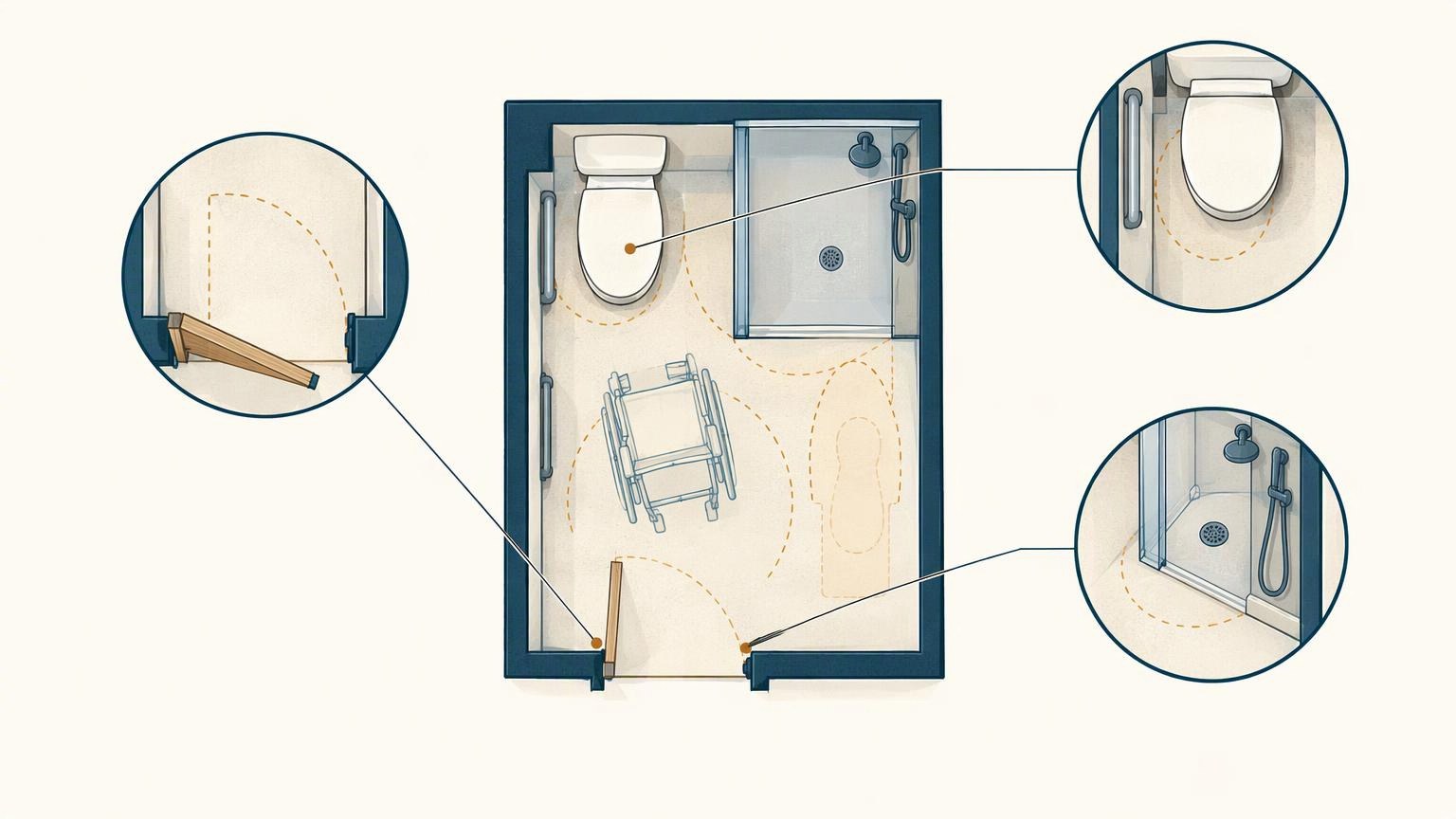
Illustration of a bathroom plan with dotted planning arcs and circular close-ups of the doorway, toilet area and shower entrance.
I would prepare an equipment description before comparing cabins: model, overall dimensions, weight, battery details where relevant, and anything you need to use alongside it. This is information for verification, not a reason to assume a particular device is accepted.
I would separate entering the room from living in it. A scooter that fits through the entrance still needs a suitable place to remain when you are sleeping, transferring, or moving to the bathroom.
For powered equipment, I would establish the operator's charging rules and the proposed charging location. I would not build a plan around an extension cord, an assumed outlet position, or storage outside the cabin without explicit approval.
Bed access deserves the same attention. I would compare the bed height and transfer approach with your needs, then address under-bed clearance if you use equipment that depends on it.
I would choose between keeping equipment assembled and using a folding arrangement based on what you can actually manage. Dismantling may solve a storage problem for someone who can do it comfortably; it is a poor substitute for sufficient space if it makes every bathroom visit dependent on extra help. The equipment plan must support the entire day, including overnight use.
I would keep a suitable cabin on the shortlist while evaluating the rest of the journey separately. The accommodation decision does not settle how you will board, reach the places you want to use, or go ashore.
Onboard, I would trace the routes that matter to you, including dining and other planned activities. Identify where step-free movement is essential and whether any part of the route requires assistance you have not arranged.
For embarkation and disembarkation, I would establish the process for your equipment and personal assistance needs. A cabin description cannot substitute for an answer about boarding arrangements.
At each port, I would distinguish leaving the ship from using transportation and enjoying the activity itself. Ask whether the planned transfer is directly to the pier or uses another vessel, then request the applicable equipment and access requirements.
I would apply this same separate review when comparing river cruise itineraries, rather than assuming an ocean-cruise assessment transfers to another vessel. If going ashore is essential, uncertainty about that part of the trip can outweigh a suitable cabin. If you would enjoy remaining onboard, I would make that an intentional choice rather than a fallback discovered after booking.
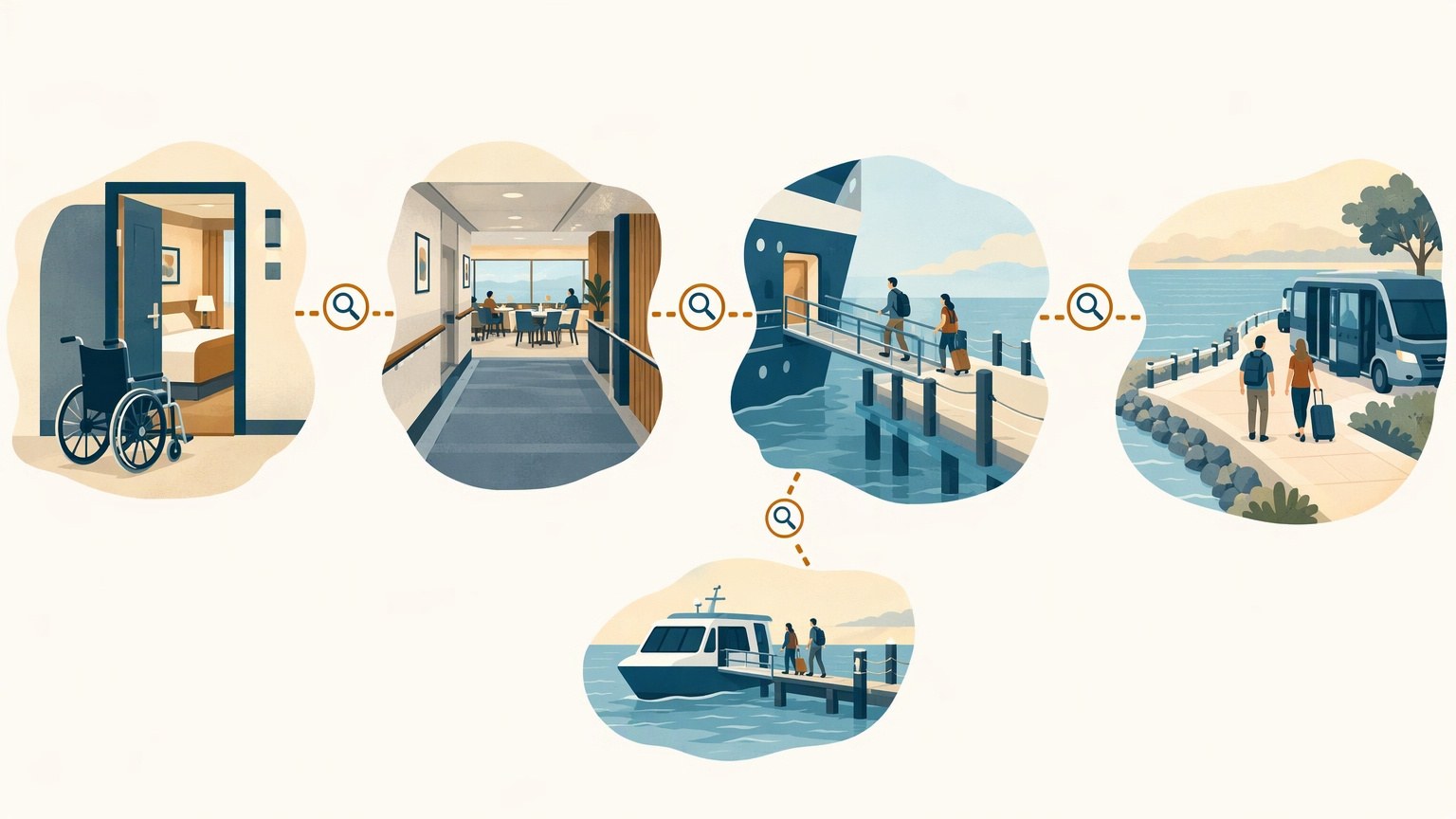
Illustration of separate cruise access questions, with cabin, corridor, gangway and waterfront transport scenes connected by dashed lines and magnifying glasses, plus a small-boat branch.
Say you use a powered wheelchair, need a particular bedside transfer approach, and prefer a balcony. You are comparing a standard balcony cabin with unverified access, an accessible cabin without a balcony, and an accessible balcony cabin awaiting detailed confirmation.
I would not choose the standard cabin because its view is appealing. I would evaluate the other options against the essential movements first, using the comparison below.
If the cabin without a balcony meets your requirements and the balcony option does not, I would favor usable access. If both meet them, the balcony becomes a preference to weigh against the current quote.
My specialties connect this decision to cruise and group vacation planning. For a family or group, I would keep your cabin requirements distinct from companions' preferences so that nearby accommodation does not become a substitute for access.
For travelers considering a travel agency on Long Island, that provides a named cruise-planning advisor to approach. My guide to using a travel agent addresses the broader choice; here, the useful next step is a cabin-specific enquiry. I would request verification without assuming accessible inventory or specialist assistance is available.
| Choice | What decides suitability | Trade-off |
|---|---|---|
| Standard balcony cabin | Exact entrance, bathroom, and transfer details | Preferred view does not establish usable access |
| Accessible cabin without balcony | Confirmed fit for essential movements and equipment | May require giving up the balcony preference |
| Accessible balcony cabin | Cabin fit plus usable balcony access | Additional verification before comparing value |
| Cabin choice | Verify first | Trade-off |
|---|---|---|
| Standard balcony cabin | Entrance, bathroom, and transfer details | Preferred view does not establish access |
| Accessible cabin without balcony | Essential movements and equipment fit | May mean giving up the balcony |
| Accessible balcony cabin | Cabin fit and usable balcony access | Verify before comparing value |
Share the destination, dates and travel style you have in mind. A Superior Travel advisor will help turn the possibilities into one clear, personal plan.