
Count usable meals
I would mark the included meals you expect to attend. A meal you plan to skip should not carry the same value as one that fits your day.

I would favor included meals when their timing, menus and locations fit your plans and dietary needs. I would choose breakfast-only when independent dining matters more. For value, compare meals you will actually use and expenses outside the package, not just meal counts.
When I compare all-inclusive tour packages, I read the itinerary before counting meals. For Long Island travelers, the appeal of all-inclusive tour packages may be simpler dining arrangements. I would focus on whether those arrangements fit how you want to spend each day.
I would weigh all-inclusive tour packages against breakfast-only options by considering your lunch pace, free evenings and dietary needs. A prepaid dinner offers little value if you prefer eating elsewhere. Breakfast-only leaves more choices and expenses with you, so I would balance that freedom against the effort involved.
I would mark the included meals you expect to attend. A meal you plan to skip should not carry the same value as one that fits your day.
I would decide whether choosing dinner independently is part of your vacation. If it is, compare actual free evenings rather than assuming breakfast-only creates more sightseeing time.
I would read beverage inclusions separately from meal inclusions. An included dinner is not enough evidence that wine, bottled water or every other drink is covered.
I would separate preferences from requirements that affect safety. A menu substitution and protection against cross-contact need different answers.
I would not dismiss an itinerary with breakfast and selected dinners. It may preserve independent dining while organizing meals on the days when that matters most.
I start with the written meal schedule, not the package name. Here, breakfast-only means breakfast is included while you arrange other meals unless the itinerary explicitly adds them.
I would not equate an all-inclusive tour with an all-inclusive hotel stay. Hotels themselves have different dining venues, beverage inclusions and additional charges; those arrangements do not establish what a touring itinerary covers.
For each proposed tour, I would identify the included breakfasts, lunches and dinners, their locations, and whether you choose from a menu or receive a set meal. A hotel dinner, group restaurant meal and excursion meal may offer different experiences even when each counts as one inclusion.
The table compares written arrangements, not promises about an operator. I would apply it to escorted tours and river cruises while keeping each itinerary's terms separate. Selected included meals deserve consideration alongside either endpoint.
I would compare sightseeing, transportation and guiding separately. More meals do not establish that more activities are included; breakfast-only does not establish a less organized tour. The meal plan should support the itinerary you want, rather than determine the entire choice.
| Arrangement | Best fit | Trade-off |
|---|---|---|
| Breakfast only | Independent dining | Restaurant choices and extra spending |
| Selected meals | A balance | Day-by-day planning |
| All meals on specified days | Planned dining | Skipped prepaid meals plus outside spending |
| Arrangement | Best fit | Trade-off |
|---|---|---|
| Breakfast only | Independent dining | Restaurant choices and extra spending |
| Selected meals | A balance | Day-by-day planning |
| All meals on specified days | Planned dining | Skipped prepaid meals + outside spending |
I would place meals beside each day's activities. An included lunch can simplify a break between visits, but its timing should match your appetite and leave room for the day's plans.
A free evening needs interpretation. I would consider when activities end, whether dinner is scheduled and when the next morning starts. Restaurant choice offers less value if you are tired or need an early night.
For a European vacation or an Asia vacation, I would weigh how much independent food exploration matters to you. That preference belongs in the itinerary comparison, not as an afterthought once the tour is selected.
I would also read dining reservation and dress requirements. Dinner dress codes matter at resorts, but only the tour's own instructions establish its requirements.
More included meals can reduce decisions after a busy day. Their drawback is less flexibility when dining conflicts with your preferred evening. Breakfast-only preserves restaurant choice, not freedom from tour departures or activities. I would distinguish choosing where to eat from having enough time to enjoy it; either plan works poorly when its schedule clashes with your priorities.
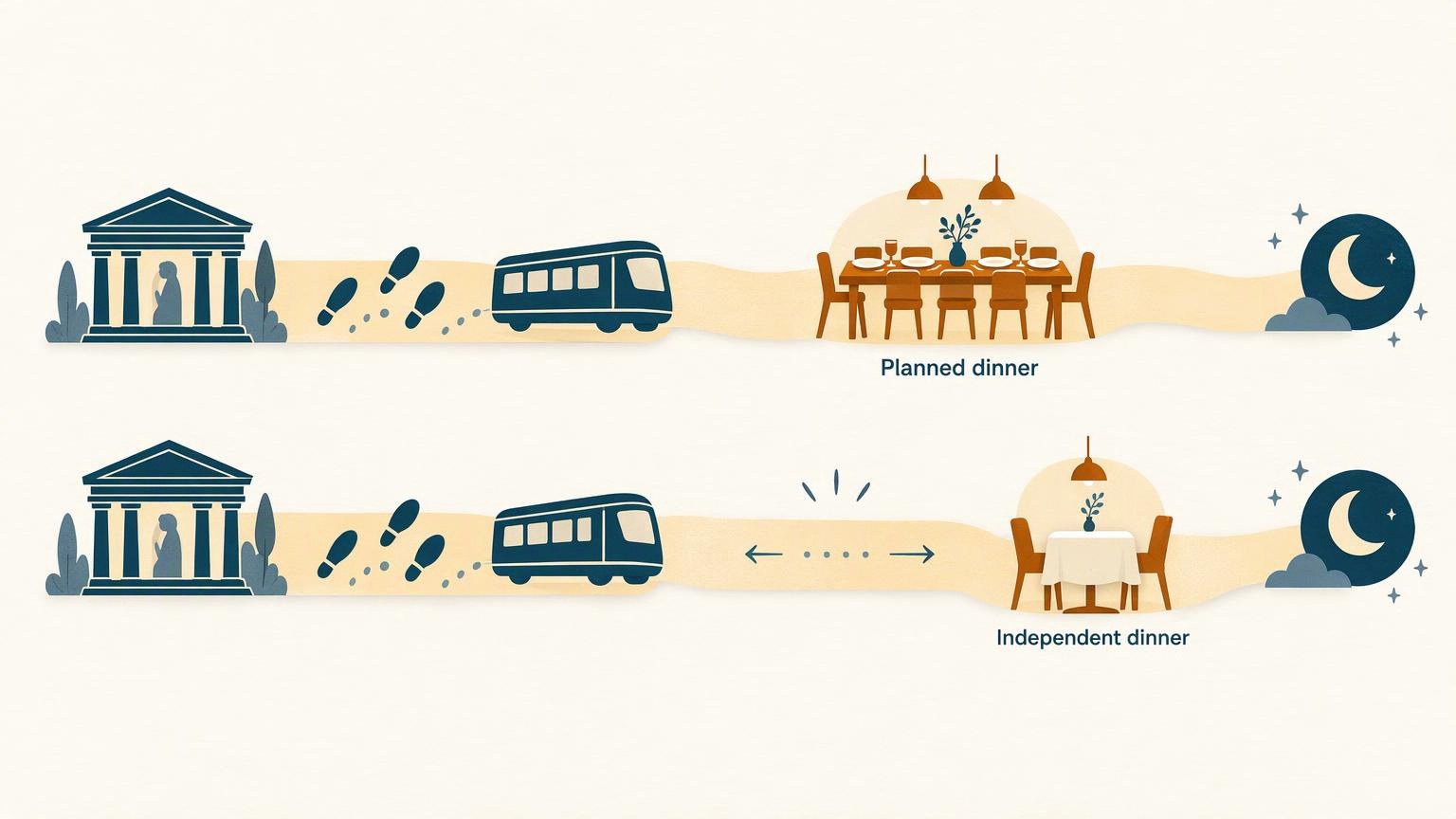
Illustration comparing planned and independent dinner paths after sightseeing, with an open stretch before the smaller independent dinner table.
I would compare the quoted tour price plus expected spending outside it. Neither a lower headline price nor a longer inclusion list establishes better value without considering what you will use.
For breakfast-only, I would include lunches, dinners, drinks and transportation to chosen restaurants. For a more inclusive plan, I would separate covered meals from optional dining, beverages, supplements and stated compulsory charges. These categories show where the dining budget can grow.
I would value included meals against your likely choices. If you prefer a light lunch, a full group lunch should not automatically count as the cost of a restaurant meal you would never buy.
I would also budget for independent meals when prepaid ones remain available. Eating elsewhere may be worthwhile, but I would not assume a missed meal earns a refund.
If you are considering a Caribbean all-inclusive vacation, I would keep that quote separate. Accommodation, transportation and activities can explain differences beyond food. I would use a current, itemized quote for comparable dates and arrangements, rather than invent a dining allowance. That gives you a clearer basis for deciding whether convenience justifies the complete cost.
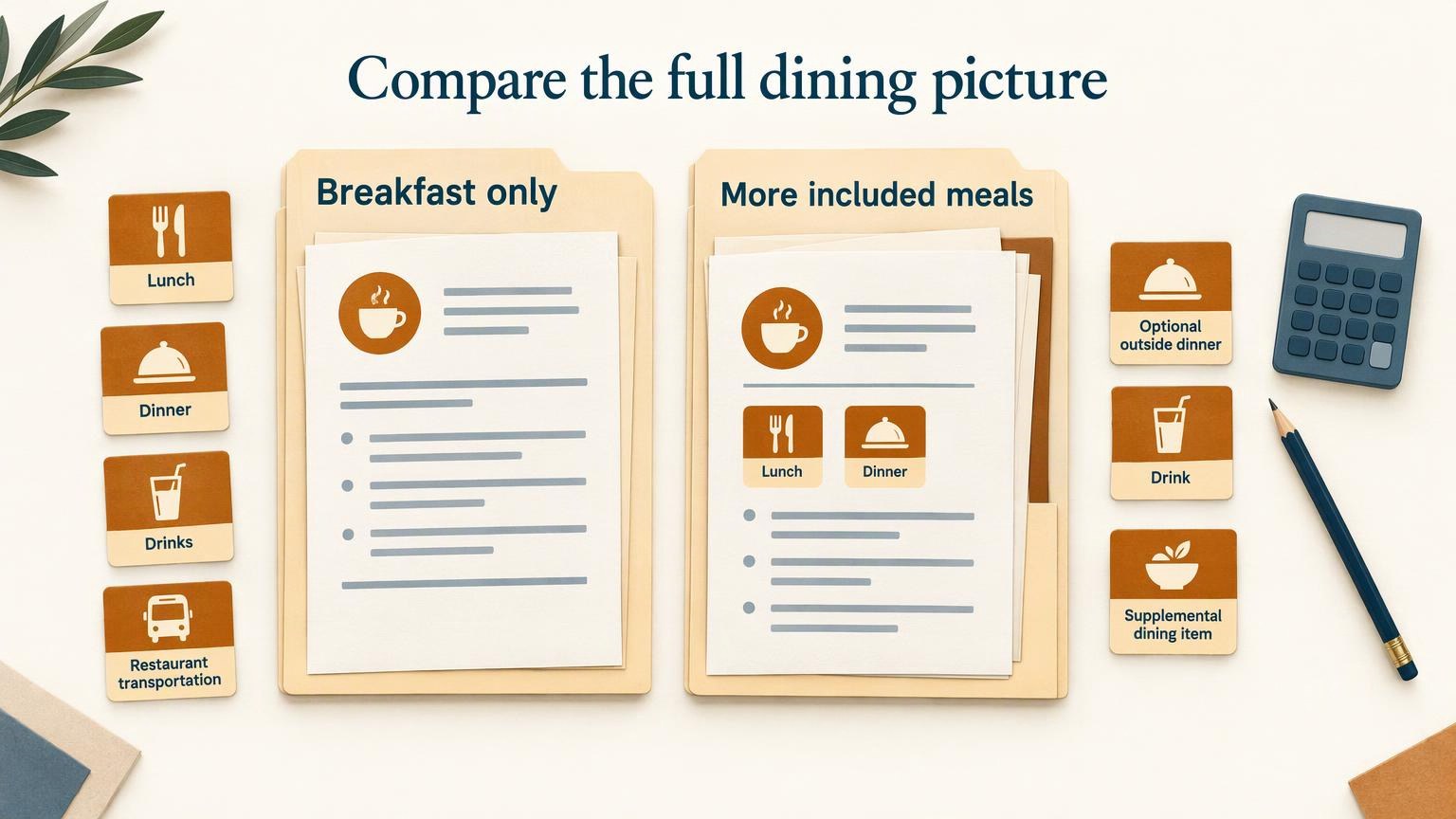
Illustration comparing “Breakfast only” and “More included meals” folders, with lunch and dinner inside the latter and separate dining, drink, and transportation tiles alongside.
I would assess specific dining arrangements rather than assume included meals or independent restaurants are safer. Prepayment does not establish that a kitchen can accommodate your needs.
I would distinguish allergies, medical requirements, religious requirements and preferences. For safety-related needs, ingredients and cross-contact require answers from the responsible provider. Alternative dishes alone do not establish suitability.
For included meals, I would identify the venues, who receives your dietary information and what happens when a dish is unsuitable. Any substitute's cost and availability matter before you rely on it. A reassuring package label cannot replace those details.
For independent dining, I would weigh the effort of finding suitable restaurants within available breaks. Greater choice may help, but you still need to assess each venue. A tight schedule can make that responsibility harder to manage, even when dinner is technically independent.
In family and group travel planning, I consider travelers individually. One suitable menu does not establish that everyone can eat comfortably. My role is to organize planning questions, not guarantee allergen safety or replace guidance from your clinician and the food provider. Neither meal-plan label settles this decision.
Suppose you want guided sightseeing but consider local dinners part of the trip. One proposed tour includes most lunches and dinners; another includes breakfast and leaves dinner independent. I would compare sightseeing first, since food may not be their only difference.
If both meet your sightseeing goals and breakfast-only leaves usable evenings, I would favor it for your dining preference. Its budget still needs to include independent meals before I would call it an acceptable choice.
For someone who dislikes finding restaurants after scheduled activities and expects to attend group dinners, I would lean toward more included meals when menus and timing fit. Selected dinners could offer a middle option if available, without sacrificing every independent evening.
I am Mary Susan Schilling. My specialties include all-inclusive vacations, family travel, cruises and solo travelers. At Superior Travel Consultants, I connect your preferences with customized planning, rather than favoring the largest meal count.
For broader context, I suggest why use a travel agent. Here, I would bring the comparison back to your proposed itinerary, complete spending and the dining freedom you want to preserve.
Share the destination, dates and travel style you have in mind. A Superior Travel advisor will help turn the possibilities into one clear, personal plan.