
Define the experience you need
I would distinguish wanting more cruise nights from needing uninterrupted cabin access. A pair of sailings can satisfy the first preference while leaving the second dependent on turnaround arrangements.

I would choose consecutive adults-only sailings when the booking terms, cabin assignments and turnaround requirements fit your needs. Adjacent dates do not establish continuous cabin use or ship access. If moving rooms or waiting ashore would undermine your vacation, I would compare a longer single sailing.
I compare adults-only cruise vacations as complete journeys, including the handoff between departures. For Long Island travelers considering back-to-back adults-only cruise vacations, that transition can determine whether a longer trip delivers the rest or destination variety you want.
My approach to adults-only cruise vacations separates booking terms from onboard continuity. I am Lois Howes, an ocean and river cruise advisor at Superior Travel Consultants. Through advisor-led planning on Long Island, I would assess both departures together before treating them as one uninterrupted vacation.
I would distinguish wanting more cruise nights from needing uninterrupted cabin access. A pair of sailings can satisfy the first preference while leaving the second dependent on turnaround arrangements.
I would look for the cabin number on each proposal, not just matching category names. If assignments remain open, I would judge the pair on your willingness to move.
I would plan to carry medication, documents and other necessary items during any cabin handoff or required time ashore. That avoids making your comfort depend on immediate luggage access.
I would assess what happens financially if you cannot continue after the first sailing. The second booking deserves its own review even when you intend to take both.
I would avoid committing to an independent outing until the required consecutive-guest process is clear. A port visit is worthwhile only if it fits around the mandatory steps.
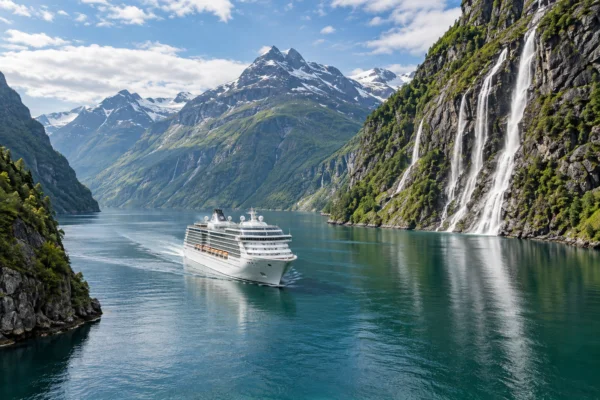
Cruise ship sailing through a mountain fjord beside waterfalls Client photo (media library)
I use back-to-back to mean consecutive departures taken as one planned trip. I would start with what each sailing adds: different ports, more time aboard or a pace you prefer. A repeated itinerary deserves closer consideration if destination variety is your main reason for extending the vacation.
I would verify the adults-only designation for each exact departure. An adult-restricted venue is not an adults-only sailing, and a ship's reputation does not replace its applicable guest policy. That distinction matters when changing ships or comparing dates with different designations.
I would also separate eligibility from atmosphere. Quiet evenings, social activities and destination-focused days are different preferences. An adults-only label does not settle those choices, so I would compare the proposed onboard rhythm across both sailings.
My trade-off is whether the extra itinerary value outweighs the transition. If uninterrupted rest matters most, I would retain a longer single sailing as an alternative. The useful reason to involve a travel advisor is to assess how the departures depend on each other, rather than evaluate two attractive itineraries in isolation.
I would establish whether the supplier sells the combination as one booking or separate reservations. Linking bookings for consecutive-guest handling is a separate question from payment and cancellation terms. I would not treat a connecting notation as proof that contractual commitments have merged.
For separate bookings, I would compare deposits, final payment deadlines and cancellation schedules. What would you owe or lose if you changed one departure but kept the other? I would also assess whether a date change breaks the pairing, leaving a sailing you would no longer want alone.
My cost comparison would cover both fares and their inclusions. Port charges, gratuities, drinks, Wi-Fi, excursions and surrounding transportation belong beside the quoted offers. I would not assume an inclusion or credit on one booking applies to the next.
I would prepare a current combined quote rather than predict savings. Sharing outward and return travel does not establish a discount or lower overall cost. For friends traveling together, I would distinguish each person's financial commitments from the shared schedule, as in group and cruise vacation planning, before recommending the combined trip.
I would compare actual cabin assignments, not just matching category names. If either proposal leaves the cabin number unassigned, I would judge the pair on your willingness to move rather than describe continuous use of a particular room as secured.
Matching cabin numbers answer only the assignment question. I would separately establish whether belongings may remain in place and what access is permitted during turnaround. Keeping the same room does not establish that you can occupy it throughout the handoff.
If a move is necessary, I would weigh its practical effect. The supplier's packing instructions, luggage handling arrangements and room-vacating and availability times determine the interruption. I would keep medication, documents and other essentials accessible rather than depend on immediate access to luggage.
My recommendation changes when the cabin meets a necessary need. Accessibility, motion sensitivity or a particular layout deserves more weight than a casual location preference. I would assess both rooms against that requirement. A clearly arranged move between suitable rooms may be acceptable; an unsuitable second cabin is not offset by an appealing extended itinerary or extra cruise nights.
I would not use a universal turnaround allowance. For the same ship, I would obtain the consecutive-guest instructions for the exact port and departures. These should establish whether disembarkation, immigration, check-in or a wait ashore is required, along with return timing and permitted cabin and public-space access.
I would plan meals and rest around those instructions rather than assume normal sea-day service. If a lounge, dining venue or cabin is essential to your comfort, its availability matters to the choice. Any independent excursion must fit around mandatory procedures, not compete with them.
For a ship change, I would assess the first sailing's disembarkation process against the second's boarding deadline. Terminal locations, transportation, luggage and check-in requirements all affect the connection. An itinerary's arrival time does not establish when you will be ready to leave the terminal.
If success requires everything to run exactly to plan, I would compare time ashore between cruises or a longer single sailing. Our agency team can coordinate flights, hotels and transfers, but my timing recommendation would address the actual connection risk rather than add an arbitrary buffer.
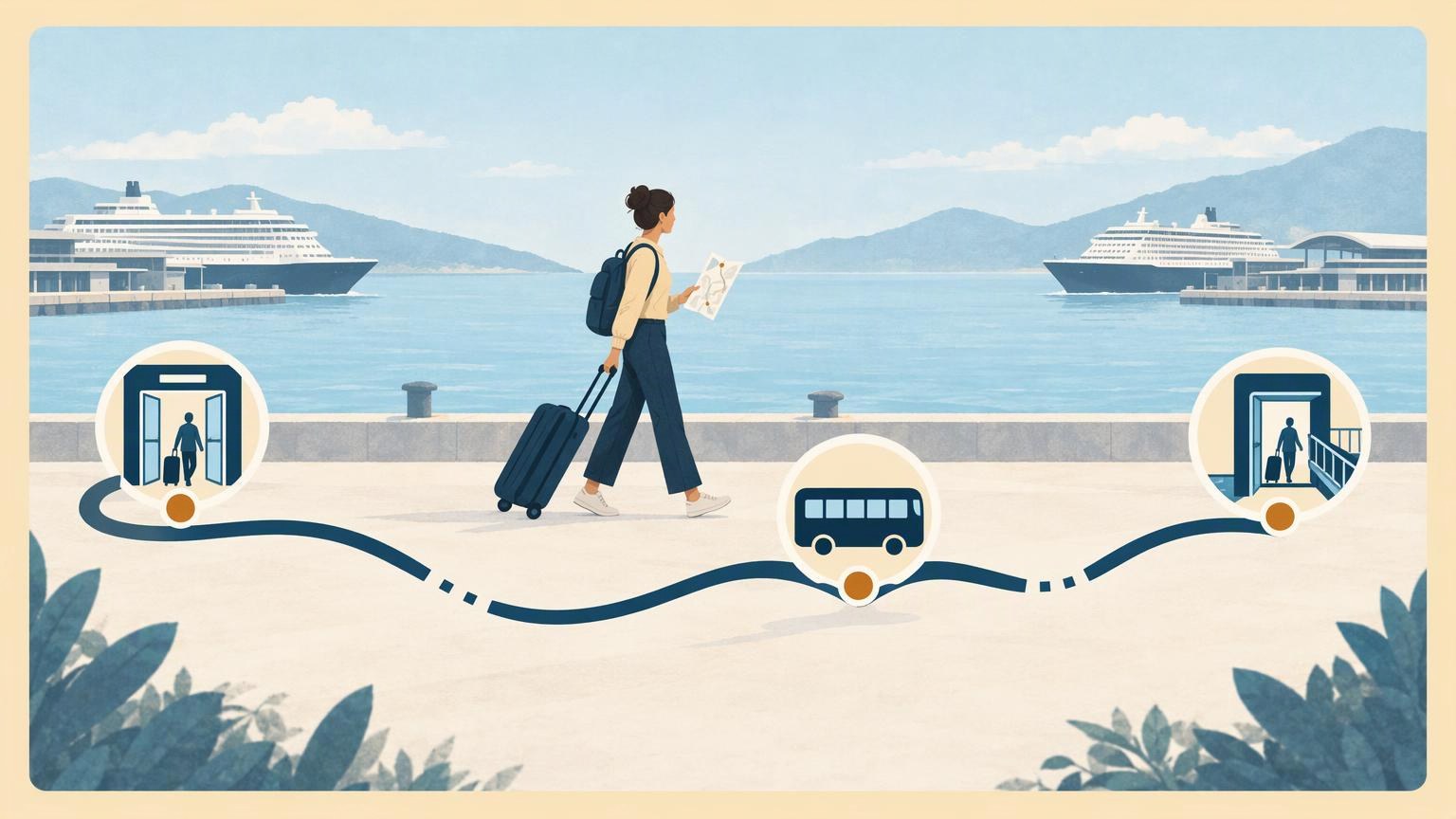
Illustration of a traveler between two ships and terminals, with a broken foreground route linking an exit doorway, a bus and a boarding-entry doorway.
Suppose you want varied ports and a longer adults-only vacation, but need a suitable cabin and somewhere to rest during the transition. I would first verify both departures' guest policies and compare itineraries. You would decide whether uninterrupted room access is essential or simply preferred.
Next, I would compare assigned cabins and obtain the supplier's turnaround instructions. With the same suitable room but required time outside it, you would weigh whether the interruption is manageable. With a room change, I would assess the second cabin and luggage arrangements before recommending the pair.
Then I would compare the combined quote and terms with a longer single departure. I would favor consecutive sailings when their itinerary advantage matters and the handoff is acceptable. I would favor one sailing when continuity matters more than route variety.
If neither fits your pace, I would consider escorted tours and river cruises. My ocean cruise specialty supports the ship and cabin comparison; our team's coordinated planning connects that choice with surrounding travel. Reviewing both proposals together makes those dependencies visible before you commit to either sailing separately.
| Option | Favors it | Rules it out |
|---|---|---|
| Consecutive sailings | Appealing routes; manageable handoff | Essential cabin or access needs unmet |
| Longer single sailing | Continuity takes priority | Unsuitable route or dates |
| Cruises with time ashore | Workable transfer; worthwhile stay | Added cost or time outweighs value |
Share the destination, dates and travel style you have in mind. A Superior Travel advisor will help turn the possibilities into one clear, personal plan.