
Start with the ordinary evening
I would describe the dinner you want most nights, not only the celebration meal. That routine deserves more weight than a restaurant you might visit once.
I would match your cruise to the evenings you want: fixed seating for routine, flexible dining where offered for changing plans, and optional venues whose menus, costs and reservation conditions suit you. I would evaluate table privacy separately before choosing a sailing.
I compare the best cruises for couples by how dinner fits your day, not restaurant count alone. For Long Island travelers, the best cruises for couples might offer a dependable routine or accommodate changing plans after time ashore. Those preferences call for different dining setups.
My approach to the best cruises for couples separates timing, tables and restaurant access. I am Fran Lozano, a cruise specialist within advisor-led travel planning on Long Island. I would establish both partners' priorities before comparing proposed sailings.
I would describe the dinner you want most nights, not only the celebration meal. That routine deserves more weight than a restaurant you might visit once.
I would write down your preferred dinner time and table setup independently. A suitable time does not establish that you will dine without other guests.
I would decide whether you can move dinner earlier or later to secure a preferred venue. If the time matters more than the menu, let that guide the choice.
I would compare a dining package with the meals you actually want. Extra access has little value if the eligible restaurants or usable times do not suit you.
I would choose a sailing whose ordinary dining still appeals if an optional reservation is unavailable. A special dinner should improve the trip, not carry the entire decision.
I would start with when you like to eat and how much predictability you want. Fixed dining, where offered, assigns a dinner time; flexible arrangements provide choices within the ship's stated system. Flexible does not mean every restaurant is available whenever you arrive.
I would favor fixed dining if you both enjoy planning around dinner. Its downside is the commitment: lingering ashore or changing evening plans may conflict with your assigned time. Predictability helps only if the schedule suits both partners.
I would favor flexible dining if dinner needs to move with the day. The trade-off is obtaining a table: whether the sailing allows reservations, walk-ins or both affects how well it supports your preferred time.
I would also consider the following morning. Late dining may sound romantic, but an earlier meal could suit a partner who wants to rest before an early start. Your usual habits matter more than the label.
The table describes arrangements to evaluate where offered, not promises about a particular ship. I would choose your rhythm first, then compare which candidate sailing supports it with an acceptable compromise.
| Arrangement | Best fit | Key condition |
|---|---|---|
| Fixed seating | Predictable routine | Assigned time suits you |
| Flexible dining | Changing evening plans | Reservation or walk-in process |
| Optional venue | Particular dining experience | Charges and reservation availability |
| Casual alternative | Low-commitment evening | Opening hours and choices |
| Arrangement | Best fit | Check first |
|---|---|---|
| Fixed seating | Predictable routine | Assigned time suits both partners |
| Flexible dining | Changing evening plans | Reservation or walk-in process |
| Optional venue | Particular dining experience | Charges and reservation availability |
| Casual alternative | Low-commitment evening | Opening hours and choices |
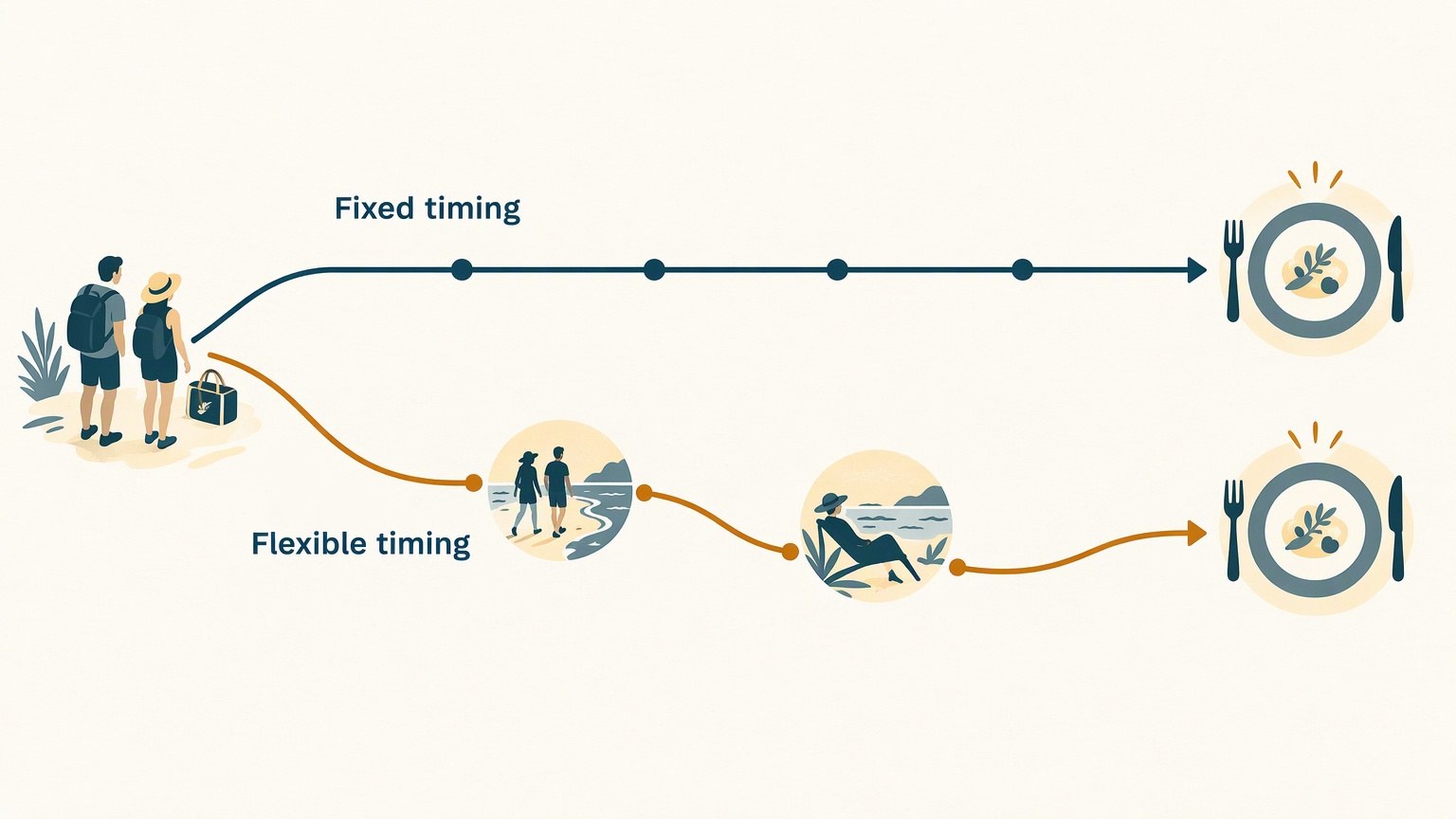
Illustration contrasting Fixed timing on a straight, evenly marked path with Flexible timing on a curved path through walking and resting scenes. Both paths lead to dinner place settings.
I would treat table preference separately from dinner timing. You might want a predictable hour and a private table, or flexible timing and opportunities to meet other travelers. Neither combination follows automatically from a dining label, so timing alone cannot settle the choice.
If conversation with other guests appeals, I would consider shared seating where offered. The benefit is a social evening; the downside is that dinner becomes a group experience rather than uninterrupted time together. Both partners should be comfortable with that trade-off.
If privacy matters, I would distinguish a table request from a confirmed arrangement. A preference recorded on a booking is not a guarantee unless the supplier's terms establish otherwise. That distinction matters before choosing a sailing for private dinners.
I would also clarify what privacy means to you. Avoiding shared seating and finding a quiet setting are different goals: a table for two does not necessarily mean less activity around you.
For a celebration, I would identify the evenings that matter most. Within romantic getaway and anniversary planning, that separates a special dinner from your ordinary nightly preference.
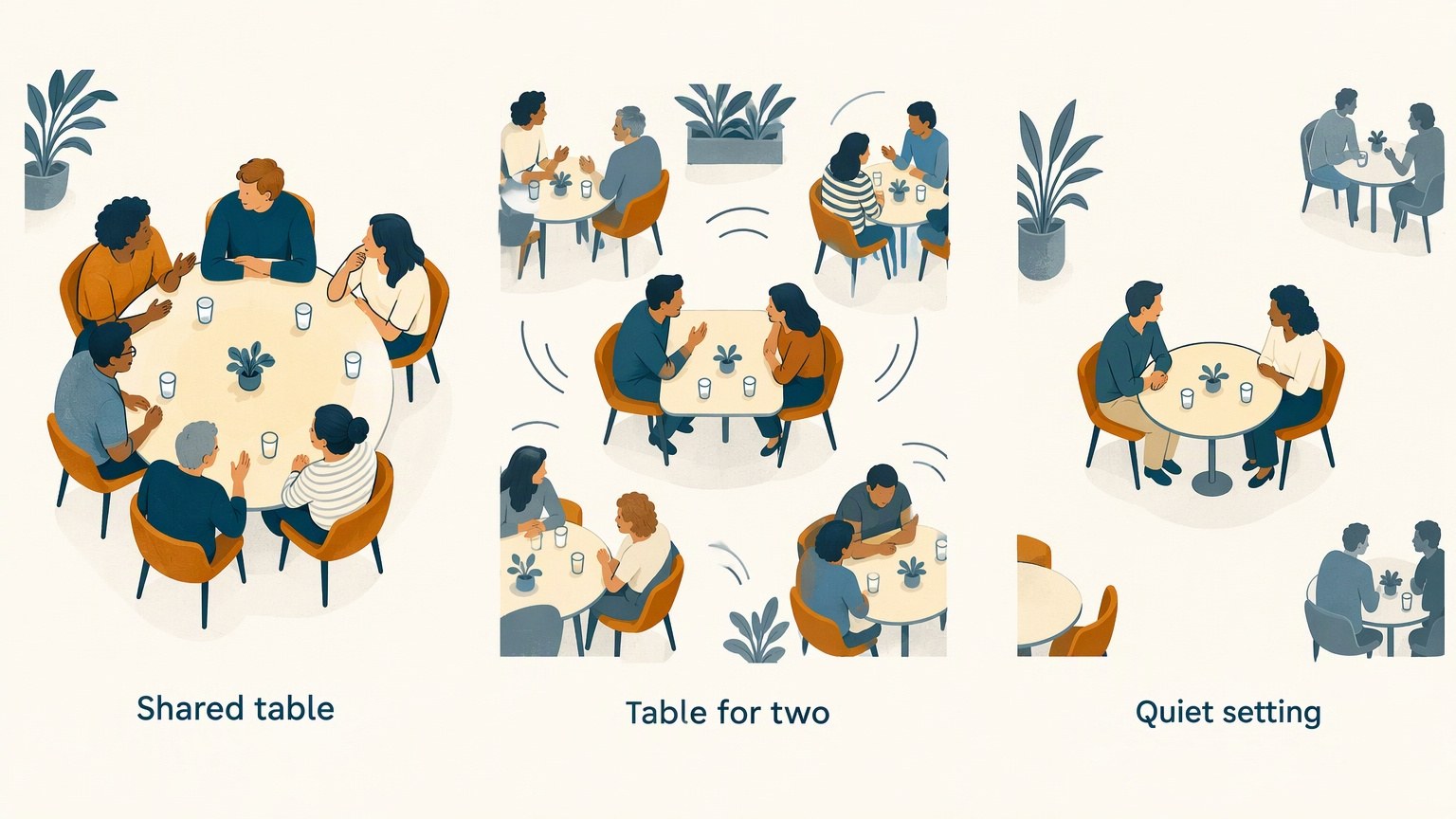
Illustration comparing “Shared table,” “Table for two,” and “Quiet setting,” with nearby diners and conversation arcs distinguishing the lively middle scene from the more spacious right scene.
I would judge an optional venue by what you want from that meal: particular cuisine, a different atmosphere or an occasion dinner. The word specialty does not establish better food, privacy or an extra charge across every cruise product.
First, I would compare its menu and setting with the dining included in your proposal. If ordinary dining meets your preferences, an optional restaurant can remain an occasional choice rather than a necessary nightly expense.
Next, I would separate eligibility from reservations. A fare, package or cabin benefit needs to specify included access; a suitable dinner time needs separate confirmation. Buying access does not establish that every preferred booking is secured.
I would consider reservation windows, eligible venues, repeat-visit restrictions and change or cancellation conditions alongside the experience. These details affect whether you can use the benefit for the meal you actually want, rather than merely enter an eligible restaurant.
For a honeymoon, I would avoid making the sailing depend on one dinner unless its arrangements can be confirmed. Appealing everyday dining with a special meal added is preferable to an unsuitable nightly routine.
I would compare cruise prices using the meals you expect to enjoy, not an assumption that every restaurant is included. Fares may cover accommodation, core dining and entertainment, while specialty restaurants, drinks and other trip expenses can be separate.
For each proposal, I would identify included dining, planned optional meals and any package under consideration. I would compare the stated charging method, whether a cover charge, individual menu pricing or another arrangement, using current terms rather than old prices.
I would include beverages and applicable service charges where required. An advertised dinner charge may not describe your evening's total, particularly if the drinks you want are separate. That difference can change which proposal offers better value for your plans.
I would test packages against actual use. Paying separately may suit one celebration dinner; several eligible meals warrant a package comparison. Neither wins without current pricing and usable access at times you would accept.
Dining belongs within the complete trip budget. This is a practical reason to consider advisor help with travel comparisons: a realistic total makes differences between proposals easier to judge.
Say you want a private anniversary dinner, but ordinarily one partner likes eating early while the other prefers deciding after the day's activities. I would separate the occasion from the routine before comparing ships.
You would first agree on an acceptable dinner window and whether sharing a table is acceptable. I would compare proposed sailings against those decisions, rather than assume that more restaurants resolve the difference between your preferences.
If fixed seating falls within that window and you both value predictability, I would keep it in contention. If dinner needs to vary, I would favor flexible dining whose reservation or walk-in process suits you.
I would evaluate the anniversary venue separately: menu, table arrangement, current charge and reservation status. You would decide whether another time or venue is an acceptable substitute; I would request supplier confirmation rather than promise availability. An unavailable must-have reservation could change your choice.
I am Fran Lozano, specializing in cruises, catamaran charters, the Caribbean and Hawaii. Through cruise vacation planning, I would connect your preferences with an exact ship, sailing and quote. Ordinary evenings should fit, even with fewer restaurants.
Share the destination, dates and travel style you have in mind. A Superior Travel advisor will help turn the possibilities into one clear, personal plan.