
Protect the activity that matters
I would name the facility you would be disappointed to lose before reviewing the offer. That keeps a room upgrade from distracting you from a closed pool or unavailable dining experience.

I would accept a resort booking during renovations only if essential facilities and your daily routine remain intact. I would verify work dates, affected areas, noise periods, room placement and written terms. If a closure removes the trip's purpose, I would choose another option.
I judge a resort booking by what you can use during your stay, not how the finished property will look. For Long Island travelers, a resort booking affected by renovations calls for comparing promised facilities with those operating on your dates.
My resort booking advice starts with where you sleep, eat, swim and relax. An attractive room cannot replace an essential pool or restful celebration setting. I would separate tolerable inconvenience from changes that remove the reason you chose the resort.
I would name the facility you would be disappointed to lose before reviewing the offer. That keeps a room upgrade from distracting you from a closed pool or unavailable dining experience.
I would compare the work schedule with naps, late mornings and time on your balcony. Daytime construction matters even if you expect to sleep through quiet nights.
I would distinguish a requested location from a confirmed room assignment. A request away from construction does not establish where you will stay.
I would ask how an alternative works in practice, including access and operating hours. Another pool is useful only if it meets the need the closed one served.
I would keep the renovation notice alongside the quote and booking terms. If an update changes the decision, the earlier description provides a clear record of what you considered.
I would consider a resort when the work affects something you can comfortably do without. I would remove it when interruptions compromise an essential facility, acceptable sleeping conditions or necessary access around the property.
For family and group vacations, I would assess each traveler's needs. A replacement pool might satisfy an adult but not a child, while a walkway detour may be unsuitable for someone with limited mobility. One person's tolerance should not decide for everyone.
For romantic getaways and anniversaries, I would prioritize privacy and uninterrupted downtime. If you plan afternoons on a terrace, daytime work matters as much as overnight quiet.
I would distinguish inconvenience from safety or access concerns. A blocked entrance or unclear route requires a specific explanation before booking, not an assumption that staff will resolve it after arrival.
I would also consider how often you need an affected route. A detour between your room and every meal could be a meaningful daily burden even if each individual walk seems manageable.
My test is whether you would still choose the property knowing what is unavailable. If suitability depends on a promised reopening, I would compare another option rather than buy the experience pictured for the finished resort.
I would seek a dated disclosure covering arrival through departure. “Improvements underway” does not explain whether work affects your room, breakfast location or swimming plans.
I would separate construction completion from facility reopening: one does not establish the other. The disclosure should identify:
I would relate these details to the proposed room location. A resort-wide notice cannot establish a particular building's exposure, and a category name does not prove separation from work. A location request also differs from a confirmed assignment.
For options in the Punta Cana, Antigua and Sandals resort guide, I would apply the same standard: information specific to your dates and accommodation.
If notices conflict, I would seek clarification identifying which description applies to the proposed stay. I would retain the dated clarification with the original notice rather than treat an undated summary as a reliable update.
I would translate “minimal impact” into affected spaces and operating hours. That lets you judge the disruption against your routine rather than accept someone else's tolerance.
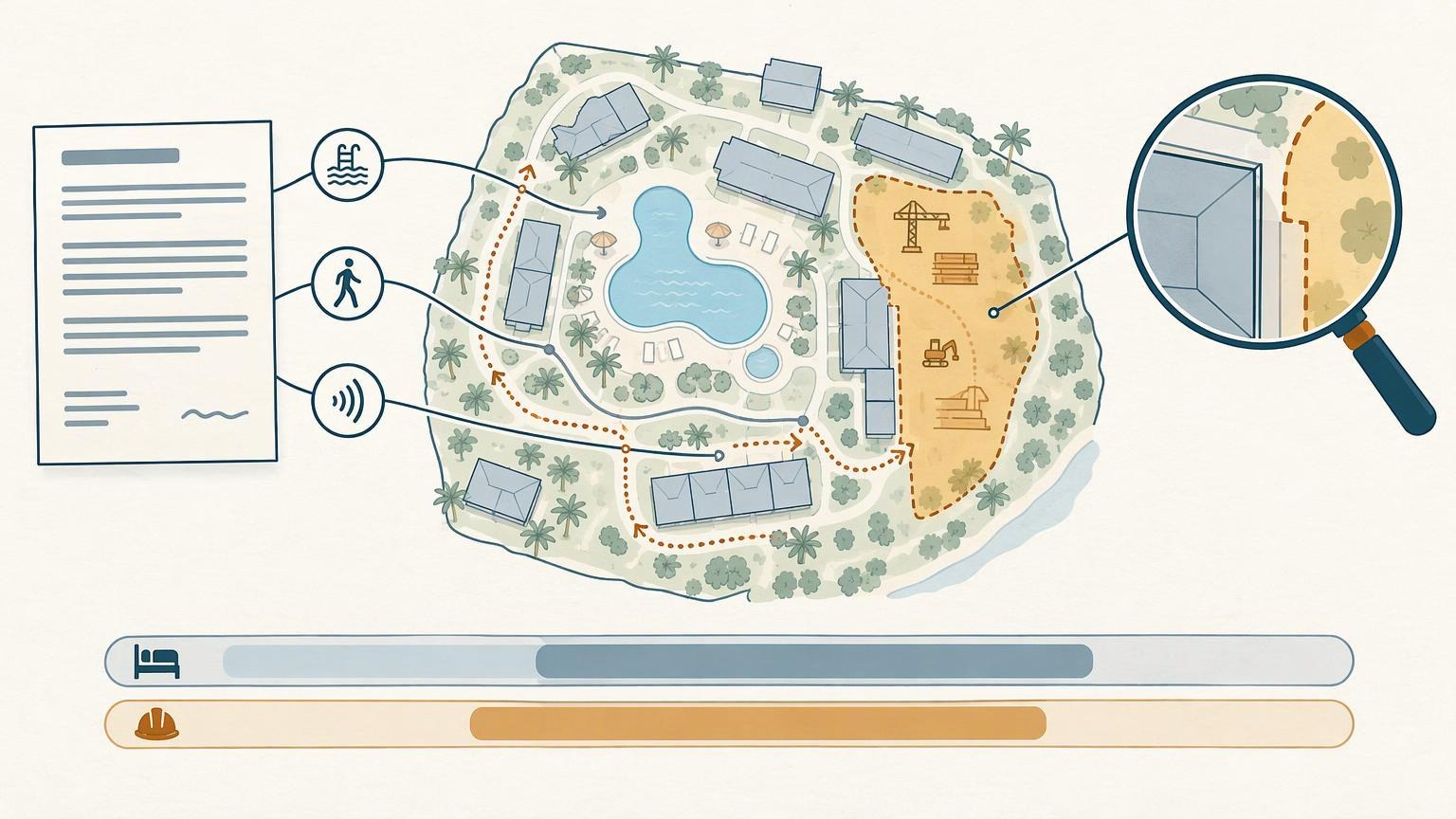
Illustration linking a disclosure sheet and pool, walking and sound symbols to a site sketch, with an amber work zone, magnified building boundary and overlapping stay and work-period strips.
I would compare usable facilities, not assume renovations produce a discount. For Caribbean and all-inclusive vacations, an inclusion deserves less weight if the facility delivering it will be closed during your stay.
I would align travel dates, room category, occupancy, meals and transportation, then identify taxes, charges and optional services in each current quote. These differences affect the complete cost; an accommodation-only figure is not comparable to a complete package.
For replacement dining, I would examine access, hours and reservation requirements. “Replacement” does not establish an equivalent experience, especially if the original restaurant helped you choose the resort.
I would distinguish an included alternative from one requiring extra spending. If your preferred substitute is outside the package, I would account for its cost and transportation rather than assume the original inclusion covers it.
I would review change and cancellation conditions separately. Renovation disclosure does not establish a right to cancel without charge, receive compensation or relocate. Those outcomes require applicable terms or a written agreement.
Within a broader European vacation plan, I would consider how changing hotels affects other arrangements.
A lower quote may justify an acceptable compromise, but it cannot restore an essential activity. I would compare current quotes and usable inclusions rather than invent a renovation-related saving.
Suppose your family vacation centers on swimming and quiet afternoons. The proposed resort reports pool work during your stay, an alternative swimming area and daytime construction beside the accommodation under consideration.
I would assess whether the alternative pool meets your family's needs, then compare work hours with afternoon rest. An acceptable pool replacement would not resolve noise conflicting with the other purpose of the trip.
If both needs remain satisfied and the terms are acceptable, I would consider keeping the resort. Otherwise, I would favor another property over a room upgrade that does not address construction exposure.
I would consider moving dates only with a flexible schedule and confirmation that essential facilities will operate for the new stay. An expected completion date alone would not justify moving the vacation. I would also weigh changes to transportation and other arrangements before deciding that different dates solve the problem.
| Choice | When it fits | Main trade-off |
|---|---|---|
| Keep the resort | Essential facilities and daily routine remain workable | You accept the disclosed inconvenience |
| Move the dates | Your schedule is flexible and needed facilities are confirmed | Other travel arrangements may need revision |
| Choose another property | Work removes a core reason for the trip | Room style, location or complete cost may differ |
I would assess a replacement property against the same priorities, not label it better simply because the first has construction. My aim is to preserve your vacation, not exchange one mismatch for another.
| Choice | When it fits | Main trade-off |
|---|---|---|
| Keep the resort | Essential facilities and routine work | Accept the disclosed inconvenience |
| Move the dates | Flexible dates; needed facilities confirmed | Other travel plans may need revision |
| Choose another property | Work removes a core reason for the trip | Style, location or total cost may differ |
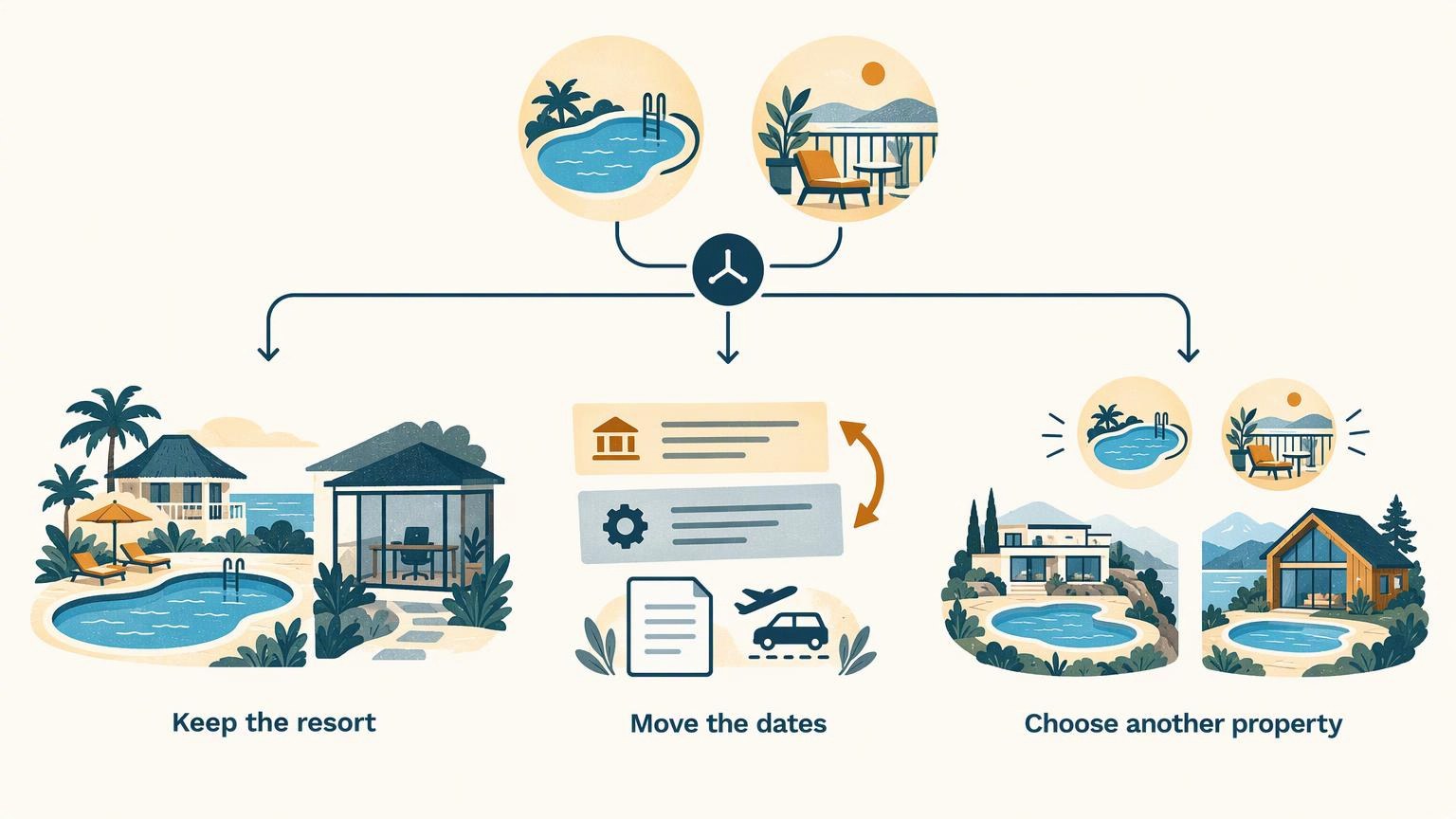
Illustration comparing “Keep the resort,” “Move the dates,” and “Choose another property,” with pool and terrace icons above three equally presented branches.
I am Robin Holian, a travel advisor with Superior Travel Consultants. My specialties include groups, family travel, cruises and honeymoons throughout Europe. My advisor profile documents my Certified Sandals & Beaches Specialist and Hyatt All-Inclusive Collection Confident credentials.
Superior's customized planning for Long Island travelers provides a relevant setting to discuss accommodation concerns alongside the vacation you want. Essential facilities and your tolerance for interruption make that discussion more useful than a general request for the best resort.
I would distinguish shared requirements from individual preferences for a group. For an individual trip, I would focus on your routine. This helps identify which compromises remain acceptable and which would change the trip's purpose.
I would frame the choice around priorities in order: what must remain available, what could be substituted and what is optional. That distinction makes a less familiar property easier to compare with your original choice.
I would keep preferences separate from resort operating information and booking terms. My credentials do not guarantee completion dates, room placement or uninterrupted facilities; those details need specific support.
In your planning enquiry, include dates, the proposed property and room category, essential facilities and any renovation notice. Request Robin Holian and ask what needs confirmation before proceeding.
Share the destination, dates and travel style you have in mind. A Superior Travel advisor will help turn the possibilities into one clear, personal plan.