
Describe the bed you want
I would write one shared bed or separate beds rather than simply double room. If bed size matters, I would name that requirement separately.

I would choose the best tours for couples by separating room sharing from bedding. Double occupancy means two travelers sharing a room, not a confirmed double bed. I would compare written bedding terms, hotel exceptions and costs against your essential needs.
I approach the best tours for couples as a room-fit decision, not a destination ranking. For Long Island travelers, the best tours for couples distinguish sharing a room from having your preferred bed configuration confirmed.
When comparing the best tours for couples, I put accommodation wording beside the itinerary. My work with Superior Travel Consultants on Long Island centers on customized planning. Even a beautiful route needs room arrangements you both understand and accept before booking.
I would write one shared bed or separate beds rather than simply double room. If bed size matters, I would name that requirement separately.
I would decide whether separate beds in the same room are acceptable before comparing proposals. That answer changes whether a bedding request is enough for you.
I would compare the bed setup independently from privacy, views and other room features. A more appealing category name does not answer every accommodation question.
I would evaluate an accommodation change against the full quote for both travelers. I would not assume an upgrade includes the preferred bed unless the written terms establish it.
I would retain the proposal and the supplier's written clarification together. That keeps the explanation attached to the particular departure and accommodation being considered.
I read double occupancy as two travelers sharing a room, not confirmation of a particular bed. Occupancy and sleeping arrangements answer different questions, so I compare both before judging whether a tour fits.
I would describe your preference plainly: one shared bed, separate beds, or either arrangement. If bed size matters, I would name it separately. The word double alone leaves too much room for interpretation.
I distinguish a recorded preference from a confirmed arrangement. Requested tells me a preference has been noted; I would not read it as a promise. For confirmed bedding, I would identify the accommodation and dates covered, not assume the wording applies throughout.
I also separate room category from bedding. A category may describe a view or another feature without specifying the beds. Paying for a different category settles the question only if its terms do.
I would use Superior Travel Consultants' romantic getaway and anniversary guide for the broader property decision. My separate tour test is whether both partners can explain room sharing and bedding status from the written terms, without relying on a photograph.
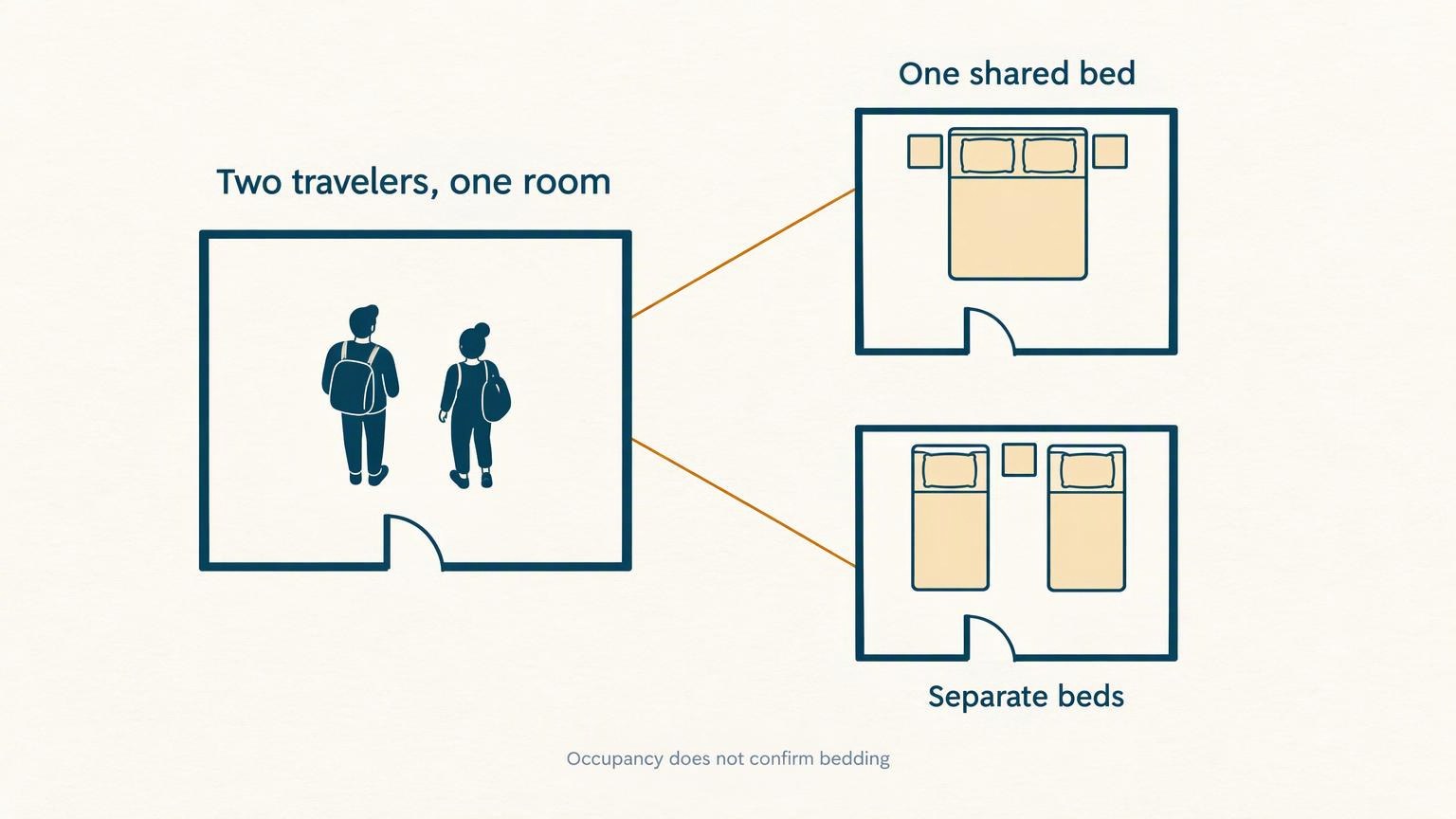
Illustration contrasting two travelers in one room with shared-bed and separate-bed layouts. The footer reads, “Occupancy does not confirm bedding.”
I would match each accommodation stay to its rooming terms. An answer for the main hotel does not establish arrangements for an arrival night, an extension or another hotel along the route.
For each stay, I would record room category, preferred bedding, confirmation status and any stated exception. This makes a broad assurance comparable with the nights you are buying and shows where the terms still do not confirm an essential requirement.
I compare privacy and practical details separately. A private bathroom, room layout or access requirement may matter more than a romantic category name. I would prioritize essentials over optional features such as a view.
For escorted tours and river cruises, I would distinguish hotel arrangements from cruise accommodation terms. I would not carry an answer from one segment into another without matching written terms.
I apply the same approach to a customized European vacation package with touring included, keeping separately arranged stays visible. If the proposal permits hotel substitutions, I would examine whether your essential room requirements remain covered. An otherwise suitable itinerary needs reconsideration if a possible substitution leaves an arrangement you cannot accept.

Illustration of four separate travel-segment cards linked by an amber route, with a magnifying glass over the Cruise card and a pencil beside Extension.
I compare the total payable for both travelers using the room arrangement you want. An advertised amount cannot settle the comparison if a proposed accommodation change remains unpriced.
I separate the base arrangement from category changes, additional nights and separate-room options. For any supplement, I would identify what it buys, which stays it covers and how it is charged. I would not assume operators use identical charging methods.
I keep quoted accommodation nights, meals, transport and touring visible. A room change may improve suitability without improving overall value. A lower quote may still fit if you genuinely accept its bedding terms, while a higher quote needs a meaningful accommodation benefit to justify the difference.
When couples travel with solo friends, I would record each traveler's room needs before comparing availability and price, rather than divide a group total equally. The family and group travel guide offers broader planning context.
I would request a current quote for the exact departure and arrangement. Charges for bedding changes, upgrades or separate rooms belong in that quote. Request me, Renata Boulos, for a comparison reflecting those choices rather than a general price.
Suppose you want one shared bed throughout a honeymoon tour. You like a guided itinerary but would accept a different route to meet that requirement. I would compare accommodation terms before choosing the itinerary.
First, you decide whether the shared bed is essential or preferred. I compare proposals against that answer; the operator or accommodation provider supplies the applicable terms. I distinguish confirmed arrangements from requests and identify which stays each answer covers.
If the bed is essential, I would favor explicit confirmation for the covered stays, provided the price and remaining terms fit. If it is preferred, requested bedding may be acceptable. Accepting a fallback is a genuine trade-off, not automatically an inferior choice.
I would test a customized alternative just as carefully: custom planning is not a bed guarantee. Superior Travel Consultants' safari, honeymoon and luxury-escape guide offers context for considering another trip structure.
I would choose according to what you can accept, including any hotel exception. Paying more makes sense only when the revised terms deliver something you value, not when reassuring language leaves the same bedding request unconfirmed.
| Terms | Established | Potential fit |
|---|---|---|
| Shared room; bedding requested | Sharing, not preferred bedding | You accept fallback bedding |
| Bedding confirmed for identified stays | Bedding on those stays | Essential bedding; other terms fit |
| New category; bedding unspecified | Category change only | Clarified bedding and revised total justify change |
| Proposal terms | Established | Potential fit |
|---|---|---|
| Shared room; bedding requested | Room sharing, not preferred bedding | You accept fallback bedding |
| Bedding confirmed for identified stays | Bedding on those stays only | Essential bedding; other terms fit |
| New category; bedding unspecified | Category change only | Clarified bedding and cost justify change |
I am Renata Boulos; my specialties include honeymooners, families, special occasions and milestone anniversaries. My role here is to connect your trip priorities with accommodation terms you can evaluate, not treat a couples label as proof of room fit.
I begin with room sharing, preferred bedding and any indispensable room feature. Separating preferences from essentials helps me compare viable options without treating every optional feature as a requirement.
A useful brief might read: both travelers want to share a room; one shared bed is essential; identify stays where it is only requested; show the terms and cost of an acceptable alternative. I would attach this to the proposed itinerary so it remains specific to the trip under consideration.
Before payment, I reconcile the proposal with written clarification. A changed category or hotel exception must appear in the comparison. I would also read applicable change and cancellation terms before you commit, since an unsuitable fallback could change your decision.
I can help evaluate accommodation terms within customized planning. The supplier's written terms establish what is confirmed; my recommendation should explain how the proposed arrangements match your needs.
Share the destination, dates and travel style you have in mind. A Superior Travel advisor will help turn the possibilities into one clear, personal plan.