
Describe a comfortable outing
I would use a familiar outing to describe what you can comfortably repeat. Include the surfaces, pauses and how you feel afterward, rather than giving only a fitness label.

I choose the best tours by comparing required walks, terrain, standing and seated breaks with your comfortable limits. A leisurely label can hide demanding sightseeing. Before committing, I would establish whether essential visits fit and optional activities can be skipped.
For Long Island travelers considering Europe, I would begin the search for the best tours with a familiar outing you can comfortably repeat. Note its surfaces, pauses and how you feel afterward. I would also list your essential visits before comparing the best tours, so an easier alternative does not remove your main reason for traveling.
I separate ability from preference: you may walk briskly at home but want to linger abroad. Choosing the best tours means understanding required activity, what you can skip and when you can recover. My focus is itinerary fit, not an operator ranking or a test of fitness.
I would use a familiar outing to describe what you can comfortably repeat. Include the surfaces, pauses and how you feel afterward, rather than giving only a fitness label.
I would distinguish needing a slower walk from wanting more time at each stop. A tour can fit your physical ability while still moving too quickly for your interests.
I would identify the attraction you most want to experience before accepting an alternative route. Skipping the demanding part is a poor solution if that part is your reason for traveling.
I would not treat a small group as proof of a flexible pace. The route and departure commitments matter more than the number of participants.
I would save the activity description and any written answers about access or alternatives. Those details give you a clear reference if the proposed itinerary changes.
I start with required activity, not the headline rating. Easy, moderate and active need an itinerary-specific explanation: what must you do to complete the included sightseeing? A rating without route details gives me little basis for comparing fit.
I separate total distance from the longest continuous walk. Frequent seated pauses may make a longer day more manageable than a shorter route without rest. Distance alone does not establish whether you can comfortably keep up.
For a personal baseline, I would record a familiar walk's distance and elapsed time, including pauses. Moving time is different: terrain, ascent and stops change route-time estimates, so flat walking speed should not become a sightseeing deadline.
I would compare your comfortable continuous walking time with the tour's longest required stretch. Include whether recovery requires a seat or a standing pause. Use an effort you can repeat, not your best-ever performance.
If only a rating is supplied, I would seek a route description before choosing. A slower advertised pace does not necessarily remove long walks, difficult surfaces or the requirement to stay with the group.
I assess surfaces separately because a shorter walk can be harder. For European sightseeing, I would look for cobblestones, uneven paving, slopes, steps and staircases, then identify which are unavoidable on the included route.
I distinguish climbing from descending. If either affects your comfort or balance, the description should address both directions. An uphill arrival with a steep return differs from a level approach, even when the distances match.
I also count standing during explanations, entrance waits and indoor visits. A stop spent standing may not provide recovery. I would look for seated opportunities and their placement, rather than treat every sightseeing pause as rest.
If you use a mobility aid, I move beyond pace to access: steps, doorways, boarding requirements and whether the aid can accompany you throughout the visit. I would not treat a relaxed tour as an accessibility assurance or assume an alternative entrance reaches the same sights.
My choice turns on the unavoidable obstacle. If an essential visit requires terrain you cannot comfortably manage, without a confirmed suitable route, I would favor different sightseeing rather than rely on moving slowly.
I read from departure to return. Reaching a meeting point, boarding transport, visiting interiors and returning to accommodation belong in the assessment, even outside the advertised guided walk. The walking segment is only part of your day.
I mark seated meals and genuine free periods. A quiet afternoon helps only if it arrives before you exhaust your comfortable limits. I also examine consecutive demanding days; shorter activity days and planned rest periods can build recovery into an active itinerary.
Transfers deserve separate attention. Seated travel interrupts walking but may not let you rest when needed. I account for boarding, luggage handling and fixed departures rather than label a transport-heavy day restful. The effort before and after the ride still counts.
For families, I assess each person's walking tolerance and patience with standing explanations. My starting point for family and group travel planning is a workable shared day. Separate activities make sense only where supervision and rejoining arrangements allow them.
I favor a repeatable rhythm over a day you can manage only by dropping the next day's highlight. Recovery should support the sightseeing you value most.
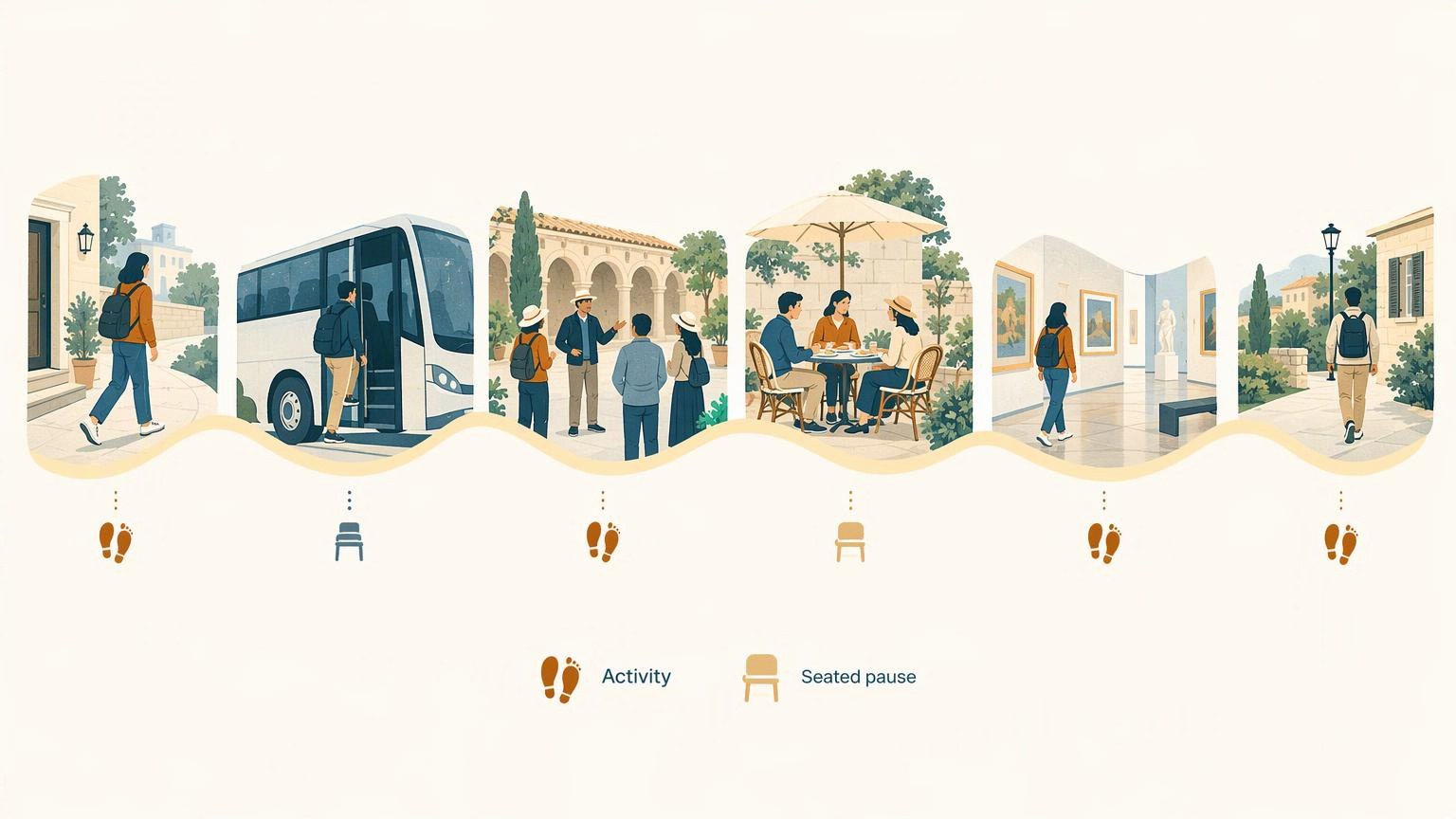
Illustration of a sightseeing-day sequence, linking walking, coach boarding, a courtyard visit, a café meal, gallery walking and a return walk above Activity and Seated pause icon keys.
I compare formats by their freedom to change the day. Group departures create shared timing commitments. A private arrangement may allow route changes if agreed; independent sightseeing gives you control but leaves more decisions with you.
I treat optional as a logistics question: where can you wait, can you remain at the accommodation, and how do you rejoin? I would not assume transport returns for someone leaving early or that skipping an inclusion earns a refund.
For escorted tours and river cruises, I assess each excursion separately. The trip format does not establish a visit's walking demands. Excursion choices help only if a suitable option is available for your departure and preserves the sightseeing you value.
For couples or a honeymoon, I weigh shared time against separate interests. An active outing alongside a quieter choice can work, but I would protect the time you want together. That matters in romantic getaway planning too.
I choose according to the trade-off you accept: shared structure, agreed flexibility or responsibility for your own day. A smaller group alone does not establish control over pace.
| Format | Control | Trade-off |
|---|---|---|
| Scheduled group | Defined program | Fixed departures and group pace |
| Private guided | Agreed route changes | Access, guide scope and current quote |
| Independent | Your own pauses | Routing, tickets and return travel |
| Format | Pace control | Trade-off |
|---|---|---|
| Scheduled group | Defined program | Fixed departures and group pace |
| Private guided | Agreed route changes | Access, guide scope and current quote |
| Independent | Your own pauses | Routing, tickets and return travel |
Suppose you enjoy steady walking but need seated breaks and find uneven descents difficult. You are comparing a shorter old-town walk labeled leisurely with a longer, level route offering seated stops. I would not choose from those descriptions alone.
I would examine the shorter route's surfaces and descent. If unavoidable, they may outweigh its distance advantage. For the longer route, I would compare continuous stretches with your comfortable limit. Seated stops help only when placed where you need them.
If the longer route fits and preserves your essential sightseeing, I would favor it. If neither fits, I would consider another visit or an agreed private route, not assume the shorter option is easier.
I am Carol McParland, owner of Superior Travel Consultants. Europe is one of my specialties, and I hold Certified Travel Consultant and Master Cruise Counselor credentials. Those qualifications support planning, not supplier route or access confirmation.
For customized planning, I would consider your limits and sightseeing rhythm alongside the itinerary. The European vacation planning page is the starting point for sending those preferences before committing to a tour.
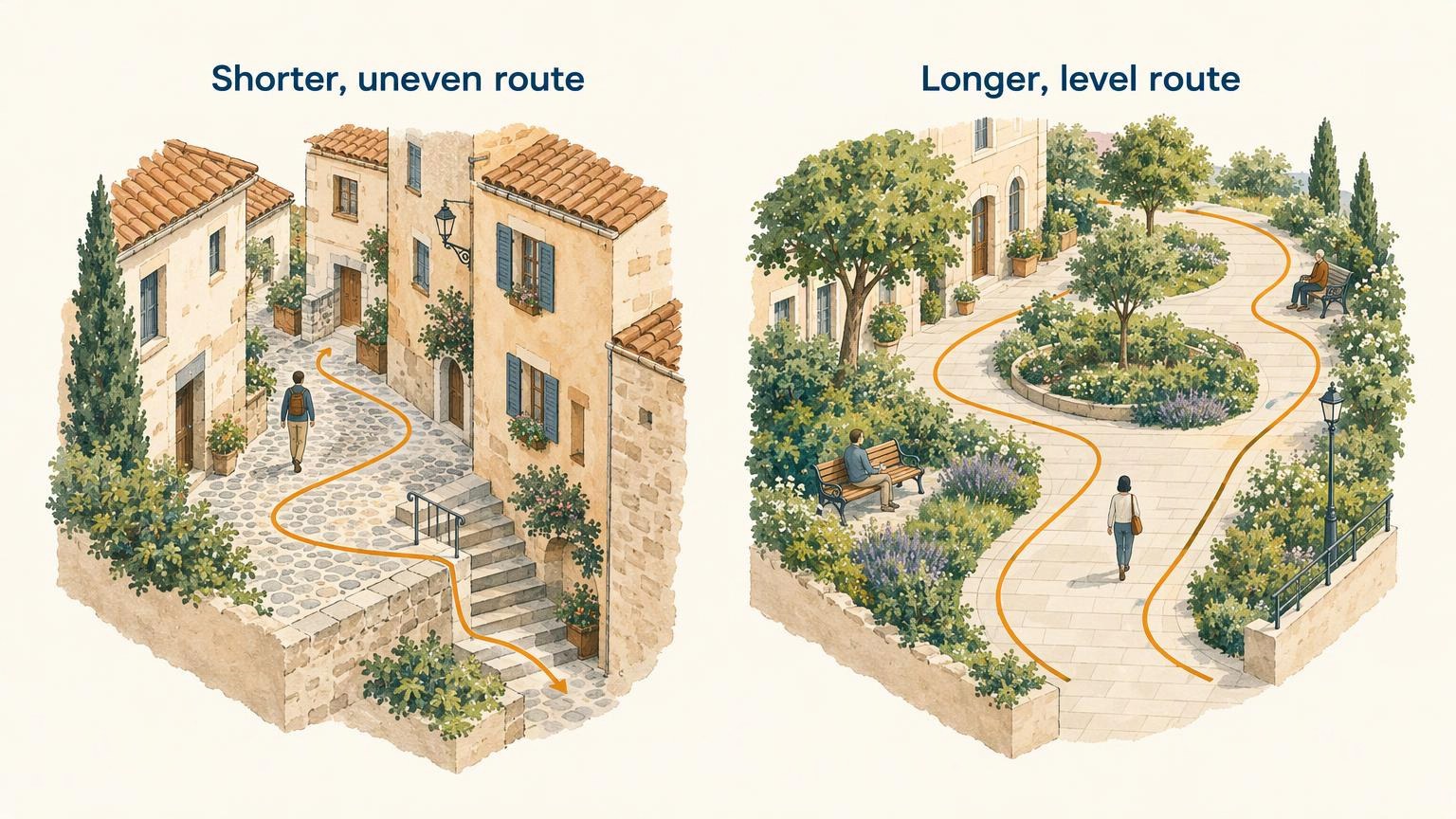
Illustration comparing a shorter cobbled route with stairs and a longer level promenade with two benches; ochre lines trace the routes.
Share the destination, dates and travel style you have in mind. A Superior Travel advisor will help turn the possibilities into one clear, personal plan.