
Keep the budget ceiling visible
I would reserve room for expenses outside the quote before considering a higher-priced route. A comfortable overnight pattern is still the wrong choice if it leaves essential trip costs uncovered.

I would choose the lower-priced tour when its savings remain after matching inclusions and its hotel moves support the experiences you want. I would pay more for fewer moves when the revised route protects meaningful free time or makes the pace manageable, provided the added cost fits your total budget.
I compare cheapest tour packages by reading the overnight pattern alongside the price. For Long Island travelers, cheapest tour packages merit scrutiny when savings require repeated packing and departures.
I would not assume cheapest tour packages are poor value or that staying put is better. My specialties include custom vacations, cruise planning and group travel; meet me through my Heather Hamann advisor profile. I weigh what each route delivers within your budget.
I would reserve room for expenses outside the quote before considering a higher-priced route. A comfortable overnight pattern is still the wrong choice if it leaves essential trip costs uncovered.
I would find the departure that combines packing with the most demanding transfer or activity. That day can reveal more about the trip's suitability than the average pace.
I would name what the extra time is for, such as an unhurried visit or independent exploring. Paying more for free time has little value if the revised route removes your main reason for traveling.
I would discuss luggage handling, rest needs and departure routines before choosing an overnight pattern. Different travelers can agree on destinations while needing very different daily schedules.
I would check whether the higher quote already includes the transfer or activity you are adding separately. The comparison should reflect what you will buy, not duplicate allowances.
I would compare quotes for the same dates, travelers and room arrangement. A lower total matters only after I account for included services and purchases you still need to make.
I would distinguish an escorted itinerary from a flight-and-hotel bundle. Neither the label nor the price establishes whether transportation, guiding or admissions are included.
My comparison would cover accommodation nights, room category, meals, airport transfers, transport between overnight stops and desired activities. I would also read baggage provisions and charges in the written terms, rather than assume every necessary expense appears in the headline quote.
For lodging, I would consider location and amenities. As MyBankTracker explains, hotel location and included breakfast can affect overall costs. A lower room rate may leave more transportation or meal expenses.
I would add required exclusions, then separate optional spending. An unwanted excursion adds little value; an essential excluded visit belongs in the comparison. I would keep any unpriced essential separate rather than treat an unknown cost as zero.
For European vacation planning, I would establish this cash difference before reviewing the route. Equivalent inclusions reveal the savings, not whether the overnight pattern suits you.
I would measure each move from the start of your departure routine until you can use the next destination. Packing, checkout, reaching transport and arrival arrangements matter alongside travel time.
I would distinguish transit from sightseeing along the route. A transfer incorporating a priority visit may justify the move; a journey without a useful stop needs another benefit.
On each move day, I would mark:
I would use the actual schedule, not a universal allowance. I would never assume luggage storage or early room access. A nominally free afternoon has limited value if arrival arrangements prevent you from using it.
For family and group travel, I would weigh everyone's departure routine, rest needs and luggage responsibilities. An independent traveler's comfortable pace may not suit the whole party.
I would identify difficult days, not reject every move. A well-placed overnight change can reduce backtracking and preserve an evening somewhere important to you.

Illustration linking packing, luggage handling, train transit and a waiting area with a suitcase, with a pedestrian street beyond.
I would choose an overnight pattern by geography and priorities, not hotel count alone. Successive stops can reduce backtracking when your desired sights lie along a forward-moving route, although packing and scheduled departures limit morning flexibility.
I would favor a longer stay when sights cluster around a convenient base. Unpacking once simplifies routines, but I would count every excursion's outward and return journey before calling it a time saving.
A mixed route can protect longer stays where exploration matters most, with shorter stops that advance the journey. I would pay a premium only for valued time or manageable routines, not simply fewer check-ins. If the cheaper route preserves your priorities efficiently, frequent moves alone need not disqualify it.
I would also distinguish a restful evening from a flexible morning. A longer stay may let you leave belongings unpacked while still requiring an early excursion departure. If sleeping later or choosing your own breakfast time matters most, I would favor a route with genuinely unscheduled mornings, not just consecutive nights in the same room.
| Pattern | When I would favor it | What I would examine |
|---|---|---|
| Moving touring route | Your priority experiences lie along a route, and you accept regular departures. | Packing frequency, luggage arrangements and whether transfers include worthwhile stops. |
| Fewer overnight bases | You want longer stays while retaining selected touring stops. | Return journeys from each base and any experiences removed to simplify the route. |
| Single-base vacation | Rest and local exploring matter more than covering a broad route. | Whether desired outings remain practical without repeated long return journeys. |
| Pattern | Best fit | Check first |
|---|---|---|
| Moving touring route | Priority sights along a forward route | Packing, luggage and useful transfer stops |
| Fewer overnight bases | Longer stays with selected touring stops | Return journeys and removed experiences |
| Single-base vacation | Rest and local exploring | Practicality of outings and return travel |
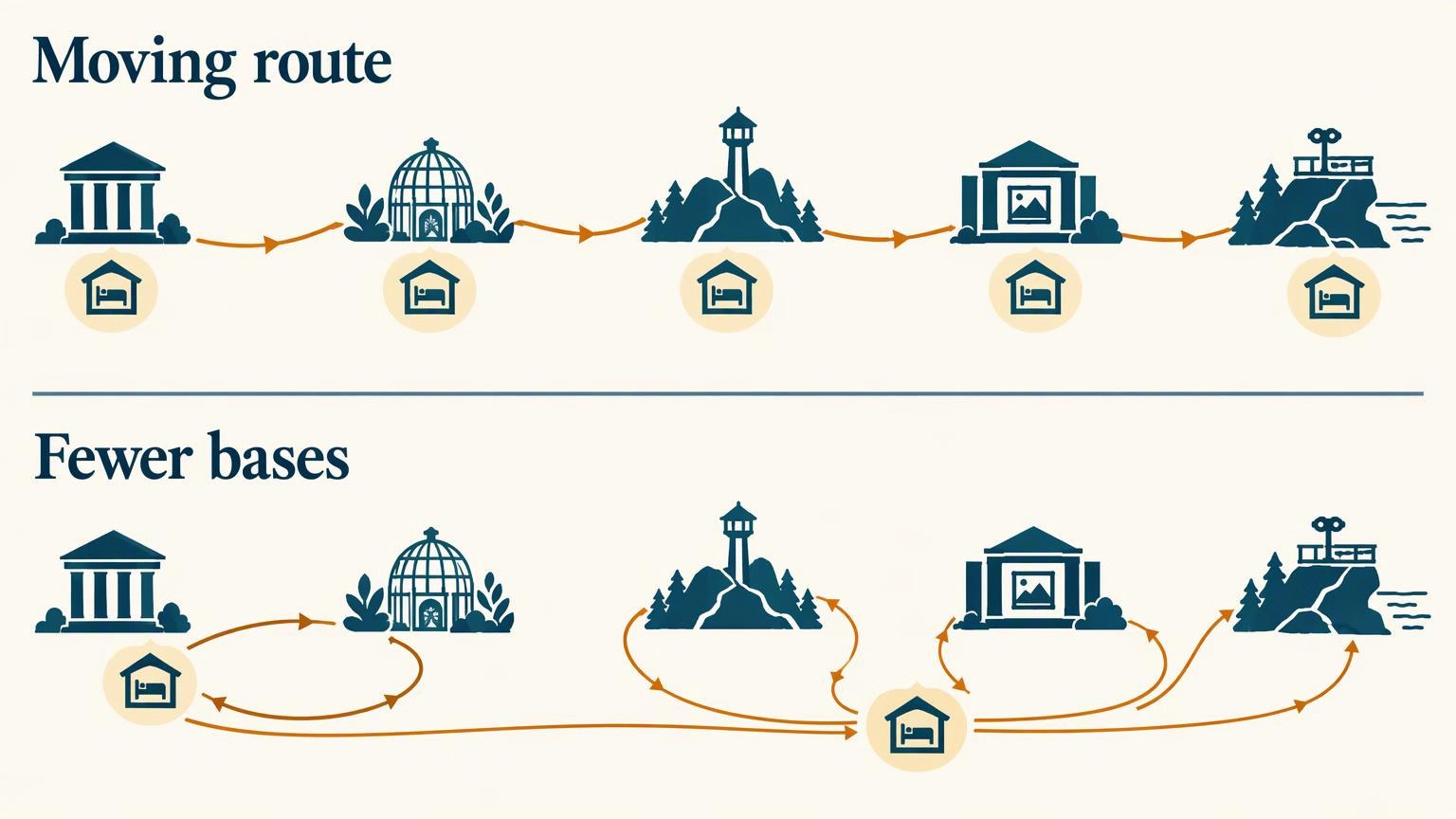
Illustration comparing a moving route with fewer bases, using matching sightseeing landmarks, lodging pictograms and directional route arrows.
Suppose your lower-priced touring itinerary changes hotels frequently, while a higher-priced version offers longer stays. You want independent exploring and dislike repeated packing. I would compare both savings and usable time.
First, I would match meals, transfers and desired visits. Essential transport excluded from the cheaper quote belongs in its total before I judge the price difference.
Next, I would examine move days. If the touring route includes a highlight, eliminating that move might also eliminate a reason for traveling. I would weigh the lost experience rather than label every removed departure an improvement.
I would favor the slower version if it preserves priority visits, creates usable afternoons and fits your budget without substantial return travel. Its premium then addresses your packing preference while protecting the experiences you want.
If longer stays require repeated journeys to the same touring areas, I would favor the moving route or reconsider the route itself. Fewer room changes have not reduced the travel burden.
If neither option fits, I would remove a lower-priority stop rather than pay more to rearrange an equally demanding trip with every destination retained.
I would choose a clear, acceptable trade-off: savings worth the extra movement, or an affordable premium protecting something specific. A slower-sounding itinerary alone does not justify paying more.
Before payment, I would review the final written route. Changes to hotels, transfers or overnight order can alter the value of your choice. I would also consider cancellation and change terms: a route that depends on later adjustments is not equivalent to one that already fits. I would make the booking decision on the itinerary offered, not an assumed future revision.
My custom vacation specialty at Superior Travel Consultants fits this route-and-budget decision. My cruise planning and group travel specialties also matter when alternatives involve a ship or travelers with different pacing needs.
I would focus advisor input on connected choices, such as whether keeping a visit requires moving hotels. A straightforward itinerary may be reasonable to book independently; complexity concerns dependencies, not reservation counts.
My agency's explanation of why use a travel agent adds context. Here, the value is assessing logistics against your priorities and budget, not promising the lowest price.
Share the destination, dates and travel style you have in mind. A Superior Travel advisor will help turn the possibilities into one clear, personal plan.