
Protect the boarding connection
I would work backward from the required boarding time, not the advertised sailing time. If the arrival plan leaves little room for disruption, I would change that connection before adding sightseeing.

I would build the trip around the ship's boarding requirements, then connect flights, hotel nights and transfers. Before payment, I would identify each provider and compare change and cancellation terms. Coordinating separate reservations does not automatically create one protected package.
I approach cruise vacations with a land stay as a connected journey. For Long Island travelers, cruise vacations begin with transportation to the departure airport or port and end with the journey home. Those connections deserve attention alongside the ship.
When planning cruise vacations, I separate your preferred experience from the arrangements supporting it. A city stay before sailing and relaxation afterward serve different purposes.
I would work backward from the required boarding time, not the advertised sailing time. If the arrival plan leaves little room for disruption, I would change that connection before adding sightseeing.
I would compare your expected hotel arrival with its confirmed check-in arrangements. An early arrival needs a luggage and waiting plan unless earlier room access is explicitly arranged.
I would record the company responsible for each ride and its meeting instructions. A hotel reservation alone would not establish an airport pickup or a ride to the ship.
I would identify whether the land portion is essential or optional. That distinction helps me choose which dates to preserve if the combined journey needs shortening.
I would revisit dependent reservations whenever a flight, hotel or sailing changes. Updating one booking does not establish that the other arrangements still fit.
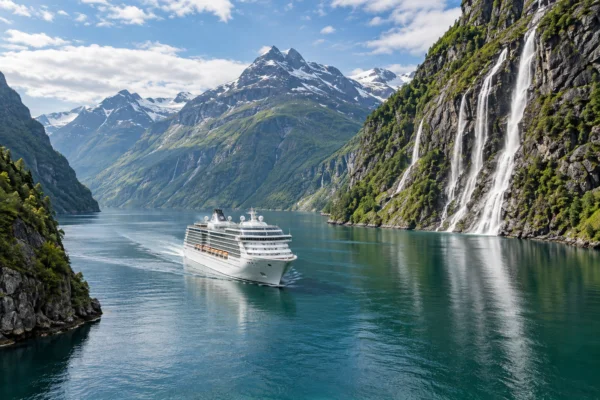
Cruise ship sailing through a mountain fjord beside waterfalls Client photo (media library)
I would place the land stay before sailing for a less compressed arrival journey, or afterward for unhurried time ashore. Stays on both sides serve both purposes but add lodging and transportation costs. Earlier arrival creates a buffer, not a guarantee against missing the ship after a disruption.
I would compare embarkation and disembarkation locations alongside the ship and itinerary. If the sailing ends elsewhere, flights and land arrangements must fit both endpoints. I would map the airport, hotel and terminal in sequence rather than assume a shared destination name means short journeys.
I would distinguish an arrival hotel from a destination stay. For an arrival hotel, rest and access to the terminal take priority over sightseeing. A destination stay needs usable time for your chosen experiences. Late arrival followed by early departure may provide rest but little exploration.
Before committing, I would align hotel terms with sailing dates and identify each ride. Airport pickup does not establish hotel-to-terminal transportation. After sailing, I would allow time for disembarkation and the hotel journey before a timed activity.
For a longer land portion, I would explore European vacation planning alongside the sailing. For a river itinerary, I would consider river cruise and escorted tour options, treating extensions and transfers separately unless explicitly included. The placement should support your priorities without compromising boarding.
| Placement | Purpose | Trade-off |
|---|---|---|
| Before | Arrival buffer and sightseeing | Uses pre-cruise vacation days |
| After | More time ashore | No outward arrival buffer |
| Both | Arrival buffer plus relaxation | More lodging and transfers |
| Placement | Purpose | Trade-off |
|---|---|---|
| Before sailing | Arrival buffer and sightseeing | Uses pre-cruise vacation days |
| After sailing | More time ashore | No outward arrival buffer |
| Both sides | Arrival buffer plus relaxation | More lodging and transfers |
I would map each handoff: home to departure point, airport to hotel, hotel to ship, ship to the next stay, and travel home. Each needs a time and responsible provider, even when reservations share an itinerary. This separates confirmed transportation from a journey segment still needing an arrangement.
For airport pickup, I would establish the airport, meeting point, luggage arrangements and delayed-flight procedure. For the hotel-to-port ride, I would use the confirmed terminal and boarding instructions, not just the destination name.
I would keep flight arrival, hotel check-in and boarding separate on the timeline. After sailing, I would account for disembarkation, transportation and airport procedures before choosing onward travel. No universal connection interval replaces the actual route and current instructions.
My transportation record would include:
For family and group cruise travel, I would match each ride to its passengers. Different arrival flights need separate coordination, not an assumed shared pickup. A changed flight also means revisiting the ride, even when the hotel dates remain unchanged.

Poolside daybed overlooking a tropical bay framed by palm trees Client photo (media library)
I would compare the complete journey, not just the cruise fare. My cost breakdown would separate sailing, airfare, hotel nights and transportation, identifying meals, activities and other expenses included in each quote.
Land-stay length, room choice, flight routing and transfers shape the budget. I would compare equivalent inclusions: a lower sailing fare may lose its advantage when surrounding costs rise or an essential ride remains unarranged. I would also distinguish optional experiences from expenses needed to complete the journey.
For a resort extension, I would use Caribbean and all-inclusive vacation planning to define the experience, then examine the property's actual inclusions. Its meal or transportation arrangements do not establish what the cruise includes.
I would compare payment dates, cancellation conditions and change provisions for each booking. If one component changes, the key question is what happens to dependent reservations and whether any remedy extends beyond the affected booking.
I would review insurance across the journey, starting with cruise travel insurance considerations. Coverage depends on the policy, not merely a coordinated itinerary. For a current quote, ask me to distinguish inclusions, exclusions and applicable charges before payment.
Suppose you want a cruise and city stay, but have limited vacation time. Your preferred flight arrives on boarding day, while sightseeing is your main reason for adding hotel nights.
I would compare moving the city stay before sailing with keeping it afterward. A pre-cruise stay separates arrival from boarding and may provide sightseeing time. A post-cruise stay preserves your preferred finish, but I would still need to determine whether the outward flight allows enough time to reach the ship.
If earlier travel fits your dates, I would favor the pre-cruise stay because it addresses both needs. Otherwise, I would compare another outward flight or shorten sightseeing rather than assume boarding-day arrival works. The selected route and boarding instructions would determine whether that alternative is workable.
I would not automatically add hotels on both sides. Each stay needs a purpose worth its cost and vacation time. For an anniversary, I would distinguish a practical arrival night from the experience considered through romantic getaway planning.
My priority follows the dependency: the flight must support boarding, while sightseeing can move. I would preserve that connection, then place optional experiences where they offer usable time rather than simply adding nights.
My specialties are cruises, all-inclusive vacations, family travel and solo travelers. They fit combined trips because the sailing and surrounding stay should suit the same traveler, not simply occupy adjacent dates.
Superior Travel Consultants offers cruise planning and customized vacations. Within our Long Island travel planning services, I would consider sailing and land dates together while keeping supplier responsibilities and terms distinct. That connects the cruise choice with the experience you want ashore, rather than leaving the land portion as an unrelated booking.
I would begin with your proposed sailing, available travel window and land-stay priorities. I would distinguish existing reservations from preferences so a new hotel or flight does not conflict with a confirmed commitment. An essential stay deserves different treatment from optional sightseeing.
My role is to connect those decisions, not guarantee a connection or imply separate suppliers share a contract. Straightforward arrangements may be manageable independently; uncertain transfers or inflexible bookings make planning help more valuable.
The goal is compatible dates, clear handoffs and understood inclusions. I would preserve transportation essentials before fitting optional experiences around them, with each reservation's limits visible before payment.
Share the destination, dates and travel style you have in mind. A Superior Travel advisor will help turn the possibilities into one clear, personal plan.