
Name the recipient
I would identify the business receiving your inquiry before sending passenger details. An individual advisor's name helps you know whom to speak with, but I would also establish the business responsible for the sale.

I would choose among cruise booking agencies after identifying who sells the reservation, receives payment and provides operator-backed confirmation. I would also establish who handles changes and supplier messages. A lower quote matters only when comparable fare terms and those responsibilities are clear.
I compare cruise booking agencies by the responsibilities behind an offer. For Long Island travelers, cruise booking agencies merit more than a fare comparison: I would identify who accepts payment, provides reservation evidence and answers questions after booking.
My approach to cruise booking agencies separates the seller, operator and planning contact. I am Fran Lozano, and cruises are one of my specialties. I would resolve these distinctions before you send passenger documents or authorize a deposit.
I would identify the business receiving your inquiry before sending passenger details. An individual advisor's name helps you know whom to speak with, but I would also establish the business responsible for the sale.
I would keep payment evidence and reservation evidence as separate records. A receipt answers what was paid; I would use the operator reservation details to establish what was booked.
I would align the sailing, passenger party, cabin category and fare terms before comparing totals. Otherwise, an apparent saving may reflect a different purchase rather than a better seller.
I would use a question that affects your trip, such as whether a necessary cabin arrangement can be confirmed. The answer should explain its status and the next action, not simply repeat the offer.
I would save the accepted quote, payment record, reservation details and contact instructions together. If something changes, that record helps you describe the issue without reconstructing the original conversation.
I would identify the business selling the reservation, the operator providing the voyage and the person answering your questions. Those roles need not belong to the same organization, even when they appear together on an offer.
Before sharing passenger details, I would establish the seller's business name, contact route and transaction role. If an inquiry moves to another business or unfamiliar payment page, I would pause until the connection is explained through a known contact.
I would choose a booking route according to the decision support you need. Online agencies may offer human assistance, and operators can answer questions. The useful comparison is the actual service, not assumptions about its label.
A travel agency on Long Island offers local relevance, but I would still identify your advisor and reservation responsibilities. Location alone establishes neither payment handling nor the scope of assistance.
When considering why to use a travel agent, I would separate planning fit from transaction verification. Advice can help you evaluate an unfamiliar itinerary or cabin choice; clear seller identification and written records remain necessary regardless of how you book.
| Route | Useful for | Evaluate |
|---|---|---|
| Direct operator | Known sailing and terms | Support for separate bookings |
| Online agency | Digital comparisons | Human help and changes |
| Named advisor | Trip decisions needing advice | Scope, fees and consultation steps |
| Route | Useful for | Evaluate |
|---|---|---|
| Direct operator | Known sailing and terms | Support for separate bookings |
| Online agency | Digital comparisons | Human help and changes |
| Named advisor | Trip decisions needing advice | Scope, fees and consultation steps |
I would identify the payment processor and the business name expected on your receipt. I would verify changed payment instructions through a contact route you already know, rather than rely solely on the message announcing them.
I would read the payment request alongside the written offer: amount authorized, reservation covered, deposit conditions, final-payment deadline and cancellation terms. I would distinguish operator terms from separate agency charges or conditions.
For a meaningful cost comparison, I would match the sailing, travelers, cabin category and fare type. Dates and accommodation choices can change the purchase substantially. I would separate fare, taxes, mandatory charges and optional purchases, including gratuities, drinks, excursions, insurance and transfers.
I would evaluate a credit or inclusion by its written conditions and usefulness to you. A perk does not compensate for cancellation terms you cannot accept. I would also establish whether a proposed change triggers a charge or requires repricing before treating two offers as equivalent.
I treat cruise travel insurance as a separate coverage decision, not an assurance that every cancellation loss is recoverable. I would read the coverage alongside the fare restrictions.
I distinguish a quote, payment receipt and reservation confirmation. An itinerary describes a proposed trip; an inquiry acknowledgment shows contact, not operator acceptance. I would establish what confirmation you will receive and when before authorizing payment.
After booking, I would look for the operator's reservation reference and the sailing, traveler, accommodation and fare details. I would compare those details with the accepted quote, keeping both records so any difference is easy to explain.
If passenger spelling, dates or cabin descriptions differ, I would raise the discrepancy promptly through the agreed reservation contact. I would not assume a payment receipt resolves it or that the records will correct themselves.
Where the operator offers reservation access, I would establish how to use its own contact route. Without access, I would seek operator-backed confirmation from the seller; unavailable access alone does not establish a problem.
I would separate confirmed arrangements from requests, including dining preferences, cabin position and accommodation needs. If your trip depends on a detail, its written status matters more than a reassuring description. I would decide whether you can accept that uncertainty before committing.
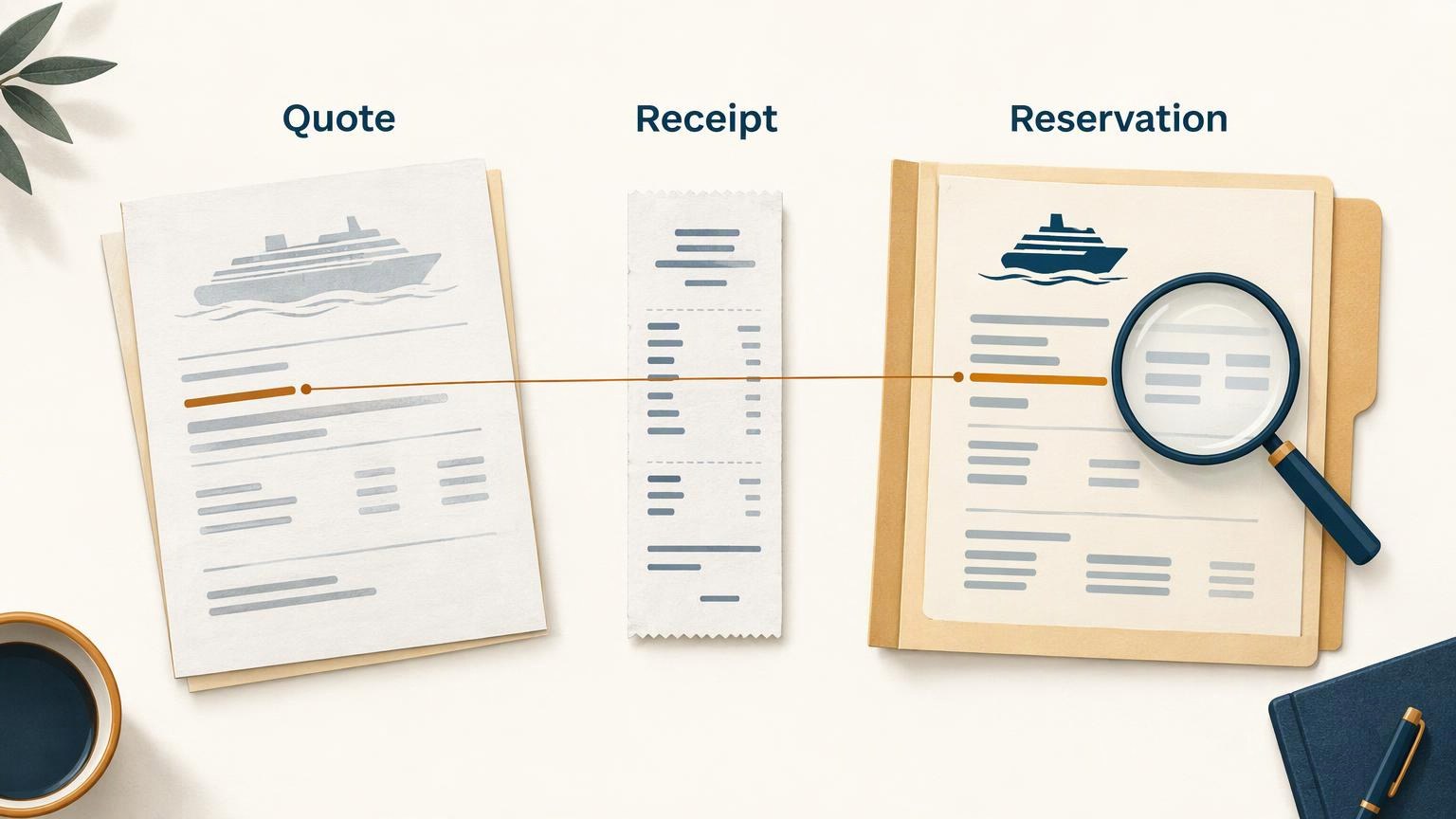
An illustration separates quote, receipt, and reservation papers; a thin line compares quote and reservation marks while a magnifying glass highlights reservation fields.
I would establish whom you contact about changes, who submits requests to the operator and how responses reach you. I would not assume every action can be completed directly or must pass through the seller.
I distinguish a submitted request from an accepted change. For passenger details or accommodation changes, I would want a clear status and written evidence of the result. Until acceptance is established, I would keep the original confirmation rather than treat the request as a replacement.
I would establish the urgent-issue contact route, including what to do when your named advisor is unavailable. Actual instructions are more useful than an assumed response time or around-the-clock promise.
For family and group cruise planning, I would separate shared questions from household-specific payments and changes. That division helps an organizer coordinate without guessing whether another household's transaction was accepted.
For river cruises and escorted tours, or cruises combined with European vacation arrangements, I would map each component's contact and responsibilities. The deciding factor is whether a change affects another booking. I would favor support that addresses those connections over simply counting how many reservations you have.
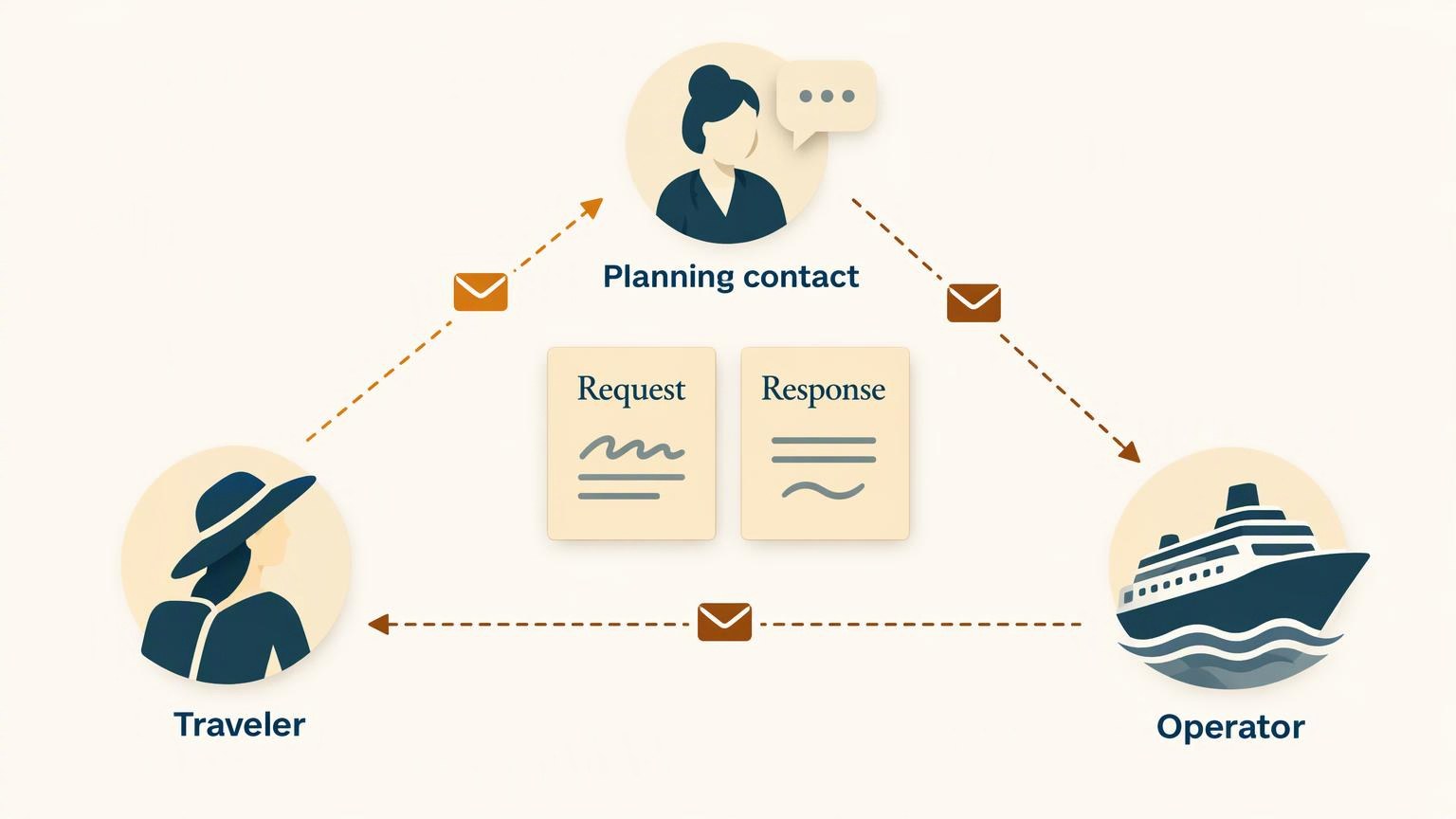
Illustration showing Traveler, Planning contact, and Operator linked by a cycle of directional message paths around separate Request and Response cards.
If you know your sailing and can accept the quoted cabin and fare terms, I would consider direct booking or an online agency reasonable choices when payment, confirmation and change responsibilities are clear. Extra consultation may add little if your essential decisions are already settled.
If an accommodation question determines whether you can travel, I would give more weight to a seller who can explain it, obtain an operator response and distinguish acceptance from a request. Even one reservation can justify advice when uncertainty affects the entire trip.
I would not choose an advisor automatically. Another seller may provide the evidence and support you need on preferable terms. But I would not let a lower headline fare outweigh an unanswered essential question.
My specialties at Superior Travel Consultants include cruises, catamaran charters, the Caribbean and Hawaii. You can review an identifiable consultant whose documented focus includes cruise planning before deciding whether to proceed.
For a discussion with me, I would start with your preferred sailing or priorities and the decision you still need help making. I would then establish who would handle your reservation, payment questions and supplier communications before any commitment.
Share the destination, dates and travel style you have in mind. A Superior Travel advisor will help turn the possibilities into one clear, personal plan.