
Match flexibility to your actual concern
I would identify the change you are most likely to need before comparing offers. Permission to move a sailing does not answer whether you can replace a companion.

I would compare cruise line vacations by each proposal's cancellation terms, passenger-name amendments, cabin assignment, special-request confirmation and servicing arrangements. When flexibility matters most, I would favor terms addressing your likely change over ship amenities that cannot resolve that uncertainty.
I compare cruise line vacations differently when your dates, companion or accommodation needs remain uncertain. For Long Island travelers comparing cruise line vacations, booking terms can determine whether a sailing remains suitable if plans change.
My approach to cruise line vacations starts with the proposed fare and your most important uncertainty. I am James McParland, owner of Superior Travel Consultants, with cruise and group specialties. These five comparisons help me distinguish manageable restrictions from terms that could make an otherwise appealing sailing unsuitable.
I would identify the change you are most likely to need before comparing offers. Permission to move a sailing does not answer whether you can replace a companion.
I would weigh a proposed credit against its eligibility and expiration conditions. If another trip is unlikely, I would not treat that credit as equivalent to money returned.
I would distinguish a preferred deck from a cabin arrangement necessary for travel. That distinction determines how much assignment uncertainty I would accept.
I would compare the original total with the consequences of your likely amendment. A lower initial fare may be less useful if the needed change requires an unacceptable new purchase.
I would settle a travel-critical question before treating an offer as suitable. A request awaiting acceptance is a different choice from an arrangement confirmed for your reservation.
Cruise ship sailing through a mountainous fjord beside waterfalls Client photo (media library)
I would compare each fare's cancellation schedule, deposit conditions and final-payment deadline. General descriptions of flexibility cannot replace the terms attached to your proposed reservation.
I would distinguish refunds, retained payments and credits. Before valuing a credit, I would examine eligible travelers, qualifying bookings and expiration. If another trip is unlikely, I would not count it as equivalent to money returned.
I would also separate your cancellation from an operator's cancellation of the voyage. Different provisions may govern those events; I would not transfer an answer from one to the other.
For packages, I would examine separate flight, hotel and transfer conditions. Favorable cruise terms do not settle another component's cancellation exposure, particularly when adding European vacation arrangements.
My cost comparison would include the fare, taxes, mandatory charges and stated inclusions, separating optional purchases. I would accept stricter terms only when the saving and confidence in traveling justify the possible loss. I would evaluate cruise travel insurance separately, not as a substitute for acceptable booking terms. The deciding question is whether the proposed financial exposure fits the uncertainty you actually face.
I would distinguish a spelling correction, legal-name update and passenger replacement. Permission for one does not establish permission for another, so I would compare the amendment you might actually need.
For each proposal, I would examine eligibility, deadlines, charges and whether the change requires cancellation or repricing. I would also establish whether permission covers only the cruise or every component carrying that passenger's name.
Suppose your relative's ability to travel is uncertain. If one proposal expressly allows a suitable replacement and another requires an unacceptable cancellation and new booking, I would favor the first when its remaining terms also fit.
If both travelers are certain to go, I would give replacement rights less weight. A broader amendment policy is valuable only when it addresses a meaningful concern, not simply because it lists more possibilities.
For family and group cruise planning, I would assess each household separately. I would examine how removing a passenger affects the remaining traveler's fare and cabin arrangement rather than assume the original total divides differently. That consequence can matter even when the departing passenger's own cancellation terms seem acceptable.
I would distinguish an identified cabin from an offer leaving assignment to the operator. My comparison would cover the promised accommodation, assignment timing and choices available afterward.
If a proposal says guarantee, I would establish precisely what is guaranteed. A category commitment does not confirm location, view or proximity to another cabin unless the reservation terms expressly include those details.
Suppose you are comparing an identified cabin with an operator-assigned option. If any location permitted by the latter's terms suits you, I would weigh its cost and other conditions normally. If a particular arrangement is essential, I would favor written certainty over a saving that leaves it open.
I would assess upgrade permission too. An upgrade is not necessarily preferable when location or proximity to another traveler matters more than the category label.
For an anniversary trip, I would separate atmosphere from essential accommodation, as when discussing romantic getaways. After assignment, I would compare the cabin details with the accepted proposal and address differences through the agreed servicing route. This keeps a preference for something nicer distinct from a requirement necessary for comfortable travel.
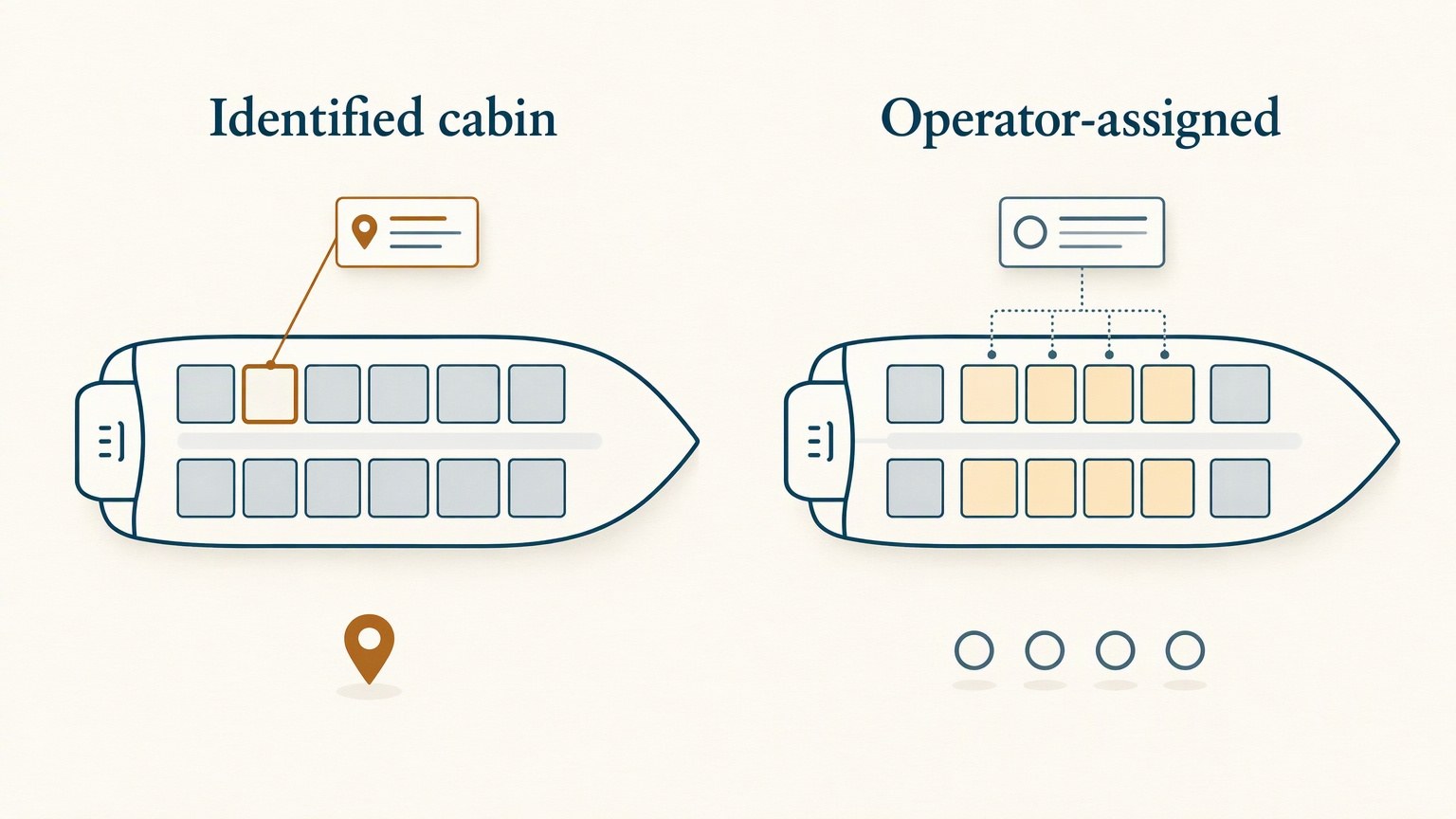
Illustration comparing identified and operator-assigned cabins using ship outlines, card connectors, a location pin and open circles.
I would classify special arrangements by the consequence of their absence. An adjustable dining preference is different from an accommodation requirement that determines whether you can travel.
For an essential need, I would seek an operator response tied to the sailing and reservation, identifying what is accepted, any conditions and what remains undecided. That status belongs in the comparison before you commit.
I would not equate a recorded request with acceptance. A broad description of ship facilities also cannot answer whether your particular arrangement has been accepted for the proposed reservation.
If the trip cannot work without it, I would not consider the offer suitable until confirmation supports that need. For an optional preference, I would instead weigh the possible inconvenience against the proposal's other advantages.
When comparing river cruises and escorted tours, I would apply this distinction across the itinerary, not just accommodation. Acceptance for one component does not establish acceptance elsewhere. I would describe the practical requirement clearly so the comparison addresses what makes travel possible, rather than treating every preference as equally important or rejecting a suitable sailing over an optional detail.
I would compare who submits amendments, how operator decisions reach you and the urgent contact route. An allowed change is useful only if its servicing process works for your situation.
I would separate operator policy from seller conditions, including any seller charges and responsibilities. Amendment permission alone does not explain how a request must be submitted or handled.
I would verify unexpected payment instructions through an established contact route. Marc Shoffman's reporting describes fraudulent emails seeking cruise booking payments; I would not verify a suspicious message using its own contact details.
If your companion may change but either cabin suits you, I would prioritize passenger replacement, then cancellation exposure and servicing. If your companion is certain but essential accommodation remains pending, I would reverse those priorities. The table summarizes which uncertainty makes each policy decisive.
My cruise and group specialties and Virgin Voyages Seacademy Graduate credential give you a named advisor for discussing these choices. I would not present that credential as evidence of current supplier terms or promise an exception. I would base the choice on the conditions attached to each actual proposal.
| Policy | Compare | Priority |
|---|---|---|
| Cancellation | Deposit, deadlines, refunds, credits | Uncertain dates |
| Name amendments | Corrections, replacements, deadlines, repricing | Uncertain companion |
| Cabin assignment | Identified versus operator-assigned | Essential location or layout |
| Special requests | Accepted versus pending | Travel-critical need |
| Servicing | Change authority, seller terms, urgent contact | Acting on changes |
| Policy | Compare | Priority when |
|---|---|---|
| Cancellation | Deposit, deadlines, refunds, credits | Dates are uncertain |
| Name amendments | Corrections, replacements, repricing | Companion is uncertain |
| Cabin assignment | Identified versus operator-assigned | Location or layout is essential |
| Special requests | Accepted versus pending | A need is travel-critical |
| Servicing | Change authority, charges, urgent contact | You need to act on changes |
Share the destination, dates and travel style you have in mind. A Superior Travel advisor will help turn the possibilities into one clear, personal plan.