
Separate the location labels
I would record the marketed city, actual port and terminal separately. An answer in one field should not stand in for an answer in another.

I would verify the embarkation port before buying flights, booking a hotel or arranging transportation. A marketed departure city does not identify the exact boarding location. Match the ship and sailing date to current booking information, then confirm the terminal address, boarding instructions and transfer details before treating your arrival plan as complete.
I approach cruise vacations by separating the itinerary from the arrival plan. For Long Island travelers, cruise vacations need more than a departure-city filter: that label cannot settle your hotel or transportation choice. I would establish where you board before committing.
When comparing cruise vacations, I keep confirmed details separate from pending answers. I am Lois Howes, specializing in ocean cruises, river cruises and group travel at our Long Island travel agency.
I would record the marketed city, actual port and terminal separately. An answer in one field should not stand in for an answer in another.
I would attach every logistics question to the ship and departure date. Information about another sailing is not enough to choose your drop-off point.
I would decide whether your hotel supports sightseeing or simplifies boarding morning. Either choice can work, but each needs a transportation plan to the confirmed terminal.
I would look for the pickup location, destination and included services in writing. A transfer label alone does not explain luggage handling, waiting arrangements or accessibility.
I would save the latest boarding and transfer instructions together. If a detail changes, update the dependent reservation rather than rely on an older screenshot.

Cruise ship sailing through a mountainous fjord beside waterfalls Client photo (media library)
I distinguish three locations: the marketed departure city, the embarkation port and the assigned terminal. The city helps you find sailings; the port establishes where you board; terminal or berth instructions guide your final approach. A driver needs the specific applicable address, not just the city label.
A New York departure illustrates the difference. Manhattan, Brooklyn and Cape Liberty in Bayonne are distinct embarkation choices. I would identify which belongs to your sailing before deciding whether a city hotel fits your plans.
I would not choose a port on convenience alone. Your preferred ship and itinerary may determine the location, so changing ports can mean changing cruises. Compare that trade-off before a hotel reservation makes an option harder to change.
Even a confirmed port is not a complete drop-off instruction when the terminal, entrance or berth remains unspecified. I use the table to separate what is known from what still needs an answer.
| Detail | Useful for | Still needs an answer |
|---|---|---|
| Marketed departure city | Finding and comparing sailings | Actual embarkation port |
| Embarkation port | Building the arrival plan | Terminal, berth or entrance instructions |
| Terminal or berth instructions | Directing your final approach | Boarding time and applicable pickup or drop-off details |
| Location detail | Useful for | Still needed |
|---|---|---|
| Marketed departure city | Finding and comparing sailings | Actual embarkation port |
| Embarkation port | Building the arrival plan | Terminal, berth or entrance instructions |
| Terminal or berth instructions | Directing your final approach | Boarding time and pickup/drop-off details |
I start with the booking confirmation and current cruise-line schedule, matching the ship, departure date and embarkation port. For competing proposals, use those same identifiers. A search-result screenshot records a possibility; it is not enough to direct a transfer.
Next, I read the sailing's current boarding instructions for the terminal address, designated arrival window and boarding deadline. These are separate details. I would not calculate arrival backward from the ship's departure time alone.
If documents disagree, I would resolve the discrepancy with the cruise line before making a dependent purchase. Identify the ship, date and location shown in each document rather than asking where cruises usually depart. A correct port listed for another departure does not settle your sailing's destination.
I keep confirmed and pending information separate. With a port but no terminal instructions, you can compare arrival options without treating the final destination as settled. If you must reserve first, weigh the reservation's change terms against the missing detail.
For example, I would treat a hotel reservation with acceptable change terms differently from a transfer tied to a specific terminal. The hotel may still fit your plans, while the transfer destination needs confirmation before you commit.
I also compare saved instructions with current information. An older document should not silently remain the basis for a hotel or transfer reservation.
I compare the whole path to boarding, not flights, hotels and transfers separately. If you are flying, I generally favor arriving before embarkation day. That adds hotel spending and time away, but separates flight arrival from the immediate need to reach the ship.
For a hotel, I first identify its purpose. A sightseeing stay can center on your activities; a boarding-focused stay should support the confirmed terminal and morning transportation. A departure-city label establishes neither advantage.
I compare package inclusions with separately arranged travel legs. Does the transfer start at your airport or hotel, reach the relevant boarding location and accommodate your party and luggage? I would include any separate transportation costs in the comparison. A lower fare is not automatically a lower total arrival cost.
For family and group cruise planning, I distinguish shared meeting points from individual arrivals: a shared ship reservation does not establish a shared pickup. For a European vacation built around a sailing, I keep the land stay and embarkation address distinct.
I favor the plan that meets your timing and travel needs at an acceptable total cost, not simply the lowest room rate.
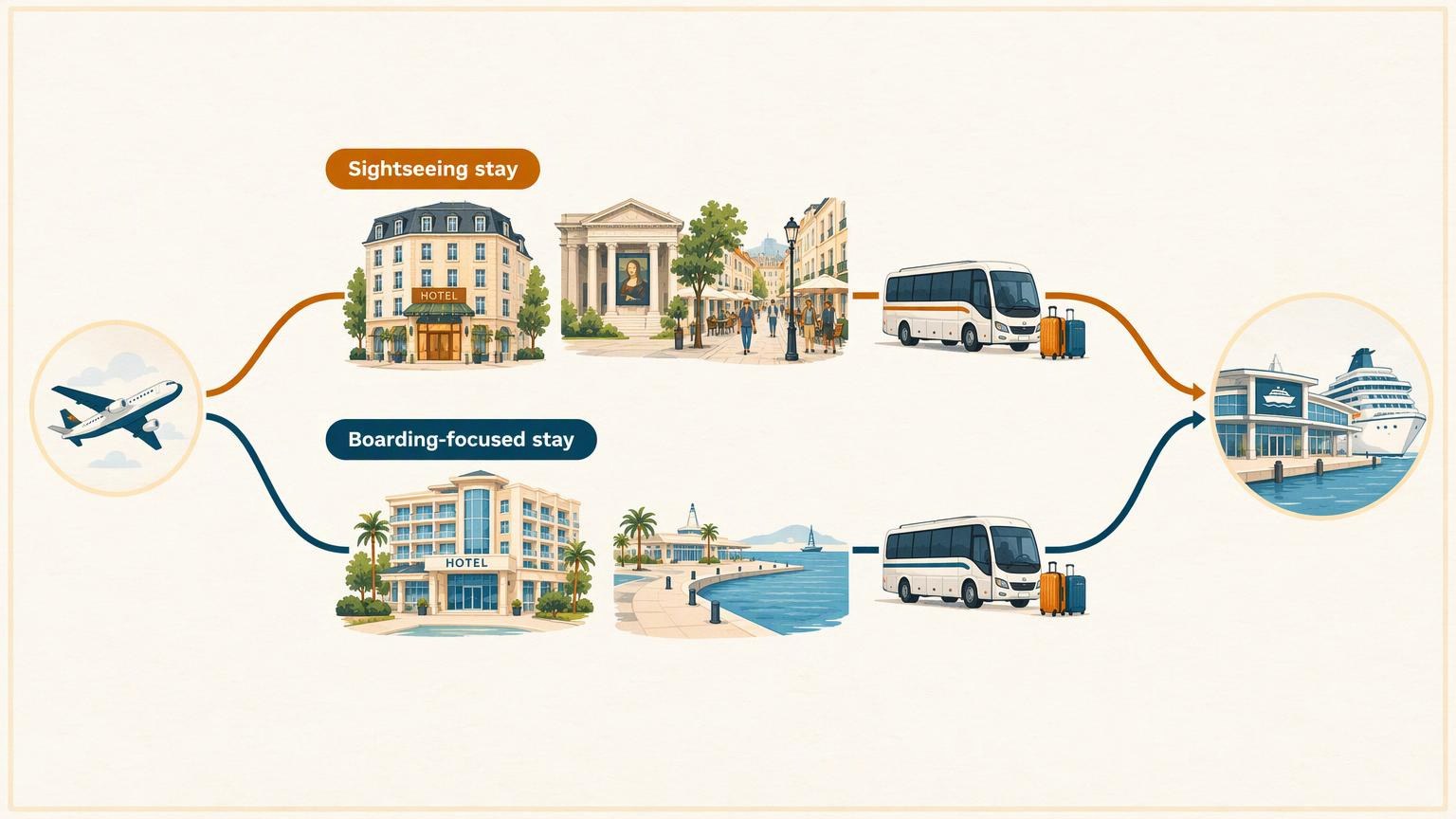
Illustration comparing sightseeing and boarding-focused hotel stays: two routes lead from an airplane past hotels, city or waterfront scenery, buses and luggage to one cruise terminal.
Imagine finding a cruise under a New York departure filter. You want sightseeing before boarding; your companion prefers an uncomplicated boarding morning. A hotel looks promising, but the sailing's actual port remains unidentified.
I would first match the ship and date to the proposal or confirmation, then establish the port and seek terminal instructions. You would compare sightseeing-focused and boarding-focused hotels using that destination, not the search label. The starting mistake is treating the hotel search as evidence of boarding convenience.
I would keep the city stay in contention if sightseeing matters most and transportation fits your needs. If boarding morning takes priority, I would favor the hotel whose transportation plan better supports it. Neither wins just because it appears first in the search.
With terminal information pending, I would compare transfer proposals and change terms without treating a terminal-specific booking as final. Once the destination is established, the provider should document pickup and drop-off instructions.
I apply the same distinction to escorted tours and river cruises. The city describes the trip; boarding instructions determine the final approach. What changes the choice is the connection between your stay and embarkation.
Before travel, I compare the latest boarding instructions with your transportation reservation. Match the sailing date, terminal address and intended arrival time, then review the provider's pickup location and contact instructions. Both ends of the transfer should be clear.
I would not assume a universal terminal-assignment timetable or notification process. For your sailing, establish where current instructions appear and what remains pending. If instructions change, identify the affected hotel or transportation arrangement before altering reservations. A new address matters because it can change the final travel leg.
For a group, I favor one current arrival record over competing maps. Keep the ship and date alongside the address, distinguishing shared arrangements from individual pickups. Each traveler needs the instructions that apply to their journey.
My ocean cruise, river cruise and group travel specialties are relevant to these connections. Our agency can help coordinate a hotel and transfer around confirmed boarding details. For context, I recommend reading about the role of a travel advisor.
I would use that planning conversation to establish the port, available terminal instructions and details still needing confirmation, keeping the proposed sailing and arrival arrangements together.
Share the destination, dates and travel style you have in mind. A Superior Travel advisor will help turn the possibilities into one clear, personal plan.