
Try an unscheduled afternoon
I would imagine an afternoon without a booked activity. If you can describe how you would enjoy it aboard, a sea-heavy itinerary has a stronger case.

I would pair your preferred sea-day pattern with onboard spaces you will use. Consecutive sea days favor uninterrupted routines; separated days offer breaks between outings. I would weigh quiet-space access, activities, cabin comfort and spending rather than rank ships universally.
I compare cruise ship vacations around your ideal day aboard: a slow breakfast, comfortable reading or engaging activities. For Long Island travelers, cruise ship vacations should make onboard time worthwhile, not leave you waiting for the next port.
My approach to cruise ship vacations connects that routine with the sailing schedule. I am James McParland, owner of Superior Travel Consultants, specializing in cruises and groups. I would establish your sea-day priorities before choosing by a ship's headline attraction.
I would imagine an afternoon without a booked activity. If you can describe how you would enjoy it aboard, a sea-heavy itinerary has a stronger case.
I would give daily comfort more weight than an attraction you might try once. A suitable sitting area or dining routine may influence more of your vacation.
I would let traveling companions describe their ideal day separately. Shared meals can anchor the day without requiring everyone to follow the same activity schedule.
I would connect your mobility or sensory needs to the spaces you plan to use. A general ship description does not establish whether that particular route or activity suits you.
I would identify an enjoyable indoor alternative to your preferred outdoor routine. That gives weather less control over whether a day aboard feels well spent.

Large cruise ship sailing near a rugged mountainous coastline Client photo (media library)
I would mark full sea days separately from embarkation, disembarkation and port calls. An evening aboard offers less uninterrupted time. For cruise ship vacations centered on the ship, I would compare both the number and placement of sea days.
I would favor consecutive sea days for repeating a comfortable routine: breakfast, reading, an activity and dinner. The trade-off is less change of scene. That pattern works only if the exact ship's documented spaces and activities support what you enjoy.
I would favor separated sea days for recovery between outings without abandoning destination variety. If exploring tires you, stretches of consecutive port calls deserve particular attention, even when the overall itinerary seems balanced.
I would also weigh timing: early sea days may suit settling in, while later ones offer a quieter finish. My deciding question is whether you prefer sustained downtime or alternating exploration and rest. Staying aboard in port is another choice, but not equivalent to a scheduled sea day.
If destinations matter more, I would broaden the comparison to escorted tours and river cruises rather than force a sea-focused vacation.
| Pattern | Useful fit | Main trade-off |
|---|---|---|
| Consecutive sea days | An uninterrupted onboard routine | Less change of setting |
| Sea days between port calls | Rest between outings | More transitions throughout the trip |
| Port-heavy schedule | Exploration with onboard evenings | Less full-day time to enjoy the ship |
I would translate your free-time preferences into ship requirements. Reading calls for comfortable seating; organized entertainment needs enough appeal to last beyond the first afternoon. I would prioritize daily usefulness over attractions you might try once.
I would assess the exact ship proposed, not assume a cruise line's identity establishes that vessel's facilities or atmosphere. Its documented spaces should support the routine you want.
For quiet time, I would compare indoor seating and outdoor relaxation areas, including cabin-category restrictions or additional charges. For active days, I would consider appealing activities alongside eligibility rules and reservation requirements.
I would distinguish a facility's existence from usable access. Photographs cannot establish opening hours, availability or compatibility with your preferred meals. An indoor alternative also matters if your ideal routine depends on outdoor space.
For family and group cruise planning, I would favor compatible independent routines, with shared meals as anchors. For a romantic getaway, suitable shared spaces may matter more than the longest attraction list.
My test is an ordinary enjoyable day, not the ship's most dramatic photograph or promotional feature.
Suppose you want unhurried mornings and reading, while your partner prefers entertainment and occasional exploring. I would look for options supporting both routines without making every day alike.
I would compare consecutive sea days with sea days between port calls. If both ships have suitable documented relaxation spaces and entertainment, the separated pattern may fit better: slower days alternate with changes of setting.
If your priority becomes avoiding organized outings and repeating a comfortable morning routine, I would instead favor consecutive sea days, provided the exact ship supports both your quiet time and your partner's activities.
I would compare how much of each trip you would actually spend doing what you enjoy. More sea days are valuable only when you want that time; an appealing ship cannot compensate for a pace you dislike.
I would eliminate options failing an essential requirement before weighing optional attractions. That keeps an exciting amenity from masking daily inconvenience.
If you prefer a stable base but feel indifferent to sailing, I would also compare a Caribbean all-inclusive vacation. A cruise should earn its place through the onboard experience you want.
I would treat the cabin as part of your sea-day experience. If private downtime matters, its layout and documented amenities deserve more weight than on a trip spent mostly ashore.
I would locate the quoted cabin on the deck plan and weigh proximity to preferred spaces against your desire for quiet. No location guarantees silence or comfort, but the layout helps reveal practical trade-offs.
I would compare quotes using the same travelers, dates and cabin requirements, separating the fare from spending associated with your preferred routine. Ship, cabin category and package terms can change the comparison.
My budget would distinguish included meals and activities from selected dining, drinks, internet, wellness services or other purchases outside the offer. Promotional photographs do not establish that an activity is free.
I would favor the lower fare if competing extras offer little value to you. Useful access matters more than a generous-sounding inclusion list, especially when you expect to repeat an activity across several sea days.
I would weigh booking terms and cruise travel insurance separately: those decisions concern financial exposure, not onboard enjoyment.
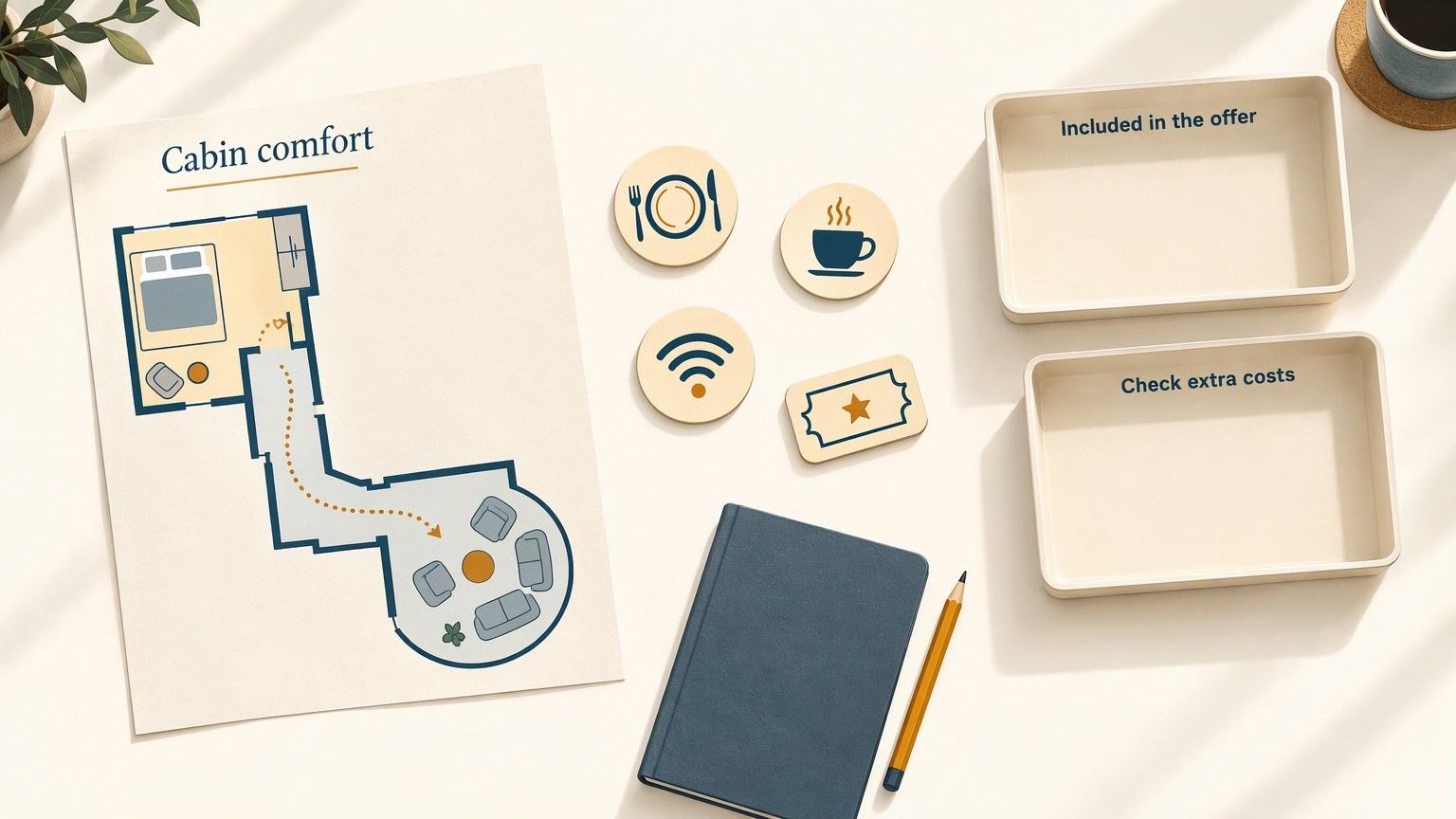
Illustration pairing a “Cabin comfort” sketch with unassigned meal, cup, Wi-Fi and ticket tokens beside empty trays labeled “Included in the offer” and “Check extra costs”.
My cruise specialty fits this decision because itinerary pacing and onboard preferences belong together. I would frame suitable sailing options around your desired balance, then compare the exact ship's documented spaces and quoted terms.
I am a Virgin Voyages Seacademy Graduate. That credential informs my cruise-planning background; it is not a reason to favor one supplier for every traveler.
For travelers choosing a travel agency on Long Island, working with a named advisor makes the specialty match clear. My role is to connect your onboard priorities with a request for suitable options, not declare a universally best ship.
I would find advisor help particularly useful when an appealing activity's access terms are uncertain or different travelers need different routines. Comparing those details with the itinerary can clarify which option meets essential needs and which merely adds attractions.
If you understand the exact sailing and prefer handling the booking independently, that remains reasonable; why use a travel agent explores the broader choice.
My starting point is your preferred sea-day pattern and an enjoyable ordinary day aboard, rather than a ranking.
Share the destination, dates and travel style you have in mind. A Superior Travel advisor will help turn the possibilities into one clear, personal plan.