
Separate access from comfort
I would distinguish whether you can board from whether you will enjoy the ride. A comfortable cabin does not answer either question about the transfer ashore.
I would choose an itinerary with cruise tender ports only when its boat transfers fit your boarding needs and leave enough flexibility for your shore plans. A tender adds a smaller-boat journey between ship and shore. Before booking, separate physical access requirements from questions about queues, return departures and excursion timing.
I approach cruise tender ports as an itinerary-fit question, rather than a reason to reject a sailing automatically. For Long Island travelers choosing a cruise, cruise tender ports deserve attention before a favorite destination or cabin determines the purchase. I would start with what you need to do ashore.
When comparing cruise tender ports, I would distinguish a manageable extra transfer from a transfer that puts an essential outing out of reach. At our Long Island travel agency, customized planning gives those priorities a place in the comparison alongside ship, cabin and pace.
I would distinguish whether you can board from whether you will enjoy the ride. A comfortable cabin does not answer either question about the transfer ashore.
I would identify the outing that makes the sailing worthwhile. If that visit depends on an uncertain transfer, I would give it more weight than optional sightseeing.
I would plan the journey back before filling the day with activities. Returning to the tender landing is part of the outing, not an afterthought.
I would save the sailing details beside any written access guidance. Advice about another ship or departure should not settle your purchase.
I would treat a tender stop as a different route ashore: you board a smaller boat rather than walk directly from the ship to a pier. The distinction matters because the boat transfer adds boarding, waiting and a return journey to the port day.
My first comparison is between the destination you want and the access you need. A tender transfer may be acceptable for an unhurried wander, yet unsuitable for someone whose essential activity depends on a firm early arrival or a boarding arrangement they cannot use.
I would locate the transfer designation in the proposed sailing details and request clarification for any unclear stop. A destination name alone is not enough to establish how your particular ship will get passengers ashore.
I would also rank port visits as essential or optional. The best cruise vacations for your needs are the ones whose important days work for you, not necessarily the ones with the longest destination list.
For a broader comparison of family, group and cruise vacations, I would keep each traveler's access needs visible. A transfer that works for most of the party does not settle whether it works for everyone.
| Choice | Useful when | Trade-off |
|---|---|---|
| Keep the tender itinerary | Boarding needs are addressed and shore plans allow flexibility | The boat transfer remains part of each tender day |
| Favor a docked alternative | Avoiding a boat transfer is an essential requirement | The destination mix or sailing choice may differ |
| Compare a land-based trip | Time at a particular destination matters more than sailing | You give up the cruise's shared onboard base |
| Option | When it fits | Trade-off |
|---|---|---|
| Keep tender sailing | Boarding works; shore plans are flexible | Boat transfer on each tender day |
| Favor docked sailing | Avoiding a boat transfer is essential | Destination mix or sailing may differ |
| Compare land-based trip | Destination time matters more than sailing | Give up the shared onboard base |
I would evaluate the entire transfer, not stop at whether the ship has an accessible cabin. The relevant questions concern getting to the boarding point, entering the boat, sitting during the journey and getting onto the shore landing.
For someone using a wheelchair, scooter or another mobility aid, I would describe the equipment and the traveler's abilities separately. Being able to walk a little does not answer whether someone can manage the actual boarding route, and being able to transfer out of a chair does not establish what happens to the chair.
I would seek written guidance from the cruise operator for the proposed ship and stops. That guidance should address whether you must leave the mobility aid, what boarding movements are required, what assistance is available and what happens if the transfer cannot be completed.
My decision would turn on whether the required movements are acceptable for you. I would not make lifting by a companion, access for a particular device or step-free boarding an assumed part of the plan.
If shore access is essential, I would compare an alternative before committing. For travel centered on land sightseeing, European vacation packages provide another format to consider, with their own transportation and accommodation access questions.

Illustration of a wheelchair user and companion reviewing a boat journey diagram, with a magnifying glass highlighting the dock scene and a cabin drawing on a separate sheet.
I would work backward from the required return arrangements instead of treating the published port window as free time ashore. The useful window begins when you reach the landing and ends early enough to complete the return process.
My planning sequence is to establish the boarding procedure, consider the outbound transfer, place the activity inside the available window and allow for the journey back. If tender tickets or boarding groups apply, I would use the sailing's instructions rather than assume a first-come process.
I would distinguish the last tender departure from the ship's departure. Before leaving the landing, I would record the return instruction and make sure the time reference is clear. A reminder should prompt your return journey, not merely tell you that the final boat is about to leave.
For an excursion, I would compare the meeting point, required arrival time and provider's response to a delayed arrival. I would not assume that a cruise-line excursion guarantees a particular tender boarding time or that an independently booked outing can accommodate a delay.
I would also ask how weather-related changes are handled and what happens to separately booked activities. My test is whether your day still works if shore access starts later than you hoped, without relying on an invented queue estimate.
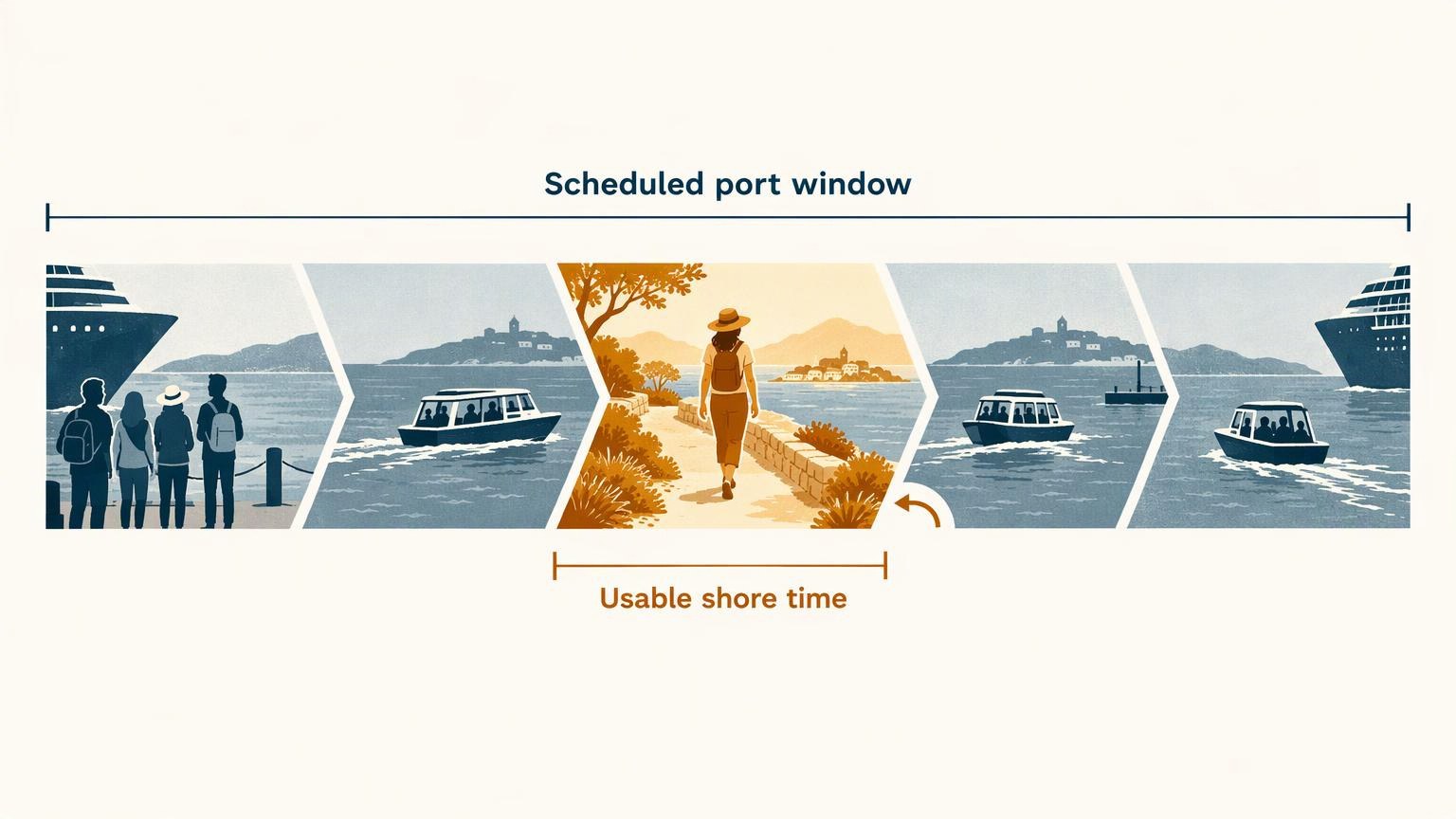
Conceptual illustration contrasts the full scheduled port window with a central coastal outing labeled “Usable shore time,” surrounded by waiting and tender journeys.
Say you are comparing a sailing with a tender visit to your favorite destination and another itinerary with a docked call elsewhere. Someone in your party uses a mobility aid, and the favorite destination is the main reason for traveling.
I would first separate desire from feasibility. You would describe the traveler's boarding needs; I would put those needs beside the proposed itinerary and request the operator's applicable guidance. I would leave the excursion uncommitted while that access question is being answered.
If the required transfer is acceptable and the outing allows a flexible start, I would keep the tender itinerary in consideration. The extra transfer is a genuine inconvenience, but it may be worth accepting for the destination you want.
If the boarding requirement does not work, I would favor another route to that destination rather than buy the cruise on the hope that arrangements will change. If early shore access is the main problem, I would compare a different outing before rejecting the entire sailing.
I would consider escorted tours and river cruises as different trip formats, not automatic accessibility solutions. If a settled vacation base matters more than multiple ports, I would also compare Caribbean and all-inclusive vacations. Each alternative still needs to meet your actual access requirements.
I am Heather Hamann, and my specialties include cruise planning, custom vacations and group travel. My role in this decision is to bring your ship, itinerary and travel priorities into a useful comparison, without treating an access request as a guarantee.
I would start with the proposed sailing and the shore experience you want to protect. Include the ship, departure date, itinerary and any excursion already under consideration. Describe essential boarding needs in practical terms rather than relying only on an accessibility label.
I would separate requirements from preferences. Avoiding a transfer entirely is different from preferring a shorter wait; visiting a particular destination is different from wanting any relaxed day ashore.
When comparing cruise vacation packages, I would place the quoted inclusions beside optional excursions, flights, transfers and pre- or post-cruise stays. Those choices affect the overall proposal, so I would request a current quote rather than assign a general price to tender-port travel.
I would keep operator guidance attached to the itinerary it addresses. Your next decision should be clear: keep the sailing, change the shore plan or compare another itinerary. That is more useful than collecting reassurance that does not answer your boarding or timing question.
Share the destination, dates and travel style you have in mind. A Superior Travel advisor will help turn the possibilities into one clear, personal plan.