
Keep travel days visible
I would put your earliest possible departure from home beside your required return date. That lets you reject a sailing whose surrounding travel does not fit, even if its onboard dates do.

I would shortlist 2027 cruise vacations by your full travel window, acceptable embarkation ports and itinerary priorities. Before treating a sailing as bookable, request current supplier confirmation of departure, cabin availability, total quote and terms. Familiar ships or routes are ideas, not confirmation.
I start comparing cruise vacations with the days you can be away, including travel before and after sailing. For Long Island travelers considering cruise vacations for 2027, that distinction separates an appealing departure from a practical trip.
My approach to cruise vacations separates preferences from booking evidence. Decide your preferred pace and necessary cabin layout first. I would then compare the exact sailing, departure arrangements and current quote, rather than assume an earlier itinerary will repeat or your preferred cabin remains available.
I would put your earliest possible departure from home beside your required return date. That lets you reject a sailing whose surrounding travel does not fit, even if its onboard dates do.
I would distinguish a necessary cabin arrangement from a preferred ship. If the ship changes but the essential arrangement remains possible, the alternative may still deserve consideration.
I would describe what you want to do ashore before counting ports. An overnight visit and a brief daytime call answer different travel goals.
I would mark an option as an idea, a published sailing or a currently quoted choice. Keeping those stages separate prevents an attractive description from acquiring certainty it has not earned.
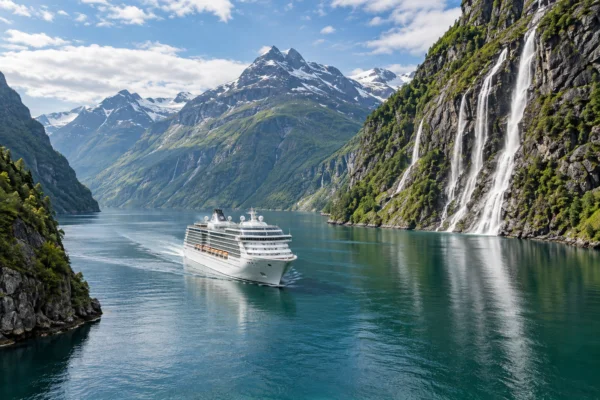
Cruise ship sailing through a mountain fjord beside waterfalls Client photo (media library)
I would begin with your full 2027 travel window: when you can leave home and when you must return. Sailing dates belong inside that window, alongside transportation and any overnight stay. Onboard dates alone can hide a trip that requires too much time away.
Next, I would identify acceptable embarkation ports and whether you will fly. A cruise ending somewhere other than its starting port needs a separate return plan. I would compare both ends before judging convenience or ruling out an otherwise suitable itinerary.
For each candidate, I would record the exact port, confirmed terminal information, embarkation deadline and practical arrival plan. A familiar departure city does not establish that earlier terminal or transportation arrangements still apply.
I would make flexibility specific: can you move the sailing date, change the departure port or adjust trip length? Each opens a different search without requiring you to compromise every preference. I would rank those adjustments before searching. If your return date cannot move, changing the departure port may be more useful than extending the sailing; if avoiding flights is essential, I would keep that boundary intact.
Through advisor-led travel planning on Long Island, I would assess convenience across your complete journey. A nearby port helps only when the sailing and surrounding travel fit.
I read an itinerary as a timetable, not just a destination list. Arrival and departure times show what each visit could support; overnight calls, tender ports and sea-day spacing help establish whether the pace suits you.
For tender calls, I would check transfer arrangements and relevant accessibility requirements. For overnight calls, I would examine actual hours rather than assume two full days ashore. Both details need reconfirmation for the proposed sailing, particularly when a specific shore activity drives your choice.
I would record the supplier, ship, exact departure date, embarkation and return ports, itinerary and cabin requirement. Then I would request current availability confirmation and a dated quote. A published route guides the search but does not establish that your needed cabin is available.
I would also read itinerary-change conditions before committing. The route offered at booking is not a promise that every call will occur unchanged, especially important when one destination motivates your trip.
If your priorities suggest another travel style, I would compare escorted tours and river cruises rather than force those preferences into an ocean sailing.
I compare proposals using matching travelers, dates and cabin requirements. A headline fare cannot establish equivalent value: cabin category, location, occupancy basis and current promotion belong beside the total quote.
I would distinguish a category description from confirmation of a particular cabin. If layout or location matters, establish what the reservation secures. I would judge an upgrade by how you expect to use the room, not assume a higher category is automatically worthwhile.
My budget comparison separates stated inclusions from outside purchases. I would check taxes, fees and gratuities, then budget for transportation, a pre-cruise stay, insurance, drinks, Wi-Fi, specialty dining and excursions unless explicitly included. An extra adds value only if you will use it; a package with more inclusions is not necessarily your better choice.
I would place deposit, final payment deadline and cancellation terms beside the price. A smaller initial payment does not establish a smaller later loss, and date changes may carry costs.
For protection, I would use travel insurance for a cruise to compare actual policy wording rather than assume every disruption is covered.
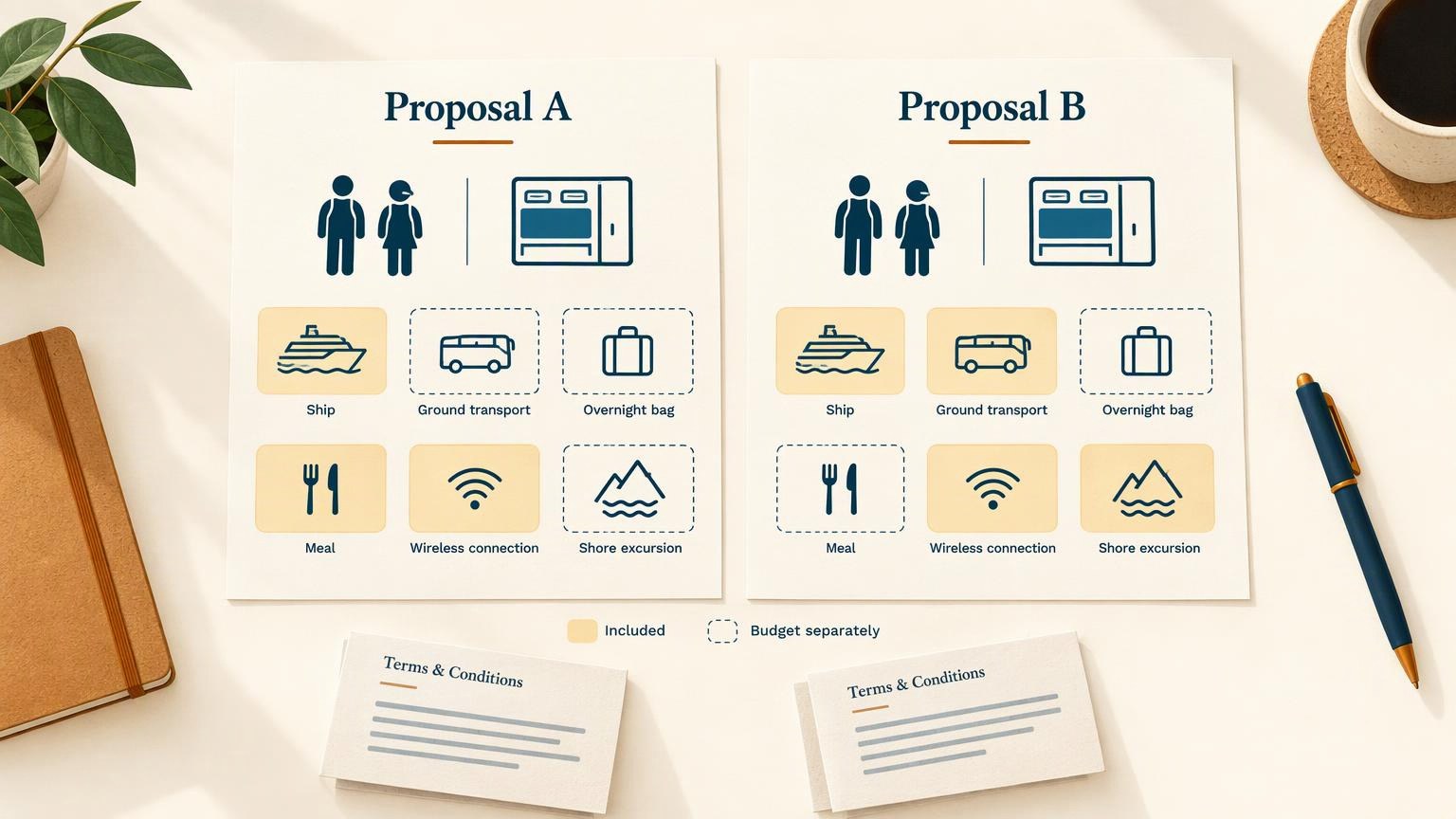
Illustration comparing Proposal A and Proposal B through matching traveler and cabin icons, different included and separately budgeted cost groupings, and Terms & Conditions sheets.
Say your 2027 vacation must end before a fixed return-to-work date. You want meaningful time ashore and prefer avoiding flights, but would fly for a substantially better itinerary. I would compare complete travel plans before ships.
First, you would define the latest acceptable return and the shore experiences that matter. I would test candidate port schedules against those requirements. A departure reachable without flying deserves consideration, but convenience cannot compensate for calls too short to support your main interests.
Next, I would test a fly-to-port candidate against the same deadline and total budget. Workable arrival and return arrangements, combined with a better port schedule, may justify additional travel. Otherwise, I would remove it rather than compress the journey around the sailing.
Finally, I would ask whether cruising is essential. For longer destination stays, I would compare a custom European vacation; for settling into one place, a Caribbean all-inclusive vacation. The table highlights these trade-offs, but current sailing details and quotes determine which candidate actually fits. Your priorities decide which compromises are acceptable. I would keep the no-flight choice if both candidates provide the shore experience you want and flying adds no meaningful benefit. If neither fits your return deadline, I would revise the trip rather than choose the less unsuitable sailing.
| Option | What could favor it | What could rule it out |
|---|---|---|
| Cruise without flights | Ground travel and port schedule fit your goals | Its calls do not provide the shore experience you want |
| Fly-to-port cruise | Better itinerary with workable travel at both ends | Arrival, return or total cost does not fit |
| Land-based vacation | Longer stays where destination time matters most | You would miss the onboard experience you want |
| Option | Could favor it | Could rule it out |
|---|---|---|
| Cruise without flights | Ground travel and port schedule fit | Calls too short for your shore goals |
| Fly-to-port cruise | Better itinerary; workable travel | Arrival, return or total cost does not fit |
| Land-based vacation | Longer stays at destinations | Missing your desired onboard experience |
I am Blake Rehfield, a travel advisor at Superior Travel Consultants specializing in cruise planning, custom vacations and group travel. I can help connect the sailing choice with surrounding travel and the needs of everyone going.
For your initial enquiry, include preferred 2027 dates, earliest departure from home, required return, acceptable embarkation ports and willingness to fly. Add the travelers involved and your total trip budget. You do not need to select a ship first. I would rather receive a clear requirement with an undecided preference than a ship name that hides your limits. If your budget or departure port is still open, say so and identify which decisions are already settled.
I would also want your priorities: more time ashore, more ship time, a necessary cabin arrangement or a destination you do not want to miss. For an existing itinerary idea, include its supplier, ship and departure date so we discuss an identifiable sailing.
For separate households, I would distinguish shared requirements from individual preferences. Family and group cruise planning needs a common travel window, not necessarily identical cabins or spending choices.
I would keep open details visible when comparing options. Request a current quote from me and review applicable conditions before committing: a planning enquiry is not a confirmed reservation.
Share the destination, dates and travel style you have in mind. A Superior Travel advisor will help turn the possibilities into one clear, personal plan.