
Start with usable park time
I would mark arrival and departure days before selecting tickets. A day on the calendar is not necessarily a day you can comfortably spend in a park.
I would budget lodging nights and ticketed days separately, then add transportation, meals and extras. Buy park days you can realistically use before upgrading the room. A longer stay with fewer park days may suit your pace; a complete, current quote establishes affordability.
I approach Disney vacation cost by separating nights away from days in the parks. For Long Island travelers, Disney vacation cost also includes the journey, not just the room and admission.
I would compare Disney vacation cost for the same travelers and travel window, changing one major choice at a time. Here, I focus on Walt Disney World lodging and park days to help you allocate your budget before choosing a package, room category or optional addition.
I would mark arrival and departure days before selecting tickets. A day on the calendar is not necessarily a day you can comfortably spend in a park.
I would compare complete ticket totals for your preferred visit lengths. A lower average daily price is useful only if the additional admission fits your plans.
I would add a hotel night for a clear reason, such as rest or a less compressed departure. Then I would include the food and transportation spending attached to it.
I would separate essential sleeping arrangements from preferred amenities. If you expect to spend most waking hours in the parks, an unused hotel upgrade deserves closer scrutiny.
I would judge prepaid dining against your actual eating habits. Paying earlier can help manage spending without reducing the total cost.
I would divide your budget into lodging, admission, transportation, meals and optional spending. A package can combine components, but its name does not establish that every expense is included.
For lodging, I would use the full-stay total for your required room arrangement. For admission, I would use the exact ticket product and total for everyone traveling, rather than a starting price that may describe a different trip.
I would add transportation from home and separately charged local travel. Food needs its own allowance unless the proposal includes the meals you intend to use. Keeping optional purchases separate shows what remains for souvenirs or experiences without taking money from essentials.
I would compare packages with separate reservations only after matching dates, travelers, room type and admission. Booking together may be convenient; it does not prove a lower total or better terms.
The building-block approach on our Disney vacation packages page supports this comparison. Flights can be added, but I would keep airfare visible rather than assume it is included. That distinction lets you compare complete trips instead of mismatched offers.
I would choose hotel nights for your preferred pace and admission for intended park visits. A longer stay need not mean more ticketed days: your budget may be buying rest or easier travel timing instead.
I would first map arrival, departure, park visits and rest time. For an illustrative family trip with an afternoon arrival and morning departure, I would exclude those travel days from the initial park plan. You would identify the visits that matter most before I assess admission options.
Next, I would compare complete ticket totals for the visit lengths under consideration, including applicable taxes and selected add-ons. Multiplying a single-day price is not a reliable estimate. A lower average daily price can still mean a higher total, and ticket validity must fit the calendar.
I would then compare fewer park days within the same stay against a shorter stay. The first preserves rest without necessarily reducing lodging costs. The second removes a hotel night but may change transportation and meal spending. Planned resort time gives room amenities more weight.
Superior's Disney-vacation planning page provides a route for a current, tailored enquiry. Send your dates, budget and preferred ticketed days, and request me, Mary Susan Schilling. Those priorities frame the comparison without assuming a particular package is available.
| Structure | Purpose | Trade-off |
|---|---|---|
| Fewer park days, same stay | Rest | Less admission; lodging remains |
| Shorter stay, visits retained | Fewer nights | Tighter pace |
| Longer stay, same park days | Slower pace | More lodging and everyday spending |
I would verify permitted ticket-use dates before relying on rest days between visits. I would judge optional multi-park access by your intended daily schedule, rather than add it automatically to the budget.
| Trip structure | Purpose | Trade-off |
|---|---|---|
| Fewer park days, same stay | Rest | Less admission; lodging remains |
| Shorter stay, visits retained | Fewer nights | Tighter pace |
| Longer stay, same park days | Slower pace | More lodging and everyday spending |
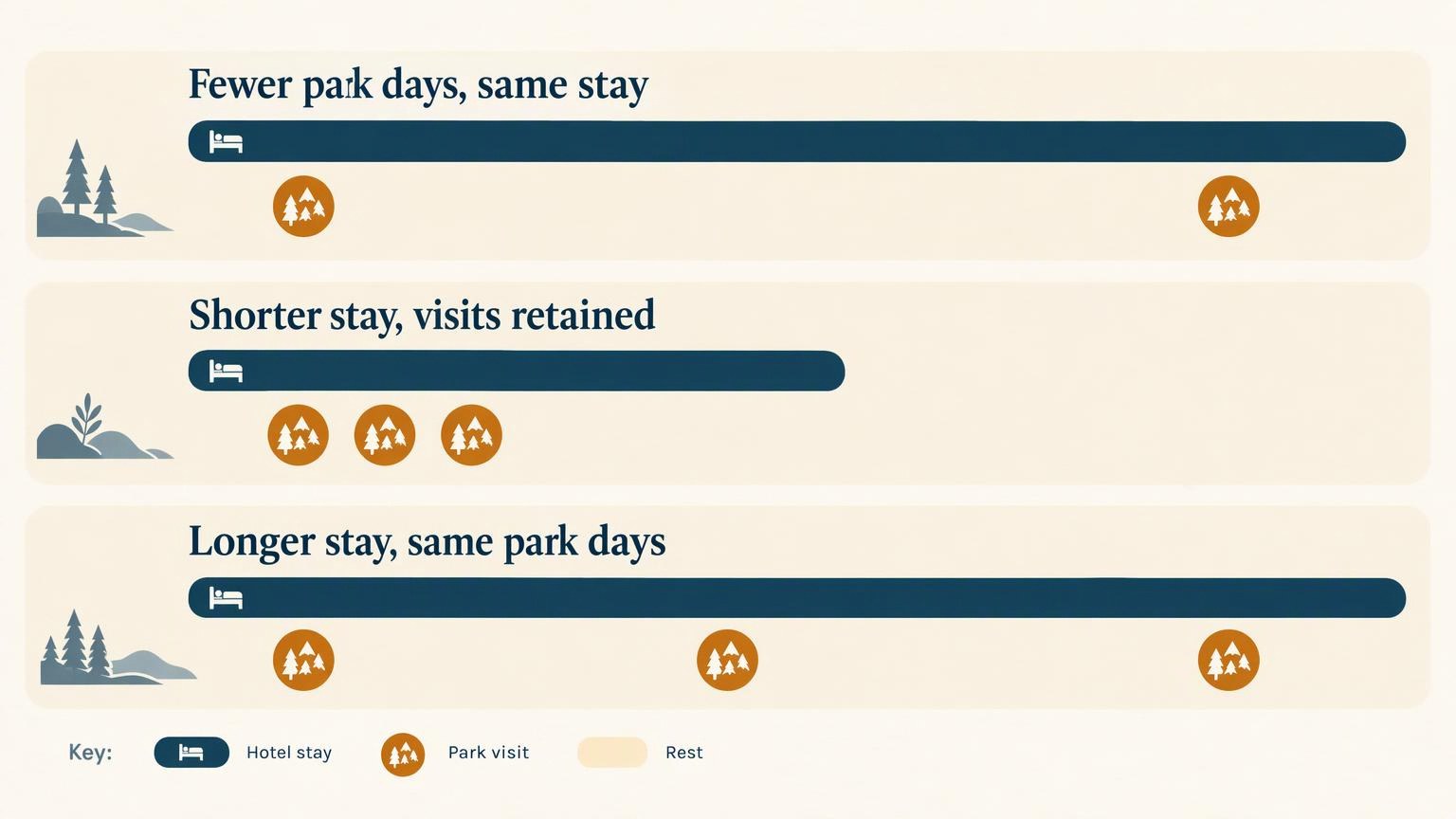
Illustration comparing hotel-stay lengths and park-visit spacing across three options, using navy bars, amber visit symbols and pale rest space.
I would choose lodging by how you expect to use it. Essential sleeping arrangements deserve protection; preferred amenities need to justify their share of the budget. That distinction leaves more room for the experiences you value.
Walt Disney World lodging includes value, moderate, deluxe and villa choices, trading cost against space and amenities. I would compare exact rooms rather than assume a tier label guarantees your required layout. Current options matter more than a general category.
For long park days, I would question a substantial upgrade to a room mainly used for sleep. Regular hotel breaks or necessary separate sleeping space make accommodation a larger part of the vacation, potentially deserving more spending.
I would compare on-site and off-site lodging using full-stay costs and practical transportation arrangements. Separately charged transport or parking can change an attractive room-price comparison; neither location is automatically cheaper.
For separate households, I would distinguish shared park plans from individual room needs. As in family and group vacation planning, agreement on the itinerary need not mean identical accommodation. Each household can prioritize its sleeping needs without making every optional room preference a group expense.
I would reserve money for necessary transportation and food before allocating the remainder to extra nights or admission. Otherwise, an affordable room-and-ticket total can leave too little for everyday needs.
For transportation, I would separate flights or driving from airport transfers and hotel-to-park travel. Each quoted arrangement needs a clear account of inclusions, separately charged parking and other applicable costs. On-site transportation access does not establish that every journey is included.
I would assess dining against your likely meals. Prepayment can make spending predictable without reducing it. Paying as you go may cost less for light eaters or travelers who prefer quick counter-service meals. The useful comparison is what you expect to consume, not simply how much is paid before departure.
If broadly prepaid resort spending matters more than park visits, I would compare a Caribbean all-inclusive vacation as a different travel style, not treat Disney dining as the same proposition.
I would then assign an allowance to the optional experiences and purchases you actually want. Removing an unwanted extra is a better first adjustment than cutting a hotel night needed for workable travel timing.

Illustration of trip-budget categories arranged in a travel bag, with airplane and shuttle in separate pockets and a parcel labeled Optional extras set aside.
Suppose your family has a set travel window, several desired park visits and a firm need for rest. You are choosing between more admission and a more expensive room. I would start with pace, not upgrades.
You would identify priority visits and mark rest days. I would assess whether the selected admission permits that pattern, then compare fewer ticketed days within the same stay before considering a shorter vacation.
Next, I would compare rooms meeting your sleeping needs. If you mainly need somewhere to rest between visits, I would favor a suitable room over unused amenities. If separate sleeping space is essential, I would protect it and reconsider optional admission or extras.
The resulting choice depends on the constraint: fewer park days preserve rest, fewer hotel nights compress the trip, and an upgrade changes hotel time. They solve different problems, so a cheaper option is not necessarily the better fit.
Through advisor-led planning on Long Island, I connect those priorities to your budget discussion. Our explanation of why use a travel agent describes that role without guaranteeing lower prices.
Share the destination, dates and travel style you have in mind. A Superior Travel advisor will help turn the possibilities into one clear, personal plan.