
Use a shared starting point
I would give every quote the same dates, party ages and intended park days. If a proposal changes one of those details, I would label it an alternative trip rather than treat its total as a direct price comparison.

I compare Disney vacation prices only after matching travel dates, party ages, lodging, park days and ticket options. Then I add expenses outside each quote and review payment and cancellation terms. A lower total is better value only if it covers the trip you want, rather than leaving out something you need.
I approach Disney vacations as complete trips, not headline prices. For Long Island travelers comparing Disney vacations, I start by matching the stay and park access. A room-and-ticket quote cannot fairly compete with a budget that includes transportation and meals.
When comparing Disney vacations, I separate inclusions, outside spending and undecided details. That makes each proposal's scope visible before you choose. Here, I focus on Walt Disney World quotes, keeping room details, ticket choices and booking conditions beside the totals.
I would give every quote the same dates, party ages and intended park days. If a proposal changes one of those details, I would label it an alternative trip rather than treat its total as a direct price comparison.
I would weigh sleeping arrangements and time spent at the resort before selecting a room. A lower lodging total is useful only if the proposed room works for your party and the stay you want.
I would connect ticket options to your intended daily schedule. If an upgrade does not support a plan you want, I would compare the trip without it rather than assume more access means better value.
I would separate souvenirs and optional experiences from the essential trip budget. That lets you reduce discretionary spending without obscuring the cost of lodging, admission or getting there.
I compare proposals for the same vacation before weighing totals. My starting points are arrival and departure dates, traveler ages, room category, lodging nights and intended park days. A lower total may simply leave out something you need.
For lodging, I compare room descriptions, not just resort names. Sleeping arrangements, room count and amenities you expect to use belong beside each amount. A preference is not a stated inclusion. A different room category represents a comfort trade-off, not an equivalent price comparison.
For admission, I match ticketed days and the named product. I list options such as Park Hopper separately when proposed. Hotel nights and park days also stay separate: an arrival night may help you settle in without requiring admission.
I label transportation, meals and relevant extras as included, excluded or not specified. An unspecified item remains an open cost, never something I count as free.
My rule is to compare equivalent essentials first, then judge upgrades. An extra lodging night might support your arrival plans or a rest day. Once those differences are visible, you can weigh their usefulness rather than choose only the smallest total.
| Proposal | Match first | Keep separate |
|---|---|---|
| Room-only | Dates, room, nights, lodging charges | Admission and other components unless included |
| Room-and-ticket package | Room, ticket product, park days, inclusions | Expenses outside the written scope |
| Separate lodging and tickets | Combined total for matching dates and products | Each component's payment and change terms |
| Proposal | Match first | Keep separate |
|---|---|---|
| Room-only | Dates, room, nights, lodging charges | Admission and extras unless included |
| Room-and-ticket package | Room, ticket product, park days | Expenses outside written inclusions |
| Separate lodging and tickets | Combined cost, matching dates and products | Each component's payment and change terms |
I build a second total for expenses outside the proposal. Travel to and from the destination, meals, snacks and personal purchases belong in your vacation budget, even when excluded from the package.
I mark each expense as included, separately priced or a personal allowance. An allowance is your budgeting choice, not a supplier quote. That distinction keeps an estimate from looking like a guaranteed charge and makes uncertain costs visible.
I examine transportation from start to finish. For flying, I include the flight product you intend to buy and separately charged services you need. For driving, I account for the whole journey rather than compare fuel alone with airfare and transfers.
I also distinguish getting to your lodging from getting around during the stay. If transportation appears in a proposal, I count only its stated coverage and avoid adding the same journey again in my outside-spending estimate.
I base a meal allowance on how your party expects to eat. Any proposed dining component needs its own inclusion details; the word package does not mean all food is covered.
For family and group travel, I separate shared expenses from individual spending. I also allow for practical purchases, such as rain protection, without inventing a daily figure. Your complete budget should remain useful, not falsely precise.
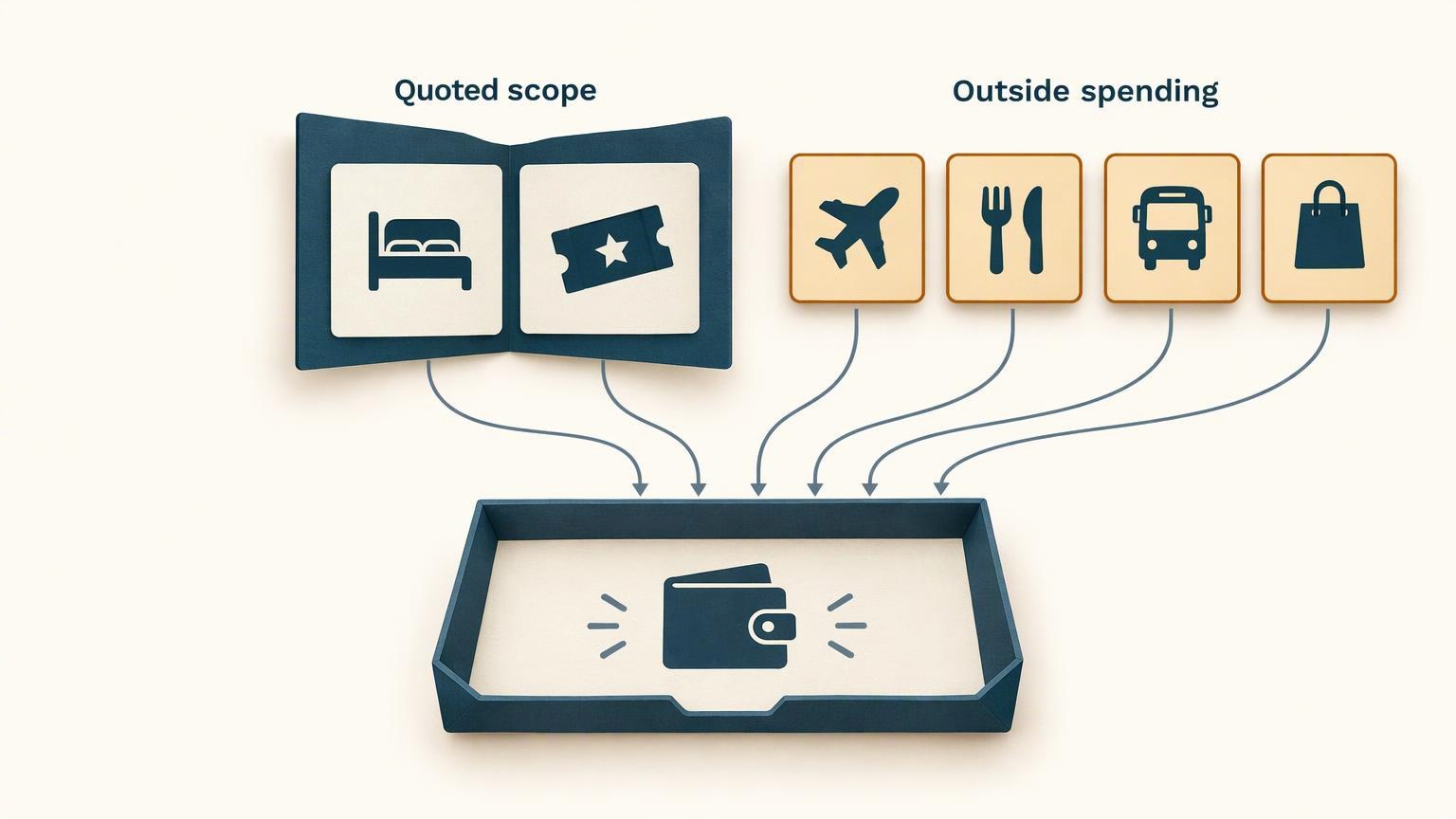
Illustration of quoted scope and outside spending, with bed, ticket, airplane, meal, bus and shopping icons connected by arrows to a shared tray containing a wallet icon.
I would change one part of the trip at a time and compare what you gain and lose. That reveals whether a reduction comes from different dates, lodging, fewer park days or removing an optional addition.
Suppose you want a family trip with an afternoon for rest. The lower proposal offers a shorter stay and fewer park days; the higher one preserves that break. I would first compare equivalent trip lengths and admission.
If the difference narrows, the apparent saving partly reflects a smaller vacation. If the lower proposal still costs less after matching those details, I would examine lodging and terms next. That separates price differences from changes to the trip itself.
If your budget requires the shorter stay, I would favor a less ambitious park plan rather than squeeze the original schedule into fewer days. Keeping the break means accepting less park time, an honest trade-off rather than the same trip at a discount.
I would remove an unused ticket option before cutting a priority. For me, the best Disney vacations fit your plans and complete budget without requiring every upgrade.
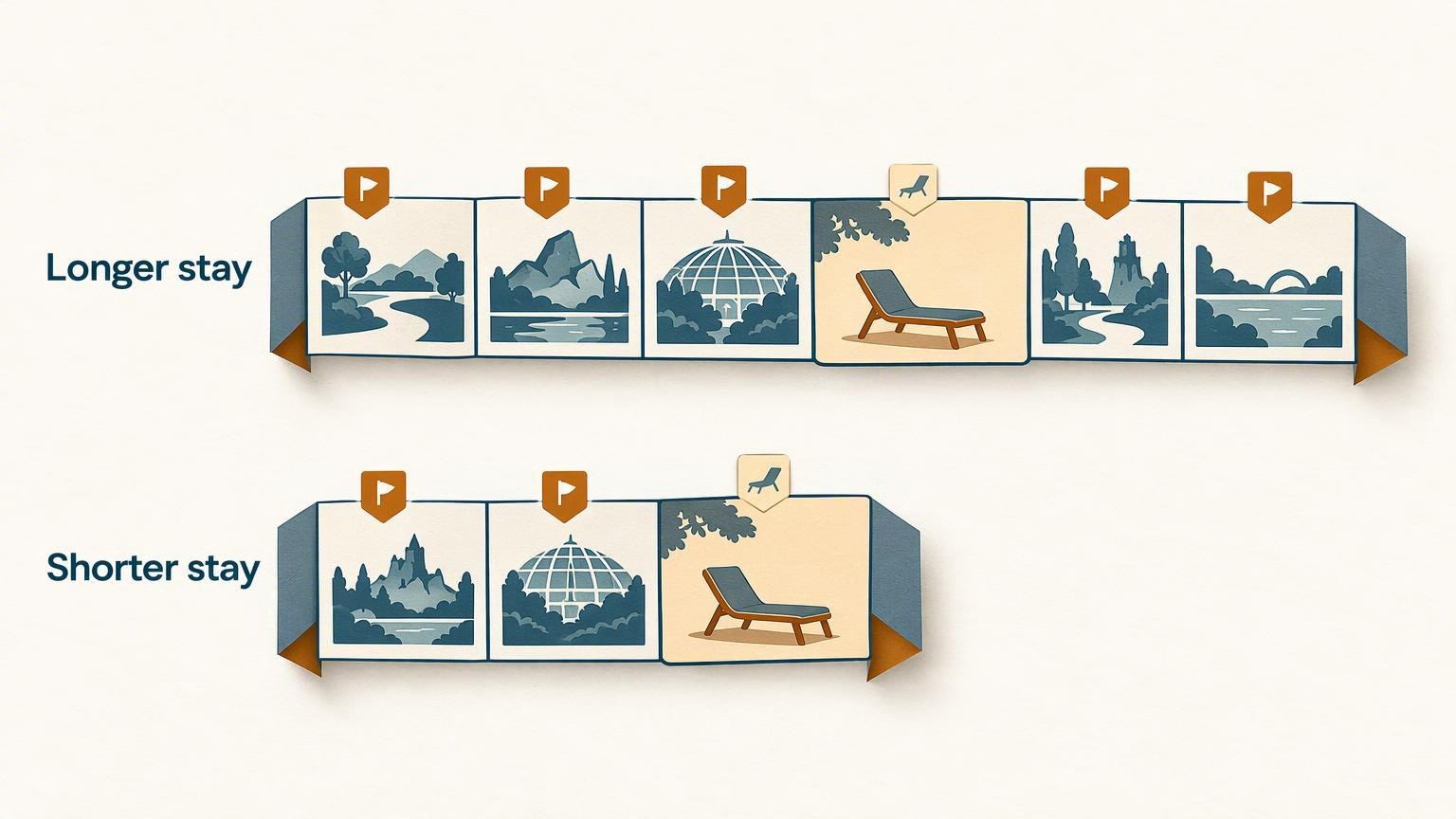
An illustration compares longer and shorter itinerary ribbons: fewer park tiles appear in the shorter stay, while both retain a shaded lounge-chair rest tile.
I choose based on complete cost and written terms, not the booking label. Packages and separate reservations can both be reasonable; neither automatically means savings, broader inclusions or better flexibility.
I compare taxes and stated charges consistently, separating the amount due now from the full amount payable. A small deposit describes a payment schedule, not a cheaper vacation. I keep the balance and deadlines beside it so the eventual commitment stays visible.
I review changes and cancellations separately from price: what happens to each component if dates change, who handles the change and which amounts may be at risk. I use the actual quote's terms rather than assume one policy covers every Disney booking.
Separate bookings can be manageable when products and dates are clear. I still consider dependencies: changing lodging could leave admission unsuitable for your revised stay. Comparing each reservation alone would miss that risk.
When weighing whether to use a travel advisor, choices you still need to make matter more than reservation count. I would not add coordination you do not need or promise that advisor involvement removes supplier restrictions.
Family travel is one of my specialties, and my credentials include Aulani Disney Achievement. I keep that distinct from credentials for other Disney products. Review my profile as Mary Susan Schilling, travel advisor.
Superior Travel Consultants has a dedicated Disney vacation planning page. I would start a current quote discussion with your dates, party ages, lodging priorities and intended park days, not a generic online budget tier.
With proposals and their inclusion descriptions intact, I can distinguish equivalent price comparisons from different trip designs. A detail that still needs an answer stays visible rather than receiving a made-up cost.
I would separate your must-haves from preferences you could change. If sleeping arrangements are essential but an additional park day is optional, I would use that distinction to evaluate alternatives. The purpose is to identify which proposal fits your priorities, not simply which has more components.
I connect proposed spending to your priorities. The benefits of advisor-led planning matter when you need help choosing a room, comparing admission or understanding terms.
As a Long Island travel agency, Superior provides customized planning. I cannot promise the lowest price or unchanged availability; your current proposal and written terms remain the basis for choosing.
Share the destination, dates and travel style you have in mind. A Superior Travel advisor will help turn the possibilities into one clear, personal plan.