
Mark the real return deadline
I would write down when everyone must be home, rather than only the last vacation night. An itinerary that arrives on the required school or work day deserves a different assessment from one that leaves recovery time.

I would choose school-break dates if attendance obligations or parental leave rule out term time. Otherwise, I would compare equivalent current quotes and cancellation exposure. The better window meets your household's scheduling requirements with acceptable booking terms, not necessarily the lowest advertised price.
I compare family vacations using dates your household can actually use. For Long Island parents, family vacations must fit school calendars, work commitments and return deadlines. I would establish those limits before comparing destinations or paying a deposit.
My approach to family vacations separates scheduling fit from financial commitment. I am Mary Susan Schilling; my specialties include family travel, cruises and all-inclusive vacations. I would retain both windows until school requirements, leave approvals and comparable written offers show which choice works for your household.
I would write down when everyone must be home, rather than only the last vacation night. An itinerary that arrives on the required school or work day deserves a different assessment from one that leaves recovery time.
I would distinguish requested leave from approved leave and a school conversation from a formal attendance decision. That distinction tells you whether a date window is ready for a financial commitment or still needs an answer.
I would identify requirements such as a workable sleeping arrangement separately from a preferred view. A date window does not become suitable merely because its quote includes extras while leaving an essential arrangement uncertain.
I would save both written offers with their dates and stated validity. If you revisit the decision later, I would compare current quotes rather than assume that an earlier price or room choice remains available.
I would have the adults agree on the acceptable school impact and financial exposure before choosing a window. Otherwise, a lower quote can distract from a disagreement that will remain after the trip is booked.
I would compare both windows with each child's calendar, including assessments, required activities and the procedure for planned absences. Days outside a holiday are not necessarily interchangeable: a missed assessment presents a different decision from a day without that obligation.
I would match each window to the adults' leave commitments. Requested leave is not approved leave, and I would address that uncertainty before recommending a nonrefundable commitment. Include when each parent must return to work, not just departure availability.
The debate over taking children out of school for vacations presents differing opinions about convenience and educational value. I would distinguish those opinions from your child's applicable attendance requirements.
My dividing line is whether essential approvals remain unanswered. If term time creates an attendance problem your household cannot accept, I would eliminate it regardless of an attractive quote.
For multiple households, I would apply the distinction behind family and group vacation planning: shared travel dates do not mean shared obligations. I would establish each household's usable window before treating a common departure as workable for everyone, including families whose school calendars differ.
I would request current quotes for both usable windows without assuming term time costs less. Destination demand and school calendars are different considerations; the written offers establish what your family would pay for the proposed trip.
I would align travelers, trip length, accommodation needs and main inclusions. A different sleeping arrangement or excluded transfers can explain a lower total without making the offer better value. Those differences should remain visible in the comparison.
For Caribbean and all-inclusive vacations, I would compare the meals, activities and transportation specified in each offer. The all-inclusive label alone does not establish equivalent purchases or cover every expense your family might incur.
For a Disney vacation planned around your family, I would keep hotel and ticket requirements consistent. For European vacation packages, I would assess whether different travel days change the desired itinerary or reduce usable vacation time.
I would separate mandatory charges from optional spending and flag anything awaiting a quote. With those differences explained, I would judge whether any saving warrants the scheduling trade-off, rather than let the headline total decide which departure window your household should choose.
| Factor | School break | Term time |
|---|---|---|
| School | Calendar fit | Acceptable absence |
| Leave | Approved; return fits | Approved; return fits |
| Trip | Matched inclusions | Matched inclusions |
| Exposure | Payments, changes, cancellation | Payments, changes, cancellation |
| Choose if | Household requirements met | Requirements and absence acceptable |

Illustration of side-by-side travel offer sheets, with amber connectors aligning matching categories and an outlined van with sparse marks highlighting an unresolved transfer inclusion.
I would read booking terms against scheduling questions still awaiting an answer. A lower total may offer poor value if the consequences of declined leave or changed dates exceed what your household can accept. Price and flexibility deserve separate consideration.
I distinguish changing dates from canceling. I would identify whether changes are permitted, applicable charges and whether the replacement trip must be repriced. Permission to request a change does not guarantee an affordable replacement or the dates you need.
I would identify deposit conditions, payment deadlines and cancellation consequences for each offer. Where flights and accommodation have separate terms, I would assess both: the same scheduling problem can affect purchases with different financial consequences.
For a sailing, I would consult the agency's cruise travel insurance guide, then review applicable policy terms. I would not assume that an attendance decision or changed work leave is covered.
I would separate cancellation losses from a possible insurance claim. Before committing, I would compare the loss under the booking terms with the applicable coverage, rather than rely on a general promise of flexibility. That distinction matters even when both departure windows are otherwise usable.
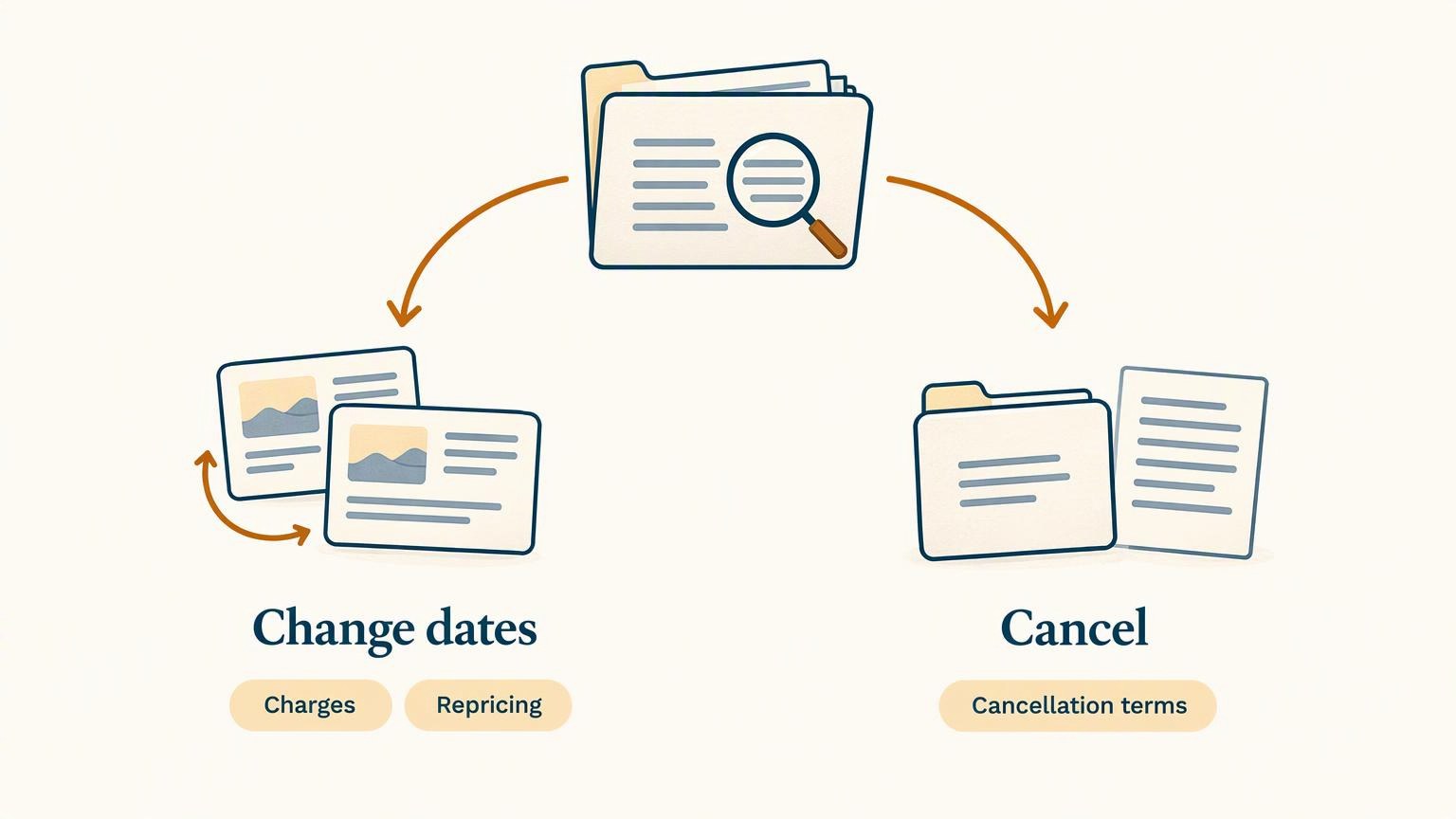
Illustration of a folder branching into Change dates and Cancel, with separate tags for Charges, Repricing and Cancellation terms.
Suppose your school-break window has approved parental leave, while term time still depends on approval. Your child has a required activity during the term-time option, but that quote looks more attractive. I would assess those conflicts before comparing the saving.
I would choose school break if missing the activity or risking the leave decision is unacceptable. The lower quote resolves neither conflict, so it is not better value for this household simply because it costs less.
If the term-time obligations are addressed through the applicable school procedure and parental leave is approved, I would reopen the comparison. I would match trip requirements and review terms before deciding whether any saving warrants the missed school time.
If school break has less acceptable cancellation terms, I would weigh that exposure against term time's attendance impact. Neither calendar label automatically wins; the acceptable consequences determine my recommendation.
When neither window works, I would consider a shorter school-break trip or another usable break. A shorter trip changes the purchase, so I would compare its itinerary and current quote separately rather than present it as an equivalent saving on the original vacation.
My specialties at Superior Travel Consultants include family travel, cruises and all-inclusive vacations. You have a named planning contact whose documented focus matches these formats, rather than choosing an advisor only because the agency serves your area.
Through our Long Island travel agency, I would begin with your competing date windows. Keeping them separate makes it easier to explain scheduling fit, trip inclusions and the booking terms affecting your commitment. That comparison supports a choice, not an assumed term-time discount.
For each window, I would need the earliest departure, latest acceptable return, travelers' ages, accommodation requirements and overall budget. Identify requirements that cannot move and approvals still pending so those uncertainties remain visible when discussing options.
I would use those details to discuss relevant family vacation packages and a current quote. School and employer decisions remain with those organizations; my role is travel planning, not authorizing an absence or guaranteeing savings.
You can send both possible windows and what would make the trip feel right. Request me, Mary Susan Schilling, by name so your inquiry identifies the advisor you would like to work with.
Share the destination, dates and travel style you have in mind. A Superior Travel advisor will help turn the possibilities into one clear, personal plan.