
Agree on how plans can change
I would decide whether optional outings need the whole family's approval. Let each household change an independent activity without reopening the shared commitments everyone has accepted.

I would choose a coordinated vacation when your family agrees on supervision, daily pace and the time everyone wants together. I would favor linked arrangements with separate schedules when those needs differ. Sharing a base can still work, provided each household can rest or explore without depending on another household's plans.
I approach family vacations with grandparents by separating shared arrangements from each household's schedule. For Long Island travelers, family vacations with grandparents can mean traveling together without spending every hour together. I would settle that distinction before choosing a resort, cruise or itinerary.
When comparing family vacations with grandparents, I would start with supervision, quiet time and essential family moments. Those choices help prevent a shared trip from becoming a schedule that suits only one household.
I would decide whether optional outings need the whole family's approval. Let each household change an independent activity without reopening the shared commitments everyone has accepted.
I would apply the same supervision and rest agreements to arrival and departure. Separate daytime schedules are less useful if the journey itself depends on everyone keeping exactly the same pace.
I would decide what happens if someone skips an activity. Keep the family meeting point clear, and avoid making another household's day depend on attendance at every optional event.
I would have each household read its own room, transportation and spending arrangements. A plan that looks balanced overall can still leave one family carrying most of the supervision or coordination.
I would coordinate the family moments you most want to protect, not make every day identical. Sharing dates and accommodation can work with separate outings; linked stays can preserve a celebration meal when budgets or trip lengths differ.
My test is dependency: can someone change their afternoon without changing everyone else's? A shared transfer or excursion creates a firmer commitment than staying at the same property.
Imagine dinner is the priority, parents want sightseeing and grandparents prefer unhurried mornings. I would favor a common base and evening meal, leaving daytime activities separate. Parents would retain responsibility for their children unless another adult explicitly agreed to take over.
Separate properties offer more independence but make spontaneous visits harder. Full coordination makes reunions easier but limits independent changes.
I would also distinguish essential shared time from invitations. If dinner is essential, I would keep daytime plans compatible with it. If an outing is optional, declining it should not disrupt the transportation or supervision another household needs.
Through family and group vacation planning, I can translate those priorities into a customized brief. I would compare rooms, transfers and activities: separate bookings are not automatically cheaper, and shared inclusions offer little value to relatives who would skip them.
| Arrangement | Useful when | Trade-off |
|---|---|---|
| Shared travel, base and schedule | Everyone wants similar days and accepts the same commitments | A change can affect the whole group |
| Shared base, separate daytime plans | Family meals matter, but activity and rest needs differ | Meeting points and supervision need clear agreement |
| Linked stays or travel dates | Households need substantially different routines or trip lengths | Shared time takes more deliberate coordination |
| Arrangement | Best fit | Trade-off |
|---|---|---|
| Shared travel, base and schedule | Similar days and shared commitments | Changes can affect the whole group |
| Shared base, separate daytime plans | Shared meals; different activity needs | Agree on meeting points and supervision |
| Linked stays or travel dates | Different routines or trip lengths | Shared time needs more coordination |
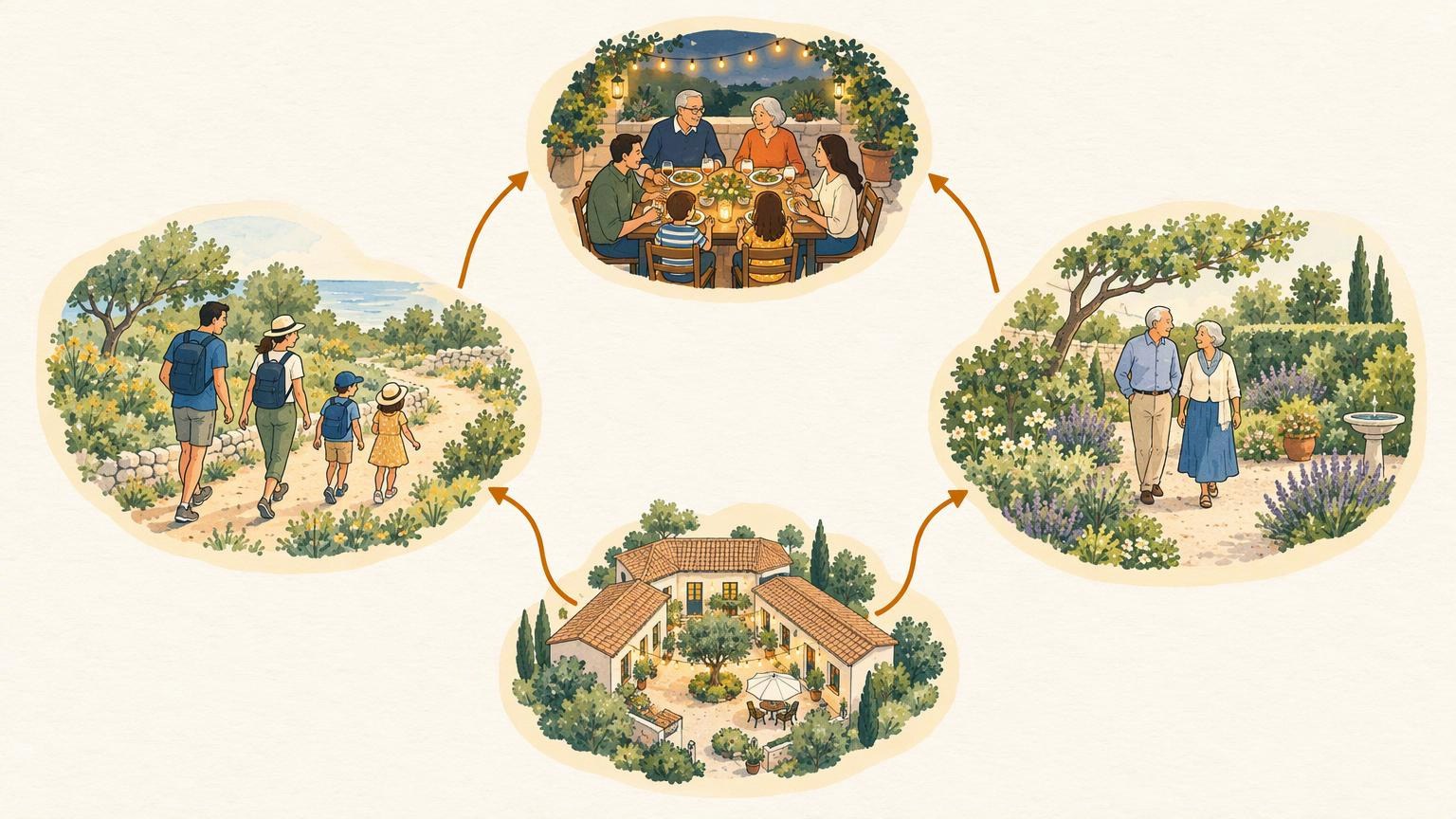
Illustration of a courtyard base branching into a family walking outing and an older couple’s garden stroll, with both routes leading to dinner together.
I would treat grandparents as fellow travelers, not assumed childcare. Before schedules split, the adults should agree on who supervises each child and when responsibility changes. That agreement determines which activities can happen independently.
I would distinguish a vague offer to help from an agreed afternoon of supervision. A clear handoff identifies the meeting place, the adult taking over and how that adult reaches the parents.
Time with grandchildren is not automatically supervision. A grandparent may welcome dinner or a quiet game without wanting responsibility for a pool visit or outing. I would build the schedule around that distinction.
For a parents-only activity, I would work backward from supervision everyone accepts. If nobody wants that responsibility, I would change the activity or keep a parent with the children, rather than commit to an excursion first.
I would evaluate supplier-run children's programs separately. Eligibility, hours and booking conditions must fit the actual proposal; a family-friendly label does not establish them. Even when a program is suitable, I would make clear which adult handles drop-off, pickup and the time outside its scheduled hours.
I would favor arrangements that let someone rest without ending everyone else's outing. Separate rooms support different bedtimes, but the route back matters as much as the room.
I would base this choice on preferences, not age. A grandparent may want a full day out; a parent may need quiet time. Someone taking a break needs independent transportation, room access and a practical way to rejoin the family.
If an outing depends on one shared vehicle, I would choose a shorter common activity or separate daytime plans. A break has little value if everyone must leave to make it possible. Sharing a room can also undermine rest when others return for naps or need access.
For Disney vacation planning or European vacation packages, I would compare accommodation location and return options alongside activities. A shared base fits flexible days when independent returns are practical; linked arrangements may better accommodate substantially different routines.
Imagine the family wants dinner together, children need midday breaks and grandparents prefer quiet afternoons. I would protect dinner first. Parents would decide who handles the children's break; I would then compare rooms, independent return routes and transportation costs.
A shared base fits if those arrangements work. If everyone depends on one vehicle, I would favor shorter outings or separate transportation.
I would compare complete household totals, not assume shared arrangements are cheaper. Separate rooms, different trip lengths and independent transportation change the comparison, as can a shared upgrade that only some travelers value.
I would put room categories and occupancy beside meals, transfers, activities and other intended spending. Separating included items from optional costs makes proposals comparable and shows whether each household is paying for the vacation it wants.
For Caribbean and all-inclusive vacations, I would review actual inclusions rather than assume every activity, childcare arrangement or transportation need is covered.
I would separate shared expenses from optional household spending. Grandparents might fund dinner without funding every excursion. Paying for accommodation should not override the occupants' privacy or rest needs. I would also establish who approves extra spending before accepting an upgrade.
I would review protection separately; the cruise travel insurance guide offers further reading when relevant. For a current quote, request Mary Susan Schilling with dates, travelers, room preferences and the shared commitments you want priced. I would use the same essentials when comparing coordinated and partly separate alternatives.
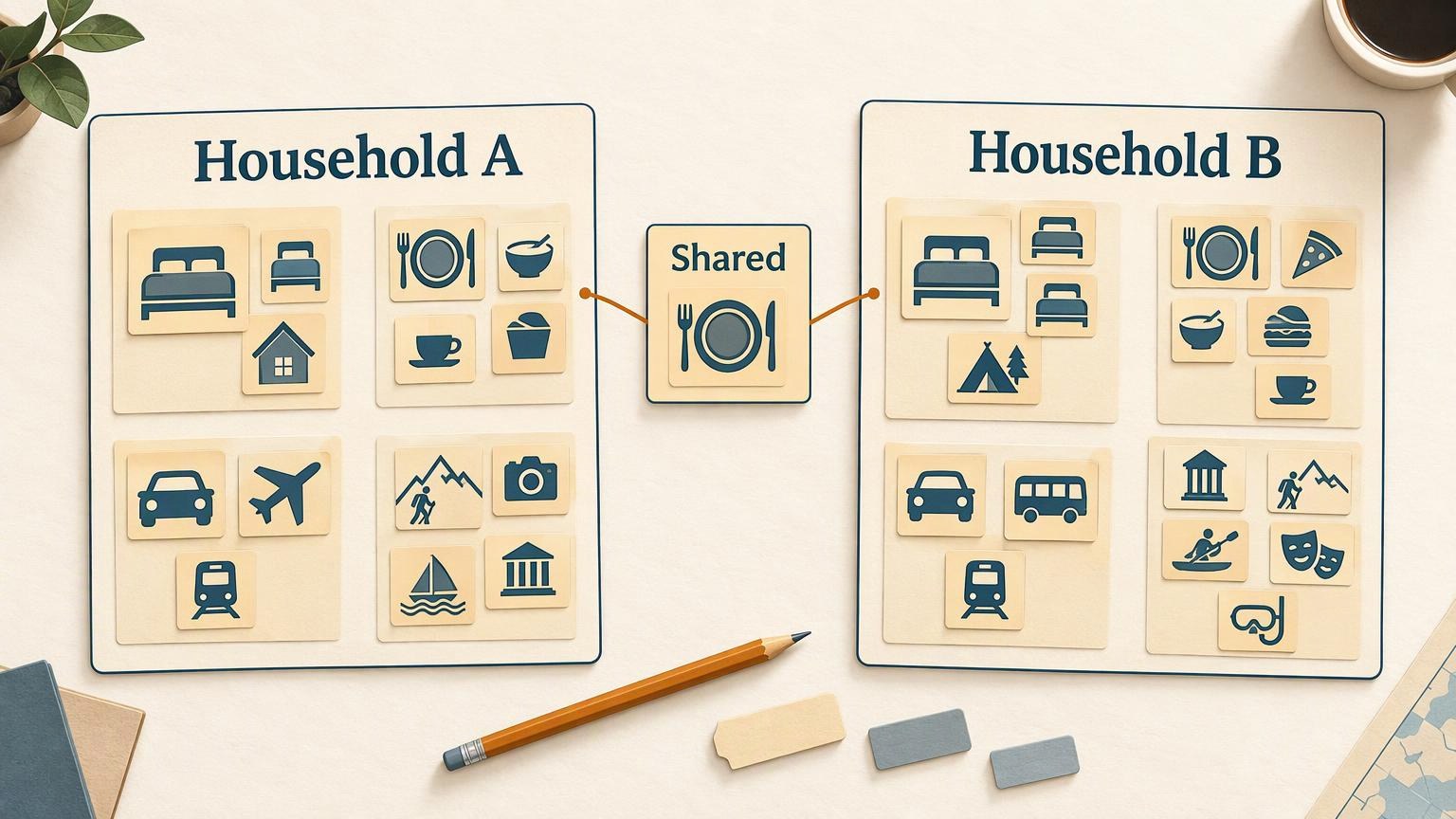
An illustration of two household planning boards with different travel pictograms, connected to a shared meal card, with a pencil and blank movable tabs below.
I would turn your choice into a brief covering shared priorities and individual household needs. That gives a customized comparison more direction than a request for the best family vacation.
I am Mary Susan Schilling; my specialties include cruises, all-inclusive vacations and family travel. I can help compare those formats against your preferred balance of togetherness and independence.
At our Long Island travel agency, we plan customized family trips around ages, interests, rooms and logistics.
I would include dates, travelers, household budgets, essential shared moments, room privacy, rest needs, supervision agreements and existing bookings. Distinguish essentials from preferences: if adjoining rooms are necessary, a room-location request alone would not resolve that requirement.
I would make the deciding trade-off explicit in the comparison. A shared base might preserve dinner together but require separate transportation; linked stays might suit different trip lengths but reduce casual visits. Those consequences matter more than the arrangement's label.
You need not decide before reaching out. I would use the brief to compare coordinated and partly separate plans, making their commitments visible before you choose.
Share the destination, dates and travel style you have in mind. A Superior Travel advisor will help turn the possibilities into one clear, personal plan.