
Name the independent activity
I would replace a general wish for flexibility with something concrete, such as an unhurried meal or a museum visit. That gives each advertised break a practical test.

I would choose a guided itinerary whose independent periods fit your priorities. Separate genuine free time from transfers, meal breaks and optional outings, then establish release and return arrangements. If declining an excursion leaves no workable alternative, I would compare a different itinerary before booking.
I would compare tour packages by reading the gaps as carefully as the sightseeing descriptions. For Long Island travelers considering Europe, tour packages need a daily check: an unlisted afternoon does not establish where you will be or what you can do.
I am Izabela Melli, specializing in Europe with our Long Island travel agency. My approach to tour packages connects the written schedule with your independent-time priorities, rather than treating every blank space as freedom.
I would replace a general wish for flexibility with something concrete, such as an unhurried meal or a museum visit. That gives each advertised break a practical test.
I would examine what finishes before the break and what starts afterward. A gap between a transfer and dinner has different uses from a free afternoon following a city walk.
I would work backward from the next meeting point. Your independent plan must include getting there, not only arriving at the attraction you want to visit.
I would evaluate the day with the optional outing removed. If the remaining arrangement does not suit you, the outing is doing more work than its optional label suggests.
I would start with the detailed daily itinerary, not the overview's mentions of flexibility. For each gap, identify the last included activity, the next commitment and any movement between them.
I read at leisure, time to explore and dinner on your own as different planning prompts, not complete timetables. An independently chosen dinner might suit you perfectly, but it is not necessarily a separate sightseeing opportunity.
A stop during a travel day also differs from time based in a destination. I would treat lunch or a brief walk as possibilities, while testing a longer visit against the departure arrangement.
My escorted tours and river cruises planning route is relevant when you want guided structure. Here, I would focus on how that structure divides the day.
The table separates potential uses from details still needed. Until a gap's boundaries are clear, I would keep your activity flexible rather than reserve around an assumed schedule.
| Wording | What I would establish | Possible use |
|---|---|---|
| Afternoon at leisure | Release location and next meeting | An independent visit if access and timing fit |
| Dinner on your own | Arrival time and evening commitments | A meal you choose |
| Free time during a stop | Departure point and return requirement | Lunch or a brief local activity |
| Optional excursion | Arrangements for travelers declining | Independent plans only if the alternative works |
| Wording | Establish | Possible use |
|---|---|---|
| Afternoon at leisure | Release location and next meeting | Independent visit if access and timing fit |
| Dinner on your own | Arrival time and evening commitments | A meal you choose |
| Free time during a stop | Departure point and return requirement | Lunch or a brief local activity |
| Optional excursion | Arrangements for travelers declining | Independent plans if the alternative works |
I would test a gap against your intended activity, not a universal minimum. A relaxed coffee and a reserved museum visit need different schedules; neither preference is less valid.
Location comes first: where does the guided activity end, where does your independent plan begin, and where must you return? A hotel break and a city-center release can support different choices despite identical advertised durations.
I would account for reaching the activity, entering, enjoying it and returning. For timed admission, compare the entry requirement with the confirmed release time. I would not justify a nonrefundable reservation with an optimistic arrival estimate.
Eating, unpacking or resting may be the best use of an open period. If you also want sightseeing, I would avoid counting that same gap twice. A plan that technically fits may still leave you rushed.
For example, if you want a leisurely lunch and a museum visit, I would map both into the same gap, including travel between them. If that leaves no room for a delayed meal or admission line, I would choose the activity you value more rather than squeeze in both.
Certainty matters too. An evening after a confirmed arrival is easier to plan than one following an unspecified transfer. I would reserve uncertain gaps for adaptable activities. The deciding question is whether your priority fits with a return journey you can comfortably manage.
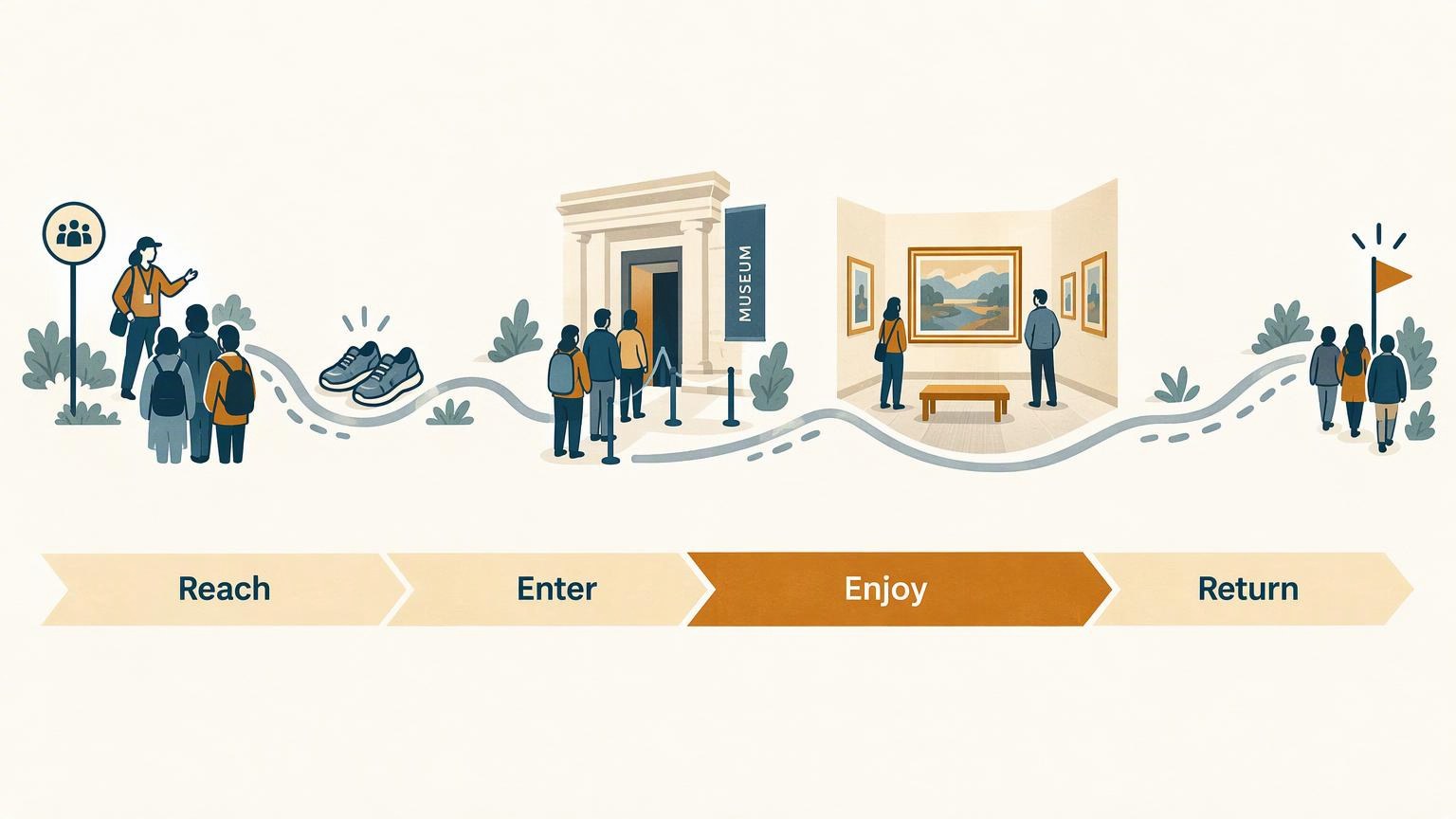
Illustration of a winding route from a group to a museum queue and gallery, then back to a gathering flag, with Reach, Enter, Enjoy and Return segments below.
I would evaluate each optional outing separately from the included itinerary. If it contains an experience essential to you, its cost and timing belong in your booking comparison, regardless of the optional label.
Then I would read the day without it. Where would you stay, would transport remain available, and would you need to reach a different meeting point independently? Those arrangements need to apply to your exact departure.
Declining does not necessarily create a free afternoon where you want to explore. Conversely, an optional guided visit could be your preferred use of that period if its content, price and arrangements fit.
For budgeting, I would distinguish included admissions and meals from optional tickets, independent meals and self-arranged transport. Compare spending for your intended trip, not an assumed saving from skipping every extra. Independent plans can replace some excursion expenses.
My test is whether the day still suits you without the outing. If not, I would budget for it deliberately or choose another itinerary. Repeatedly accepting activities you do not want is a poor solution to an otherwise unsuitable schedule.
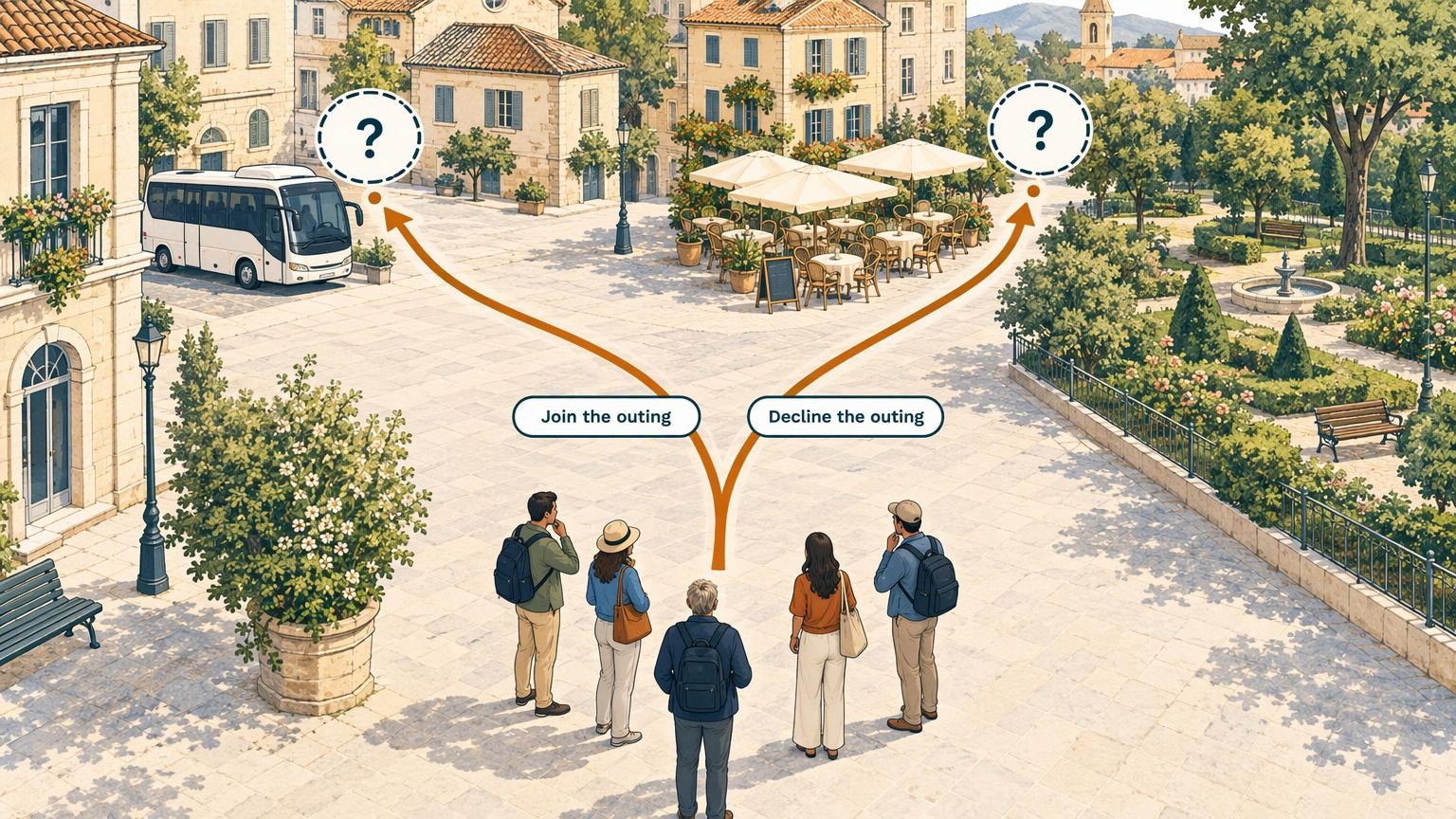
Illustration of travelers considering two paths through a town square, toward a coach or a café and garden, with question marks marking both unresolved options.
Imagine your family wants a guided introduction followed by an independent museum visit. One itinerary lists free time before onward travel. Another releases you after sightseeing with no group activity until dinner.
I would establish both tours' release and meeting arrangements. You would check museum opening and admission requirements against each gap. I would favor the second if the visit fits comfortably, but neither if timing remains too uncertain for the ticket you need.
The first could be better if your priority is lunch followed by guided travel. My family and group travel planning starts with your travelers' preferences, not an assumption that families need less structure.
For a couple wanting a private meal, I would use the same method. A workable evening may matter more than a free afternoon. For a honeymoon, I would distinguish time together from time remaining after a tiring transfer.
I would connect those preferences with romantic getaway planning where relevant. More independent time also means more decisions to handle yourself. Choose the division of guided and independent time you want, rather than the itinerary with the most gaps.
I would compare the days that matter most. Limited independent time can work when included experiences match your interests; several advertised breaks can disappoint if none supports your priority.
Keep the exact itinerary beside the quote. For each essential independent activity, I would record whether it fits, requires flexibility or points toward another itinerary. This separates a workable choice from one built on assumptions.
My Europe specialty makes this relevant to European vacation planning. I can connect your preferred guided segment with the wider trip decision, without assuming a fixed group schedule can accommodate an independent reservation.
If the route fits except for one important visit, I would consider independent time before or after the tour. Compare added accommodation, transport and overall cost with choosing another itinerary. An extension is worthwhile only if it solves the mismatch at a cost you accept.
Before committing, I would seek a current quote for your intended version. Keep supplier arrangements separate from your own plans, and retain clarifications affecting the choice. Your decision should reflect usable time and intended spending, not blank entries on a page.
Share the destination, dates and travel style you have in mind. A Superior Travel advisor will help turn the possibilities into one clear, personal plan.