
Describe the requirement precisely
I would replace a broad phrase such as special diet with the actual ingredients or preparation conditions that matter. Keep essential needs separate from substitutions you would simply prefer.
I would match essential dietary requirements to written arrangements for the proposed ship and sailing before booking. Establish notice deadlines, eligible venues and preparation limitations. A menu label or general accommodation promise does not establish whether the cruise can meet your particular needs.
I approach choosing a cruise for dietary requirements as a dining-fit decision. For Long Island travelers, choosing a cruise starts with essential meals, not the longest restaurant list.
When choosing a cruise, I distinguish appealing menus from usable arrangements. I am James McParland; my specialties include cruises, groups and all-inclusive vacations. Through our advisor-led travel planning on Long Island, I can bring your priorities into the comparison without promising supplier accommodation.
I would replace a broad phrase such as special diet with the actual ingredients or preparation conditions that matter. Keep essential needs separate from substitutions you would simply prefer.
I would save the cruise line's wording with the ship and sailing details. A summary such as dietary request noted should not replace an explanation of what the line can accommodate.
I would map breakfast and lunch as carefully as dinner. A workable evening arrangement does not answer what you will eat before an excursion or between scheduled meals.
I would describe requirements that apply to the same traveler in one clear statement. Separate answers about individual ingredients may not establish that a meal can meet all of those needs together.
I would record which limitations you accept and which would rule out the sailing. That helps prevent an attractive itinerary from outweighing an essential dining need.
I put essential dietary requirements ahead of restaurant variety. Appealing menus do not make a sailing suitable if its documented arrangements leave a nonnegotiable need unanswered.
I separate flexible preferences from food allergies, medically directed diets and essential religious requirements. Describe each need accurately, using your clinician's guidance where applicable. My role is travel planning, not deciding which ingredients or exposure conditions are medically acceptable.
Imagine you prefer vegetarian meals and also have a food allergy. I would compare vegetarian choices for enjoyment and variety, but evaluate the allergy through answers about ingredients and preparation. A vegetarian label would not resolve the allergy question.
I would compare the proposed ship and sailing against those essentials using documentation of notice deadlines, eligible venues and preparation or cross-contact limitations. You decide whether the stated arrangements fit your needs. If an essential point remains unanswered, I would hold off on booking that option; submitting a request is not confirmation.
For family and group cruise planning, I would keep each traveler's needs visible. A limited, suitable selection might work for one person while another needs greater variety. The table distinguishes those decisions without promising accommodation.
| Need | What I would establish | Decision effect |
|---|---|---|
| Flexible preference | Choices and substitutions | Compare variety |
| Essential ingredient restriction | Ingredients and preparation procedures | Resolve before booking |
| Required preparation or certification | Standard, availability and request process | Labels are insufficient |
I read a menu description as information about a dish, not a complete explanation of preparation. If cross-contact matters to you, I would evaluate it explicitly rather than treat an ingredient label as the answer.
I would ask the cruise line about relevant shared surfaces, utensils and cooking equipment, how staff communicate meal requests, and what the line cannot guarantee. The response should explain the process applicable to your requirement, not merely acknowledge it.
These are separate decisions: suitable listed ingredients may still require a different preparation arrangement. For a flexible preference, you might accept shared equipment without needing the same precautions. I would keep that distinction visible when comparing options.
I give specific explanations more weight than phrases such as special diets welcome. An offer to try to help does not identify available meals, preparation procedures or limitations.
I would not describe any ship as universally safe for food allergies. If the response leaves a medical question, I would suggest taking its exact wording to your clinician before committing. Your decision should rest on the stated arrangements, not reassurance alone.
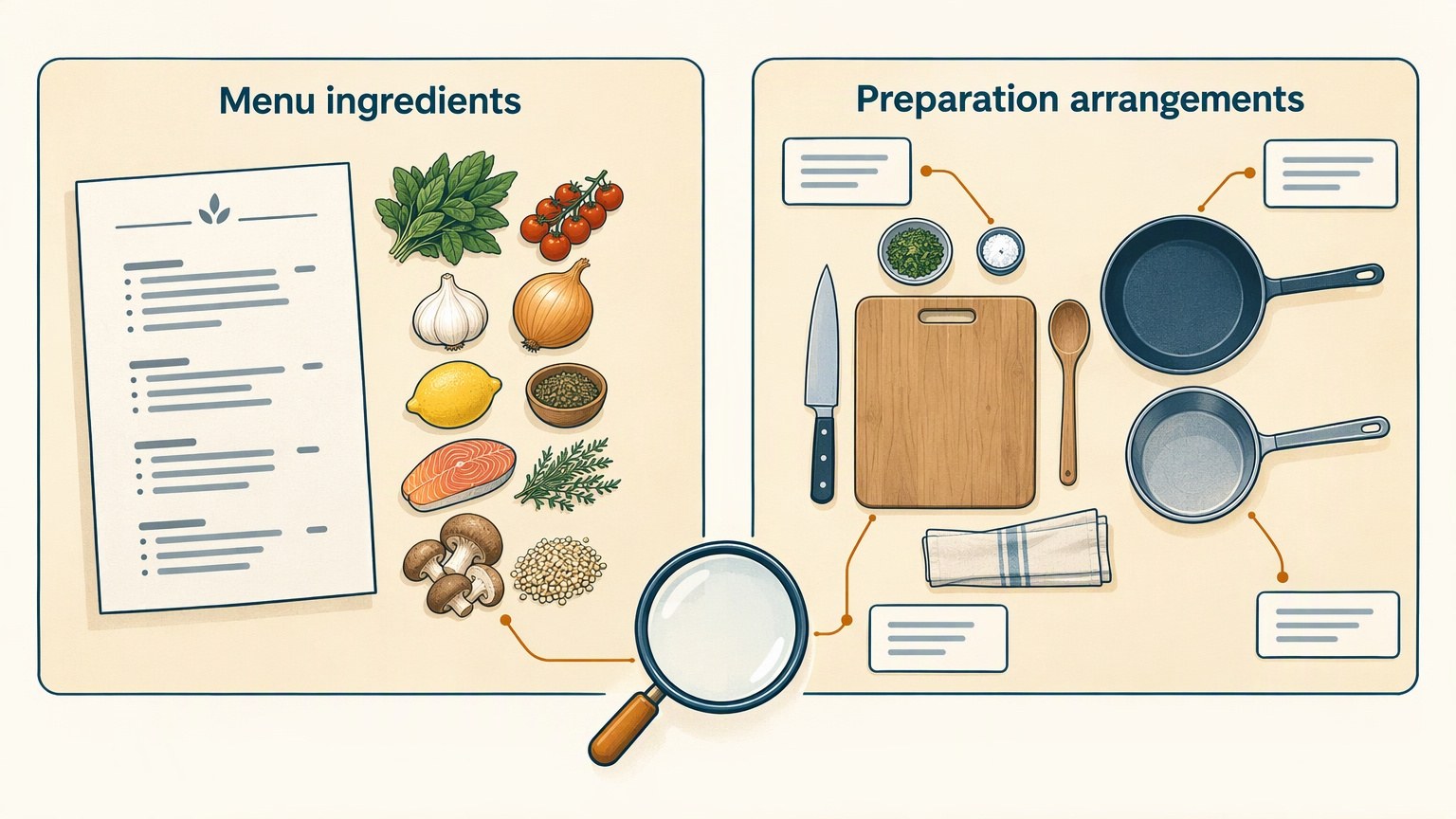
Illustration contrasting menu ingredients with preparation arrangements, using separate panels, abstract inquiry cards and a magnifying glass.
I would test the arrangements across a normal day at sea and a day ashore: breakfast before an outing, lunch after returning and dinner each need a usable answer.
I distinguish the main dining room, buffet, specialty restaurants, room service and excursion meals. Confirmation for one venue should not be carried over to another. This matters if your preferred schedule depends on eating outside the confirmed dining arrangement.
I would compare where you must go, any advance ordering and whom to speak with against your travel style. Scheduled meals might suit you, or reduce the flexibility you wanted. Restaurant count alone misses that trade-off.
For an escorted tour or river cruise, I would separate onboard meals from land dining and keep supplier responsibilities distinct. The ship's response need not cover every restaurant.
I would include cost without assuming a request is free or carries a supplement. Ask me for a current quote identifying included usable venues and any required arrangement affecting the total. A lower fare is less useful if suitable meals fall outside its inclusions or require a dining package.
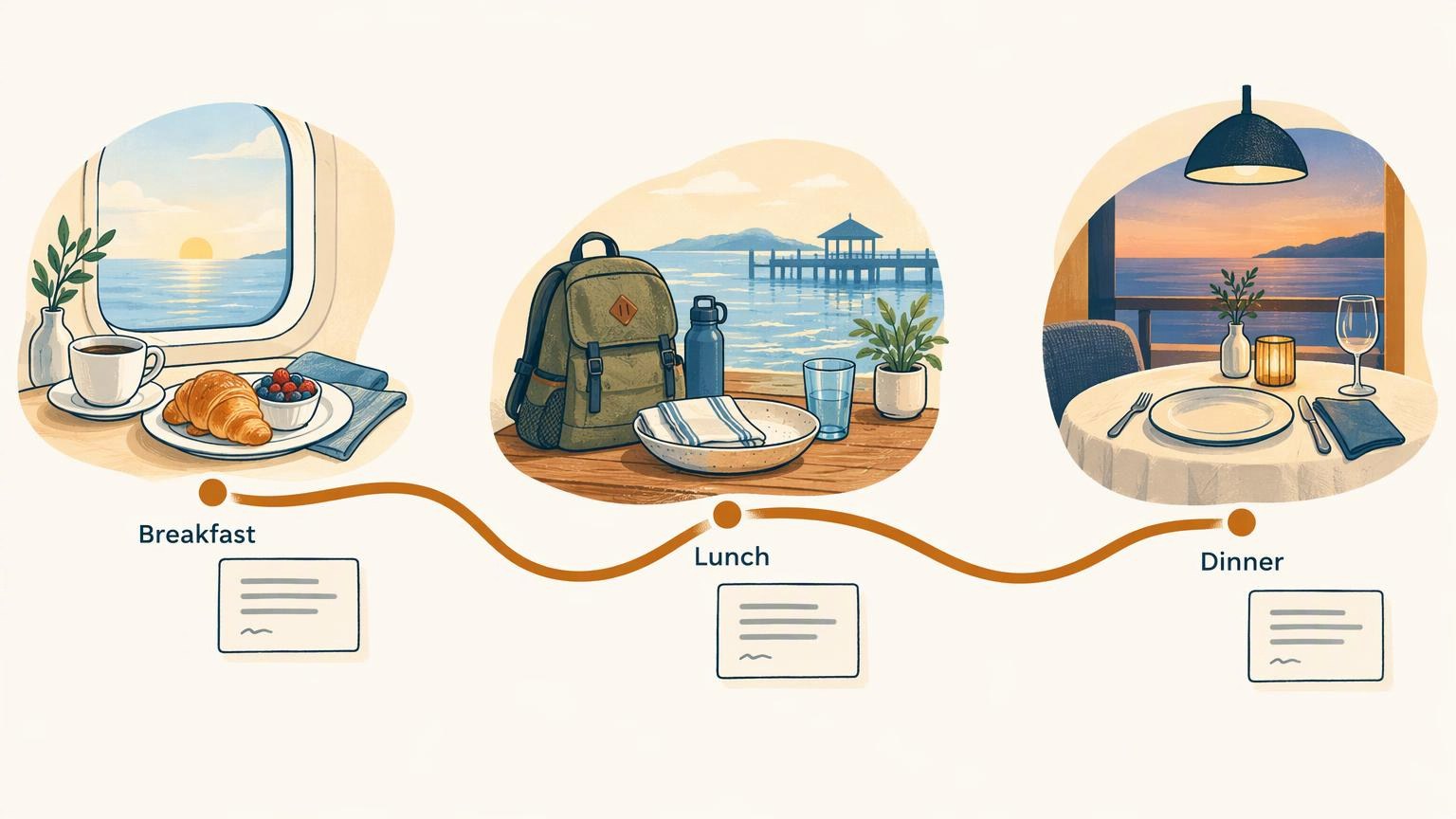
Illustration of a route connecting breakfast, lunch and dinner settings, each paired with a neutral note card; a daypack and pier distinguish the lunch stop.
I would establish the notice deadline while comparing sailings, before booking authorization. The answer should address your exact requirement and departure, rather than simply advise notifying the line early.
I separate submitting a request from receiving an accommodation response. A booking note records your need; the cruise line's explanation should identify what is possible, where it applies and what remains limited.
Near a request deadline, I would ask how late requests are handled. Cabin availability does not establish availability of a required meal arrangement.
My booking sequence would be:
I would review cancellation terms alongside timing. An opportunity to ask after booking is not equivalent to knowing before committing. If suitability remains uncertain, I would pause rather than treat a sent request as approval. The decision is whether the available answer supports proceeding, including any limitations you accept, not whether the paperwork has been submitted.
Imagine you want flexible meals, but one traveler has an essential ingredient restriction and needs preparation questions answered. One proposed ship offers many restaurants; another has fewer venues but a clearly described meal-request arrangement.
I would first have you define the nonnegotiable need, then compare each cruise line's response against it across breakfast, lunch and dinner. The line addresses its capabilities; you assess the limitations, with clinical guidance where needed.
If both fit, I would compare convenience, variety and total quoted cost. If only the structured arrangement fits, I would explain the trade-off: meals may need to follow that routine rather than your preferred spontaneous schedule.
If neither answers the essential question, I would pause. A different departure or vacation format is preferable to treating missing confirmation as approval.
My cruise specialty and Virgin Voyages Seacademy Graduate credential support a planning connection, not a dietary safety guarantee. The relevant benefit of advisor-led planning is bringing your priorities into a clear comparison. I would distinguish a suitable option from an attractive one with unanswered dietary questions; you retain authority to approve the booking.
| Dining fit | Booking decision |
|---|---|
| Both options meet essential needs | Compare convenience, variety and cost |
| Only the structured arrangement fits | Weigh its routine against flexibility |
| Neither answers the essential question | Pause; consider another departure or trip |
Share the destination, dates and travel style you have in mind. A Superior Travel advisor will help turn the possibilities into one clear, personal plan.