
Give the extra night a purpose
I would identify what an extension buys: a recovery day, an unhurried outing or a more comfortable departure. If it adds no useful time, I would reconsider it.

I would choose your stay by counting usable days, placing essential Disney experiences first and protecting rest. Treat arrival and departure as partial days until travel arrangements show otherwise. If priorities require rushing or sacrificing breaks, extend the stay or narrow your list.
I plan Disney vacations around usable time, not reservation nights. For Long Island travelers, Disney vacations begin with travel days, family routines and essential experiences. A longer booking helps only when it creates time you can use.
When comparing Disney vacations, I would separate essentials from optional additions before choosing dates. I am Mary Susan Schilling, and my specialties include family travel. Here, I explain how to choose a duration that fits your priorities without crowding out rest.
I would identify what an extension buys: a recovery day, an unhurried outing or a more comfortable departure. If it adds no useful time, I would reconsider it.
I would avoid making arrival evening responsible for an essential experience. Travel, settling in and eating still need room in the plan.
I would compare accommodation nights with the days you intend to use tickets. A day devoted to rest should not automatically become another planned park day.
I would place the following morning beside any important late evening. If sleeping later makes the next day's priorities impossible, I would change the sequence.
I would decide which optional experiences you can leave for another trip. That gives a shorter vacation a clear purpose instead of an impossible completion target.
I would start with your priorities, not a universal recommended stay. A focused visit and a broad wish list need different amounts of usable time, especially when you want room for quieter mornings or repeat visits.
I would list the experiences that make the trip worthwhile separately from optional additions. Then I would give each essential experience a place in the daily plan, allowing time to reach it, eat and take breaks. An outing that fits on paper may still crowd the day once those needs are included.
I would distinguish variety from repetition. Revisiting a favorite needs schedule space even though it adds nothing new to your list. That preference can justify more time just as much as another destination or activity.
My test is whether the essentials fit without every day going perfectly. If not, I would extend the stay or remove a lower-priority commitment.
A focused stay means leaving more experiences untouched, but it gives your vacation a clear purpose. I would add nights only when they make the schedule more comfortable, not simply to pursue a longer list.
I would map arrival through departure before booking. Accommodation nights show where you sleep, not how much uninterrupted activity time you have. Counting both separately prevents a reservation from looking more generous than its daily schedule.
On arrival, I would allow for the journey, transportation to your accommodation and settling in. Until arrangements are clear, I would keep that day flexible rather than assign an essential experience that would be difficult to move.
For departure, I would work backward from leaving your accommodation. Packing, transportation and the journey home come before an optional outing. A free morning is useful only when the activity fits without making departure rushed.
I would label the intervening days by their purpose: activity, recovery or a mix. This reveals whether an extension creates another outing, protects downtime or simply eases departure. Each can be worthwhile, but they solve different problems.
Through Disney vacation planning, I can build around your dates, budget and family needs. I would establish this usable-time map before settling accommodation length and intended ticket use, so a rest day does not automatically become another park day.
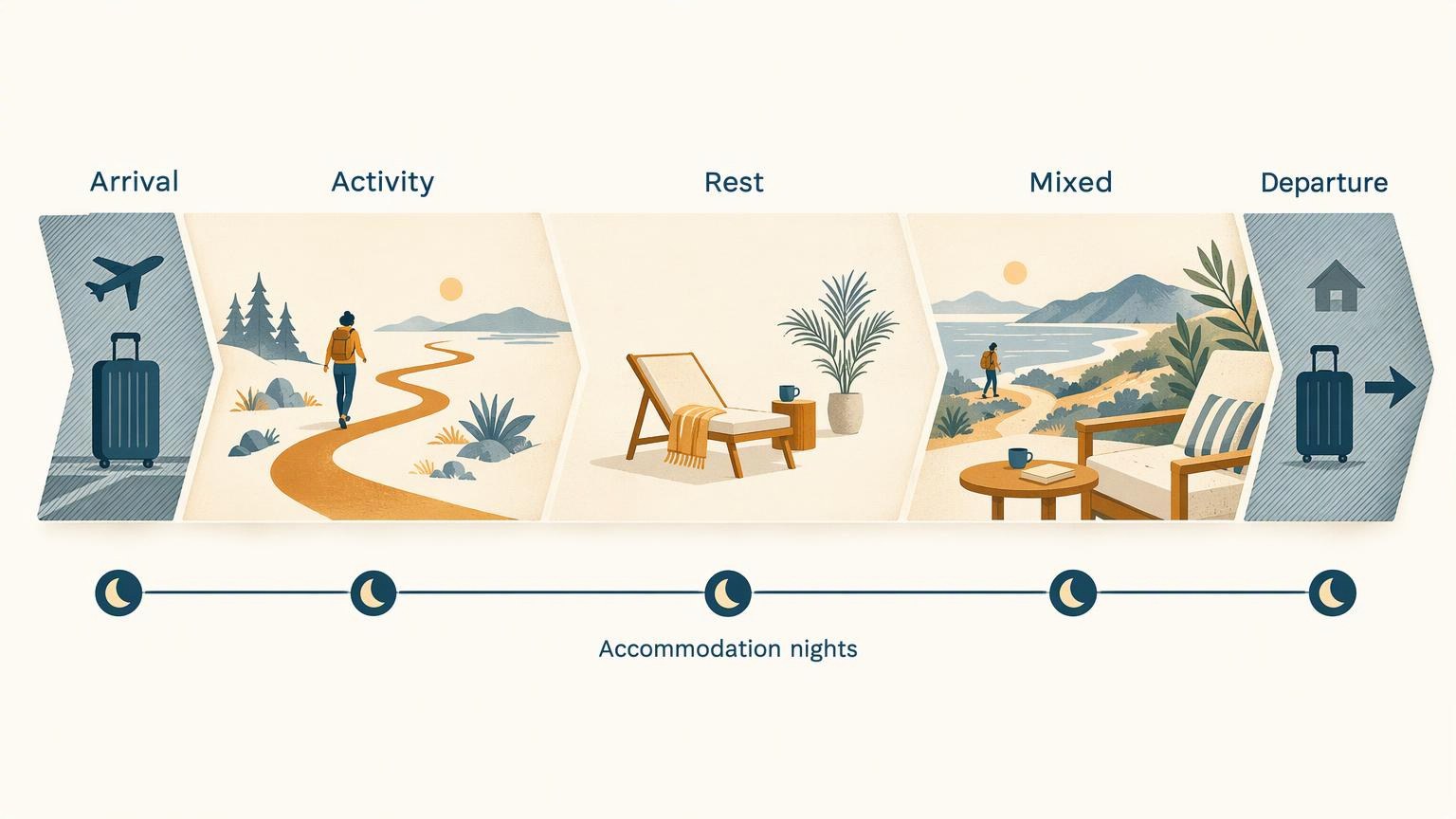
Illustration contrasts arrival and departure travel tasks with activity, rest and mixed-use time, above a separate line of moon icons labeled Accommodation nights.
I would protect rest before filling the schedule. Quiet mornings, midday downtime and early bedtimes reduce activity time, but they are not wasted vacation time. Your essential experiences need to fit the active hours your group can comfortably sustain.
I would compare routines rather than infer pace from age. Someone who likes early starts and free evenings needs a different schedule from someone who prefers slow mornings and late outings. More nights help only if the daily plan also respects those differences.
Imagine your group wants an evening experience, but a child needs midday rest. I would reserve the break first, allow time to return and regroup, then place the evening priority. If the morning becomes crowded, I would move a lower-priority activity to another usable day or leave it out, rather than shorten necessary rest.
I would consider separate activities only when the adults agree on supervision and a practical reunion plan. The adult accompanying a child during downtime may miss an experience. That consequence matters: splitting up accommodates different preferences, but it does not automatically simplify the day.
For your Disney vacation planning, I would compare spreading the same priorities across more usable days with choosing fewer experiences within fixed dates. The table distinguishes those approaches. I would favor the duration that supports an ordinary, repeatable daily pace, rather than one that works only when everyone tolerates the busiest possible schedule.
| Approach | Priority | Duration choice | Trade-off |
|---|---|---|---|
| Focused | Selected essentials | Keep the stay compact | Less variety |
| Activity-led | More experiences | Allow more active days | Less downtime |
| Rest-balanced | Protected breaks | Spread activities out | Extra nights can cost more |
I would compare complete trip totals, not accommodation rates alone. An extension needs a purpose that justifies its additional spending. A cheaper nightly rate does not necessarily make the longer trip better value.
Imagine you arrive in the evening, depart in the morning and fill every intervening day with outings. You also want an unhurried recovery day. The reservation has enough nights for the activities, but the daily plan has no room for rest.
I would first ask which outing you would least mind dropping. If removing it preserves your essentials, the shorter stay is reasonable. If every outing matters, I would compare an extension that creates the recovery day.
You decide what is essential; I use that choice to shape alternatives and a current quote. The longer option earns its place through better pacing, not length alone.
I would compare accommodation, intended ticket use, meals, transportation and optional spending without assuming everything is included. My guide to the benefits of using a travel advisor explains the broader role; the proposal must identify its own inclusions so you can judge the actual difference.
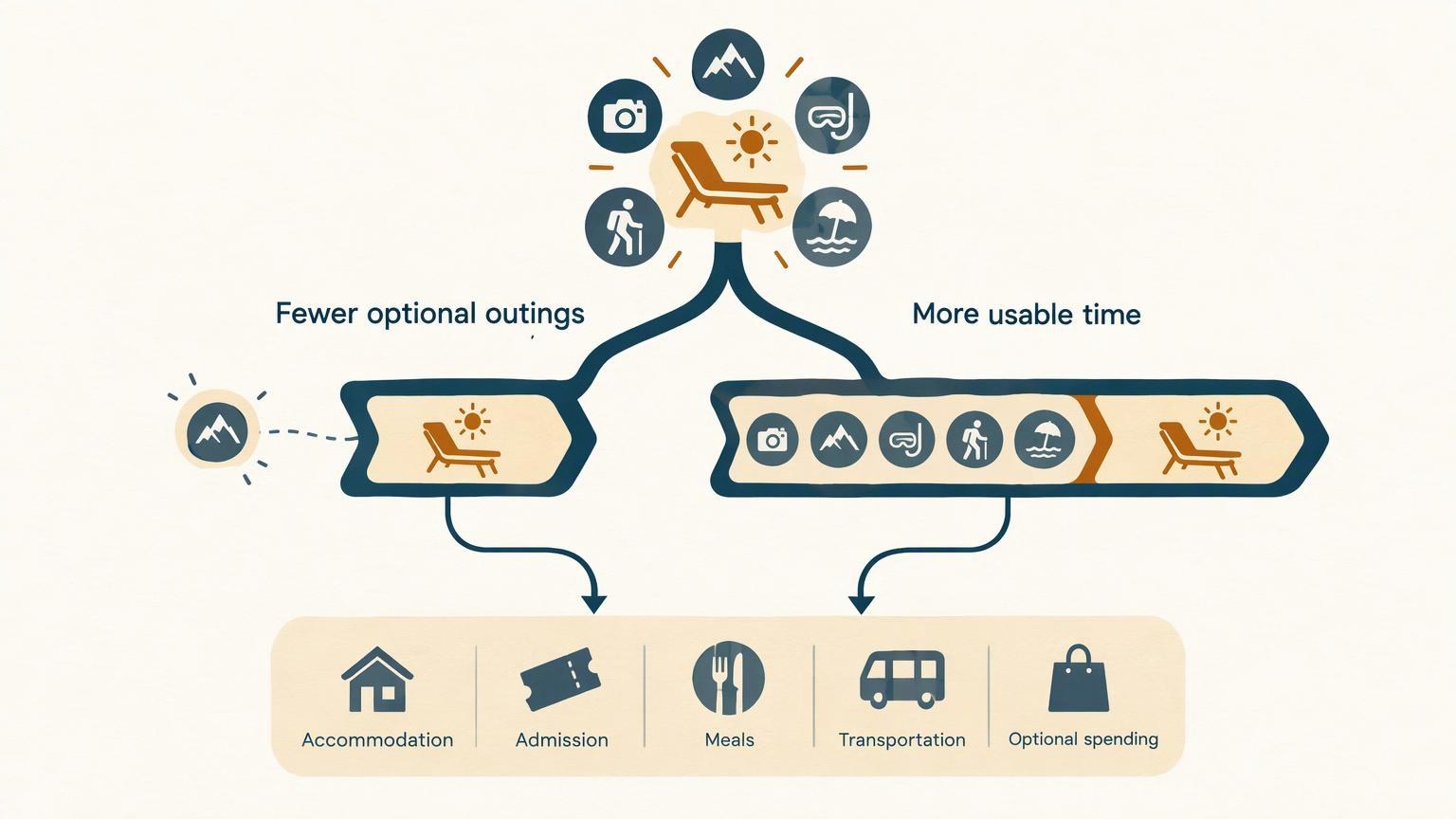
Illustration comparing fewer optional outings with more usable time, with both paths leading to accommodation, admission, meals, transportation and optional spending.
I would finish with a preferred stay length and its purpose. That gives planning a clearer starting point than requesting the longest trip within budget or a standard number of days.
Your brief should name the Disney destination, available dates, travelers and essential experiences. I would include your preferred pace, necessary breaks and travel arrangements already booked, distinguishing flexible dates from dates you must keep.
I would also identify an acceptable budget trade-off. Fewer optional experiences or a shorter stay may work; quietly removing rest you have already identified as necessary does not solve the same problem. This keeps the alternatives aligned with what you value.
At our Long Island travel agency, we provide advisor-led customized planning. My family-travel specialties and Aulani Disney Achievement provide relevant background, while your destination and priorities guide the proposed trip.
If your daily plan is straightforward and you prefer handling arrangements, independent booking may suit you. If you need help judging whether priorities fit the available time, my explanation of when to use a travel agent can help you decide what assistance would be useful before committing.
Share the destination, dates and travel style you have in mind. A Superior Travel advisor will help turn the possibilities into one clear, personal plan.