
Use the nap your child actually takes
I would distinguish reliable bed naps from occasional stroller or car naps. A sleep arrangement that sometimes works should not become the only option every afternoon.

I would choose family vacations with dependable room access, manageable returns from activities and flexible departures. If your toddler needs a bed to nap, I would prioritize proximity over extra attractions. I would assess travel days separately rather than rely on an airplane nap.
I compare family vacations by what happens around your toddler's nap. For parents on Long Island, family vacations must account for the journey from home: an appealing hotel cannot fix an arrival day with nowhere to rest.
My approach to family vacations starts with your child's current habits. I am Mary Susan Schilling, and my specialties include family travel, cruises and all-inclusive vacations. I would use those habits to compare room access, transfers and daily commitments before you choose.
I would distinguish reliable bed naps from occasional stroller or car naps. A sleep arrangement that sometimes works should not become the only option every afternoon.
I would allow for leaving the activity, transportation, lunch and your usual settling routine. The outing's finish time alone does not tell you whether a room nap fits.
I would separate reaching the hotel from gaining access to your room. Avoid making a prepaid arrival-day activity depend on immediate room access.
I would choose activities you can leave when necessary if afternoon timing matters. A short activity with a fixed shared return can be less flexible than a longer independent outing.
I would compare where the adults can sit while the toddler sleeps. A larger room deserves extra budget only if its layout gives you the separation you need.
I would begin with whether your toddler reliably sleeps away from a bed. If not, room-based rest should shape the itinerary. Reliable naps on the move give you more choices, but need not become your only option.
I would compare control over departures. A single accommodation base can still involve outings with fixed transportation. A changing itinerary may work if transfers avoid the rest window and sleeping arrangements are dependable.
For family and cruise vacation planning, I would distinguish cabin rest aboard from shore activities requiring their own return plan. I would not assume excursions allow early departures.
I would use this comparison to choose a structure, not rank destinations. Fewer long outings may be worthwhile when room-based rest matters more to you than seeing everything.
| Structure | Potential fit | Trade-off to assess |
|---|---|---|
| Single accommodation base | Room-based naps between independent outings | Actual activity-to-room journey |
| Cruise | Cabin rest during time aboard | Shore excursion and return arrangements |
| Tour or changing accommodation | Travel timed outside the preferred rest window | Fixed departures and room access after each move |
| Structure | Potential fit | Check before… |
|---|---|---|
| Single base | Room naps between independent outings | Full activity-to-room journey |
| Cruise | Cabin rest while aboard | Shore excursion return arrangements |
| Tour or changing accommodation | Transfers outside preferred rest window | Fixed departures and room access |
I would trace the route from your planned activity to the accommodation category being quoted. The property entrance is not the room door: stairs, transportation waits and stroller access can change how practical the return feels.
My comparison would include distance, estimated travel time and the route itself, plus collecting belongings, changing clothes and lunch before rest. If you depend on a shuttle, its departure and return arrangements matter as much as the ride. I would favor a dependable return over a shorter ride with uncertain waiting time.
For Caribbean and all-inclusive vacations, I would assess room position separately from the meal plan. Included meals do not establish that lunch fits your nap routine or that dining is convenient to your accommodation.
Inside, I would compare actual separation rather than room labels. An open-plan suite may offer space without somewhere for adults to talk during sleep. I would also consider whether adults can reach the bathroom and their belongings without crossing the sleeping area. A floor plan that supports those ordinary movements may be more useful than extra square footage alone.
I would distinguish requested equipment or positioning from confirmed arrangements. For the sleeping setup, I would follow age-appropriate product instructions and your pediatrician's guidance rather than improvise a space to fit the itinerary.
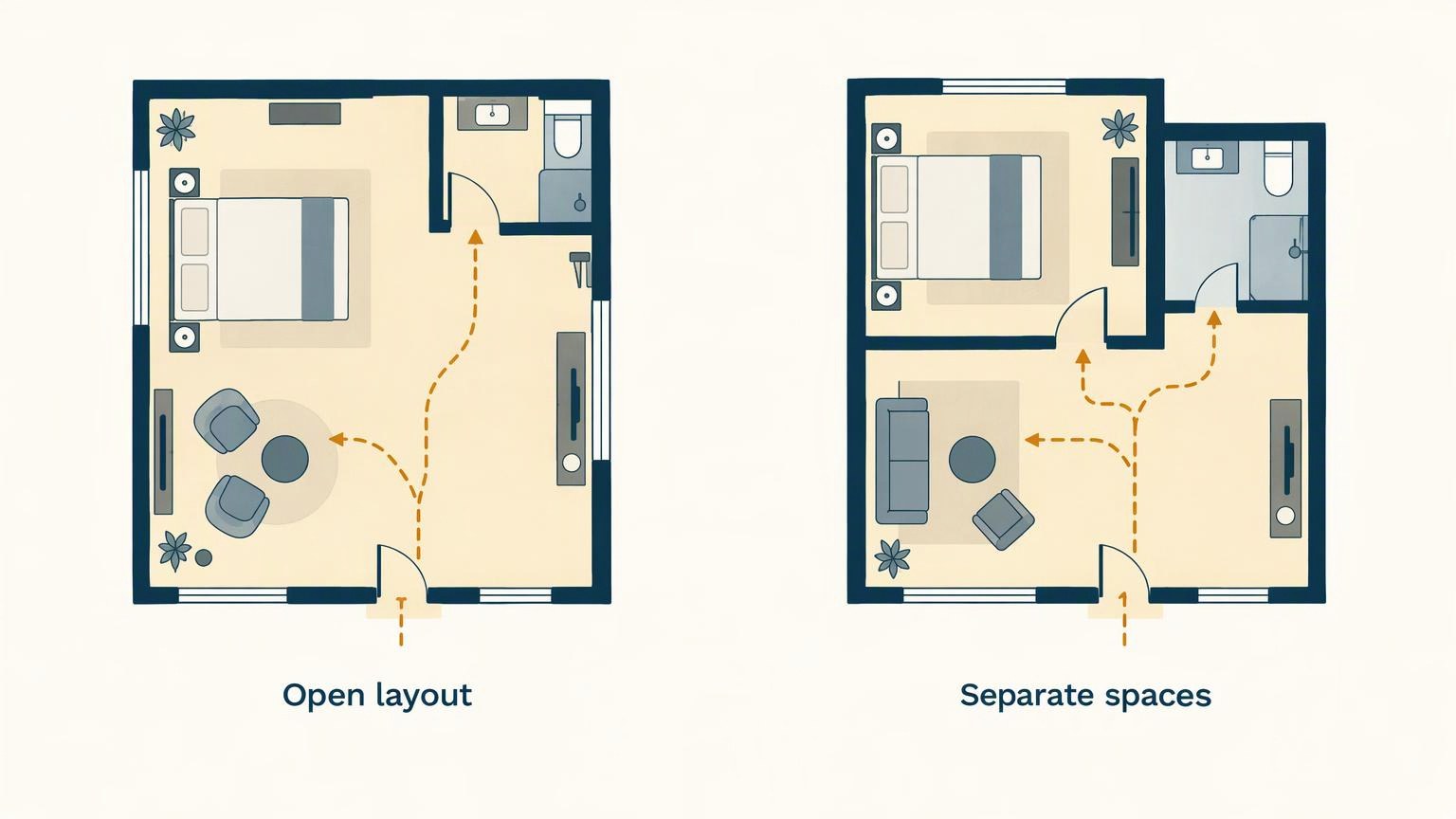
Illustration comparing an open room with a partitioned layout, with dashed routes connecting entrances, seating areas and bathrooms.
I would evaluate the full journey: leaving home, airport procedures, boarding, connections, baggage collection and the onward transfer. A flight overlapping nap time does not guarantee sleep, and its departure time alone cannot describe the day's interruptions.
I would favor fewer awkward transitions when those are your child's main difficulty. A nonstop removes a connection but may have an inconvenient departure or arrival. I would compare the complete sequence, including waiting periods, rather than make flight type the deciding factor. The preferable journey is the one whose disruptions your family can manage.
On arrival, I would separate reaching the accommodation from confirmed room access. Any waiting period needs a plan that does not depend on promised early check-in.
For European vacation packages, I would consider time-zone differences and accommodation changes separately. I would keep the first day light instead of committing to demanding sightseeing immediately after travel.
I would also review departure day. Before choosing, I would examine the gap between checkout and onward travel, where your family can spend it, and which arrangements are included or need separate planning.
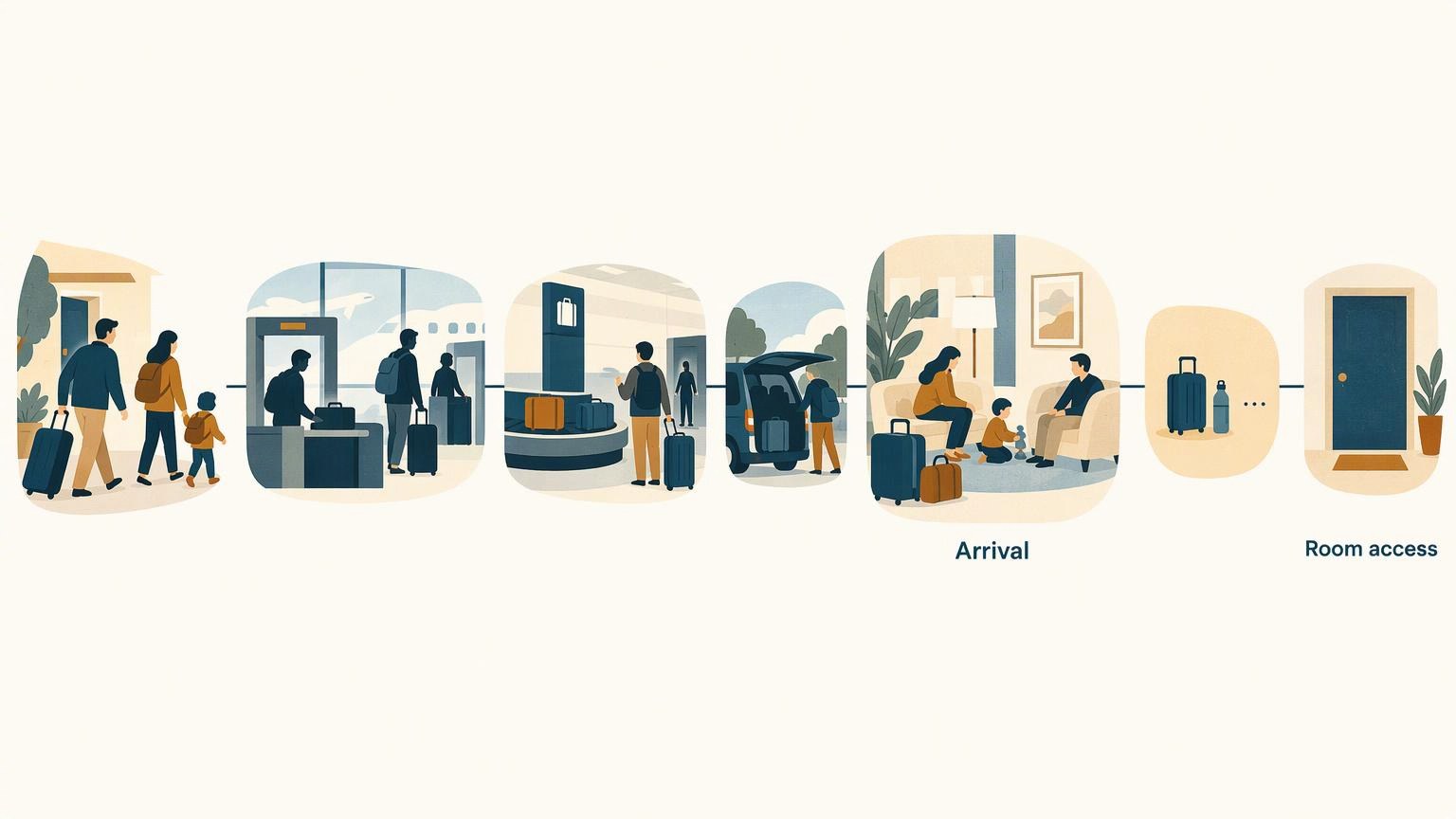
An illustration separates lounge arrival from room access in a connected travel sequence, with a carry-on, water bottle and ellipsis between the waiting family and the door.
I would work backward from when you want your toddler ready to rest: allow for settling, lunch or changing, and the return journey. What remains is your usable activity window, not the entire morning on the calendar.
I would put your most important experience inside that window and keep extra stops optional. If an outing runs late, dropping an extra stop preserves the trip's purpose without rushing lunch, transportation and settling. I would choose fewer commitments over a schedule that only works when every transition goes perfectly.
For Disney vacation planning around your family, I would compare the rest break with the transport required to leave and return. The journey must leave enough time to make the break useful.
With escorted tours and river cruises, I would examine individual activity blocks. Guided outings can fit; the distinction is whether their timing works and you control your return.
I would keep an alternative for unexpected naps. An optional afternoon walk adapts more easily than a prepaid activity with a fixed start. My goal is tolerable alternatives, not guaranteed sleep.
I would compare family vacation packages for the same dates, travelers and sleeping needs. My cost review would separate accommodation, meals, transportation and activities, identifying inclusions, optional spending and booking terms. A cheaper headline quote is not necessarily the better match if essential arrangements cost extra.
I would weigh a separate sleeping area, independent transportation or better room location against daily use. Each can affect the quote, but extra space has little nap-related value if everyone still shares the sleeping area.
Suppose your toddler naps only in bed and you want a resort stay with pool time and sightseeing. I would compare a practical pool-to-room route against more space with a transport-dependent return. If both sleeping layouts work, I would favor the dependable return you expect to use daily.
If sightseeing is the main attraction and the resort makes those journeys awkward, I would consider another accommodation base rather than prioritize facilities.
I would also weigh prepaid activities against the usable outing windows. An inclusion you routinely skip for naps adds little practical value. I would favor spending that protects your main experience rather than paying for a fuller schedule you cannot comfortably use.
My family travel and all-inclusive specialties provide a relevant starting point for that comparison. For context, I would point you to the benefits of using a travel agent.
Share the destination, dates and travel style you have in mind. A Superior Travel advisor will help turn the possibilities into one clear, personal plan.