
Give each traveler a say
I would collect sleeping preferences individually before discussing the budget together. Someone may accept a shared room but feel uncomfortable objecting to a shared bed in front of the person paying.

I would choose a room only when its exact category permits three adults and confirms sleeping arrangements everyone accepts. If bed sharing, an alternative sleeping surface, privacy or bathroom access fails your needs, I would compare another room before committing.
I approach resort booking for three adults by separating permission to stay from comfort at bedtime. For Long Island travelers, resort booking starts with who sleeps where, not the pool photograph. Permitted occupancy alone does not establish a suitable arrangement.
Before resort booking, I would establish willingness to share beds, accept alternative sleeping surfaces or share a bedroom. I am James McParland; my all-inclusive and group specialties provide a relevant starting point for this comparison.
I would collect sleeping preferences individually before discussing the budget together. Someone may accept a shared room but feel uncomfortable objecting to a shared bed in front of the person paying.
I would agree on the split before requesting alternatives. Equal shares and a different contribution from the traveler occupying a separate room are choices for your party, not assumptions to build into the quote.
I would name an acceptable alternative if the preferred configuration cannot be confirmed. That might mean separate rooms or a different resort, rather than treating an uncertain bedding request as settled.
I would use the same sleeping requirements when changing resorts or dates. Otherwise, a more attractive quote can quietly bring back a room arrangement that your party already rejected.
I treat adult occupancy and bedding as separate decisions: whether the exact room category permits your party, and whether its confirmed sleeping surfaces suit all three travelers. Both must work before the room becomes a candidate.
I would seek an adult-specific answer rather than infer permission from a maximum-guest figure. A family-oriented description does not establish that the category accepts three adults, even if its stated capacity looks sufficient.
For bedding, I would write the arrangement in ordinary language: who shares, who sleeps separately, and what each person sleeps on. Where a description lists alternative bed configurations, I would establish which one the reservation secures. An acceptable possibility is not the same as confirmed bedding.
A sofa photograph would not settle the question. I would establish whether it is an adult-permitted sleeping surface included in the reservation or merely requested, then let the intended sleeper assess it.
For Caribbean and all-inclusive vacation planning, I would keep those answers tied to the exact category and dates. Similar room names are not a reason to carry one category's occupancy or bedding answer into another.
I use a room name to find its description, then judge the layout. A suite label does not establish a separate bedroom, a sleeping area behind a door or anything beyond one larger open space.
I would follow an ordinary evening through that layout. Can one traveler sleep while others stay awake? Does bathroom access pass through someone's sleeping area? When an alternative sleeping surface opens, is there still a practical route through the room?
I distinguish bedroom separation from independence. A door can help with privacy, but a shared bathroom and living area still require coordination. I would weigh that compromise against your schedules, rather than assume more space resolves it.
For a couple traveling with another adult, I would consider the couple's need for private time without assuming familiarity makes sharing comfortable. My approach to romantic getaways and room-category choices treats privacy as a practical decision.
If a required feature remains unclear, I would leave the room off the final shortlist. Extra floor space or an appealing view would not compensate for missing separation that someone needs to accept the arrangement.
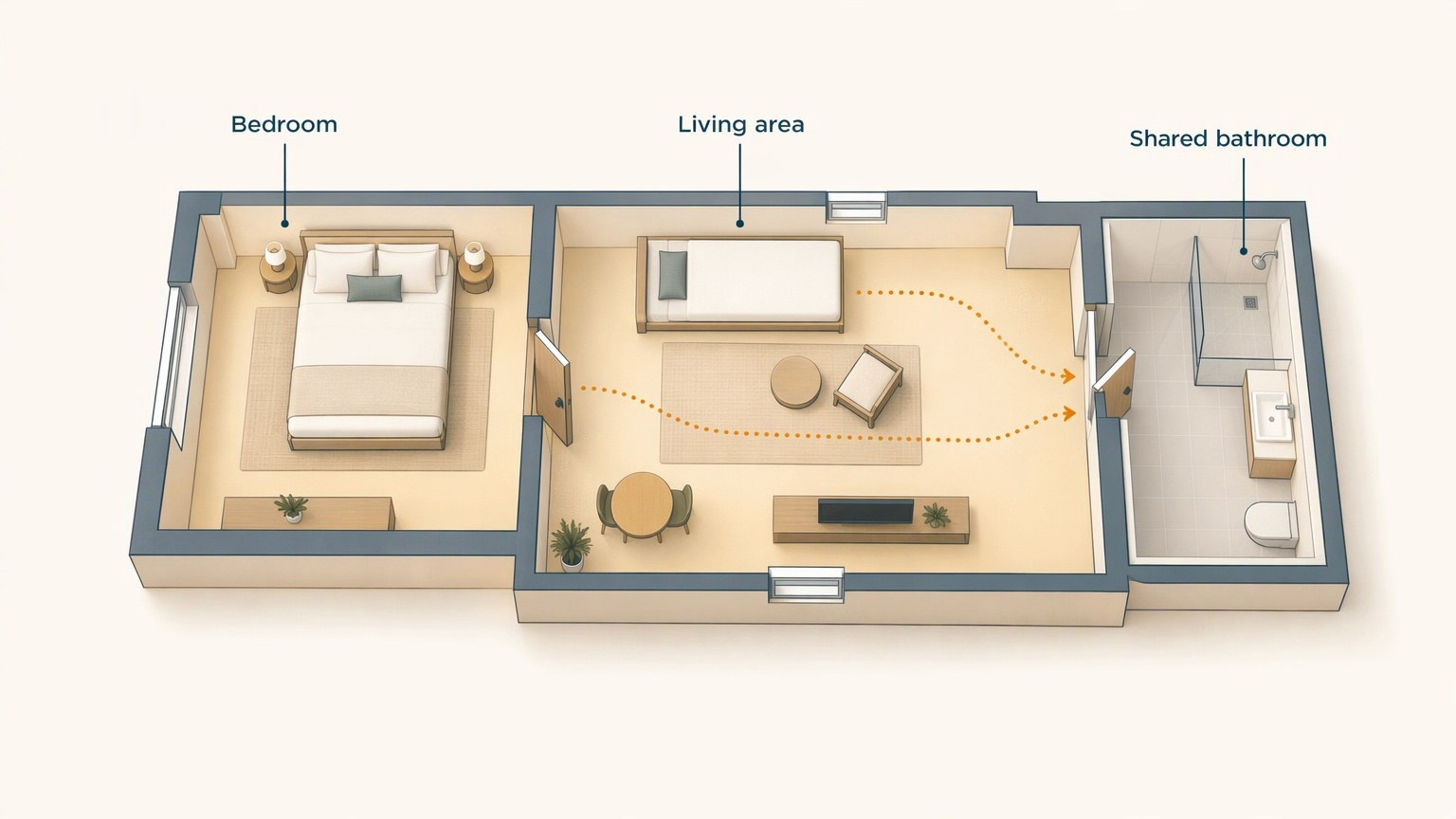
Illustration of a separated bedroom and a living-area sleeping surface, with dotted paths showing shared circulation toward the bathroom.
I would compare another room as soon as sharing conflicts with an essential preference. Permitted occupancy cannot resolve unwanted bed sharing, incompatible sleep schedules or insufficient privacy. A larger open room may leave the same problem intact.
I would keep a shared room in contention when everyone accepts its confirmed setup. If a bedroom door solves the concern, a suite with verified separation may fit without requiring independent rooms. However, I would evaluate its sleeping surfaces and bathroom access separately: bedroom separation does not establish another bathroom.
Separate rooms become useful when travelers need independent sleeping space or cannot comfortably coordinate their routines. I would decide whether proximity matters before treating nearby or connecting rooms as necessary. A connection that is only requested cannot satisfy an essential connecting-door requirement.
I would compare only configurations that permit your adult allocation and meet your nonnegotiable needs. Better separation may cost more, but it can solve a problem the cheaper room leaves open. The table summarizes that trade-off; your party's accepted bedding and privacy requirements determine which options deserve a current quote, not the room label alone.
| Configuration | Best fit | Trade-off |
|---|---|---|
| Shared room | Accepted bedding | Shared routines |
| Verified separate-bedroom suite | Bedroom privacy | Check third bed and bathroom |
| Separate rooms | Independent sleep | Total cost and proximity |
I use connecting rooms to mean rooms linked by an internal door. An essential connection needs confirmation, not a proximity request. Our family and group accommodation planning considers configurations; I would distinguish your need for connection, proximity or independent space.
| Configuration | Best fit | Trade-off |
|---|---|---|
| Shared room | Accepted bedding | Shared routines |
| Verified separate-bedroom suite | Bedroom privacy | Check third bed and bathroom |
| Separate rooms | Independent sleep | Total cost and proximity |
I compare prices after excluding arrangements someone cannot accept. A lower rate is not a useful alternative when its sleeping setup fails an essential requirement. This keeps the budget discussion focused on viable choices.
My comparison would use identical dates and all three adults, showing the allocation in each room. I would compare complete totals, not multiply an advertised per-person figure without establishing its occupancy basis.
I would distinguish accommodation from meals, transfers and other intended spending. For an all-inclusive stay, I would review the proposal's inclusions for each adult and whether a category change alters them. Comparing room prices alone can hide a difference in what you receive.
The cost drivers I would examine are dates, category, adult allocation, room count and included services, plus any applicable sleeping-arrangement charges. Payment and cancellation terms also belong in the comparison. I would not assume suites cost less than separate rooms.
When exploring the Punta Cana, Antigua and Sandals resort guide, I would price the suitable category, not an entry-level offer. A current quote should make the lower-cost option's compromises clear before you choose between acceptable arrangements.

Illustration of two proposal folders labeled Suite and Separate rooms, with matching pictograms, three traveler tokens and an overlapping airplane route card on a desk.
Imagine a couple traveling with a friend. The couple accepts sharing a bed; the friend requires a separate sleeping surface and bedroom door. I would translate those preferences into requirements before comparing prices, so an attractive rate cannot override them.
First, your party would agree that an open-plan room fails the privacy requirement even if it permits three adults. I would then compare a suite with verified separation against separate rooms, subject to the resort confirming occupancy and bedding.
Next, you would consider bathroom access and schedules. A suite remains a candidate if the friend can rest without others crossing the sleeping area. Otherwise, separate rooms better match the need, and your party would decide whether the quoted total fits its budget.
I would help connect preferences to configurations worth comparing, rather than make sharing the default winner. The benefits of working with a travel advisor matter when uncertainty concerns what a reservation secures.
Finally, I would review the category, adult allocation and bedding separately from outstanding requests. You should be able to explain where everyone sleeps without relying on an upgrade or unconfirmed arrangement.
Share the destination, dates and travel style you have in mind. A Superior Travel advisor will help turn the possibilities into one clear, personal plan.