
Separate essential stops from optional ideas
I would mark the activities you would regret missing before selecting accommodation. An optional outing should not automatically determine where you spend the night.

I favor one base when essential outings fit comfortable return journeys. I favor split stays when relocating protects sightseeing time or an important early or late activity. Before booking, I compare repeated travel with packing, luggage transport and the gap between rooms.
I approach itinerary planning by deciding where you need to wake up and finish each day, before choosing hotels. For Long Island travelers visiting Europe, itinerary planning tests whether returning to the same room supports your priorities or creates avoidable backtracking.
My itinerary planning comparison starts with essential activities, trip length and tolerance for moving. Through Superior's Long Island travel planning, I connect those needs to your route. Either arrangement can work; I focus on what each lets you do comfortably, rather than hotel count alone.
I would mark the activities you would regret missing before selecting accommodation. An optional outing should not automatically determine where you spend the night.
I compare the outward journey and the return, including access to transport. A manageable morning journey may feel different after an evening activity.
I would identify any need for a midday rest or access to equipment. That requirement belongs in the accommodation decision, not just the packing list.
I would name the experience or usable time a move protects. If the answer is simply another hotel, I would reconsider whether changing rooms is worthwhile.
I would leave room for optional activities within the chosen bases. Keeping afternoons open does not require leaving your overnight arrangements undecided.
I start by grouping activities that belong together, then testing overnight arrangements. One base means returning to the same accommodation after outings; a split stay means relocating so different parts of your trip begin from different hotels.
Hotel count alone does not tell me whether an itinerary is complicated. A settled stay can involve difficult return journeys, while a straightforward move may resolve an awkward connection. I identify which essential activity becomes harder, shorter or impossible under each arrangement.
I also consider a reduced route. If an optional stop creates most of the travel burden, dropping it may be better than adding accommodation. That preserves time for priorities rather than treating every saved idea as a commitment.
When reviewing escorted tours and river cruises as alternatives, I evaluate their actual overnight pattern separately. Their schedule and included arrangements must still suit your plans.
My comparison keeps the desired experience consistent. I would not call one base easier after removing an essential visit, or credit a split stay with more sightseeing while overlooking its transition day. Both options must support the trip you actually want.
| Structure | Best fit | Trade-off |
|---|---|---|
| One base | Comfortable essential return journeys | Repeated travel; constrained early starts or evenings |
| Split stay | Important activities near the next base | Packing, transport and room handoffs |
| Reduced route | Optional stop creates disproportionate travel | Leave that visit for another trip |
| Structure | Best fit | Trade-off |
|---|---|---|
| One base | Comfortable essential return journeys | Repeated travel; early or late limits |
| Split stay | Important activities near the next base | Packing, transport and room handoffs |
| Reduced route | Optional stop creates most travel burden | Leave that visit for another trip |
I compare door-to-door travel, not just the main train ride or drive. For each outing, I include reaching departure, waiting or connecting, reaching the activity and returning afterward. I use current schedules for your dates before treating a connection as workable.
Then I add journeys that repeat because you sleep at the same base. Repetition matters when several priority activities require retracing the same route. It matters less when outings go in different directions and relocation would not shorten the others.
For a split stay, I count packing, checkout, transporting bags, reaching the next accommodation and settling in. I include any return to the original area that the move creates: changing hotels can shift backtracking rather than eliminate it.
My test is usable time. Arriving earlier matters if it lets you attend something important; saved travel time matters less if luggage handling prevents you from using it. I do not count every saved minute as extra sightseeing.
I test early and late activities separately, including required arrival times and the last workable return. A daytime connection does not establish that an evening outing will work.
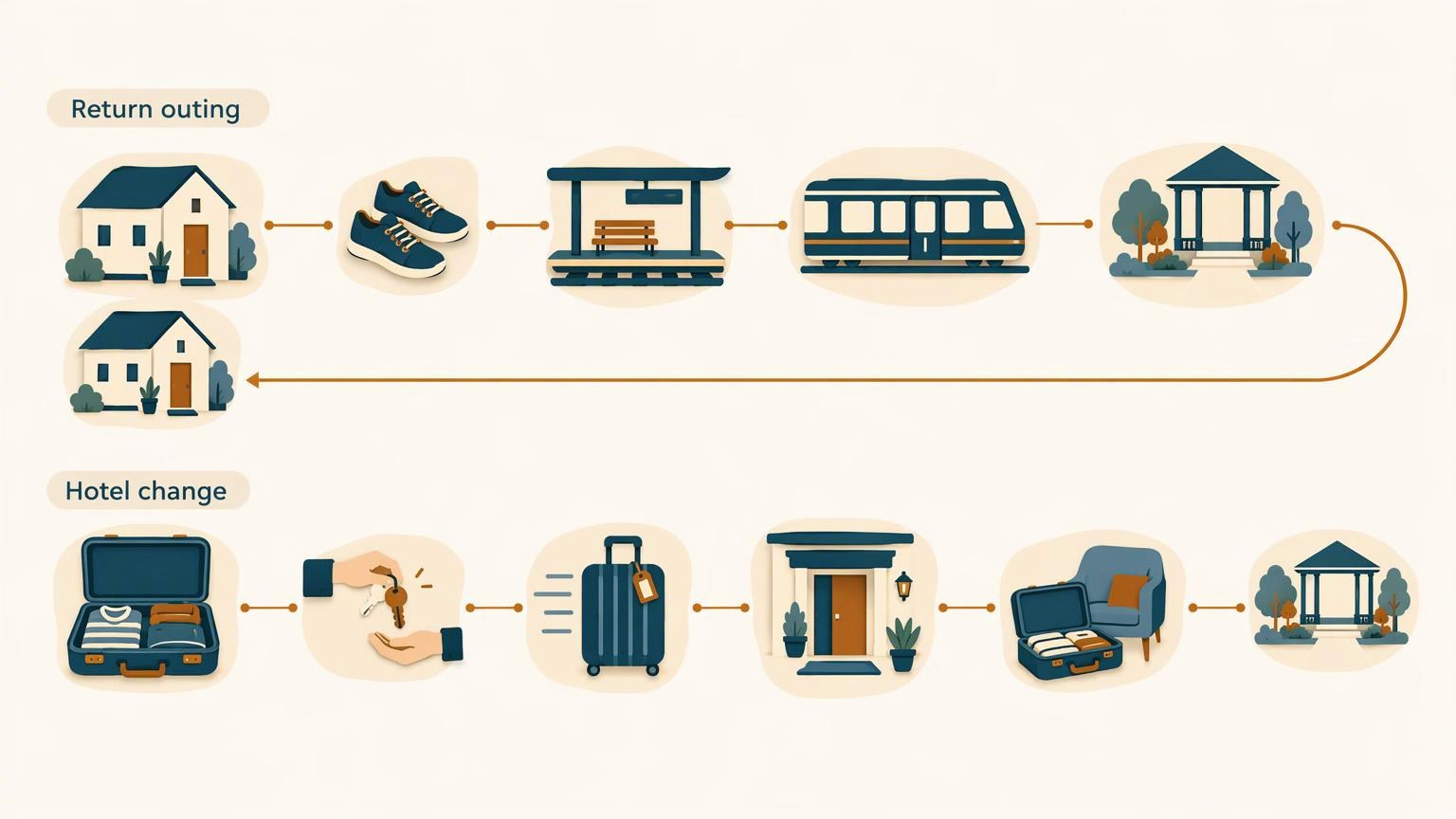
Illustration comparing a return outing with a hotel change, using connected travel icons, a curved return arrow, and packing and settling-in steps before a pavilion.
I treat a hotel change as an interval when your belongings and room may be in different places. Before adding activities, I establish checkout and check-in arrangements and whether storage is available. I do not assume early room access or luggage delivery.
If storage is available, its location matters. Bags at the departing hotel may require a return visit; bags at the next hotel require reaching it first. I favor the arrangement that supports your route without an inconvenient detour.
My moving-day plan keeps medication, documents and anything needed before room access with you. If someone needs reliable rest space, I prioritize that over an activity squeezed into the handoff. Storage solves a baggage problem, not a room-access problem.
For family and group travel, I consider who can comfortably carry what and whether everyone needs to remain together. The handling task matters more than traveler count alone, particularly when luggage and essential equipment need to move together.
I keep moving-day activities flexible until these arrangements are established. An outing that works without bags can become impractical when everyone must transport luggage along the same route.

Illustration of two seated travelers with a day bag, a suitcase in a separate storage alcove, and a closed door across the waiting area.
I compare complete trip totals for the same dates, room needs and priority activities. A lower nightly rate does not make one base cheaper if it requires repeated transport. A higher rate does not make a split stay poor value if it removes journeys you would otherwise purchase.
My comparison includes accommodation, required transport and separately charged services you intend to use. I distinguish included breakfast or transfers from items needing their own budget, using current quotes rather than assuming what a hotel change will cost.
I read payment and cancellation terms for each accommodation separately. Split stays can involve different terms across bookings. I keep those financial consequences visible without treating flexibility as guaranteed by either format.
For a celebration, I protect meaningful downtime. Romantic getaway planning is relevant when an unhurried evening matters more than another stop. That preference belongs in your budget; it does not make one arrangement universally better.
For context on the advisory role, why use a travel agent explains the broader planning decision. Here, I keep costs tied to the overnight structure and the experiences you want to preserve.
Suppose you want several days exploring one area and an evening activity elsewhere. You dislike repacking, but the evening is essential. I first test whether a return journey works after that activity, including the connection back to your accommodation.
If the return is comfortable and other outings do not repeat burdensome travel, I favor one base. If not, I compare a split stay that places the evening activity after the move, rather than during the luggage handoff.
If moving adds more disruption than you will accept, I revisit optional visits instead of pretending the difficult return has disappeared. The choice follows from the evening you want, the journey it requires and your tolerance for changing rooms.
With that same evening outing optional, I might drop it and preserve a settled stay. I would not change hotels merely to retain every wish-list item.
My specialties include custom vacations, cruise planning and group travel. Superior Travel Consultants provides customized European vacation planning, making this structure decision a useful starting point for discussing your proposed route before accommodation commitments, while your overnight choices can still reflect your priorities.
Share the destination, dates and travel style you have in mind. A Superior Travel advisor will help turn the possibilities into one clear, personal plan.