
Check the overnight date
I would record the local arrival date beside the departure date. If the journey crosses into another calendar day, I would build the first accommodation night around the actual arrival.

I would approve an itinerary when arrival arrangements, door-to-door transfers, sightseeing windows and recovery time fit together. Before booking, I would remove or rearrange any stop that depends on an unverified connection or leaves too little time for your essential experiences.
I approach itinerary planning by calculating your usable time at each stop. For Long Island travelers, itinerary planning starts before hotel selection: departure and arrival dates must support your priorities, not merely connect destinations.
I am Heather Hamann, a travel advisor specializing in custom vacations, cruise planning and group travel. My itinerary planning test separates travel from sightseeing, measures full transfers and protects recovery. I would use that test to decide whether to keep, reorder or remove stops before you commit.
I would record the local arrival date beside the departure date. If the journey crosses into another calendar day, I would build the first accommodation night around the actual arrival.
I would decide where your bags go before scheduling sightseeing between accommodations. Without a confirmed storage arrangement, I would treat that interval as travel time rather than a free activity window.
I would distinguish arriving at a hotel from being able to enter your room. If rest is necessary before going out, I would check the applicable room-access arrangements before approving an arrival-day activity.
I would place meals in the schedule before filling the remaining gaps with attractions. A day that works only if you skip lunch is not the pace I would approve for a relaxed vacation.
I would pair a weather-dependent priority with a practical alternative. That replacement should fit the same part of the day, rather than require another transfer that changes the entire schedule.
I start with the local arrival date and time, then calculate when sightseeing can reasonably begin. Landing is only the first event: applicable arrival procedures, baggage collection, onward transport and accommodation arrangements still belong on that day's timeline.
I label days as travel-led, partly available or fully available. These labels do not promise how quickly an airport or hotel will move. I would treat sightseeing windows as estimates until the relevant schedules and arrangements are checked.
For European vacation planning, I compare accommodation nights with usable time between arrival and departure. A stay that sounds generous in nights may offer little uninterrupted sightseeing. I would judge its length by the experiences it can comfortably accommodate, rather than the number of hotel nights alone.
I also work backward from departure. Checkout, transport and the carrier's reporting requirements can rule out a final-day timed attraction.
My approval test is whether every essential experience has a credible window. If an activity requires immediate baggage delivery, early room access or a perfect connection, I would move it, replace it or extend the stay before purchasing it.
I measure transfers from leaving one accommodation to being ready at the next. Flight or train duration is only part of that interval. Packing, checkout, transport to the departure point, reporting requirements, waiting and the final journey all affect the day.
I record exact departure and arrival points beside each proposed service. A city name does not identify the airport, station or terminal. Without those details, I would treat the estimate as incomplete rather than build a timed activity around it.
I compare the full travel block with the time remaining afterward. A short ride can interrupt most of a sightseeing day if it departs midway through it. An earlier service may preserve useful time, but I would weigh that benefit against the earlier wake-up.
In escorted tour and river cruise planning, I distinguish supplier-scheduled movements from independent arrival or departure travel and verify joining instructions.
I also consider a delay's consequences: whether the next commitment can move, whether tickets are connected under applicable terms, and how a missed service would affect later stops. A fragile connection can justify changing the route, not merely allowing more waiting time.
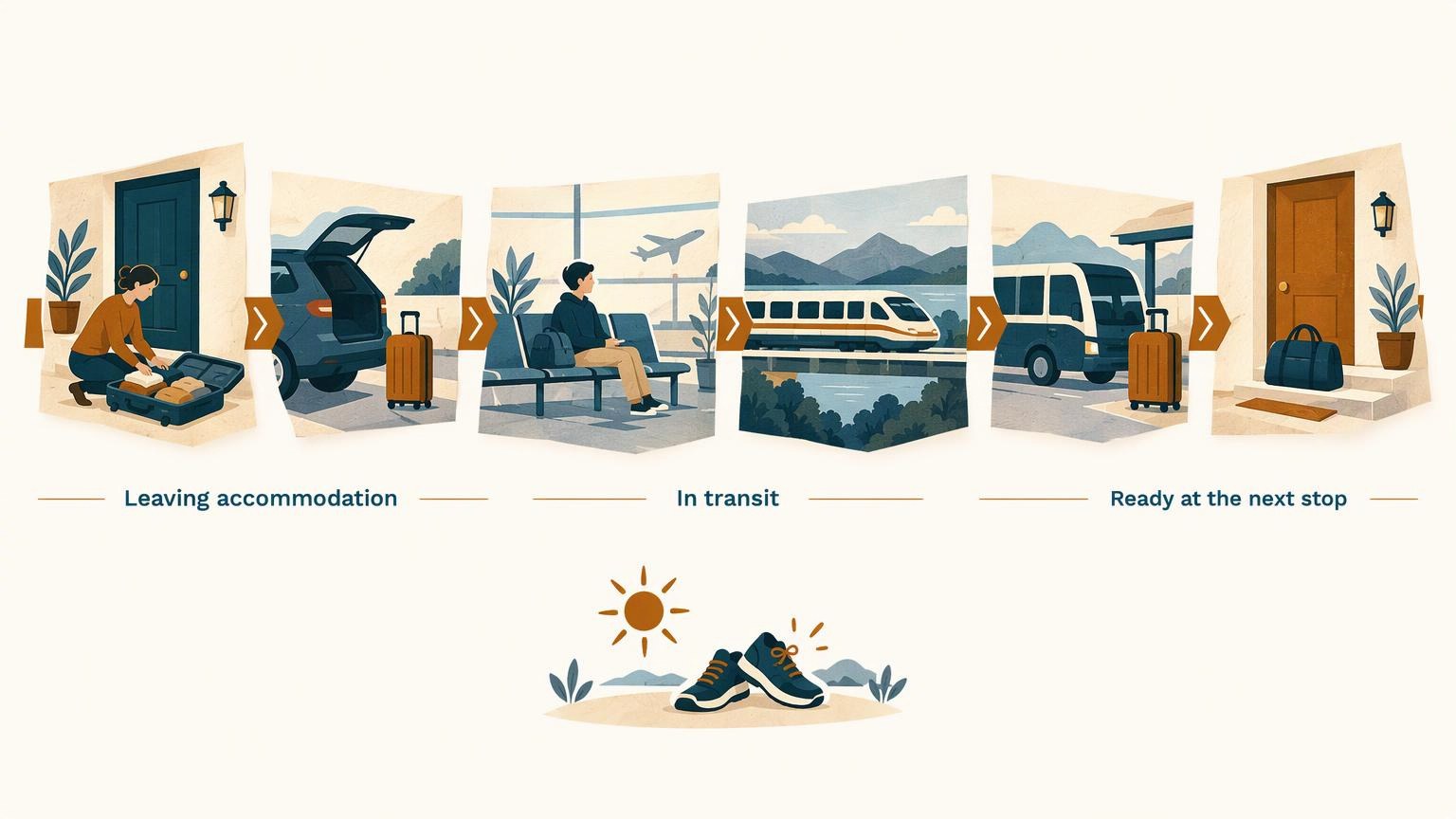
Illustration of a door-to-door transfer sequence, linking packing, local transport, terminal waiting, a train ride and arrival, with sun and walking-shoe icons below.
I build sightseeing around your preferred pace, not the longest attraction list. The distinction between slower travel and covering more places is useful: neither preference is wrong, but each needs a different schedule.
I separate essential experiences from optional additions. Essentials deserve protected time; optional activities fill genuine gaps. If everything is essential, I would narrow the priorities before adding another destination. The route should reflect what you most want from the vacation.
I make arrival-day plans easy to shorten, especially after travel that limits sleep. Recovery needs no universal allowance. I would base it on your preferences, the travel pattern and whether the next activity requires an early start. I would leave room for meals and rest rather than assume every open hour is usable.
For family and group vacations, I distinguish shared activities from optional outings so the common schedule fits its participants.
For romantic getaways and anniversary trips, I protect the time together that motivated the vacation. Removing a stop may preserve an unhurried dinner or restful afternoon. I would favor that trade-off when another packing session contributes less than the time it consumes.
Imagine a custom vacation with a cultural stop, a coastal stay and an optional stop suggested by a friend. Your dates are fixed, and culture and relaxation both matter. The draft fits the calendar, but the optional stop interrupts the only substantial rest period.
I would compare keeping the draft, removing that stop and changing the order. More destinations do not automatically mean better value. Each revision should improve the time available for your priorities, not simply make the route look more complete.
I would test a different order if it improves arrival timing or reduces backtracking. Revised services, accommodation dates and essential activity availability must still fit; a cleaner map alone is not enough.
I would remove the optional stop if its contribution matters less than the rest it consumes. That gives something up while protecting your reasons for traveling.
If relaxation leads, I would also compare a simpler stay through Caribbean and all-inclusive vacation planning. I would assess the proposed arrangements rather than assume the category guarantees easier logistics. I use the table to weigh destination coverage against recovery and connection timing.
| Choice | Protects | Trade-off | I would favor it when |
|---|---|---|---|
| Keep all stops | Destination list | Less recovery | Transfers fit your preferred pace |
| Remove optional stop | Main priorities | One destination | Rest matters more |
| Reorder stops | Better timing | Original sequence | Verified services improve connections |
| Choice | Protects | Trade-off | Favor when |
|---|---|---|---|
| Keep all stops | Destination list | Less recovery | Transfers fit your preferred pace |
| Remove optional stop | Main priorities | One destination | Rest matters more |
| Reorder stops | Better timing | Original sequence | Verified services improve connections |
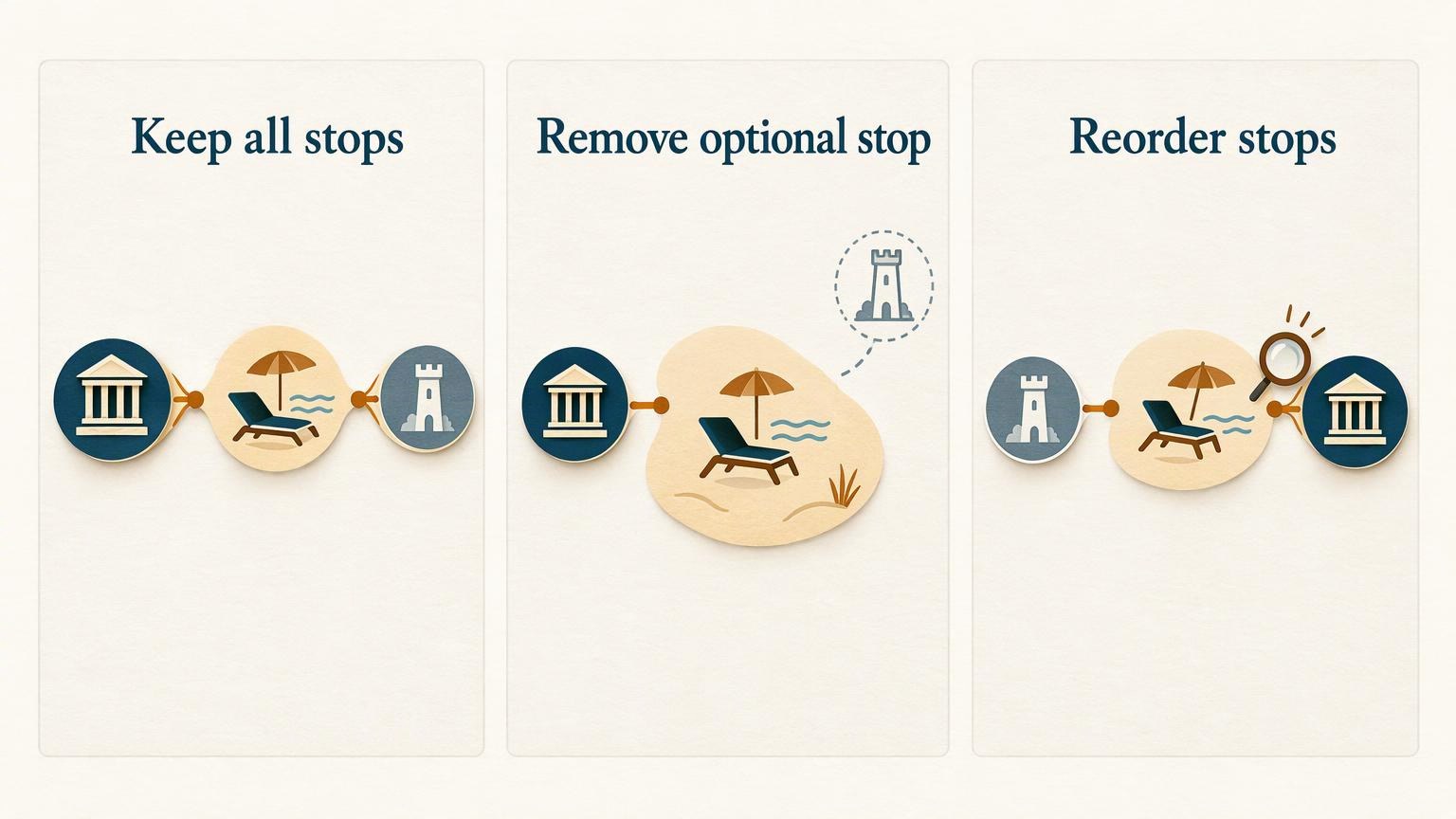
Illustration comparing keeping all stops, removing an optional tower stop, and reordering stops, with a larger beach area in the middle and a magnifying glass over the revised connector.
I approve the route as a connected plan before its individual bookings. A fixed sailing, timed visit or inflexible accommodation date may determine the sequence. I would build surrounding travel around that dependency rather than follow a universal flights-first rule.
I compare the written quote with the tested itinerary: accommodation nights, room or cabin categories, transport, activities and included meals should match what you intend to buy. I keep extras separate so the comparison reflects the whole trip, not only its headline components.
Cost drivers include dates, accommodation choices, transport and selected experiences. Another stop can add a transfer or booking cost, but removing it does not guarantee cheaper replacements. For a current quote, send me your proposed dates and trip details.
My custom vacation, cruise planning and group travel specialties match these connected decisions. Superior Travel Consultants has more than 150 years of combined team experience, not agency age or my individual tenure.
I would keep a straightforward route you feel comfortable arranging independently. Where a fixed event or uncertain connection affects the whole trip, advisor-led planning has a specific role: shaping the components around that dependency before you commit.
Share the destination, dates and travel style you have in mind. A Superior Travel advisor will help turn the possibilities into one clear, personal plan.