
Picture bedtime
I would decide whether someone needs to stay awake while another person sleeps. An enclosed bedroom matters more than extra seating when their routines differ.
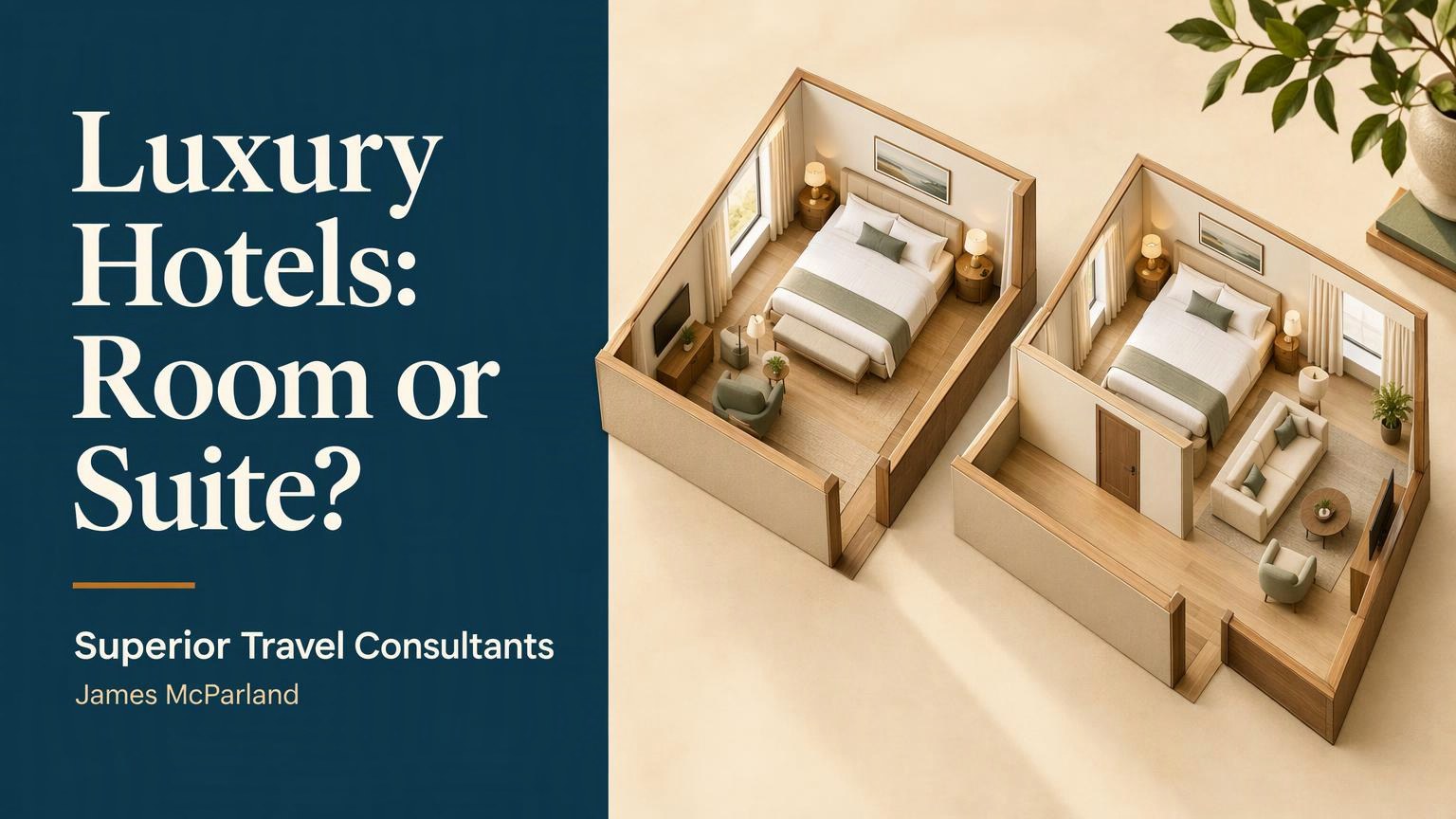
I would choose a suite when its verified layout or inclusions solve a need a standard room cannot. At luxury hotels, category names do not establish separation or value. I would compare the exact accommodation, booking terms and full-stay total.
I compare luxury hotels by how you will sleep, get ready, store luggage and relax. For Long Island travelers, luxury hotels deserve practical scrutiny: additional space helps only if it supports your vacation routine, not simply because the category sounds impressive.
When choosing rooms or suites at luxury hotels, I would separate layout, guaranteed features and documented benefits. My comparison tests whether the upgrade solves a real need and whether its additional cost fits the rest of your particular trip.
I would decide whether someone needs to stay awake while another person sleeps. An enclosed bedroom matters more than extra seating when their routines differ.
I would read the area description carefully before comparing sizes. A terrace adds somewhere to sit, but it does not create another indoor sleeping area.
I would check whether bathroom access passes through the bedroom. A living area is less independent if using the bathroom interrupts someone who is resting.
I would count an inclusion only when you expect to use it. A meal benefit adds little value if your planned outings keep you elsewhere at mealtime.
I would identify an acceptable alternative before committing. If the essential layout cannot be guaranteed, a different category or property may fit better.
I would start with the floor plan and written description for the exact accommodation. A suite deserves consideration when its layout supports something the room cannot, such as reading while your companion sleeps. The category name alone does not establish that advantage.
My first test is separation: does the sleeping area have a wall and closing door, or is the sofa beside the bed? Next comes usable space. Seating, a table and clear walking routes matter more than floor area occupied by luggage or an unfolded sofa bed.
I would trace the route from the entrance to the seating area and bathroom. If it crosses the bedroom, the living area offers less independence. Bathroom access outside an enclosed bedroom better supports different routines.
I would distinguish confirmed configurations from requests. If separation is essential, requested connecting rooms are not equivalent to a documented enclosed bedroom. The property must establish what applies to your reservation; a general photograph is insufficient.
For European vacation planning, I would weigh these features against time spent exploring. On a slower stay, indoor seating may matter more. My table identifies arrangements worth considering before comparing their documented inclusions and current quotes. More space earns its place only when you can explain how you will use it.
| Verified arrangement | Best fit | Trade-off |
|---|---|---|
| Open room with seating | Shared routines | Activity stays beside beds |
| Larger open sitting area | Relaxing without privacy needs | No enclosed sleeping area |
| Enclosed bedroom and living area | Different sleep schedules | Check bathroom access and bedding |
| Guaranteed connecting rooms | Separate sleeping spaces | Verify connection and bathroom count |
| Arrangement | Best fit | Check / trade-off |
|---|---|---|
| Open room with seating | Shared routines | Activity stays beside beds |
| Larger open sitting area | Relaxing without privacy needs | No enclosed sleeping area |
| Enclosed bedroom and living area | Different sleep schedules | Check bathroom access and bedding |
| Guaranteed connecting rooms | Separate sleeping spaces | Verify connection and bathroom count |
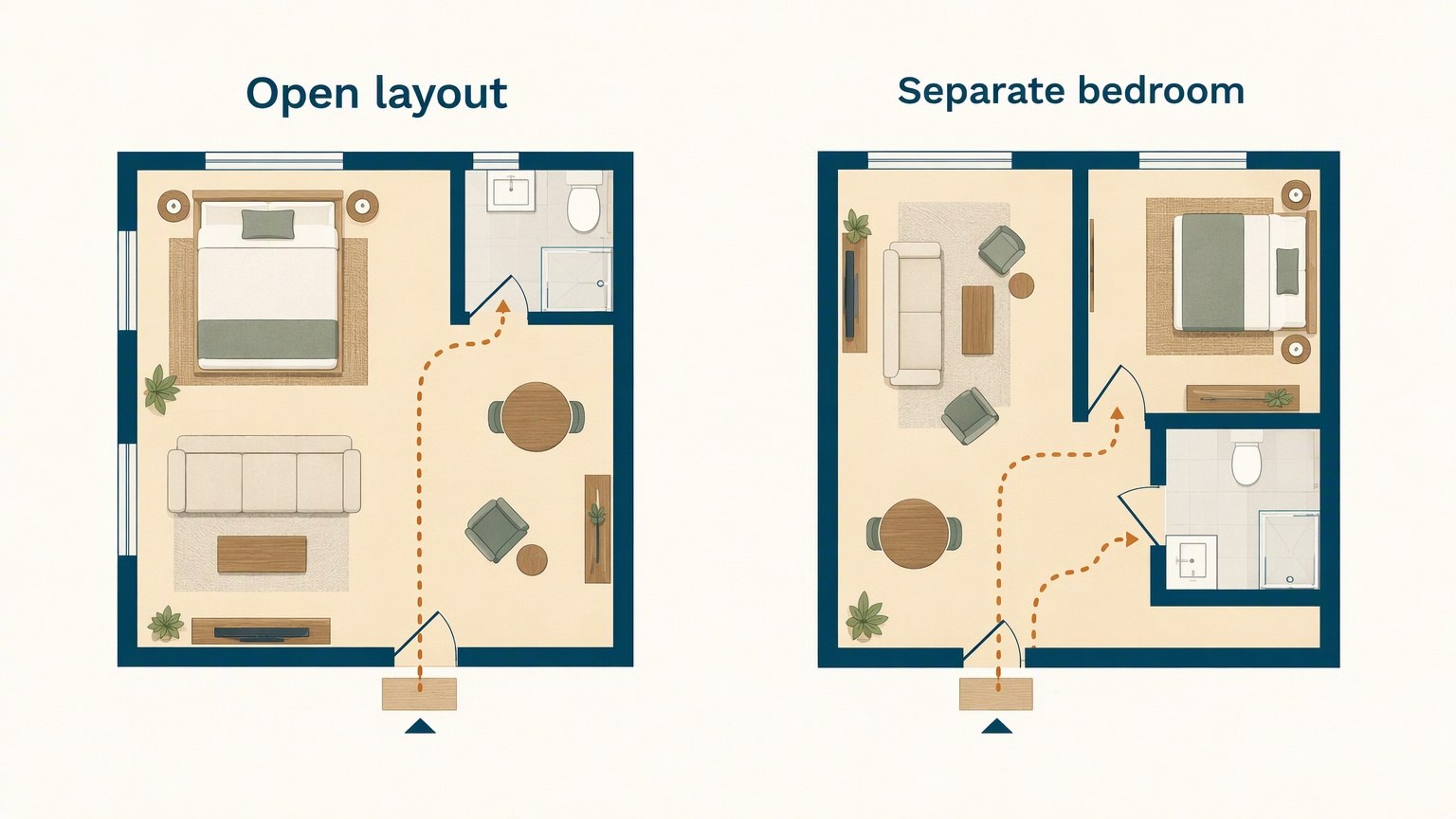
Illustration comparing an open floor plan with an enclosed bedroom layout, with dotted routes and door swings showing access through the living space.
I would divide your shortlist into confirmed features and preferences. An enclosed bedroom, required bedding or connecting door belongs among essentials if the trip cannot work without it. A preferred floor remains a request when another floor would be acceptable.
My test is simple: would you accept the reservation if the preference were not fulfilled? If not, a request is insufficient. The accommodation choice needs to resolve that requirement before you commit, rather than leave it dependent on an arrival-day outcome.
For families, I would assess permitted occupancy and actual sleeping arrangements together. A sofa in a photo does not establish an approved bed, and additional area does not establish permission for more guests.
Through our agency's family planning, we compare configurations and distinguish requests from guarantees. I would apply that distinction to family and group accommodation needs, rather than rely on a family-suite label.
I would keep the property's written confirmation with your reservation. If essential separation cannot be guaranteed, I would choose another category or property. A higher category that still does not guarantee the layout you need is not a workable upgrade for your stay.
I would compare full-stay totals for the same dates, guests and booking conditions. Then I would identify what changes: layout, view, outdoor space, meals or another explicitly included benefit. Additional square footage may explain only part of the difference.
For each benefit, I would use wording that applies to the exact category and rate. Facility access and a service included without an additional charge are different things. A benefit mentioned elsewhere in a property's brochure does not establish that your reservation includes it.
When reviewing Caribbean and all-inclusive vacation options, I would keep the focus on what the accommodation upgrade changes, rather than turn this into a separate meal-plan comparison.
I would compare cancellation and payment conditions alongside the totals. A cheaper option may involve terms you would not otherwise accept, so price alone does not settle the choice.
My final test is use. Separate living space used every evening may justify more spending; benefits you would skip may not. I would favor the option that meets your essentials, preserves your broader trip priorities and has acceptable terms, then request a current quote.

Illustration of a hand selecting an armchair tile to match a notebook’s luggage, hiking-bag and armchair sequence, with two folders, a wallet and alternative tiles nearby.
Imagine traveling with a child who sleeps earlier than the adults. You want to read indoors afterward, so sleeping-area separation is essential. Your shortlist contains a standard room and a suite whose layout is not yet established.
I would first define the need as an enclosed sleeping area, not merely more room. Next, I would compare floor plans and bedding. The property would need to confirm that the required configuration applies to your reservation.
If the suite provides separation and bathroom access outside the bedroom, I would compare its full-stay cost with your budget. If it is an open layout with extra seating, I would reject it for this need. Guaranteed connecting rooms could be an alternative.
For a couple spending most days outside and sharing a bedtime, I might favor the standard room. Extra living space would contribute less to that routine.
When comparing romantic getaway options or honeymoon and luxury escapes, I would consider whether time indoors is part of the celebration. A special occasion alone would not justify a suite; the improvement needs to match how you intend to spend the stay.
I would connect your accommodation choice to the itinerary, overall budget and time at the property. The largest option can still be wrong if it draws spending away from something you value more.
I am James McParland. My specialties include all-inclusive vacations, groups and cruises, and my credentials include Hilton Worldwide Specialist. I would discuss accommodation priorities within customized trip planning; that credential does not establish a particular hotel's layout or benefits.
At our Long Island travel agency, we build customized vacation plans. I would use your shortlisted categories to explain differences that affect your stay, rather than treat accommodation as an isolated upgrade decision.
Your brief should identify the properties, exact categories, dates, travelers and overall budget. I would distinguish essential layouts from optional benefits and relate both to your daily routine. Existing descriptions and reservation terms can anchor that comparison without relying on category names.
My goal is a clear choice: an accommodation that meets your essentials at acceptable terms. If both options work, I would judge the upgrade by its practical contribution to the trip, not its more impressive label.
Share the destination, dates and travel style you have in mind. A Superior Travel advisor will help turn the possibilities into one clear, personal plan.