
Choose the feature you will use
I would prioritize a terrace if you picture spending mornings there. If you expect to be out most days, I would weigh that upgrade against other parts of your honeymoon.

I compare luxury hotels for honeymoon trips through five checks: room privacy, exact view wording, construction disclosures, minimum-stay conditions and included meals. I would choose the room and rate that meet your essential needs in writing, not rely on a luxury label, photograph or hoped-for upgrade.
For luxury hotels for honeymoon trips, I would list your non-negotiables before reviewing proposals. For Long Island travelers considering luxury hotels for honeymoon celebrations, I start with reservable rooms, travel dates and details you would regret compromising.
I would compare luxury hotels for honeymoon trips using the same dates and traveling party. I am Renata Boulos, specializing in honeymooners and special occasions. At Superior Travel Consultants, customized travel planning for Long Island travelers connects your lodging preferences with the rest of your itinerary.
I would prioritize a terrace if you picture spending mornings there. If you expect to be out most days, I would weigh that upgrade against other parts of your honeymoon.
I would connect each appealing photograph to the room category being quoted. An image that cannot be matched to your proposed room is inspiration, not evidence of what you are buying.
I would decide whether daytime work is tolerable before comparing a construction-affected option. If uninterrupted rest is essential, a lower quote would not settle that decision for me.
I would not extend a stay simply to qualify for a honeymoon extra. I would compare the additional commitment with the benefit's actual usefulness.
I would value included meals according to when and where you expect to eat. A meal you will routinely skip should not carry the same weight as one you will use.
I separate exclusive use from visual privacy. A terrace or pool reserved for your room establishes who may use it, not whether neighboring balconies, walkways or shared spaces overlook it.
I would seek the proposed category's layout and an explanation of its outdoor setting. My questions cover screens, barriers, neighboring rooms and public access routes, without assuming a specific room number or position can be guaranteed.
I also distinguish privacy from an adults-only setting. Design Hotels lists honeymoon, adults-only and family-friendly hotel categories separately. I therefore treat a honeymoon label as a starting point, not proof of an age policy or quiet room location.
I would define your priority: being unseen outdoors, avoiding a shared pool or sleeping away from activity. Those are different needs; one room feature may not solve them all. I would also match photographs to the proposed category rather than assume every terrace shares the same setting.
My romantic getaway planning starts with your preferred atmosphere. I would weigh outdoor seclusion against the view and room size, rather than automatically favor the largest suite or its most appealing promotional photograph.
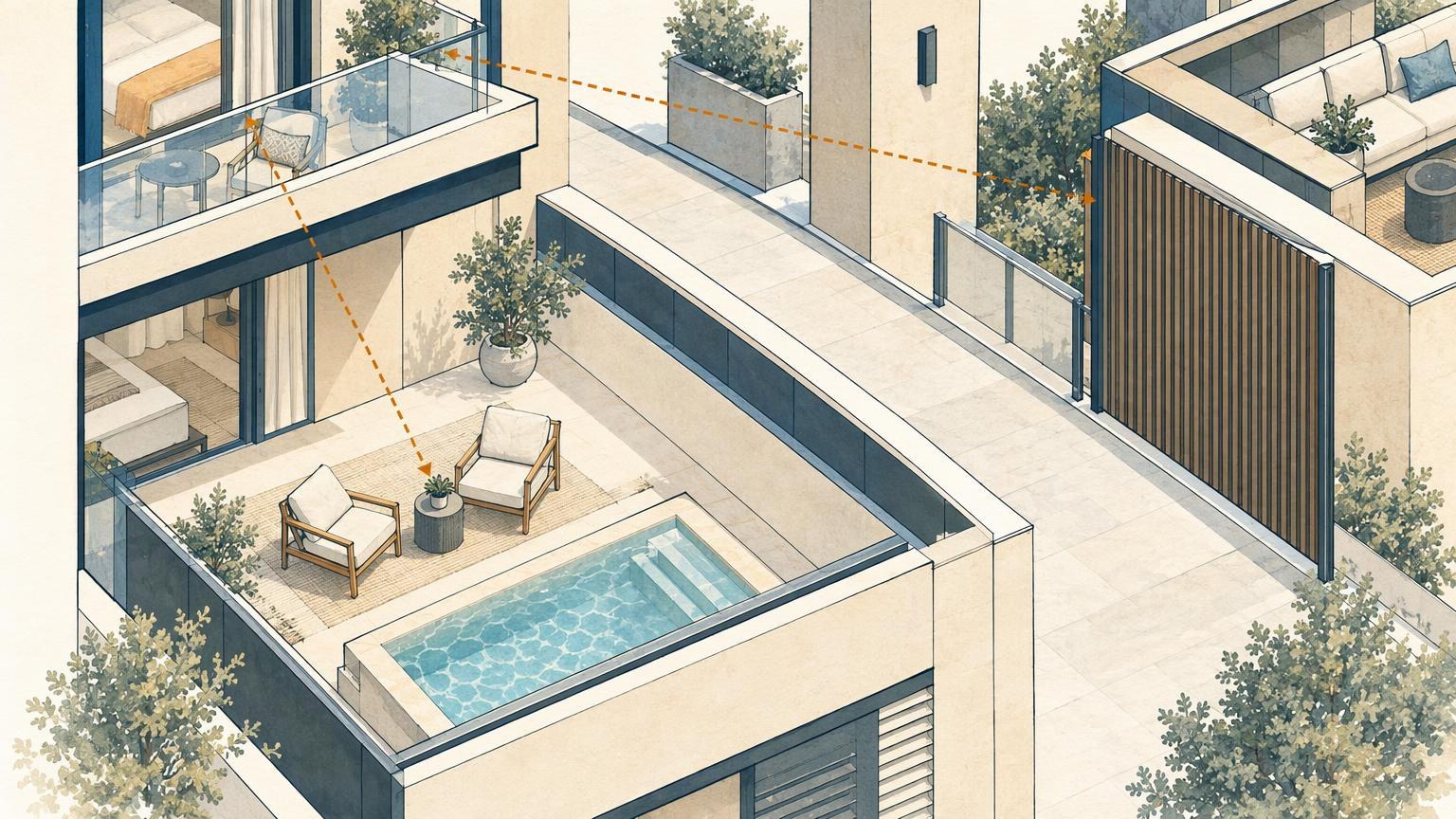
Illustration of neighboring terraces with amber dashed sightlines, including a balcony overlooking seating beside a plunge pool.
I would record the exact room-category name and read its description. I would not translate a label into a guaranteed panorama without the hotel's explanation of what is visible and from where.
I distinguish the outlook from the bed, balcony and shared spaces. If you picture breakfast overlooking water, a restaurant's attractive view does not establish whether your room provides that experience. I would connect each photograph to the category being quoted.
Suppose one proposed room has an expansive outlook but an exposed terrace; another has a screened terrace and a narrower view. If privacy is essential, I would favor the second once its setting is established, even if the first photographs better.
If the view drives your hotel choice, I would reverse that priority. The better option follows from how you will use the room, not a universal hotel ranking.
For a honeymoon combining different settings, I apply this reasoning to each stay. My European vacation planning and Asia vacation planning are relevant starting points; I would not assign identical room priorities to every stop, especially when your sightseeing and relaxation plans differ.
I evaluate construction by location, working hours and effects on facilities you intend to use. The word renovation alone does not establish whether the work is acceptable for your honeymoon.
I would seek a dated explanation covering your travel dates, affected areas, changed access routes and scheduled facility closures. I would distinguish work inside the property from work outside its control, focusing on the proposed room rather than a general assurance about the hotel.
If you expect to spend days sightseeing, some daytime disruption might be acceptable. If your honeymoon centers on sleeping late and resting outdoors, I would give the same disclosure greater weight. A lower quote would not compensate for conditions that defeat your main reason for choosing the stay.
I would not treat a renovated room as evidence that surrounding work has finished. Before accepting a construction-affected rate, I would read the change and cancellation terms and decide whether the disclosed conditions are tolerable.
Within honeymoon and custom escape planning, I keep disruption separate from room quality. Attractive accommodation and an acceptable setting both matter when rest is the purpose of the stay, even if the room itself meets every requirement.
I distinguish minimum stays required to book a room or rate from those attached only to optional honeymoon benefits. I would read terms for your dates and category, including whether shortening the stay requires a new quote or changes inclusions.
I would not extend the itinerary merely to earn an extra. Additional nights may reduce time elsewhere and add costs beyond lodging. I would value any benefit only after understanding its eligibility and documentation conditions, without borrowing another hotel's rules.
If your preferred stay is shorter than a proposed rate permits, I would compare a rate that fits your itinerary with the longer-stay option. My comparison would include the full lodging commitment, not just the nightly rate. A benefit would matter only if you want it and its confirmed value justifies the extra commitment.
I would also distinguish permission to book a shorter stay from flexibility after booking. Meeting a minimum stay does not tell me whether an early departure is refundable; I would evaluate that separately under the quoted cancellation and change terms.
I would keep those terms with the room description. My comparison below separates essential reservation details from appealing extras before you approve a proposal.
| Check | Written detail | My decision test |
|---|---|---|
| Privacy | Overlooks and access | Fits your seclusion needs? |
| View | Exact category description | Visible where you will relax? |
| Construction | Dates, hours, closures | Compatible with your planned rest? |
| Minimum stay | Rate versus benefit conditions | Worth the itinerary commitment? |
| Meals | Venues, coverage, supplements | Useful for your dining habits? |
| Check | Written detail | Decision test |
|---|---|---|
| Privacy | Overlooks and access | Fits your seclusion needs? |
| View | Exact category description | Visible where you will relax? |
| Construction | Dates, hours, closures | Compatible with your planned rest? |
| Minimum stay | Rate versus benefit conditions | Worth the itinerary commitment? |
| Meals | Venues, coverage, supplements | Useful for your dining habits? |
I compare meals at the rate level rather than infer them from a hotel's positioning. I start with what is included for your traveling party, where it is served and which charges remain separate.
For breakfast, I would establish the eligible venue, service format and whether in-room dining qualifies. For broader meal plans, I would read restaurant coverage, drink terms, reservation requirements and any supplements described in the offer.
I would also compare meal service times with your itinerary. If an early departure means missing breakfast, or your preferred dinner requires a supplement, I would count the spending you expect rather than treat the meal-plan label as complete coverage.
I compare Caribbean and all-inclusive vacation options against your dining habits. If you want most meals at the hotel, broader inclusions may fit. If exploring restaurants matters, I would favor flexibility rather than pay for meals you expect to skip.
I value a dining credit by eligible uses and likely spending. I would not subtract its full advertised value from lodging costs if it encourages purchases you had not planned.
My overall comparison aligns dates, room categories and cancellation terms before weighing meals, mandatory charges and optional spending. A lower headline rate matters only after I understand the purchase behind it.
At Superior Travel Consultants, my honeymooner specialty supports discussing these lodging preferences within your customized itinerary. I would not promise a particular hotel portfolio, upgrade or inclusion; those depend on the actual proposal.

Illustration of a travel-planning notebook linking breakfast and a suitcase, with branching dinner choices on the opposite page; a pencil and folded map sit nearby.
Share the destination, dates and travel style you have in mind. A Superior Travel advisor will help turn the possibilities into one clear, personal plan.