
Define the minimum acceptable arrangement
I would name the adult each child needs beside them. Keep preferred rows and window seats separate so a minor preference does not obscure an essential need.
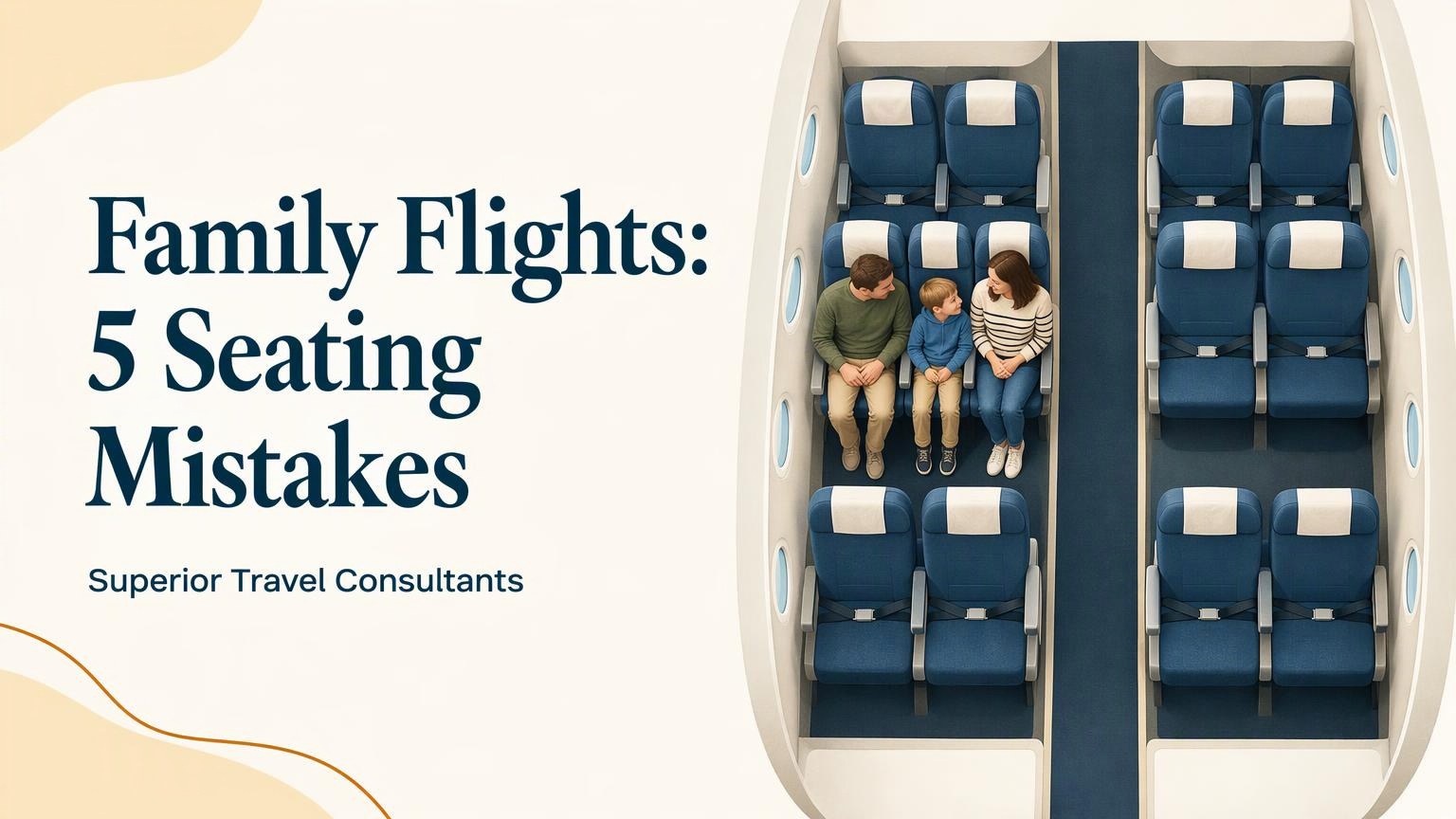
I would avoid five mistakes before accepting a family flight: leaving essential seats unassigned without understanding the process, overlooking fare restrictions, excluding seat charges from the comparison, assuming separate reservations establish family seating, and treating a request as confirmation. Decide who must sit beside whom, then judge the proposed fare against that requirement.
I approach family vacations by separating essential seating from preferences. For Long Island travelers comparing family vacations, the starting question is who must sit directly beside whom. A window preference and a child's need for an accompanying adult deserve different weight.
When reviewing family vacations, I would keep seating terms alongside the trip proposal. At our Long Island travel agency, I focus on your priorities; the airline's terms determine what a fare supports. These five mistakes explain why an attractive flight may not be suitable.
I would name the adult each child needs beside them. Keep preferred rows and window seats separate so a minor preference does not obscure an essential need.
I would distinguish permission to choose seats from the existence of suitable seats. A fare that permits selection still needs a placement review.
I would include any quoted charges needed for an acceptable arrangement. A lower airfare is only useful if the resulting seating also works.
I would identify which travelers appear on each reservation. A shared vacation plan should not substitute for reviewing every traveler's flight record.
I would distinguish a note requesting adjacent seats from seats actually assigned to named travelers. Save the relevant record rather than relying on a remembered conversation.
I would not automatically reject flights with unassigned seats. The mistake is assuming an unexplained assignment process will produce the arrangement your family needs.
Start with a precise requirement: a child needs an accompanying adult directly beside them, or a traveler needs a particular caregiver. Seats across an aisle may not satisfy that requirement, even within the same row.
For illustration, suppose either parent can help your child, but direct adjacency is essential. I would consider either parent-child pairing acceptable, while rejecting a same-row arrangement with an aisle between them. That leaves flexibility without weakening the requirement.
If seats are unassigned, establish when assignment occurs, who handles it, and what the applicable terms say about required placement. I would separate those terms from hopes about what happens later.
Comfort is a separate decision. A seat-location guide describes potential bulkhead trade-offs involving tray tables and under-seat storage. Those details depend on the aircraft, so I would review its actual layout rather than assume a row label means better seating.
My priorities would be essential adjacency, suitable placement, then preferences. Before paying, decide whether uncertain later assignment is acceptable for your required pairing.
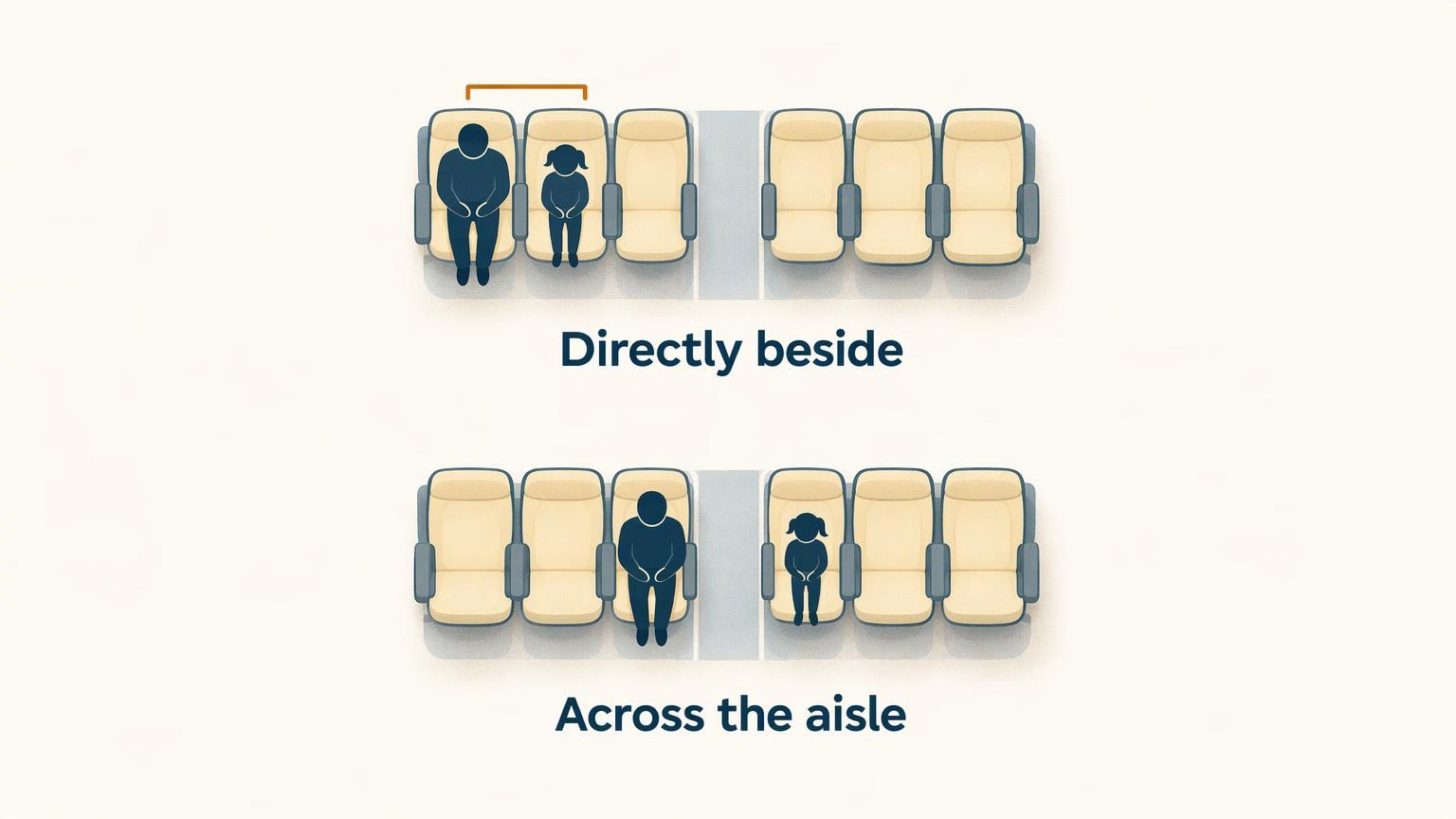
Illustration comparing “Directly beside” with “Across the aisle,” using adult and child silhouettes in two rows of seats.
I would separate the flight from the fare sold for it. An appealing departure time does not establish whether the proposed fare allows the seating choice you need.
My comparison would distinguish whether selection is permitted, when it becomes available, which seats are eligible, and whether charges apply. Permission to select does not establish that suitable adjacent seats are available. Both eligibility and placement matter before you accept the proposal.
I would use the terms attached to your actual purchase, not assumptions about what a similarly named fare meant on another trip. A fare label alone does not answer these questions.
For a Disney family vacation, I would make this distinction even after settling the destination. The flight must meet your family's needs independently of the activities.
For illustration, if a proposal allows selection only later, I would evaluate it as a delayed-placement option, not as equivalent to choosing acceptable seats now. The deciding factor is whether your essential pairing can tolerate that uncertainty, rather than whether selection is technically permitted.
A more flexible fare merits consideration if its terms solve a specific problem. If the cheaper option supports acceptable seating at an acceptable total, a different label adds no value. If its restrictions prevent essential placement, however, the lower price does not make it suitable.
I would compare the cost of an acceptable arrangement, not airfare alone. Separate charges for essential seating from optional upgrades.
For illustration, your child needs an adult beside them, but nobody requires extra legroom. One proposal charges separately for selection; another includes it. First, you identify acceptable pairings. Next, the airline or seller supplies selection terms and applicable charges. You compare the usable totals using the criteria below.
I would carry that comparison through the return flight and any connections. A quote covering selection on only part of the itinerary leaves the remaining seating costs open. If a required charge is unknown, I would mark that total as incomplete rather than count the missing amount as zero. An unfinished proposal cannot establish a saving.
If essential selection erases the lower fare's saving, I would compare other meaningful differences. If both proposals meet your needs at the same total, neither wins simply because selection is included. If only one supports acceptable pairings, that suitability matters more than how its charges are presented. A premium seat is necessary spending only if it addresses your needs.
In Caribbean and all-inclusive vacation planning, I would keep these flight details visible rather than let a package total obscure them.
| Criterion | Separate seat charges | Selection included |
|---|---|---|
| Essential placement | Add quoted charges for acceptable pairings. | Verify suitable seats are available. |
| Optional upgrades | Keep preference costs separate. | Check which seats are included. |
| Selection timing | Review when selection is allowed. | Included does not establish timing. |
| Usable total | Compare airfare plus essential selection. | Compare the fare covering acceptable selection. |
| Criterion | Separate charges | Selection included |
|---|---|---|
| Essential seating | Add charges for acceptable pairings. | Verify suitable seats are available. |
| Optional upgrades | Keep preference costs separate. | Check which seats are included. |
| Selection timing | Review when selection is allowed. | Included does not establish timing. |
| Usable total | Airfare plus essential selection. | Fare covering acceptable selection. |
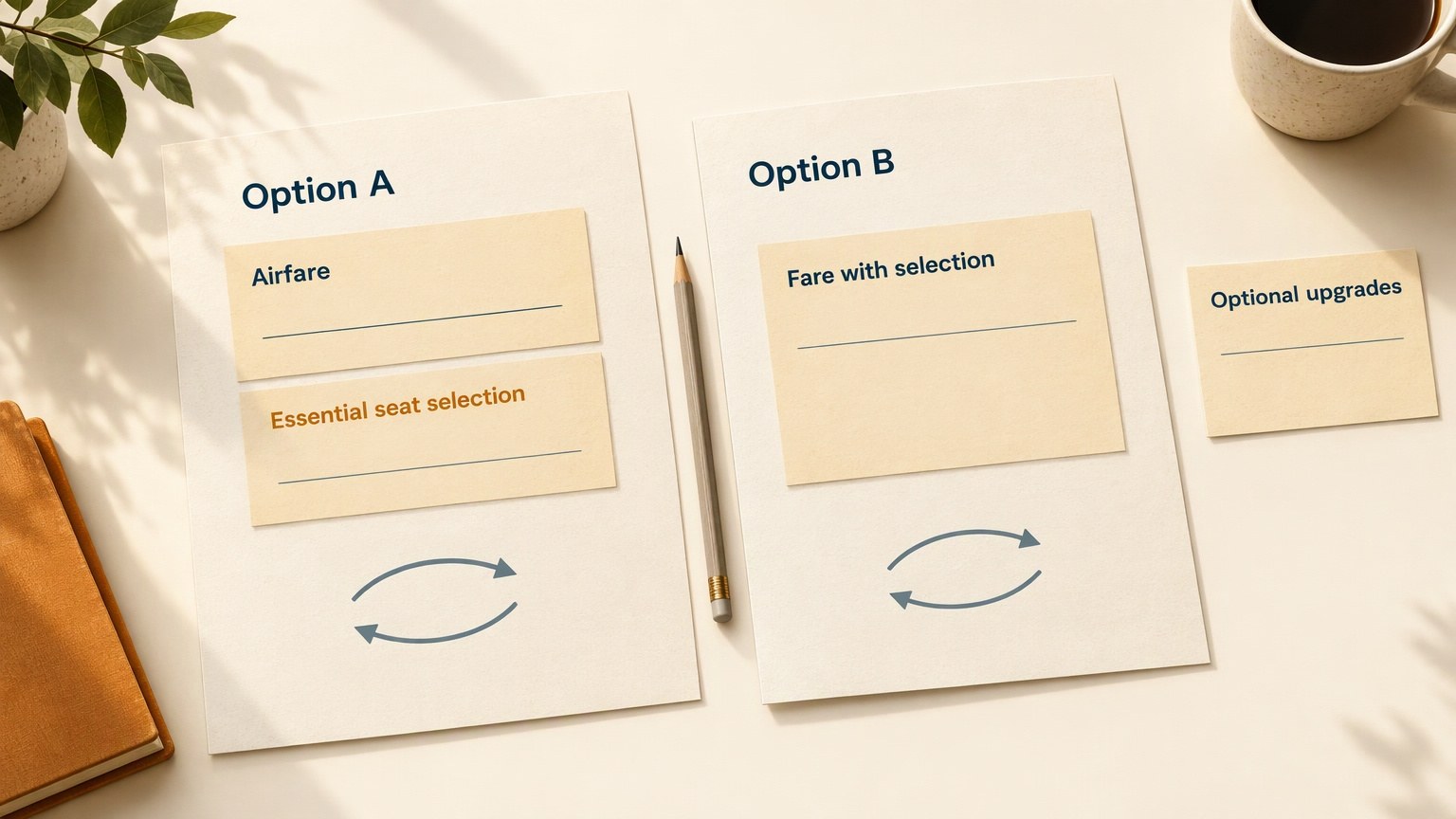
Illustration of two flight-cost options on a cream desk, with blank amount lines, opposing route arrows, a pencil between the sheets and optional upgrades set aside.
I would map travelers to their flight reservations before judging placement. Shared dates or a vacation itinerary do not establish anyone's assigned seat.
If relatives book separately, identify which adult accompanies each child and which reservation contains each traveler. A child's acceptable placement may depend on an adult whose record is elsewhere.
I would distinguish a note associating reservations from evidence of adjacent assignments. If the airline or seller offers an association process, read what it establishes. An administrative connection is not itself a seating guarantee.
In family and group cruise planning, relatives may share a sailing but arrange flights differently. For European vacation planning, I would review every shared flight segment, not just the outbound journey.
For illustration, if a child travels with a parent outbound and a grandparent returning, I would assess those as different pairings. Acceptable outbound seats do not resolve the return arrangement. Each accompanying adult's record belongs in the review for the segment they share.
Separate bookings are not automatically unsuitable. I would judge whether essential pairings work and how the airline handles their records. Independent adults have different needs from a child relying on a particular caregiver; the number of reservations alone should not decide your choice.
I would read a request as what you want and an assignment as a record allocating a seat to a named traveler. One does not substitute for the other.
For every flight segment, match traveler names to recorded seats and compare them with essential pairings. Acknowledging your message confirms communication, not placement. I would check each child and accompanying adult rather than rely on a statement that the family is together.
I would interpret seat numbers against the flight's layout. Consecutive numbers or nearby letters do not establish direct adjacency; the applicable seat map shows where those seats sit relative to each other.
My final review would keep the proposal, fare terms, selection charges and assignment records together. If the proposal changes, revisit affected details rather than assume the earlier review applies.
An assignment is the current arrangement, not an unconditional future promise. I would retain airline notices and review seating after a communicated change.
The airline remains responsible for seating terms and assignments. Read more about the role of a travel advisor.
I would accept understood terms that meet essential needs, or uncertainty you knowingly accept. Otherwise, compare another option.
Share the destination, dates and travel style you have in mind. A Superior Travel advisor will help turn the possibilities into one clear, personal plan.