
Choose one review copy
I would have every traveler review the same complete proposal. Keep older copies for reference, but clearly distinguish them from the version under consideration.

I recommend preventing five handoff mistakes before booking: reviewing an outdated proposal, sending competing approvals, leaving changes undocumented, confusing deadlines and assuming enthusiasm authorizes a reservation. Choose a lead traveler, identify the current proposal, reconcile changes and agree with your advisor on how final booking authorization must be recorded.
I recommend reviewing one identified proposal when working with travel advisors. For Long Island travelers, travel advisors should receive a consolidated decision, not competing messages about dates, rooms or pace.
I am Lois Howes with Superior Travel Consultants, our Long Island travel agency. My specialties include river cruises, ocean cruises and group travel. When working with travel advisors, I would separate feedback, approval and booking authorization so everyone knows which arrangements you intend to choose.
I would have every traveler review the same complete proposal. Keep older copies for reference, but clearly distinguish them from the version under consideration.
I recommend choosing a lead traveler to collect feedback. That role does not automatically establish permission to authorize bookings or spending for everyone.
I would compare each requested revision with the next proposal. A request remains pending until you can identify how it was addressed.
I would record what each deadline controls and the action required. A companion's review target should not be mistaken for a supplier's payment or hold deadline.
I would distinguish a request for another quote from a request to proceed with booking. Agree with your advisor on the required authorization before sending either instruction.
I would identify the complete proposal everyone should review by its date, title or reference. Ask how to distinguish it from earlier versions if needed. Approval attached to an older email may refer to arrangements you no longer want.
I recommend retaining earlier proposals for comparison but keeping them outside the active review. A room screenshot or copied price line cannot replace the full proposal: it separates that detail from its dates, inclusions and terms.
For European vacation packages, I would compare revised city order and overnight stays, not only the total. For escorted tours and river cruises, I would check whether a changed departure affects proposed stays before or after the trip.
My practical test is whether every companion can identify the same arrangements without consulting earlier conversations. If you are combining details from different versions, request a complete revision before approving. The extra comparison helps prevent a preferred detail from one option being mistaken for an inclusion in another. I would keep the proposal reference with the final response so the choice stays identifiable.
I recommend choosing one lead traveler to collect feedback and send a consolidated response. That person should surface disagreements rather than decide silently for everyone. Coordinating feedback does not establish permission to authorize another person's arrangements.
Imagine a cruise with relatives: one companion approves the cabin, while another requests a different departure date. I would treat those messages as feedback to reconcile, not an instruction to book.
First, the lead traveler gathers responses to the same proposal. Next, the travelers decide whether the date change is essential and whether the cabin preference still applies. The lead traveler sends the combined request; the advisor preparing the proposal clarifies the resulting arrangements for another review.
If the date changes, cabin approval alone does not settle the trip. If the original date remains acceptable, I would have the lead traveler state that and identify remaining choices. Agreement, not message order, determines the response.
For family and group cruise planning, I would keep different rooming and budget needs visible. One coordinator need not make everyone's arrangements identical.

Illustration of companion feedback consolidated into a combined request: distinct cabin, route and luggage cards remain visible in a folder and on a document marked with a question bubble.
I would summarize requested changes in writing through the channel agreed with your advisor. Identify the proposal, affected component and desired replacement. Distinguish a requirement from an alternative you only want to explore.
Asking whether another room is possible is not choosing it. I would label that request as a question. If you later select the alternative, check that the revised proposal reflects your choice before approving.
I recommend reviewing related details too. An extra overnight stay may require a different transportation arrangement. Check where the stay appears and whether the proposed transportation still matches. The key is identifying what depends on the changed component.
My change record would list the request, its treatment in the revision and any remaining question. That makes accepted, declined and pending requests easier to distinguish than a long email history.
The benefits of advisor-led planning offer broader context, but your review still matters. I would read the original request beside the revision: the request records your intention, while the comparison shows whether the proposal reflects it.
I would distinguish your companions' review target from deadlines attached to the arrangements. A group response date organizes feedback; a quote, hold or payment deadline has separate terms and consequences.
I recommend recording the supplied deadline, relevant time zone, component and required action. Ask what happens if it passes. An email response should not be assumed to complete payment or preserve an arrangement.
Before proceeding, I would read each component's cancellation and change terms. Keep differences visible so companions understand the financial implications of changing a trip that otherwise looks settled. A shared review target cannot replace those terms.
I would separate the proposed booking total from other expected spending. Room or cabin choices, added nights, transportation and optional activities can affect the quote and inclusions. Ask me for a current quote covering the revised arrangements instead of approving an earlier total. Compare both the cost and what it includes.
If insurance is part of your review, I would treat it separately from itinerary approval. The guide to travel insurance for a cruise offers context; applicable coverage terms and timing need their own review.
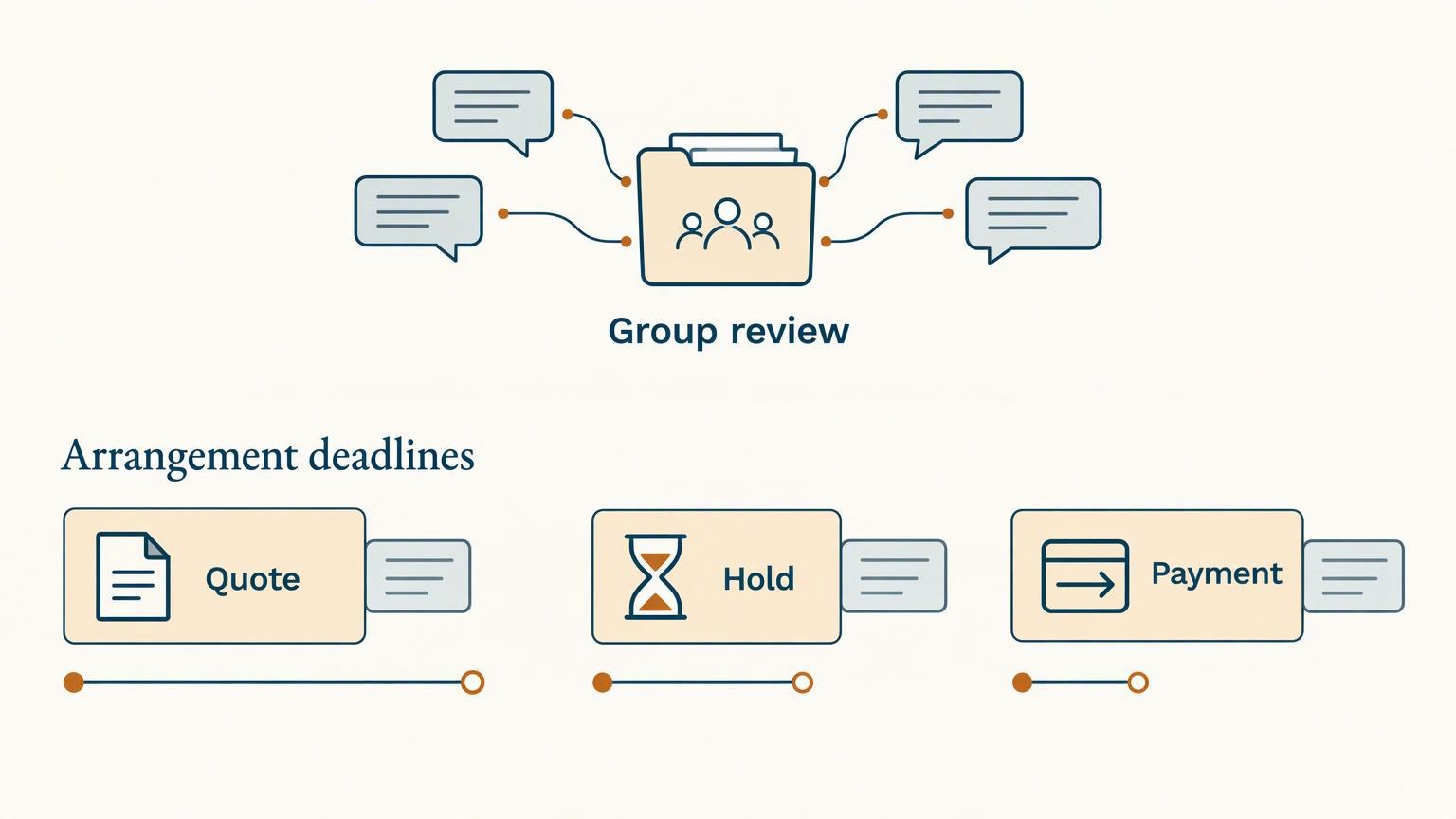
Illustration separating Group review from Arrangement deadlines, with Quote, Hold, and Payment cards above individual abstract timelines.
I would distinguish liking a proposal from requesting a booking action. “This looks good” could mean you want another discussion, a revised quote or the next booking step.
Agree beforehand on who may authorize booking and how to document it. I would not assume the lead traveler, payer or first responder has authority for every companion. Follow the requirements explained for your arrangements.
My final review would cover traveler details, passport readiness, dates, room or cabin selections, budget comfort and daily pace. Identify decisions still pending. Advisor help does not replace your judgment about whether the trip fits everyone traveling.
As a communication example, I would write: “I have reviewed the identified proposal and want to proceed with the listed arrangements. Please explain any authorization and payment steps I must complete.” This states intention without assuming the message meets every requirement.
After booking, I would compare confirmation documents with the approved proposal and raise discrepancies promptly. Keep outstanding arrangements visible. Retaining both records helps distinguish what you selected from what was booked, especially when some components are still awaiting confirmation.
| Your message | Open question | Clearer handoff |
|---|---|---|
| I prefer the earlier option. | Which proposal? | Identify the complete version. |
| Everyone seems happy. | Do companions agree? | Send reconciled feedback. |
| Please change the room. | Is the change reflected? | Review the revision before approval. |
| I will respond tomorrow. | Which deadline applies? | Name the deadline and required action. |
| This looks good. | Feedback or authorization? | State intent; complete agreed authorization steps. |
Share the destination, dates and travel style you have in mind. A Superior Travel advisor will help turn the possibilities into one clear, personal plan.