
Name the loss first
I would write down the expense you want protected and what might cause it. A concern about cancellation calls for different reading than a concern about treatment during your trip.

I would check medical history, activities, destinations, alcohol, unattended belongings, cancellation reasons and known events before buying travel insurance. These are seven areas to investigate, not exclusions every policy shares. I would match each concern to the proposed plan's wording and resolve any important coverage gap before committing.
I would compare travel insurance exclusions with your itinerary before choosing a premium. Travel insurance exclusions matter when they leave your main concern unprotected.
I am Blake Rehfield, with our Long Island travel agency. I would use these seven checks to evaluate travel insurance exclusions, leaving policy-specific interpretation to the appropriate provider.
I would write down the expense you want protected and what might cause it. A concern about cancellation calls for different reading than a concern about treatment during your trip.
I would use the activity's actual description, not a broad label such as sightseeing. Details about how you participate can make the provider's answer more useful.
I would examine each reason a loss might happen independently. An answer about an injury does not settle a question about alcohol, medical history or where the injury occurs.
I would compare another plan or adjust the trip when the wording leaves a risk you cannot comfortably fund. Buying protection does not require accepting the first proposed option.
My first check is medical history. I would locate the proposed plan's definition of a pre-existing condition and read it alongside the benefits you want. Its everyday meaning is not a substitute for the policy definition.
I would ask the provider how that wording treats relevant symptoms, treatment and medication changes. The answer should identify the applicable time period and definition. A general reassurance that a condition is stable would not settle the question.
If your concern is canceling because a relative becomes ill, I would examine whose medical circumstances matter and which relationships qualify. Reviewing only the travelers' medical benefits would leave that cancellation question unanswered.
If an exclusion waiver is proposed, I would examine its purchase timing and other eligibility conditions separately, without importing a deadline from another policy.
I would keep sensitive medical questions with the insurer or designated policy contact. My buying decision would turn on whether the terms address the specific loss you want protected. If they do not, a generous benefit amount elsewhere in the plan would not solve that gap, even when the overall premium looks attractive.
My second check is what you intend to do; my third is where. I would evaluate them separately because an itinerary question does not resolve an activity exclusion.
A guided walk and an outing involving climbing equipment illustrate why precise descriptions matter. I would compare the actual activity with the wording, without assuming either qualifies.
An optional excursion gap might be resolved by changing the outing. A restriction affecting the main destination calls for a broader choice. For combined land and sailing arrangements, I would keep the route together through escorted tour and river cruise planning.
I would bring the excursion description to the provider, including equipment, supervision and participation details. For Caribbean and all-inclusive vacation planning, I would distinguish the stay from separately chosen activities. Being offered alongside a vacation does not establish that an excursion fits the proposed protection.
I would compare every destination and transit point with any geographic or advisory-related provisions. For European vacation planning, that means the full route, not just the first stop. If the provider identifies a restriction, I would establish whether it affects one benefit, one location or the trip more broadly.
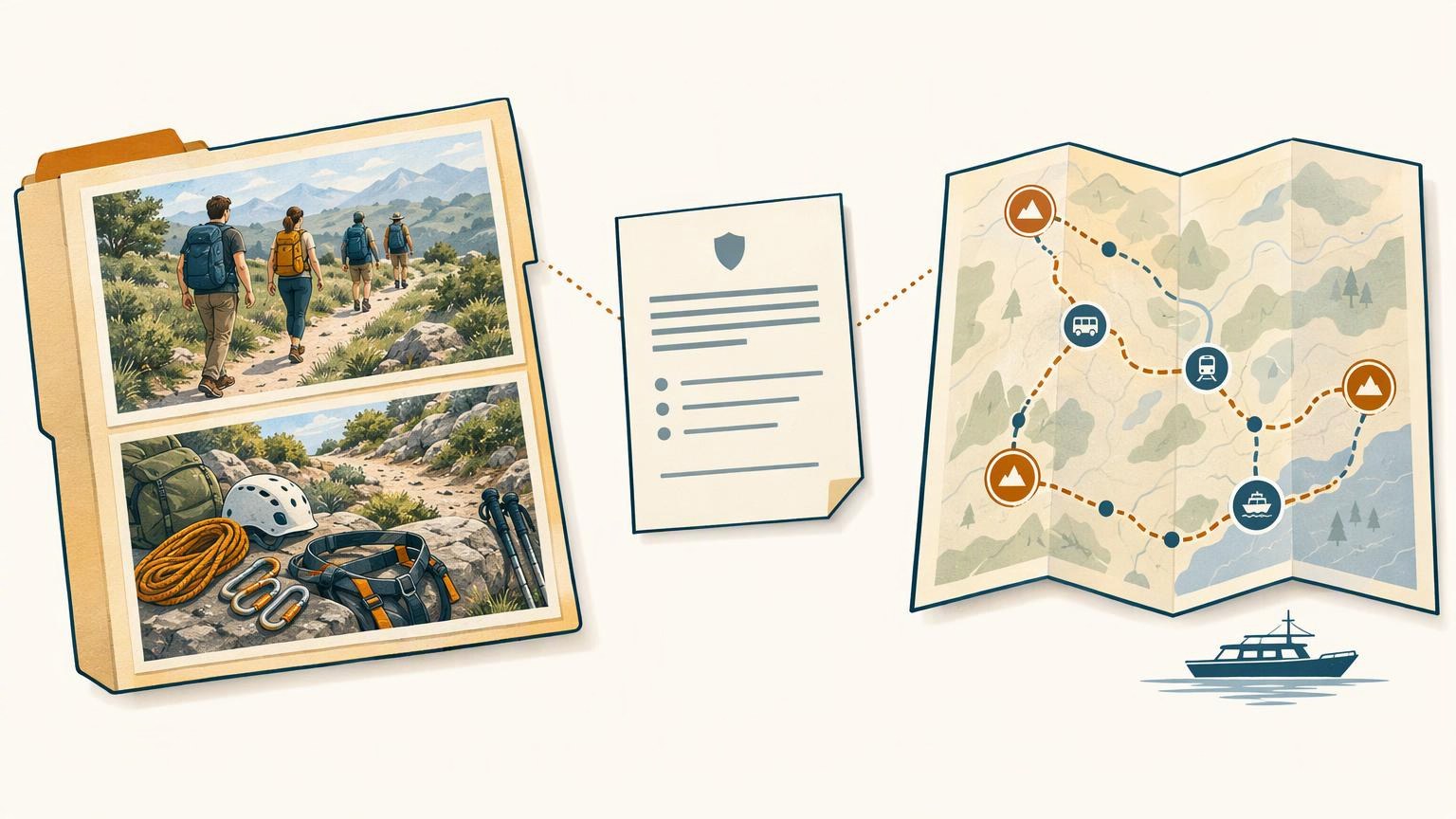
Illustration of excursion scenes and a multi-stop route map linked separately to a central policy sheet, with a small boat below the map.
My fourth and fifth checks concern alcohol and unattended belongings. Benefit labels alone do not establish whether the circumstances of a loss qualify.
For example, imagine having a drink with dinner and later falling. I would examine whether the alcohol clause requires a connection between drinking and the injury, rather than infer causation from their sequence.
For baggage, I would compare realistic storage habits with the terms. A bag beside you and one left while you swim raise different questions. If the likely loss falls outside protection, leaving unnecessary valuables home may matter more than a higher baggage limit.
I would distinguish wording about consumption, impairment and a connection to the loss. Those concepts are not interchangeable. I would not infer a universal drink limit or assume legal drinking establishes protection; an unclear clause needs a provider explanation tied to the proposed plan.
I would examine how valuables are treated, any separate limits and the definition of unattended. A locked location does not settle the question without the wording. For escorted tours and river cruises, I would consider transfers as well as time aboard, then decide whether the storage conditions fit how you can safeguard each item.
My sixth check is cancellation reasons; my seventh is known events. I would evaluate reason and timing together before treating cancellation protection as a solution.
Illness affecting a non-traveling relative calls for different reading than wanting flexibility to change your mind. Neither concern is resolved by the benefit's name.
If optional cancellation protection is proposed, cash and future cruise credit serve different goals. Credit may suit another sailing, but not expenses requiring cash. The cruise insurance guide provides context. I would not assume the option exists on every plan or protects an already-known concern.
I would match your cancellation reason to the qualifying reasons and definitions. For a proposed cancel-for-any-reason option, I would examine its conditions and whether it returns cash or future credit, a distinction raised in our agency's cruise insurance guide.
I would list when you booked, when protection was or will be purchased, and when the concern became known. The provider should apply the proposed terms to that sequence. I would distinguish a general worry from a specific event described in the policy; purchasing before departure alone does not resolve whether the timing qualifies.

Illustration of three icon markers on a horizontal ribbon, with dotted inquiry lines linking a question card, an envelope and a boat voucher to an open booklet.
I would test a proposed plan against separate losses. Consider an illustrative family cruise: you worry about canceling if a relative becomes ill and needing treatment after an excursion injury.
First, you would identify the relationship, cancellation concern and excursion activities. I would connect those details with the itinerary through family and group cruise planning. The appropriate provider would explain the relevant policy terms.
If cancellation qualifies but the activity is excluded, I would compare another plan, a different excursion or accepting that exposure. A lower premium would not fix the gap. A qualifying loss with a benefit limit presents a different financial question from an excluded loss.
Next, I would weigh what the gap changes. If the excursion is optional, replacing it might preserve the vacation you want. If it is the main reason for traveling, another plan may deserve closer comparison. Before accepting the exposure, I would consider the possible treatment expense separately from prepaid trip costs; being comfortable losing an excursion payment does not establish that you can fund medical care.
General guidance cannot establish your protection.
| Choice | When I would consider it | Trade-off |
|---|---|---|
| Compare another plan | The excluded risk remains important to your trip | More comparison work, without assuming broader coverage |
| Change the activity or itinerary | The trip can still suit you after a change | You give up part of the original plan |
| Accept the remaining risk | You understand and can fund the possible loss | That loss remains your financial responsibility |
| Choice | When to consider | Trade-off |
|---|---|---|
| Compare another plan | The excluded risk remains important | More review; broader cover not assumed |
| Change the activity or itinerary | The trip still suits you after a change | Give up part of the original plan |
| Accept the remaining risk | You understand and can fund the loss | The loss remains your responsibility |
Share the destination, dates and travel style you have in mind. A Superior Travel advisor will help turn the possibilities into one clear, personal plan.