
Define the visit you want
I would write down the actual experience that matters, such as entering a museum rather than seeing its exterior. That distinction makes the itinerary wording easier to evaluate.

I would clarify trip-defining attractions before choosing a European tour. An itinerary mention, included admission and confirmed timed entry are different commitments. For separate visits, I would establish usable sightseeing time, current reservation rules and who books before purchasing schedule-dependent tickets.
I would compare tours by the attraction you most want to enter, not simply the cities visited. For Long Island travelers reviewing tours, an itinerary mention raises three questions: what experience is described, what admission is included and what reservation remains?
My focus is tours as your sightseeing framework, not a general booking calendar. I would separate questions that affect your trip choice from tickets you can arrange afterward, so your main attraction does not become an impossible addition to an otherwise appealing itinerary.
I would write down the actual experience that matters, such as entering a museum rather than seeing its exterior. That distinction makes the itinerary wording easier to evaluate.
I would treat included admission as a cost question and confirmed entry as a scheduling question. One answer should not stand in for the other.
I would name the person or supplier responsible for each remaining reservation. A shared intention to arrange something is less useful than an agreed action and follow-up point.
I would fit an independent visit between the tour's actual commitments. Free time is useful only if it accommodates reaching the entrance, completing the visit and returning as needed.
I would reserve the visits that matter most and leave less important sightseeing open where practical. More reservations also mean more appointments to work around.
I would separate the promised experience, included admission and reservation status before committing. An attraction's name establishes none of these by itself. My starting point is the itinerary description for your proposed departure, rather than a general destination overview.
“See” or “view” does not establish an interior visit. “Admission included” addresses entry cost; I would still identify the areas covered and whether a desired exhibition needs separate admission. Confirmed timed entry needs a stated date and entrance time.
Imagine your priority is entering a landmark, but the itinerary describes an exterior stop. I would consider that a mismatch despite the landmark appearing on the route. An included interior visit with timing pending is different: the experience matches, but its reservation status remains open.
I would identify whether the operator, you or another named party handles that reservation, and when confirmation is expected. When comparing escorted tours and river cruises, I would favor a clear match with your essential experience over a longer list of sights. If you must arrange entry independently, its fit belongs in the purchase decision.
| Description | Establishes | Still to clarify |
|---|---|---|
| Attraction mentioned | The attraction is referenced | Is a stop or visit promised? Interior or exterior? |
| Admission included | Stated entry cost covered | Reservation needed? Who books? |
| Timed entry confirmed | A reserved visit time | Date, travelers and entrance covered? |
| Independent visit | Separate from group arrangements | Schedule fit and ticket buyer? |
| Arrangement | Establishes | Still to clarify |
|---|---|---|
| Attraction mentioned | The attraction is referenced | Stop or visit? Interior or exterior? |
| Admission included | Stated entry cost covered | Reservation needed? Who books? |
| Timed entry confirmed | A reserved visit time | Date, travelers and entrance covered? |
| Independent visit | Separate from group arrangements | Schedule fit and ticket buyer? |
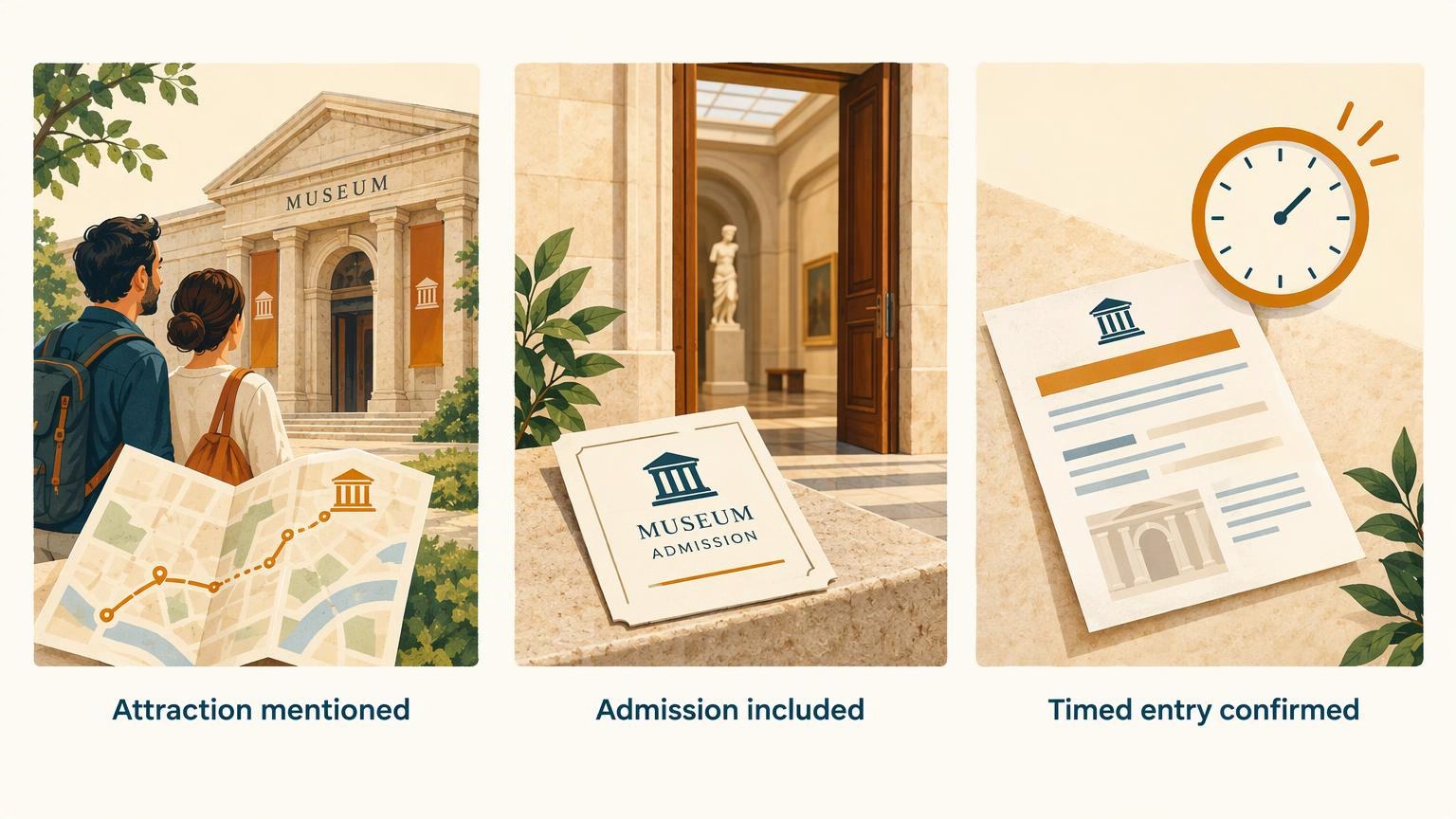
Illustration comparing three distinct commitments: attraction mentioned, admission included and timed entry confirmed, using separate museum, admission-slip and reservation-sheet scenes.
I would resolve an access question if the answer could change which trip you choose. If entering an attraction is the reason for traveling, its treatment belongs beside the route and dates in your comparison.
That does not mean every ticket must already be issued. I would distinguish a reservation that cannot yet be made from a visit whose inclusion, responsibility or timing has not been explained.
When considering European vacation planning, I would connect your attraction priorities to the proposed itinerary before treating separate sightseeing as an add-on. A trip can be appealing overall and still leave insufficient usable time for your main visit.
My buying test is whether you would accept the trip if the desired entry could not be arranged. If yes, you can decide whether the uncertainty is acceptable; if no, I would favor an alternative with clearer arrangements or reconsider the dates before committing.
For example, if your preferred museum entry is not confirmed, I would compare two outcomes: taking the tour without that visit or choosing another itinerary. If only the second outcome feels worthwhile, I would treat museum access as a condition of your choice, not a later convenience.
I would also read substitution wording alongside the attraction description. A different stop may suit a flexible traveler but be a poor substitute for someone choosing the tour specifically for that entrance.
I would give each attraction a reservation record: desired visit, inclusion status, booking owner, next action and confirmation status. This keeps an included group visit separate from an independent ticket.
My planning role differs from a supplier's authority to confirm entry. The explanation of how a travel advisor helps provides context, but I would establish responsibility for your reservation rather than assume the advisor or tour operator handles everything.
For timing, I would use the attraction's current official instructions for the exact ticket type and travel date. I would record any release point, booking cutoff or collection requirement that applies, without substituting a universal rule about booking months ahead.
If you are responsible for buying a separate ticket, I would first settle which part of the tour day is available. If a supplier is responsible, I would establish when to expect confirmation and whom to contact if it has not arrived.
For family and group travel, I would identify whose reservations each confirmation covers. A group organizer receiving a message does not show that every intended traveler has the same admission arrangement.
I would work outward from confirmed tour commitments, not inward from an attractive ticket time. Arrival plans, group activities and the next required meeting determine whether an independent visit fits.
Imagine choosing a European family tour because everyone wants to enter a museum. One option includes the intended visit; another describes an exterior stop and leaves an afternoon free.
I would first have the supplier explain the included visit and reservation status. For the second option, I would compare usable free time with the museum visit, including travel, entrance procedures and the return obligation.
You would then evaluate the separate ticket's current availability and terms. If the afternoon cannot accommodate the visit, I would favor the suitable included arrangement, provided its remaining details work for your family.
If the window works and you prefer independence, I would consider the second option. You take responsibility for the separate reservation and its compatibility with the tour.
For couples, I would weigh that appointment against the purpose of a romantic getaway: a relaxed afternoon may matter more than another entrance, depending on your priorities.
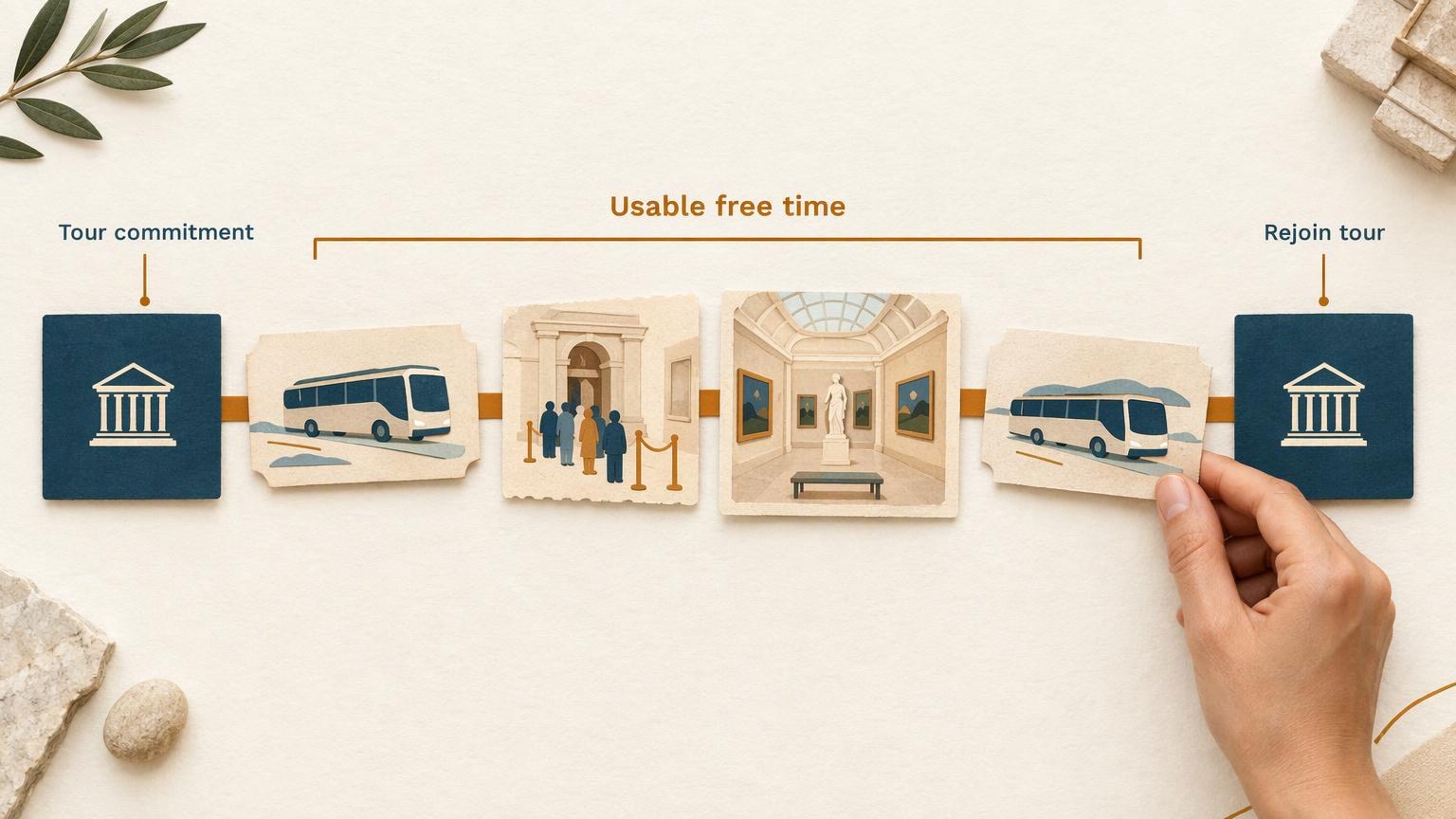
Illustration of a museum visit fitting between “Tour commitment” and “Rejoin tour,” with bus, entrance queue and gallery cards beneath a “Usable free time” bracket.
I would keep the entry confirmation with the relevant tour-day details, rather than treat a payment receipt as the complete visit record. I would read the admission instructions and check that they match the travelers and experience you intended to book.
My final review would distinguish an entrance appointment from any separate meeting or ticket-collection instruction. I would also save the designated contact and any change or cancellation terms where you can retrieve them while traveling.
If the tour schedule changes, I would compare the revised commitments with separately booked visits before purchasing replacements. I would not assume that an attraction reservation changes automatically because another part of the trip has changed.
I am Izabela Melli, and Europe is one of my travel specialties. At our Long Island travel agency, customized planning gives your attraction priorities a place in the broader itinerary discussion.
The value of advisor-led planning here is connecting your intended visit to the trip you are considering. I would keep that planning conversation separate from any supplier's decision about ticket availability or admission.
Share the destination, dates and travel style you have in mind. A Superior Travel advisor will help turn the possibilities into one clear, personal plan.