
Separate essentials from preferences
I would distinguish what the trip must accommodate from what would simply be enjoyable. That lets a comparison change the destination without sacrificing the reason you are traveling.

I recommend approaching a travel advisor when you can describe who is traveling, approximate timing, spending boundaries, and what the trip must accomplish. You do not need a finished itinerary or a chosen destination. Begin before committing to arrangements whose suitability depends on another decision, especially when travelers have competing needs.
I think the most useful time to contact travel advisors is before an appealing reservation settles a question you have not considered. For Long Island travelers, travel advisors can help connect the trip's purpose with practical choices about pace, rooms, and transportation. A clear starting brief matters more than a polished itinerary.
When comparing travel advisors, I would look for a relevant specialty and a planning conversation that allows some decisions to remain open. You can know that you want family time without knowing whether a resort or cruise fits. I would use that distinction to decide what to share first.
I would distinguish what the trip must accommodate from what would simply be enjoyable. That lets a comparison change the destination without sacrificing the reason you are traveling.
I would name your preferred departure point and any alternatives you would consider. Explain whether flexibility depends on the travel time, transportation arrangements, or total cost.
I would say whether your spending boundary includes transportation, accommodation, meals, and planned activities. A room-only budget and a whole-trip budget lead to different comparisons.
For a group, I would identify who gathers preferences and who approves shared arrangements. A spokesperson can organize the conversation without making financial commitments for other households.
I would separate reservations already made from options you are merely considering. A paid booking changes the planning starting point in a way that a saved hotel link does not.
I would begin when a decision needs interpretation, rather than wait until you have assembled everything yourself. That might mean choosing between a cruise and a resort, deciding how much travel a honeymoon should involve, or finding an arrangement that accommodates different household needs.
I would not judge the need for help by the number of reservations. A straightforward stay and flight may be manageable independently; a single accommodation choice may deserve discussion if you are unsure whether the room arrangement meets an essential requirement.
For a group, disagreement about destination or pace is a useful reason to start the conversation. I would gather each household's essential needs before choosing a format, rather than let the most enthusiastic traveler settle the trip for everyone.
I would also distinguish a planning conversation from a booking deadline. A departure date, a particular room arrangement, and willingness to change the destination create different planning needs, so I would avoid applying one universal calendar window.
If you are comparing Caribbean and all-inclusive vacations with European vacation packages, start by describing the days you want. I would compare how each format supports that purpose before narrowing the destination.
I would prepare a short description of the trip, not a finished itinerary. Include approximate timing, who is traveling, your departure point, spending boundaries, and the requirements that would make an option unsuitable.
For dates, distinguish a preferred period from dates you cannot change. For departure points, name the airport or other starting location you prefer and whether alternatives are acceptable; I would not treat flexibility as permission to overlook an inconvenient journey.
I would also explain the budget's scope. Say whether you mean the total for everyone, an amount per traveler, or a separate boundary for each household, and identify expenses you expect that amount to cover.
I would make an open question explicit. Saying that you want unhurried family time but have not chosen a destination gives the planning conversation direction without pretending the decision is settled.
For family, group, and cruise travel, I would include differences between households that could change rooming or daily pace. These are useful inquiry details, not a claim that every item is a mandatory form field.
I would organize the timeline around decisions, rather than borrow another agency's month-by-month schedule. Each stage should answer a different question, and moving forward should depend on what you know, not simply how long you have been discussing the trip.
At the start, I would focus on purpose and fit. During comparison, I would look at how routes, stays, and experiences work together, so an attractive individual item does not distract from an awkward overall plan.
I would then separate choosing an option from authorizing a reservation. Before approval, you should understand the actual inclusions, relevant terms, payment requirements, and any essential arrangements still awaiting confirmation.
For escorted tours and river cruises, for example, I would connect the departure and itinerary choice with the travel needed around it. An appealing itinerary alone does not answer how the complete journey fits your available time.
After booking, I would use the reservation documents to distinguish confirmed arrangements from requests. The downside of a considered planning conversation is that it requires decisions and feedback from you; sending an inquiry does not itself reserve the trip.
| Stage | Traveler's task | What should be clear before moving on |
|---|---|---|
| Initial inquiry | Describe the trip's purpose and practical boundaries | What matters most and what can change |
| Clarify requirements | Separate essentials from preferences | Which needs determine suitability |
| Compare options | Evaluate complete arrangements | Differences in pace, logistics, inclusions, and cost |
| Approve and book | Review the specific option and terms | What you authorize and what requires confirmation |
| Prepare to depart | Review documents and remaining tasks | Confirmed details and responsibilities |
| Stage | Your task | Before moving on |
|---|---|---|
| Initial inquiry | Describe purpose and practical boundaries | What matters most and what can change |
| Clarify needs | Separate essentials from preferences | Which needs determine suitability |
| Compare options | Evaluate complete arrangements | Pace, logistics, inclusions and cost |
| Approve and book | Review the specific option and terms | Authorization and pending confirmations |
| Prepare to depart | Review documents and remaining tasks | Confirmed details and responsibilities |
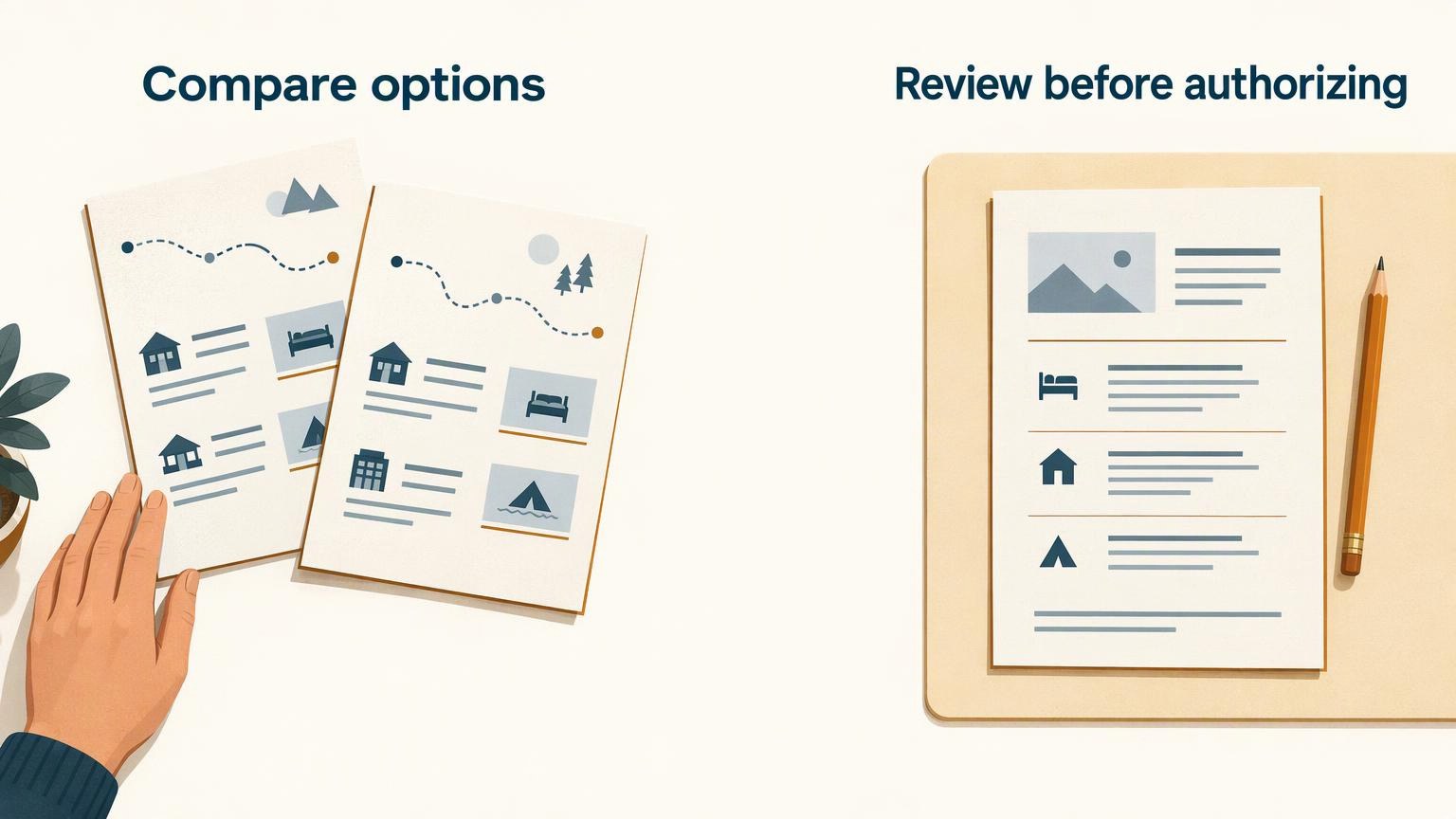
Illustration of travel option sheets and a separate review sheet, with a wide empty gap emphasizing the pause between comparing options and authorizing.
Say you are organizing a family vacation. Some relatives want a cruise, others want a beach resort, and everyone agrees that relaxed time together matters more than a packed activity schedule.
I would first ask the organizer to gather each household's travel window, spending boundary, and room needs. The households would decide their essentials; the organizer would summarize them without turning the most popular destination into a commitment.
I would next compare the formats against those essentials. A cruise comparison would need to address the itinerary and time aboard, while a resort comparison would need to address the accommodation and transportation arrangements that support the group's plans.
If exploring different stops is important to everyone, I would give the cruise option greater weight. If remaining at a common base is essential, I would favor the resort direction, subject to the specific arrangements meeting the group's needs.
I would keep optional outings open until the format works. Choosing excursions first would spend effort on details that may disappear when the group settles the bigger decision.
For a celebration, I would apply the same reasoning to romantic getaways and anniversary packages: establish the essential shared moment, then compare the trip around it. The travelers approve the direction; current pricing and supplier confirmation come after that direction becomes specific.
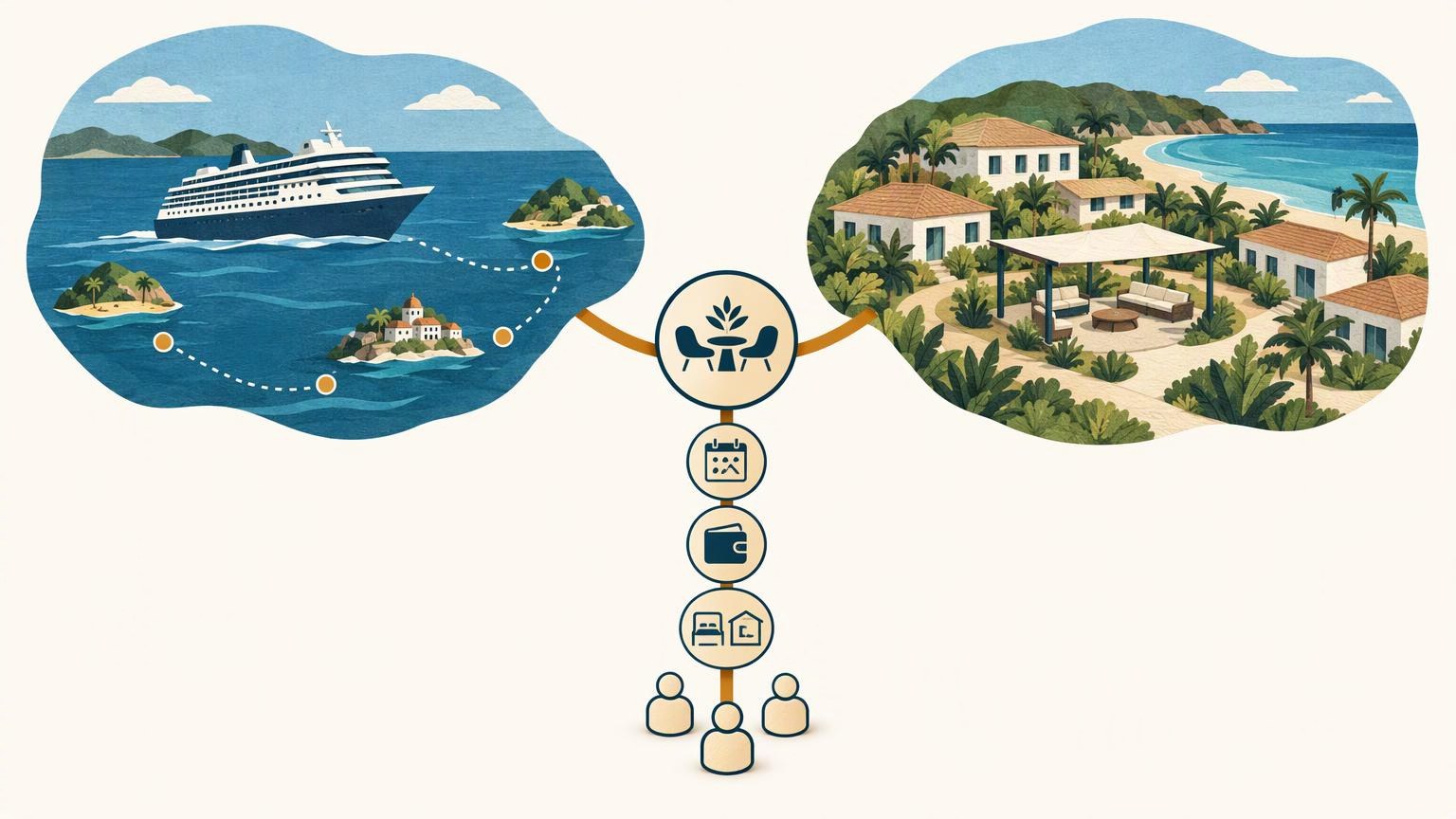
A cut-paper illustration branches from shared seating toward a ship among islands and coastal lodging around a shaded seating area, with household tokens and planning icons below.
I am Robin Holian, and my specialties include groups, family travel, cruises, and honeymoons throughout Europe. You can review my advisor profile to see how that focus relates to the trip you have in mind.
My credentials include Accredited Cruise Counselor and Certified Sandals & Beaches Specialist. Those are relevant starting points for a specialist match, rather than a promise that every cruise or resort will suit your needs.
At our Long Island travel agency, different advisors lead different specialties. I would begin with the planning problem you need help solving, then match that problem with the relevant focus.
For a current quote, I would make the cost comparison specific: travel dates, travelers, room or cabin category, transportation, meals, and intended activities. Separate included items from additional spending, and compare equivalent arrangements rather than headline totals.
I would consider travel protection separately from the vacation price. If you are considering a sailing, the cruise travel insurance guide is relevant further reading. The useful next step is a clear starting brief that leaves room for the right option to emerge.
Share the destination, dates and travel style you have in mind. A Superior Travel advisor will help turn the possibilities into one clear, personal plan.