
Name your deal-breaker
I would identify the room detail that makes the stay workable, such as bedding or an accessibility need. A written request does not settle whether that detail is confirmed.

I would authorize a travel agent hotel booking only when the written proposal identifies the supplier, stay details, cost and terms. Before paying, establish who issues confirmation, when it is expected and what happens to your payment if accommodation cannot be secured.
I treat travel agent hotel booking as a documentation decision, not a test of a voucher's appearance. A travel agent hotel booking should identify the accommodation and responsible parties before payment. I separate the proposal, authorization and confirmation.
My travel agent hotel booking review starts with your room requirements. At our Long Island travel agency, we provide customized planning; clear documentation helps connect an appealing hotel choice to the commitment you are considering.
I would identify the room detail that makes the stay workable, such as bedding or an accessibility need. A written request does not settle whether that detail is confirmed.
I would distinguish a deposit, final payment and any amount payable at the property. Ask what each payment authorizes rather than assume they all mean the same thing.
I would save each identifier beside its issuer and contact instructions. An unlabeled number gives you less help when someone needs to locate the reservation.
I would keep the proposal and terms you approved alongside the confirmation. If something differs later, that record gives you a precise starting point for clarification.
I begin with the exact property name and address, then identify the accommodation supplier. The advisor's name alone is not enough: the proposal should state whether the arrangement is with the hotel directly or through another named company.
I distinguish the advisor coordinating your trip, the company supplying the reservation and the payment recipient. Different organizations may hold those roles. A clear explanation lets you direct a payment question to the right party without confusing it with a room or reservation issue.
I also distinguish hotel-only arrangements from accommodation within a package. For European vacation packages, I would identify the hotel component's terms and whether changing it affects other arrangements. That dependency can matter even when the room itself meets your needs.
I would verify unfamiliar contact details independently of a payment message. A recipient that differs from the named supplier needs an explanation before authorization.
My goal is traceable responsibility, not a particular supply route. An explained intermediary arrangement can be easier to evaluate than a vague assurance that everything is handled. Familiarity with the hotel does not resolve who supplies this particular reservation.
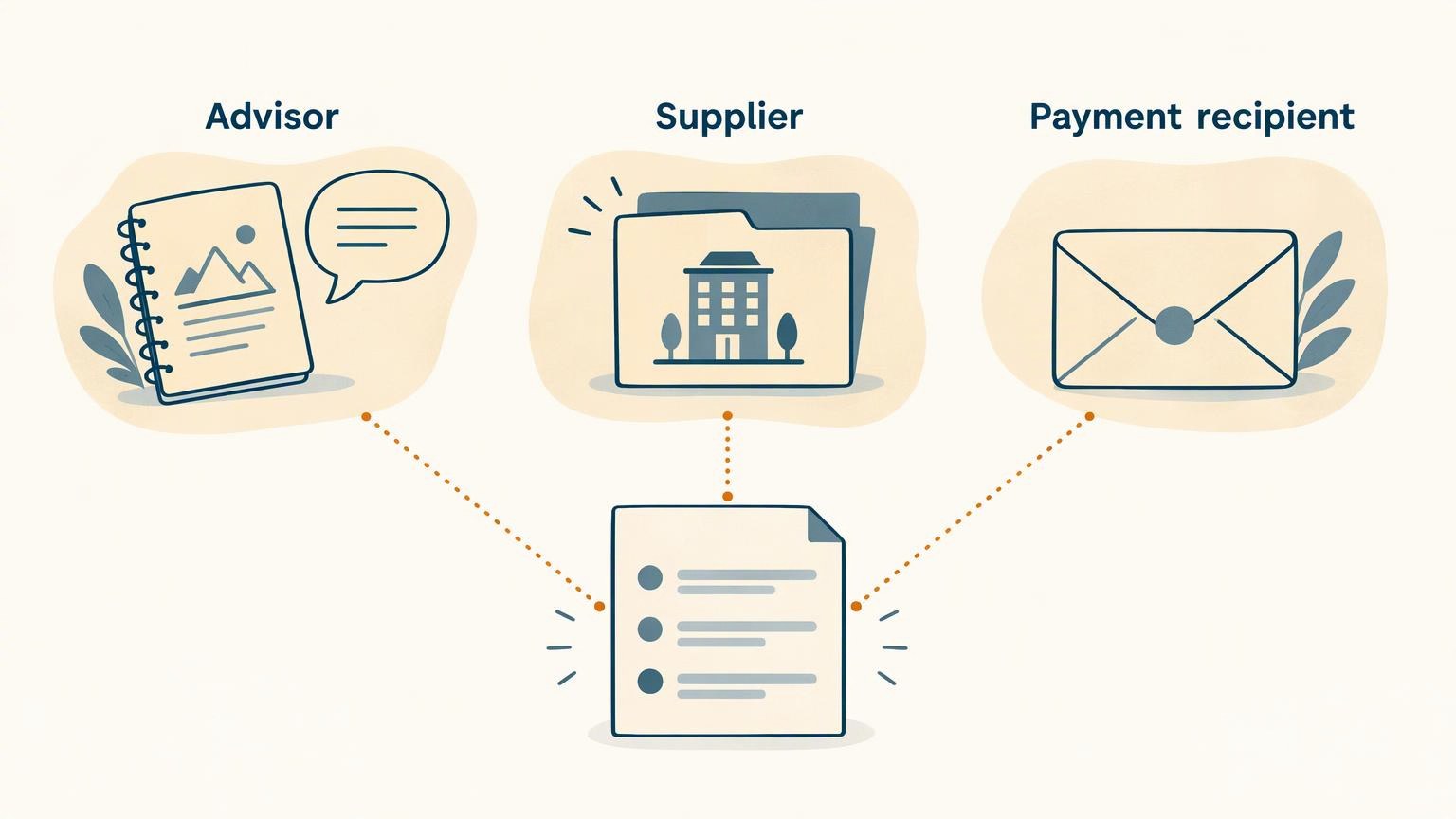
Illustration linking Advisor, Supplier, and Payment recipient icons to a single sheet with three abstract entries.
I read the proposal as if you were arriving today. Match the property, arrival and departure dates, guest names, occupancy and room category to your intended trip. A discrepancy belongs in a revised proposal, not just a conversation.
I check bedding separately from room category. For family and group vacations, each household should review its accommodation details rather than rely on a group summary. Establish whether the sleeping arrangement is part of the booked product or only requested.
I make the same distinction for connecting rooms, accessibility needs and room location. If a stay is unsuitable without a feature, its status changes the payment decision. A recorded preference alone does not establish that the supplier has accepted it.
For a romantic getaway, I separate essential room arrangements from celebration extras. The right bedding may be necessary even when a preferred extra is not.
My test is whether you can describe the accommodation you are buying without a photograph or verbal explanation. Keep preferences in the record, but distinguish them from confirmed essentials so you understand both the purchase and its remaining uncertainties before authorizing payment.
I consider a proposal ready for payment when you understand what authorization does, who supplies the stay and how confirmation arrives. You may be accepting confirmed accommodation or authorizing an attempt to secure it under written terms. Those are different commitments.
I look for the property, dates, guests, occupancy, room category and inclusions, alongside the supplier, payment terms and cancellation conditions. Requested features should remain distinct from confirmed inclusions so you can judge whether the arrangement works for you.
I would not require a hotel-issued identifier before every payment. Instead, establish who submits the reservation, who issues confirmation, when it is expected and how your payment is treated if accommodation cannot be secured. Each reference should identify its issuer and where it can be used.
Imagine a proposal has a supplier reference but no hotel reference yet. I would compare its stated status with the payment terms. If the stay is pending, your decision depends on accepting the confirmation process and the outcome if availability changes. A reference alone does not resolve unclear terms or prove that every requested detail is confirmed.
When confirmation arrives, I compare it with the accepted proposal and retain both. Differences in dates, guests, room category or inclusions need resolution through the named contact, with amendment instructions available for later changes.
| Document | Check | Question to clarify |
|---|---|---|
| Proposal | Stay, supplier, total, terms | Confirmed or pending? |
| Receipt | Recipient, amount, currency | Payment for which reservation? |
| Confirmation or voucher | Issuer, reference, guests, status | Hotel verification route? |
I save each agency, supplier or hotel reference beside its issuer. Establish which identifier the property can use and the verification route if no hotel reference is available.
For accommodation attached to an escorted tour or river cruise, I distinguish a separate hotel reference from one covering the wider arrangement. Keep the full document, not merely a screenshot of the number.
I compare the complete amount authorized, not just a nightly headline. Identify the currency, payment recipient and schedule, separating included charges from amounts payable elsewhere. A deposit and final payment may authorize different stages of the arrangement.
I keep dates, room category, occupancy and cancellation conditions aligned when comparing quotes. These choices affect cost and what you receive; a lower amount for a different stay is not a like-for-like comparison.
For Caribbean and all-inclusive vacations, I look for written inclusions. Meals, transfers and other intended items need explicit treatment rather than assumptions based on the package label.
I review cancellation and amendment terms before payment: deadlines, time zones, required methods, penalties and conditions for changing names, dates or room categories. These terms determine the flexibility you are buying.
I also establish what happens if confirmation fails, including payment treatment and whether a substitute requires your approval. An unspecified “comparable” alternative may not meet your essential requirements.
I would request a current quote from Robin Holian for the actual stay. This guide explains the comparison, not a price, agency fee or supplier policy for your particular booking.
Imagine a family proposal names your preferred hotel, but essential bedding is only requested. The offered room would not work without that arrangement. I would pause authorization rather than assume arrival staff can resolve it.
You identify the requirement; the advisor seeks the supplier's written response. If accepted as part of the reservation, review the revised terms before paying. If still only requested, compare another room arrangement or property. The supplier's response changes which proposal is usable.
I would decide differently if bedding were merely a preference and the offered room still worked. You could accept that uncertainty without accepting an unsuitable stay. The distinction is between a desired feature and a condition necessary for the trip.
I then establish who receives amendments, who approves them and which document records acceptance. Keep the existing arrangement until the documented process establishes the change; sending a request is not acceptance.
I am Robin Holian; my specialties include groups, family travel, cruises and honeymoons throughout Europe. I bring those trip priorities into the accommodation discussion while keeping confirmation responsibilities and booking-specific amendment terms explicit for your decision.
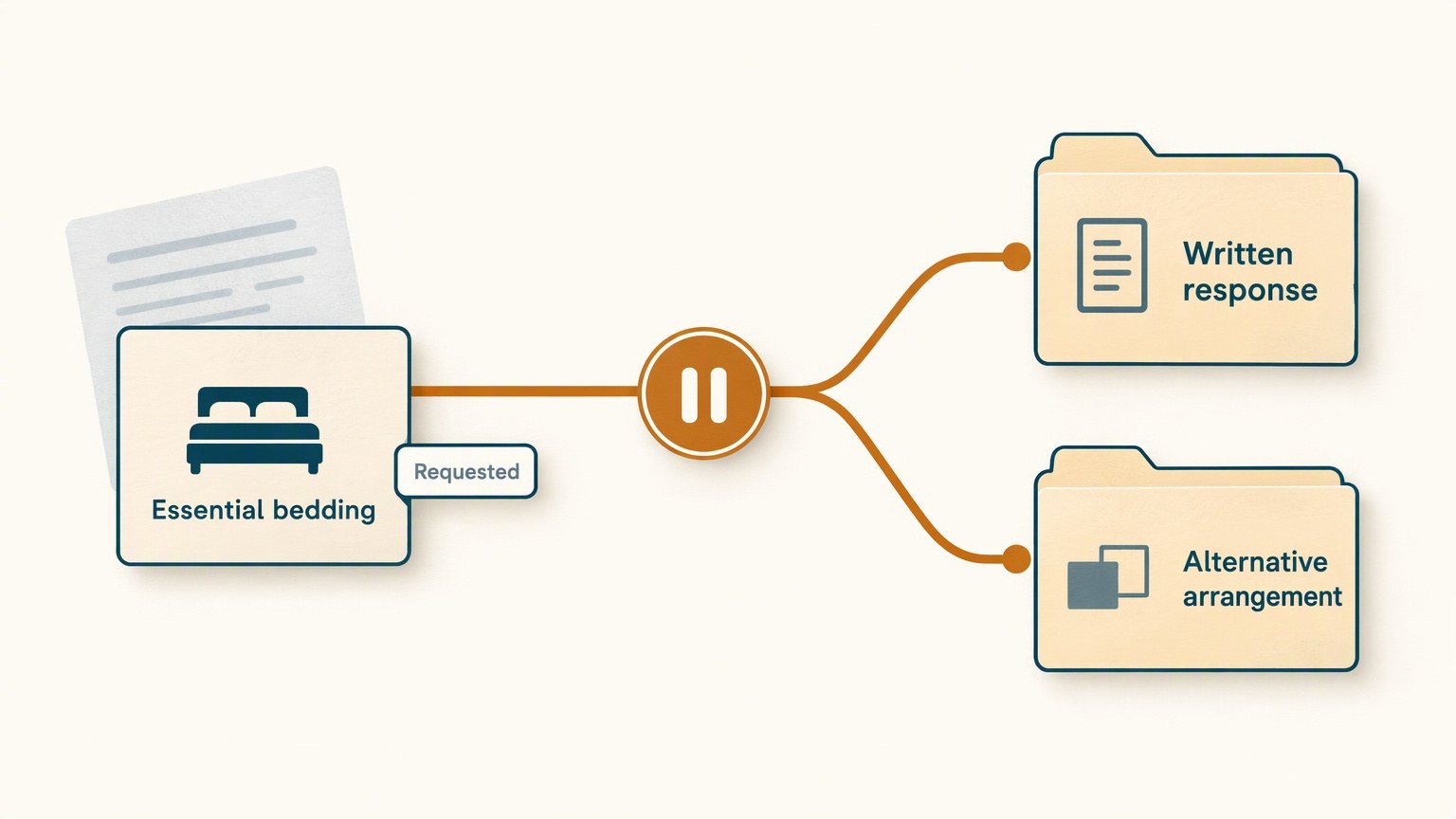
Illustration of an essential bedding request linked through a pause symbol to two folders, with a faint document behind the original card.
Share the destination, dates and travel style you have in mind. A Superior Travel advisor will help turn the possibilities into one clear, personal plan.