
Start with the loss you care about
I would name the expense you want protected before comparing plans. A cancellation concern calls for different reading than a concern about paying for medical treatment.

I would buy a policy only after understanding what makes a claim eligible, what evidence I would need, when I must notify the administrator and how payment works. Assistance is not the same as reimbursement. I would also identify who decides claims and check whether any cancellation benefit returns money or travel credit.
I would evaluate travel insurance claims before purchasing protection, while you still have time to compare the paperwork with your trip. For Long Island travelers, travel insurance claims deserve attention alongside benefit limits: a benefit is useful only if its terms fit the loss you want to protect against.
I am Robin Holian, a travel advisor with our Long Island travel agency. My focus here is travel insurance claims as a buying decision, rather than a recommendation of any particular plan. I would assess eligibility, evidence, timing and payment separately before deciding whether the protection suits you.
I would name the expense you want protected before comparing plans. A cancellation concern calls for different reading than a concern about paying for medical treatment.
I would keep the policy wording and claim instructions together. The benefit description answers a different question from the instructions for documenting a loss.
I would record each deadline with its starting event and required action. A reminder to make contact should not replace a reminder to submit supporting evidence.
I would consider whether you could manage an expense while a reimbursement request is reviewed. If that would be difficult, the prospective plan's payment terms deserve extra attention.
I would distinguish your travel advisor from the organization deciding the claim. Knowing the correct contact is more useful than assuming everyone involved has the same authority.
I would request the full policy or certificate applicable to your quote, its benefit schedule and any amendments or optional-benefit wording. I would also request the claim instructions for the benefits that matter to you, rather than rely on a short description of the plan.
My first comparison would connect the intended loss to the relevant benefit. For cancellation, I would read the covered reasons, exclusions and definitions together; a benefit name alone would not establish that your reason qualifies. I would then locate the conditions attached to claiming that benefit.
Next, I would match the documents to the exact quoted plan and travelers. A useful answer about a different version would not settle your purchase decision. I would save the version reviewed alongside the quote so later explanations have a clear reference point.
For a sailing, I would use my cruise insurance guide for the broader coverage decision, then examine the prospective plan's claim terms. I would keep covered-reason cancellation separate from any cancel-for-any-reason option and establish whether each applicable benefit returns cash or future cruise credit.
I would read the evidence requirements against the loss you want to insure. My practical question is whether you could obtain the required records while dealing with that event, not simply whether you could complete a form afterward.
I would organize the review around what happened, what expense resulted and what amount remains your responsibility. Booking confirmations, payment records, cancellation statements, receipts or medical records are examples to discuss with the administrator, not a universal list of documents every claim requires.
For family and group travel, I would pay particular attention to whose expense each record describes. One person paying for shared arrangements does not answer how the prospective plan treats each traveler. I would have that relationship explained before assuming one set of paperwork is sufficient.
My buying test would include access: who holds the records, how you would request them and whether you could submit the required format. A plan may still suit you despite detailed evidence requirements, but I would weigh the effort honestly. Easy online submission would not make a difficult-to-obtain document easier to obtain.
I would make separate notes for notifying the administrator and supplying the claim or proof of loss. I would look for each action in the prospective policy and its instructions, then ask for clarification if the relationship between them is unclear.
For every deadline, I would record the event that starts the clock, the required action and the designated recipient. I would not substitute a general instruction such as contacting someone after the trip for the plan's actual wording. Where exceptions or extensions are described, I would read their conditions too.
I would also examine whether any benefit requires contact or authorization before arranging a service or incurring an expense. The useful answer identifies the applicable benefit and action; a general reassurance that help is available does not settle that question.
For escorted tours and river cruises, I would consider how you would reach the named contact while following your itinerary. Before purchase, I would save the appropriate contact details and establish how to keep a record of notification. My aim would be a sequence you can carry out while traveling, without treating one message as completion of every later requirement.
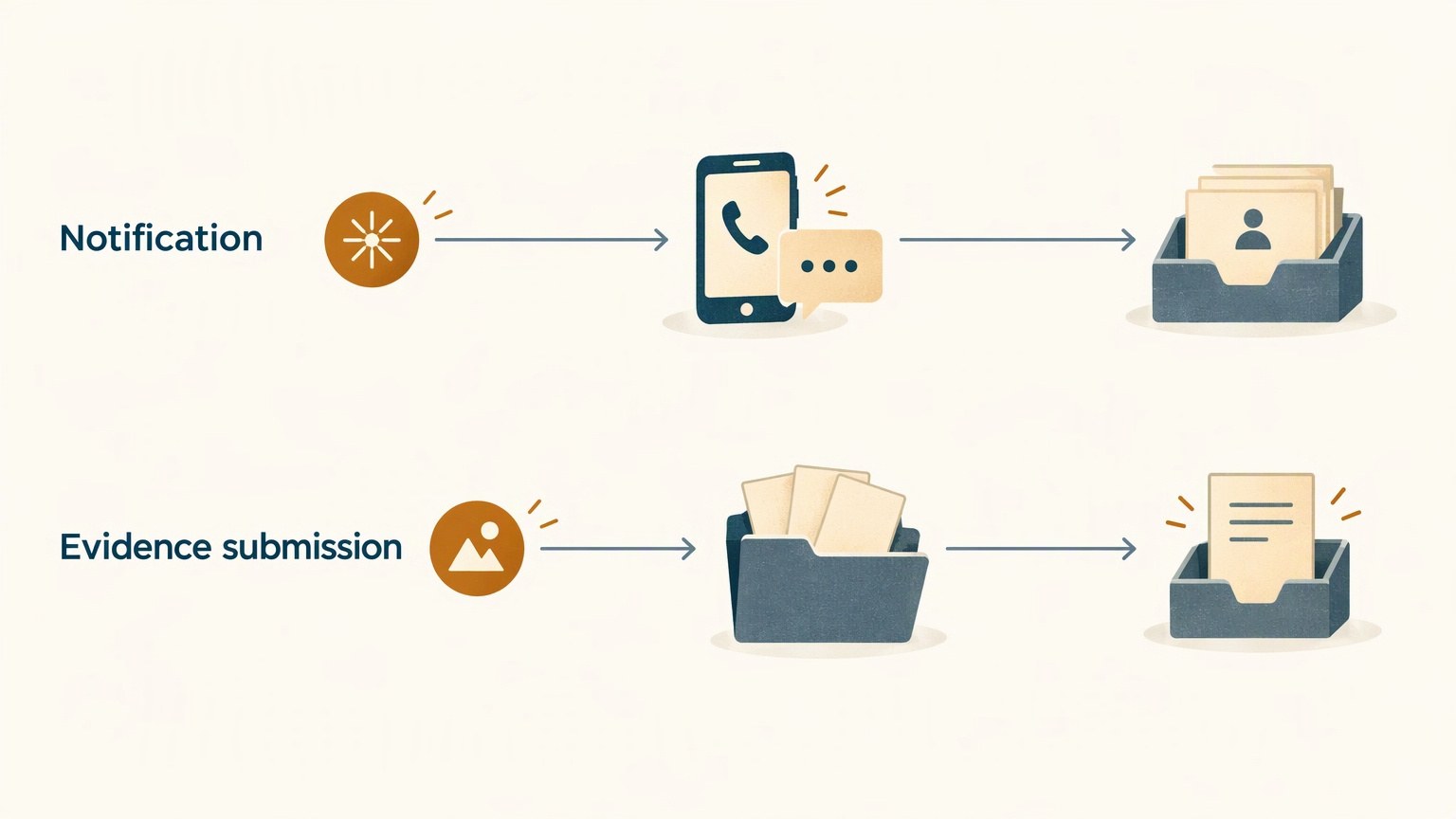
Illustration of two independent paths: Notification links an event icon, phone and message bubble, and contact inbox; Evidence submission links another icon, a paper folder, and a document tray.
I would distinguish help arranging a response from a commitment to pay an expense. I would ask whether the prospective benefit involves assistance, reimbursement after payment or a direct-payment arrangement, and read any eligibility and authorization conditions attached to the answer.
Say you are comparing protection for a family cruise and could manage routine extra spending, but a substantial upfront medical bill would be difficult. I would first identify the medical benefit in each plan, then have the designated provider explain who pays initially and what approval is needed. You would compare that answer with what you could realistically fund.
I would favor the option with workable payment terms if its coverage also fits, even if another plan has a more appealing headline limit. If both require upfront payment you cannot manage, neither has answered your concern. A current quote matters, but a cheaper premium does not resolve that gap.
For couples comparing protection alongside a romantic getaway or a European vacation, I would apply the same test to cancellation: establish the payment form and conditions before treating protection as money available for a replacement trip.
| Arrangement to investigate | Question to resolve | Buying implication |
|---|---|---|
| Assistance | What help is provided, and is payment a separate decision? | Do not budget as though arranging help guarantees coverage. |
| Reimbursement | What must you pay first, and what evidence supports repayment? | Consider whether you can carry the expense during review. |
| Direct payment | When is it available, and what approval or acceptance is required? | Do not assume it applies to every expense or provider. |
| Arrangement | What to confirm | Budget check |
|---|---|---|
| Assistance | Is payment a separate decision? | Arranging help does not guarantee coverage |
| Reimbursement | Upfront costs and evidence for repayment | Can you carry the expense during review? |
| Direct payment | Availability, approval and acceptance | Do not assume every expense qualifies |
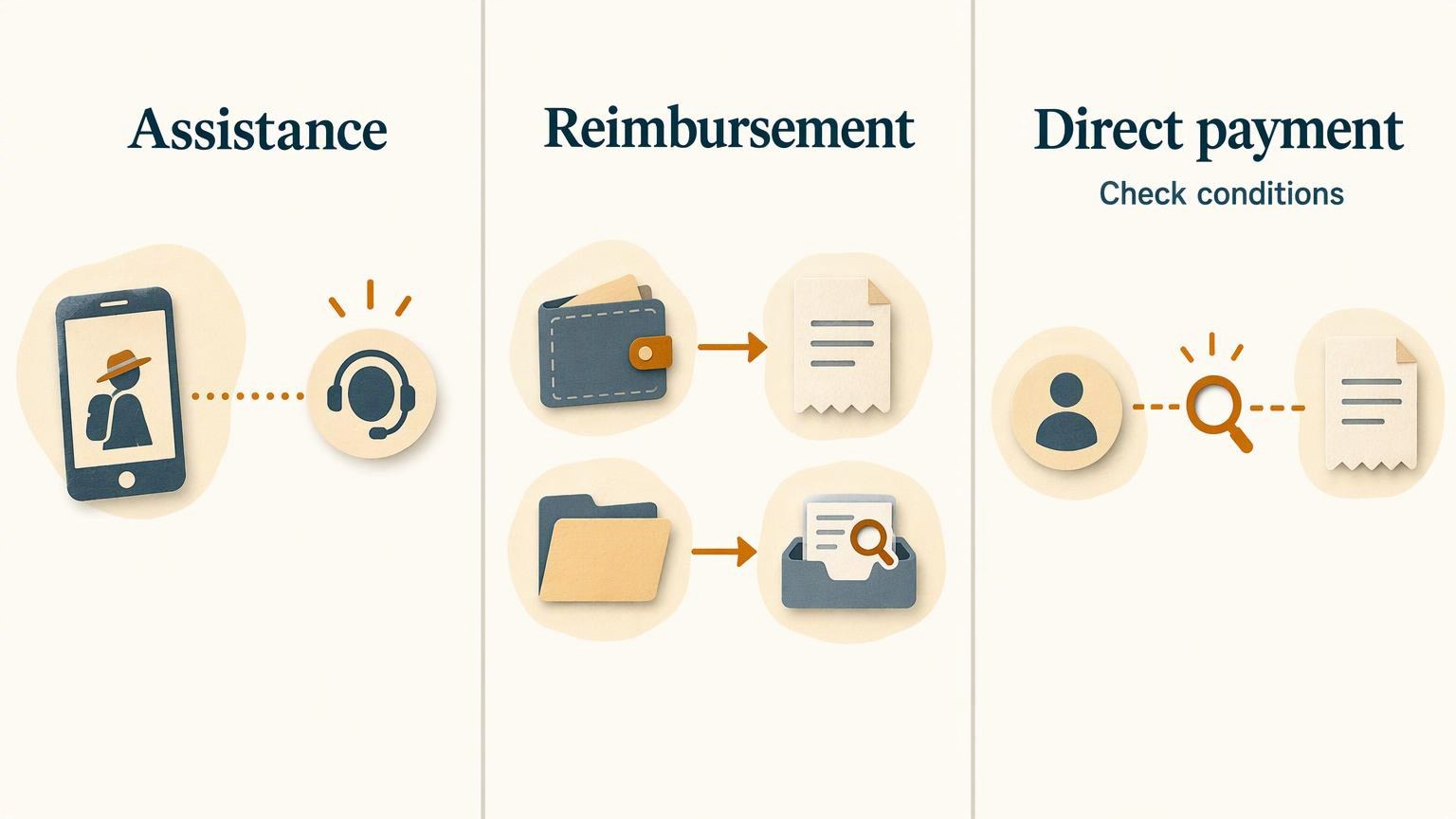
Illustration comparing Assistance, Reimbursement and Direct payment using phone, wallet, document and review icons. The direct-payment panel includes the label Check conditions.
I would identify the claims administrator before purchase and keep its responsibilities separate from travel planning. I would want a clear submission route, a way to track the claim and an explanation of how requests for additional information reach you.
My specialties are groups, family travel, cruises and honeymoons throughout Europe. That makes your travelers and arrangements relevant to my planning role. I would bring those trip details into the coverage conversation, while directing questions about claim decisions, evidence acceptance and payment authority to the appropriate policy contact.
I would also ask how review progress is communicated and what the written process says about reconsideration if you disagree with a decision. I would not build your budget around an assumed processing time or treat submission as approval. For the buying decision, the useful distinction is between a process you understand and an outcome nobody can promise in advance.
Before proceeding, I would keep the quoted plan, applicable documents and written clarifications together. If an answer changes which plan you prefer, I would have you resolve it before purchase rather than rely on a reassuring conversation that does not identify the relevant terms.
Share the destination, dates and travel style you have in mind. A Superior Travel advisor will help turn the possibilities into one clear, personal plan.