
Describe the outing, not its appeal
I would save the operator's full activity description before comparing policies. A memorable excursion title tells you less than the route, participation requirements and actual activity.

I compare travel insurance for couples against each partner's activities separately: definitions, exclusions, supervision conditions, equipment provisions and required optional coverage. A shared itinerary is not enough. I would choose coverage only when its wording addresses both partners' activities and desired benefits.
Before comparing travel insurance for couples, I would save each operator's full excursion description, including the route and participation requirements. I would also list the expenses you want travel insurance for couples to address, separating treatment, equipment losses and unused bookings.
I am Blake Rehfield, specializing in cruise planning, custom vacations and group travel. For travel insurance for couples, I would include optional outings in your notes, not just excursions already booked. At our Long Island travel agency, I connect those itinerary details with specific questions about the insurer's wording.
I would save the operator's full activity description before comparing policies. A memorable excursion title tells you less than the route, participation requirements and actual activity.
I would give each partner a separate list, including optional outings. That prevents the quieter itinerary from standing in for the more demanding one.
I would distinguish an injury expense from damaged equipment or an unused booking. Those are different questions, even when they arise during the same excursion.
I would retain the policy version, relevant clause and insurer's written response together. If your outing changes, compare the new description with that answer instead of relying on memory.
I would discuss a less demanding alternative before you commit. Changing an excursion can be a sensible choice if suitable coverage or participation conditions do not fit your plans.
I begin with the actual activity description. Walking, hiking and climbing are useful search terms, but I would not treat them as interchangeable in a policy.
I record the route, setting, equipment and whether you are learning, participating recreationally or entering an organized event. Carry stated depth, altitude or other measurable details into the comparison rather than substituting estimates. I would retain the operator's description so the insurer can assess the same outing you intend to book.
For Caribbean and all-inclusive vacations, I separate time at the accommodation from water-based excursions. For European vacation planning, I distinguish ordinary sightseeing from an outing described as a trek or climb.
My decision is whether the wording matches your intended activity. I would not infer a match from a broad sports coverage heading or the absence of an excursion's marketing name.
If only one partner participates, I assess that person's activity terms, then examine effects on shared arrangements separately. Different interests do not necessarily require different policies, but I would use separate reasoning rather than let the quieter itinerary represent both travelers.
I start with the expense you want protected, then read exclusions. Specify whether your concern is injury treatment, evacuation, interrupted travel or equipment damage. These are separate needs, even during the same excursion.
I trace protection through the benefit description, definitions and exclusions. A benefits summary helps with orientation, but I would not use it alone to decide how an activity-related claim would be treated. I also compare applicable limits and conditions rather than treating an activity's inclusion as a complete coverage answer.
I distinguish an accident from deciding an outing feels too demanding. For a voluntary change, I review the booking's cancellation terms instead of assuming insurance reimburses the unused reservation.
My cruise insurance guide offers broader sailing context. Here, I focus on the activity and relevant benefit, whether the excursion is connected to the sailing or independently arranged.
I compare benefits and exclusions together. If one provision appears to allow an activity while another removes the protection you want, I would obtain the insurer's written explanation before relying on either. That distinction helps me compare policies against your actual priorities.
I distinguish booking a guided outing from meeting a policy's supervision condition. A guide's presence identifies who accompanies you; the wording may specify how the activity must be conducted.
Where participation conditions apply, I compare them with the operator's description. They might concern an instructor, participant qualification or permitted form of participation. I would not invent requirements absent from the policy, or assume that paying an operator satisfies every condition.
I identify when organized instruction ends. Instruction followed by independent participation differs from continuous supervision. If you intend to continue alone, I include that portion in the description sent to the insurer.
For escorted tours and river cruises, I separate the tour leader's general role from supervision of optional activities. A guided itinerary label does not establish every outing's insurance treatment.
I would choose supervision when its conditions match the policy and your preferences. Independent participation offers more control over your day, but requires its own comparison. I would not pay for guidance solely on an unverified assumption that it makes an activity insurable. If the supervision changes during the outing, I would reassess that changed description before relying on coverage.
I separate equipment required for participation from financial protection for equipment. Required protective gear, lost personal belongings and damaged rentals raise different questions, even when the same outing involves all three.
If the policy specifies equipment conditions, I compare them with what the operator supplies and what you must bring. I would resolve any mismatch before booking rather than assume supplied equipment meets the wording.
I then examine relevant property benefits for ownership requirements, item limits, deductibles and exclusions. I would not assume rentals receive the same treatment as personal belongings, or that every activity item qualifies under a baggage benefit.
I review the rental agreement separately, identifying responsibility for damage and whether the proposed insurance addresses it. Equipment included in an excursion does not establish who bears a loss. I would compare that responsibility with any applicable protection, not just the equipment's availability.
This distinction can change the choice without changing your destination. If participation conditions fit but property protection does not, I weigh the remaining financial exposure separately. I would not reject suitable medical protection solely because an unrelated equipment expense remains yours to bear.
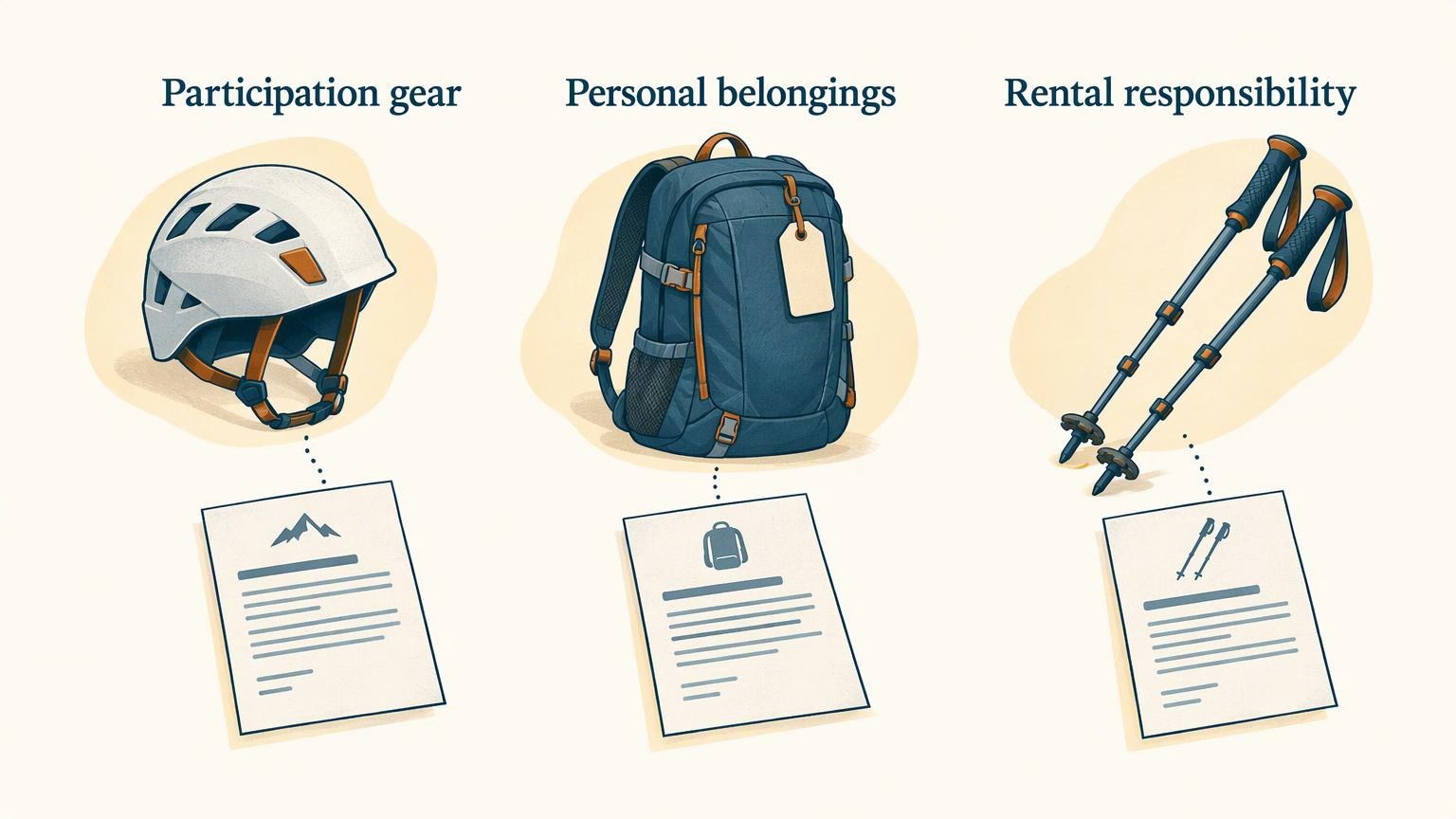
Illustration pairing a helmet, backpack and trekking poles with separate sheets under the headings Participation gear, Personal belongings and Rental responsibility.
I consider optional coverage after identifying the gap it must address. Its name matters less than the wording it changes, the person it applies to and the affected benefit.
On a shared cruise, one partner might choose sightseeing and the other diving. I compare the diving description with the policy rather than let the shared booking determine coverage.
If base wording addresses both plans, I would not add coverage merely because activities differ. If an available option addresses the gap, I compare its terms and current quote. If neither fits, I consider another policy or excursion. I would evaluate added cost against the specific protection gained, not assume a more expensive option solves every activity concern.
I consider separate policies when individual options better match each partner, while weighing separate documents and potentially different procedures. A joint purchase is not automatically easier or cheaper.
My couples and group cruise planning work connects this decision to your itinerary. I can keep both partners' outings visible during planning; the insurer's wording and response must establish coverage. That keeps trip planning distinct from the coverage determination.
| Path | Useful when | Trade-off |
|---|---|---|
| Base policy | Both plans fit | Benefit restrictions |
| Optional coverage | Added wording fills gap | Cost and conditions |
| Separate policies | Individual needs differ | Separate procedures |
| Different excursion | Protection does not fit | Forgo original outing |
| Path | Useful when | Trade-off |
|---|---|---|
| Base policy | Both partners’ plans fit | Benefit restrictions |
| Optional coverage | Added wording fills the gap | Cost and conditions |
| Separate policies | Individual needs differ | Separate procedures |
| Different excursion | Protection does not fit | Forgo original outing |
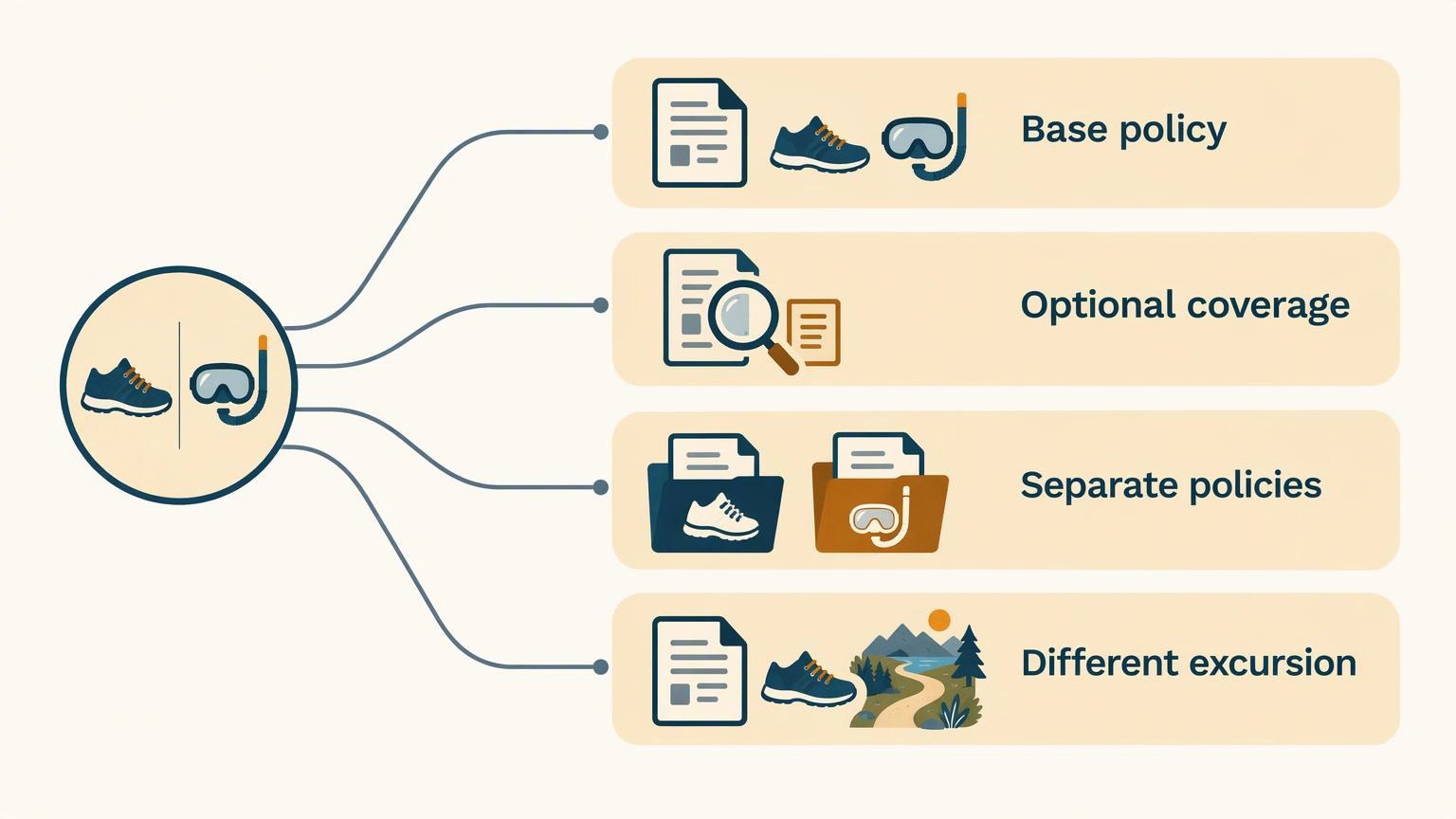
Illustration of four equally weighted branches from shoe and diving-mask icons to panels showing documents, a magnifying glass, separate folders and a scenic walking path.
Share the destination, dates and travel style you have in mind. A Superior Travel advisor will help turn the possibilities into one clear, personal plan.