
How to choose a cruise line - Blake Rehfield, Superior Travel Consultants
A first cruise gets easier when you match the line to your travel habits before you compare brand names.
By Blake Rehfield, Superior Travel Consultants
30 September 2026 · 8 minute read
Choose your first cruise line by matching the trip to your pace, budget, and preferred ship style. The right fit usually comes from itinerary, onboard atmosphere, and total trip cost, not from the cheapest starting fare or the biggest ship.
Table of Contents
How to choose a cruise line gets easier when you rank your habits before you rank brands. For Long Island travelers, how to choose a cruise line usually comes down to pace, ship size, budget, and how much structure you want.
Once you know whether you want quiet evenings, busy sea days, or port-focused travel, how to choose a cruise line becomes a practical planning decision instead of a guessing exercise.
Key Insights
Start with the trip, not the logo
Decide what the week should feel like first. A floating resort and a port-heavy itinerary can both be right, but not for the same traveler.
Treat fare as the opening number
Compare the full trip, not the lead-in price. Cabin type, dining, gratuities, Wi-Fi, and transfers can change which sailing actually costs less.
Ship size changes the whole week
Bigger ships add more choice and more walking. Smaller ships often feel easier to learn, though they may have fewer venues.
Build a shortlist before you browse
Pick two or three realistic sailings and compare those. You will make a better choice when the trip goal and cabin type stay consistent.
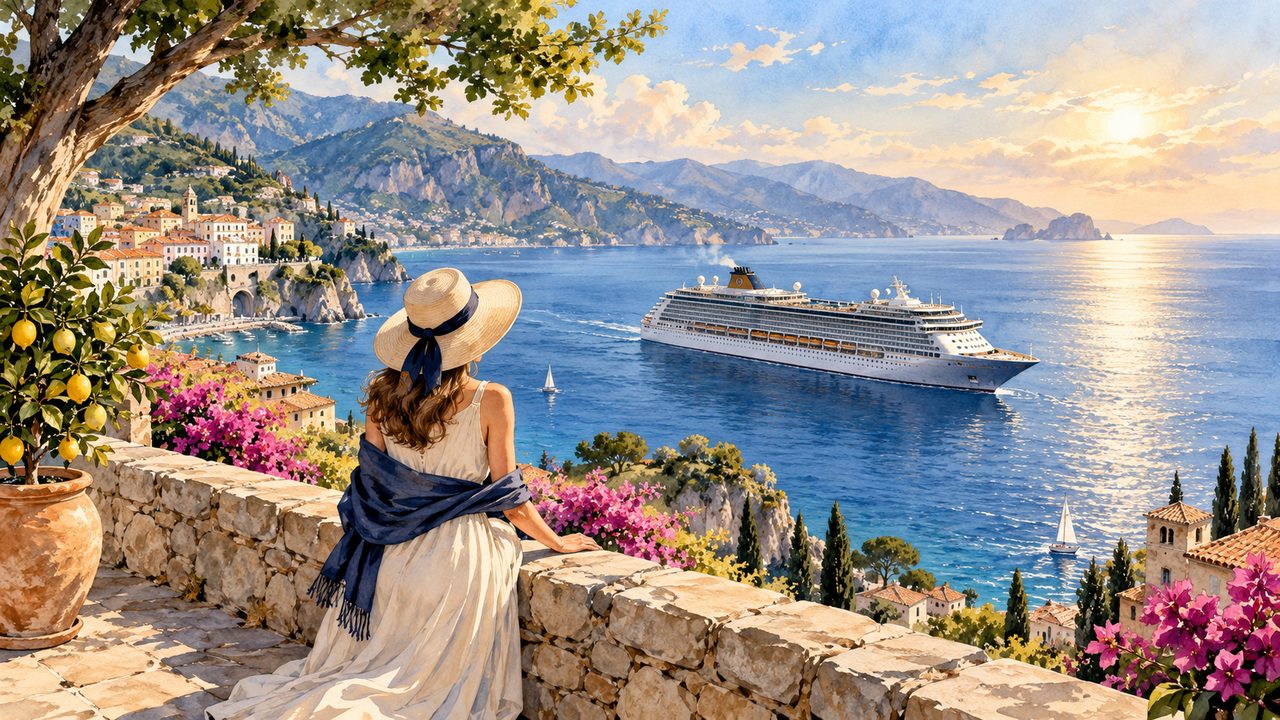
The horizon view suggests starting with trip style, then deciding which cruise line feels right for your first sailing.
How to choose a cruise line starts with your trip style
I start this decision with your travel habits, not a brand chart. If you usually like resort vacations with lots of activity, a lively ship may feel easy from day one. If you prefer quiet mornings, slow dinners, and less crowd energy, that same ship can feel tiring by the second evening.
For a first cruise, I narrow the choice to a few planning questions. Who is traveling with you? Do you want the ship itself to be part of the entertainment? How active do you want evenings to be? Are you happy making dining reservations and juggling schedules, or would you rather learn one simple routine and settle in?
A couple planning an anniversary usually needs a different shortlist than parents sailing with children or a family trying to keep grandparents and younger travelers on the same trip. Travelers who like guided touring often respond well to Escorted Tours and River Cruises. Families coordinating several cabins may want to compare cruise planning with Groups, Families and Cruise Vacations.
A useful example is this: if you want one pool, one dining routine, and a ship that feels easy to learn, the biggest vessel in the market may add more decisions than fun. If you want many dinner options, shows, and sea-day activity, a smaller ship may feel limiting. Fit comes before reputation.
What ship size feels right on a first cruise?
Ship size changes the vacation more than many first-time cruisers expect. A larger ship usually means more restaurants, more entertainment, and more public spaces competing for your attention. It also means longer walks, busier embarkation areas, and more decisions at exactly the moment when you are still learning how cruise routines work.
A smaller ship can feel easier. You learn the layout faster, your cabin is closer to most venues, and the day often has fewer moving parts. The trade-off is simple: fewer dining choices, fewer nightlife options, and sometimes fewer cabin categories. That is not a problem if you wanted a quieter trip in the first place.
I usually tell first-time cruisers to decide whether the ship is the destination or the platform. If the ship itself is a big part of the vacation, mid-size or large often makes sense. If the ship is mainly where you sleep, eat, and move between ports, you may not need the largest option. Travelers comparing ocean and river styles can also use European Vacation Packages as a helpful contrast when destination time matters more than onboard variety.
| Ship style | Usually best for | Common trade-off |
|---|---|---|
| Small | Travelers who want simpler routines | Fewer dining and nightlife choices |
| Mid-size | Travelers who want a balance of ease and variety | Can still feel busy on peak days |
| Large | Travelers who want many onboard options | More crowds and longer walking distances |

A closer deck-side notebook scene can help you weigh itinerary, value, and ship size more clearly.
Should itinerary matter more than brand?
Usually, yes. For a first cruise, the route and pace of the week often matter more than the logo on the funnel. A well-known line on the wrong itinerary can still leave you disappointed. Too many sea days can drag if you booked the trip to explore. Too many port days can feel rushed if what you wanted was rest.
I look first at sailing length, departure convenience, and how each stop fits the kind of vacation you actually like. A four- or five-night sailing can be a good test if you are unsure how much ship time you want. A seven-night trip gives you more time to settle in, but it also gives you more days to feel stuck with the wrong atmosphere.
This is also the point where some travelers decide a cruise is not the best format for the trip they have in mind. If you want a beach stay with very little unpacking and no port logistics, Caribbean and All-Inclusive Vacations may be the better comparison. If you are planning a couple-focused trip, Romantic Getaways and Anniversary Packages can help you weigh land options before you commit to a ship.
River cruising may suit travelers who want destination access and a calmer daily routine. Ocean cruising often suits travelers who want the ship to deliver part of the entertainment. The best first cruise proves fit, not loyalty.
How should you compare cruise value instead of just fare?
The headline fare is rarely enough to compare lines honestly. I want you to look at what the trip will cost once you add the items you are likely to use: cabin category, gratuities if charged separately, dining upgrades, Wi-Fi, drinks, excursions, hotel nights, flights, transfers, and insurance. A low starting fare can rise fast if your must-haves are all extra.
This is where traveler type matters. A couple that wants a balcony, specialty dining, and strong evening entertainment may get better value from a line that includes more upfront. A family may care more about cabin layout and onboard activities than upgraded meals. A group may care most about keeping expectations aligned so one traveler is not surprised by add-on costs later.
I also suggest checking the friction points that ads do not explain. Are dining reservations hard to get? Does the line have enough cabin combinations for your party? Will you need a hotel before embarkation because of the departure schedule? If insurance is part of the discussion, Do You Need Travel Insurance for a Cruise? is a useful next read.
If you want a cleaner comparison, I can narrow the options through my page at Blake Rehfield so you are comparing realistic sailings, not random fares that lead to different vacations.
When does a travel advisor make the choice easier?
A travel advisor helps most when the problem is not a lack of information, but too much of it. First-time cruisers rarely need fifty opinions. They usually need two or three sailings that match the trip they want, with the trade-offs explained clearly. That is where advisor help saves time and cuts down on expensive mismatches.
I focus on cruise planning, custom vacations, and group travel, so I look at fit before I look at marketing. Sometimes the best match is a cruise. Sometimes a land trip is easier, especially if you care more about staying put than changing ports every day. If you are still weighing that question, Why Use a Travel Agent? and Find a Travel Agency on Long Island give useful context for the planning side.
There is a real trade-off. Working with an advisor means spending some time upfront clarifying your budget priorities, cabin expectations, and tolerance for busy ships. That extra clarity is what helps avoid booking a line that looks good on paper but feels wrong once you board.
If your first cruise sits inside a bigger vacation decision, I can compare it with options like Disney Vacation Packages, Planned Around Your Family or other land-based plans. The point is not to sell one format. The point is to choose well.