
Best time to visit south korea - Lois Howes, Superior Travel Consultants
For Long Island travelers choosing between blossoms, foliage, summer energy, or winter value, I match the season to the trip you actually want.
By Lois Howes, Superior Travel Consultants
30 September 2026 · 8 minute read
The best time to visit South Korea is usually spring or autumn if you want easier sightseeing and longer walking days. Summer and winter can still be better choices when value, city-focused plans, or a specific travel style matters more than mild weather.
Table of Contents
The best time to visit South Korea depends on your route, pace, and comfort with changing weather. The best time to visit South Korea for many first trips is spring or autumn.
If best time to visit South Korea means better value or calmer dates, summer or winter may suit you better than the standard answer.
Key Insights
Choose the trip shape first
A Seoul stay handles weather swings more easily. A multi-stop route needs steadier conditions so transfer days and outdoor plans stay comfortable.
Treat scenic weeks as busy weeks
Blossom and foliage periods draw heavier demand. Start comparing flights and hotels earlier if those visuals are central to your trip.
Use summer for flexible city days
Summer fits neighborhoods, meals, museums, and evenings. It is weaker for rigid sightseeing plans built around long outdoor walking blocks.
Balance winter value with comfort
Quieter timing can improve pace and hotel choice. You still need to be realistic about cold mornings, shorter outdoor stretches, and packing.

The layered landscape reflects the choice between spring flowers, autumn color, summer energy, or winter value.
How I match the season to the trip
I start with the route, not a weather chart. A first trip built around Seoul neighborhoods, palace stops, markets, and easy walking usually points me toward spring or autumn. A short city break can absorb weather swings without changing the whole vacation. A broader route with train days, regional overnights, or Jeju usually needs a season that keeps transfer days comfortable too.
That is why I do not treat Korea as one fixed answer. Some travelers want long outdoor days and lighter packing. Others care more about lower demand, easier budget choices, or fitting Korea into a wider Asia trip. When I plan through Asia Vacation Packages, Planned Around You, the timing decision usually comes down to what your average day should feel like.
There is also a real trade-off. Spring and autumn are easier to recommend, but more travelers want those same windows. Winter can feel calmer if cold does not bother you. Summer can work if your priority is food, neighborhoods, museums, and evening energy instead of all-day walking.
I also look at who is traveling. Couples often want atmosphere and pacing. Families usually need smoother transfer days and fewer weather frustrations, which is the same planning lens I use for Groups, Families and Cruise Vacations. The season should match the trip you will actually enjoy.
Best time to visit south korea for most first trips
For most first-time travelers, I lean toward spring or autumn because both make daily sightseeing easier. You can stay outside longer, move between neighborhoods more comfortably, and build balanced days without letting the weather control every stop. That matters on a first trip, when you are still learning how much you really want to fit into each day.
Spring is the stronger pick if blossom timing is a major reason to go. It suits palace grounds, park walks, and photo-heavy days. Autumn is often better for broader itineraries because the trip usually handles longer sightseeing days more easily. If you want Seoul plus another region, autumn often gives me the cleaner planning framework.
Neither season is perfect. Blossom travel can mean tighter hotel choice and less date flexibility. Autumn can fill quickly too, especially when your vacation needs to fit school or work calendars. The main downside is not the weather. It is competing with other travelers for the same popular weeks.
A practical example: if you want four nights in Seoul and one or two scenic day trips, either season can work very well. If you want Seoul, Busan, and Jeju in one trip, I usually test autumn first because the route often feels easier to pace.
| Season | Best fit | Main trade-off |
|---|---|---|
| Spring | Blossoms and mild city sightseeing | Peak scenic weeks can tighten choice |
| Autumn | Comfortable walking and broader routes | Popular dates fill earlier |
| Summer or winter | Value or flexibility-driven trips | Weather affects outdoor time |
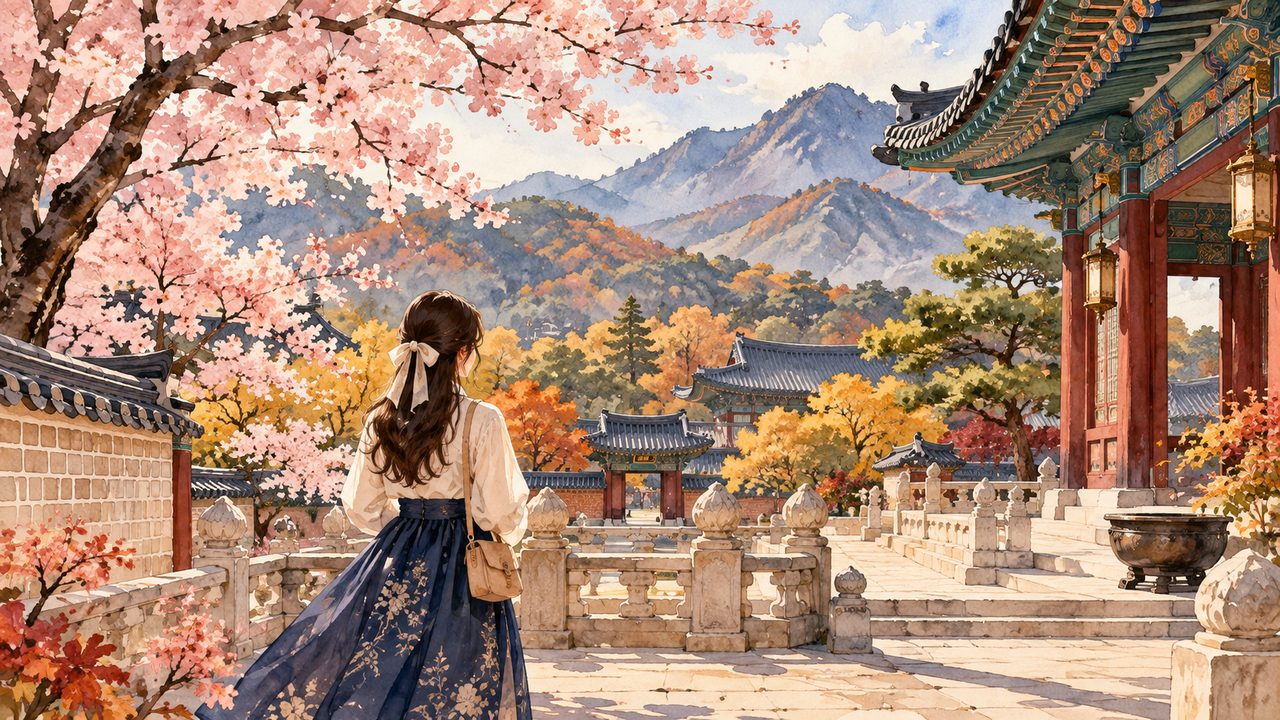
A traveler approaching the courtyard suggests matching your dates to the season that best supports your itinerary goals.
When summer or winter is the smarter choice
Summer and winter get dismissed too quickly. I only push back when a traveler wants the easiest possible sightseeing conditions every day. If your real goal is better value, lighter demand, or a trip centered on food and city atmosphere, either season can make more sense than the standard answer.
Summer works best when the itinerary stays flexible. I would not build a summer trip around nonstop outdoor walking, fixed scenic detours, and long daytime exposure. I would shape it around neighborhoods, indoor attractions, slower lunches, and evening plans. That can still be an excellent vacation. It just needs honest expectations from the start.
Winter gives you a different advantage. Fewer people chasing the same dates can make the trip feel calmer before you even leave home. If you care more about restaurants, shopping, museums, and a slower pace than about spending hours outside, winter can be a rational first trip. The limit is obvious: cold changes how long most people want to stay outdoors.
A simple example is a Seoul-first trip with markets, design districts, museums, and meals booked around neighborhoods rather than scenic transfer days. That kind of plan handles summer or winter much better than a route built around long outdoor sightseeing blocks.
Want me to compare the trade-offs for your dates? Start with Tell us what would make this trip feel right, and I will help you weigh comfort, route, and timing before you commit.
How your seasonal goal changes the itinerary
The same country can feel like a different trip depending on what you want from it. If blossoms are the main point, I build the calendar around that first and treat other preferences as secondary. If blossoms are only a bonus, I choose dates for overall comfort and let scenery improve the trip rather than control it.
The same logic applies to Jeju, food travel, and shorter city breaks. A Seoul-first itinerary can handle less-than-perfect weather because transit, dining, and indoor options are dense. A route with multiple overnights in different regions needs a season that makes moving around easier. This is where many travelers choose dates first and only later realize the route became harder than necessary.
I also compare Korea with the kind of trip you usually enjoy. Travelers planning an anniversary may care more about pacing and atmosphere than checking off every sight, which is similar to how I think through Romantic Getaways and Anniversary Packages. Travelers who want a larger long-haul trip may compare Korea with other higher-planning vacations such as Safari, Honeymoon and Luxury Escapes or a structured Europe plan through European Vacation Packages.
A practical example: a traveler focused on blossom photos may accept tighter dates and more competition. A traveler focused on food, neighborhoods, and relaxed evenings usually benefits more from flexible timing and a steadier daily pace.
What I would confirm before you lock dates
Before I lock in dates, I want four answers. First, what matters most: weather, scenery, lower demand, or a specific seasonal moment? Second, how much walking do you honestly want most days? Third, are your dates flexible by even a week? Fourth, is Korea a stand-alone trip or one part of a bigger travel year?
Those questions prevent expensive mismatches. A traveler who says they want the best season may really mean the least stressful one. Another may want the prettiest photos. Another may care most about fitting the trip between school breaks or another vacation. Different priorities lead to different months, even when the destination stays the same.
I also avoid broad promises about a cheap month or a perfect week. Rates and inclusions move, and current supplier details need checking once the route, hotel level, and timing are clear. That is more useful than guessing too early. For example, a spring departure with less flexible dates may still be worth it if blossoms are the whole point. A winter plan may be smarter if comfort with cold is high and pricing matters more.
If you want to review how I work, you can start with Lois Howes, see Find a Travel Agency on Long Island, or read Why Use a Travel Agent? before deciding how much planning help you want.