
Honeymoon packages - Renata Boulos, Superior Travel Consultants
For couples who want a honeymoon shaped around how they travel, not a bundle that looks romantic but misses the details that matter.
By Renata Boulos, Superior Travel Consultants
30 September 2026 · 8 minute read
Honeymoon packages are worth booking when the core pieces match your trip: the right room, the right meal plan, realistic transfers, and perks you will actually use. If those basics are vague, the package may cost more without making the honeymoon feel better.
Table of Contents
Honeymoon packages work best when the trip structure matches how you travel. Many honeymoon packages look generous on paper, but room type, transfer setup, and meal plan usually shape the experience more than arrival perks.
I am Renata Boulos, and I help Long Island couples compare honeymoon packages by pace, privacy, destination style, and the upgrades they will notice most once they arrive.
Key Insights
Start with the room
A better room changes privacy, noise, and the view every morning. A welcome amenity is pleasant, but it rarely improves six full nights.
Bundle only what fits
All-inclusive value is strongest when you expect to stay on property most days. If you plan tours and dinners out, bundled extras can go unused.
Keep personalization narrow
Choose one signature upgrade and one special experience. Couples usually feel that difference more clearly than a package padded with several minor add-ons.
Confirm every condition
Honeymoon perks often have stay minimums or documentation rules. I want those conditions verified before any deposit is paid or timing assumed.

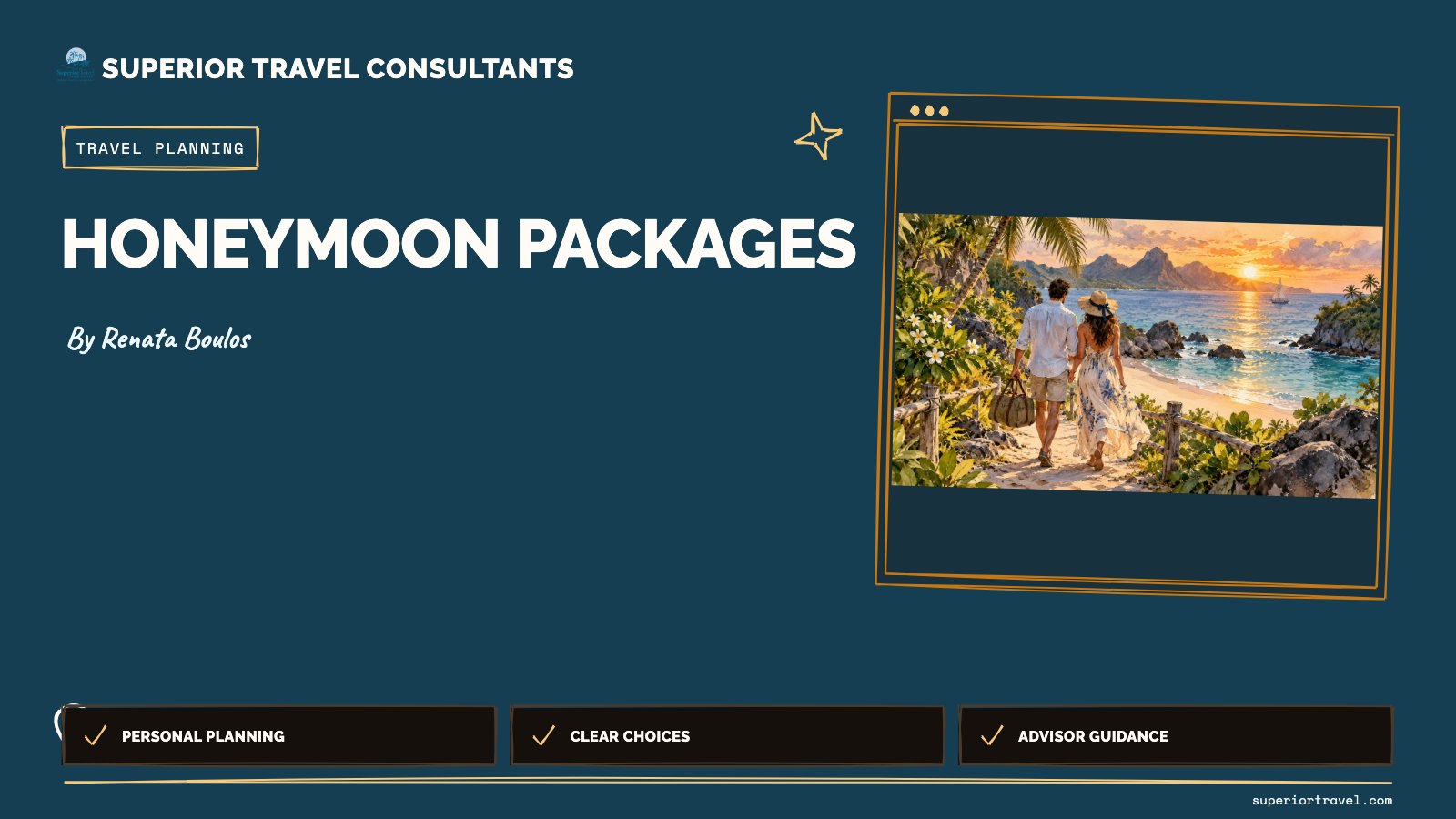
The beachside arrival scene fits a trip built around the details that make a honeymoon feel personal and calm.
What do honeymoon packages usually include?
Most honeymoon packages start with lodging, then add a mix of meals, drinks, transfers, and one or two romance extras. What matters is not the label. It is the structure underneath it. A resort package may include dining and airport transfers, while another package with a similar name may be little more than a hotel stay plus sparkling wine on arrival.
I separate the trip into backbone items and celebration items. Backbone items are the room, flights if they are bundled, the meal plan, and transportation. Celebration items are the special dinner, flowers, breakfast in bed, or spa credit. The backbone affects your budget and comfort every day. Celebration extras shape one moment, sometimes two.
I also watch the conditions. Some honeymoon perks require a minimum stay, and some require proof of marriage or honeymoon status at booking or check-in within the package terms. If a couple is counting on a private dinner or room perk, I want to confirm the rule before I treat it as value.
For couples comparing resort-style trips, I often start with Caribbean and All-Inclusive Vacations or the Punta Cana, Antigua and Sandals Resort Guide. Those options help you decide what kind of honeymoon experience you want before you compare package names.
Which upgrades actually change the trip?
The best upgrade is usually the one you notice every day. That might be a better room category, an adults-only section, or private transfers after a long flight. Couples often assume the most romantic extra is a visible one, but a quieter room with a stronger view can matter far more than a one-time amenity waiting on a table.
Here is a simple example. If you are staying at one resort for six nights and plan to spend real time in the room or on the balcony, a view upgrade may change the whole trip. If you expect to be out all day and only need a comfortable place to sleep, that same upgrade may not earn its cost. The decision depends on how you travel, not on the photo in the package listing.
I also talk couples out of upgrades. Club access, premium drinks, and enhanced dining may sound appealing, but they are easier to justify when you plan to stay on property. If your honeymoon includes multiple stops, a cruise, or a Europe itinerary, flexibility may matter more than extra resort perks.
That is why I compare resort stays with options like European Vacation Packages, Escorted Tours and River Cruises, or Safari, Honeymoon and Luxury Escapes. The right upgrade depends on the shape of the trip, not the marketing language.

A closer view with travel bags can help you decide which upgrades matter and which bundle features do not.
Are all-inclusive honeymoon packages the best value?
Sometimes yes. Sometimes no. All-inclusive honeymoon packages tend to work best for couples who want one resort, a predictable budget, and very little decision-making once they arrive. That format is especially appealing after a busy wedding because meals, drinks, and some activities are already built in.
The downside is straightforward. If you plan to leave the resort often, dine off property, or split the trip between two places, you can end up paying for convenience you do not use. A custom itinerary may look less bundled up front, but it can fit your habits better and avoid duplicate spending.
I also caution couples not to read all-inclusive literally. Spa treatments, premium wine, upgraded room service, private dining, and many excursions may still be extra. That does not make the package poor value. It means you need to know which expenses are covered and which ones are still waiting in the background.
If you want mostly beach time and low logistics, an all-inclusive can be the right answer. If you care more about variety, culture, or moving between stops, I would rather compare it with Romantic Getaways and Anniversary Packages or Groups, Families and Cruise Vacations when a cruise-style honeymoon is in the mix. The best value is the trip structure that matches how you actually spend your days.
| Style | Best for | Watch for |
|---|---|---|
| All-inclusive resort | Easy budgeting and staying on property | Extras like spa, excursions, premium dining |
| Custom multi-stop trip | Couples who want variety and pacing control | More moving parts to coordinate |
| Cruise plus stay | Built-in structure with a second experience | Confirm transfers and supplier inclusions |
How I personalize honeymoon packages without overbuilding them
When I plan honeymoon packages, I try to keep personalization narrow and useful. Most couples do better when we make four decisions early: destination style, pace, room standard, and one or two moments that should feel distinct. That gives me enough direction to shape the trip without turning the planning process into a second job.
For one couple, personalization may mean a quiet all-inclusive with a better suite and one reserved dinner. For another, it may mean combining two experiences, such as a city stay followed by a beach resort, or a cruise followed by a few nights on land. Both are tailored. Neither requires a long list of small upgrades.
A practical example: if you want zero logistics after arrival, a single-resort honeymoon in the Caribbean or Mexico may fit better than a multi-stop itinerary. If your priority is movement, culture, and different scenery across the trip, I would compare that with Why Use a Travel Agent? and The Real Benefits of Using a Travel Agent because advisor support matters more once the itinerary has multiple parts.
The mistake is assuming personalization means adding more. Usually it means editing harder. One room decision and one meaningful experience can make the honeymoon feel more personal than six scattered add-ons you barely notice.
What should you confirm before you book?
Before you book, I want the package translated into plain language. What exact room category are you getting? Are flights bundled or separate? Are transfers shared, private, or not included? If a late checkout, dining credit, or honeymoon perk matters to you, I want it spelled out before any deposit is paid.
I also check timing and eligibility. Some supplier offers require a minimum stay or ask for marriage documentation within a certain window after the wedding. Planning ahead helps because couples have more room categories and itinerary shapes to choose from, and fewer last-minute substitutions. A current honeymoon checklist from David's Bridal also recommends settling the vision, budget, and documents well before the final booking stage before the trip is locked in.
This is also where travel protection becomes easier to evaluate. If your plan includes several suppliers or a cruise element, review the logic in Do You Need Travel Insurance for a Cruise?. Even when you are not cruising, the same question applies: how many moving parts are you willing to self-manage if plans change?
If you want local advisor help, you can also start with Find a Travel Agency on Long Island. My goal is simple: make sure the trip you book is the trip you think you are buying.