

Multigenerational cruise cabins - Robin Holian, Superior Travel Consultants
For families planning one cruise across three generations, the cabin plan often decides whether the trip feels easy or crowded.
By Robin Holian, Superior Travel Consultants
30 September 2026 · 8 minute read
The best multigenerational cruise cabins usually keep your group close while protecting sleep, privacy, and mobility. For most families, that means connecting cabins, nearby cabins on the same deck, or a suite paired with a standard cabin instead of putting everyone into one room.
Table of Contents
I am Robin Holian, and I help Long Island families sort out multigenerational cruise cabins that work once grandparents, parents, and kids share one ship. The right multigenerational cruise cabins keep routines manageable.
Before you compare balcony versus interior, map sleep, privacy, and mobility first. That is how I narrow multigenerational cruise cabins without paying for a layout your family will resent by day three.
Key Insights
Start with sleepers, not cabin names
List early risers, nappers, and light sleepers first. That simple chart usually rules out cramped layouts before cabin labels distract everyone.
Treat bathrooms as a planning issue
Morning traffic matters more than brochure square footage. Two bathrooms or two nearby cabins can ease bedtime and breakfast far more.
Do not confuse occupancy with comfort
A cabin can sleep four and still feel tight. Ask where each bed opens and what walkway remains at night.
Cheap assignments can split the group
Guaranteed cabins may trim the starting fare. They can also separate grandparents, parents, and kids across decks after final assignment.
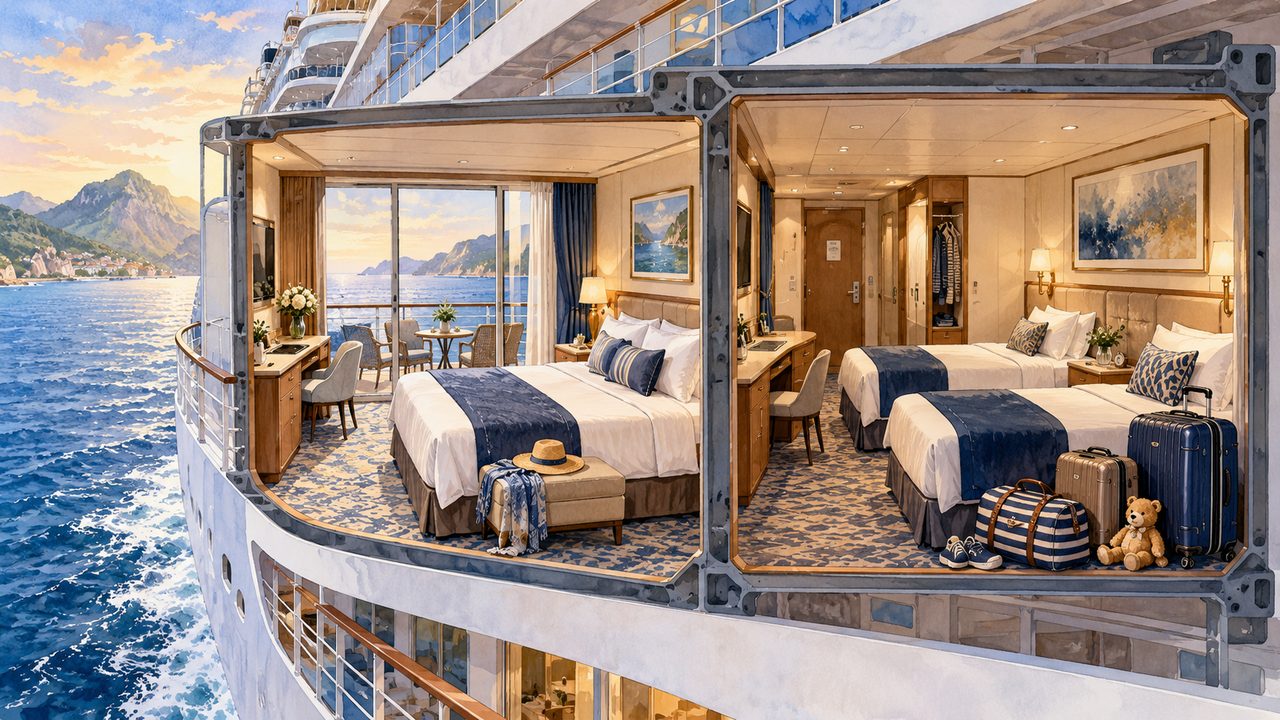
The paired cabin illustration helps families think about proximity, privacy, and whether one room will feel crowded.
Which multigenerational cruise cabins work best?
I start with the family map, not the cabin category. Who needs quiet after dinner, who gets up at night, which adult may help children, and whether anyone needs a shorter walk to elevators matter more than the word deluxe on a deck plan.
For most groups, three setups rise to the top. Connecting cabins work well for parents with younger children or for grandparents who want to be close without sharing one room. Nearby cabins on the same deck suit families with teens or adult children who want breathing room. A suite plus a standard cabin can work when one daytime gathering space matters, but not everyone wants suite pricing.
I am careful about assuming that connecting inventory will be easy to find. On many ships, interconnecting cabins are limited, so waiting too long can force a compromise on deck, location, or ship choice.
The deciding question is simple: does your family need supervision, convenience, or retreat most? If the answer is supervision, I price connecting or adjacent rooms first. If it is retreat, I compare nearby cabins before I look at suites. Families who are still deciding whether a sailing fits their group can also review Groups, Families and Cruise Vacations before narrowing specific ships.
| Setup | Best fit | Main trade-off |
|---|---|---|
| Connecting cabins | Young kids or hands-on grandparents | Limited inventory on many ships |
| Nearby same-deck cabins | Teens or adult children | Less convenient at bedtime |
| Suite plus standard cabin | Groups wanting one shared hangout | Price climbs quickly |
Can three or four guests share one room comfortably?
Sometimes, yes. Comfort depends on the sleeping layout, not the occupancy limit. When I review a cabin that sleeps three or four, I want to know whether the extra bed is a sofa bed, Pullman, trundle, or a setup that blocks the path to the bathroom once it is opened.
A room for three can work well for two adults and one child on a shorter sailing. It gets harder when the third guest is a full-size adult, a grandparent who needs floor space at night, or anyone who wakes often. The real pinch points are storage, bathroom timing, outlets, and the amount of open floor left after luggage is unpacked.
One example I see often is a family pricing one balcony for four against two interiors nearby. The balcony sounds nicer, but if one child goes to bed early and the adults still want the room, that arrangement can feel tight by the second night. Two simpler cabins may give the family more usable space, another bathroom, and a better sleep schedule.
This is the trade-off I say out loud: one room may lower the entry fare, but it can raise the stress level. If grandparents value quiet or parents need a separate bedtime zone, I usually compare the total arrangement instead of trying to make one cabin solve every problem.

A closer luggage-and-window scene can guide the cabin strategy for grandparents, parents, and kids.
What cabin locations should a family avoid?
I do not think in terms of universally bad cabins. I think in terms of bad fits. For multigenerational groups, the most common problems are noise, long walks, and rooms that look close on paper but function badly in daily life.
I am cautious about cabins directly below the pool deck, buffet seating, or late-night venues. Chair movement and foot traffic can bother grandparents and young children more than families expect. I also review far-forward or far-aft cabins carefully when someone in the group has mobility concerns. A long corridor feels much longer on day five than it does when you first study the map.
The other risk is separation. A lower fare can be appealing, but if you choose guaranteed cabins, your rooms may be assigned later. One family-cruise guide notes that when cabins are assigned later, groups can end up spread across the ship. That trade-off rarely works well when children need supervision or grandparents are part of the bedtime routine.
I also flag awkward sleep conversions. A balcony cabin is not automatically better if the sofa bed blocks storage or the nighttime path to the bathroom. If a cruise is part of a bigger family trip, I also suggest reviewing practical add-ons like Do You Need Travel Insurance for a Cruise? before deposit, not after final payment.
How should grandparents, parents, and kids be positioned?
I build cabin placement around the travelers with the least flexibility. That may be a grandparent who wants a shorter walk to elevators, a toddler who still naps every afternoon, or parents who need to get children to sleep before the rest of the group is done with dinner or a show.
If grandparents are actively helping with children, connecting cabins or directly adjacent cabins usually make the most sense. If they want quiet and independence, I place them nearby but not through an interior door. For teens, I would rather use a next-door or across-the-hall cabin than force three generations into one suite and hope privacy works itself out.
Deck choice matters too. Families with young children often do well near elevators, dining, and kids' spaces, but not directly under busy public areas. Older relatives may care more about a straightforward route to dining and fewer late-night noise issues. If accessibility is part of the conversation, I confirm door width, bathroom layout, and grab-bar details before booking.
Sometimes this planning also clarifies whether a cruise is the right format at all. Some Long Island families compare a sailing with Caribbean and All-Inclusive Vacations or with Disney Vacation Packages, Planned Around Your Family. Cruises work beautifully for shared travel, but the cabin plan needs to do the job that separate hotel rooms would normally handle.
When I step in to plan the cabin strategy
If your trip involves more than one cabin, one traveler with mobility needs, or a family disagreement about privacy versus budget, this is usually where I can save time and second-guessing. I am not only comparing categories. I am translating family habits into a layout that will still feel workable halfway through the sailing.
My process is practical. I check which ships actually have connecting options in the categories you would consider. I compare whether a room for three or four is genuinely usable, not merely allowed. I look at deck placement, elevator access, and whether paying more for proximity will matter more than upgrading the cabin itself.
Families who want to understand how I work can read Why Use a Travel Agent?, look at The Real Benefits of Using a Travel Agent, or visit Find a Travel Agency on Long Island. If you already know you want help, you can request Robin Holian directly.
I also keep the comparison honest. Sometimes the best answer is a cruise. Sometimes a family would be happier with land-based space or a different style of trip. Tell me what would make this trip feel right, and I will narrow the layouts worth pricing first.