
Choose the break before the room
I would decide whether returning to the hotel is essential or merely appealing. An essential break should shape the transport choice; an occasional break may not justify paying more for the room.

For couples' Disney vacations, I would choose accommodation around your planned parks, hotel breaks, and transportation. An upgrade makes sense when its location or amenities support those plans. I would compare complete trip costs and confirmed inclusions, not just room rates or romantic descriptions.
I compare Disney vacations by your time together, not supposedly romantic hotels. For Long Island couples, Disney vacations can mean full park days, relaxed hotel afternoons, or a mix requiring transportation in both directions.
My approach to Disney vacations starts with your daily rhythm. I am Blake Rehfield; my specialties include custom vacations, cruise planning, and group travel. Here, I compare Walt Disney World accommodation while separating hotel differences from assumptions about reservation inclusions.
I would decide whether returning to the hotel is essential or merely appealing. An essential break should shape the transport choice; an occasional break may not justify paying more for the room.
I would distinguish a direct service from a connection. The vehicle type alone does not tell you how easily you can leave the park, rest, and return.
I would pay attention to dining and hotel atmosphere if you intend to spend afternoons there. If you will mostly sleep in the room, those extras deserve less of your budget.
I would mark essential room requirements separately from wishes about views or building location. That helps prevent an attractive description from taking the place of a confirmed booking detail.
I would leave breathing room before a dinner that matters to you. A plan that depends on every journey going exactly as expected is a poor match for a relaxed evening.
I would start with what the hotel must let you do. If you leave early and return after evening plans, the room mainly provides somewhere to sleep. If you want an afternoon rest, its relationship to your park itinerary matters more.
I would have each partner describe a satisfying day separately. One may want uninterrupted attractions; the other may want a shower, privacy, and time to change before dinner. Those preferences should shape accommodation before reservations, rather than become a daily negotiation.
I distinguish a hotel break from a park pause. Returning to your room means leaving the park, reaching transportation, traveling, and reversing the journey afterward. A meal or seated pause in the park offers rest but not your room's privacy.
For romantic getaway planning, I would define privacy rather than assume a theme delivers it. A couples' trip describes your traveling party, not the hotel's atmosphere. I would prioritize accommodation that supports your most important hours, including unscheduled time. If room breaks are optional, I would give hotel atmosphere more weight; if essential, I would prioritize the route.
I would compare routes to your planned parks, not transportation labels alone. A connection useful for one park may be less useful for another, especially when you want a midday hotel break.
Disney's Polynesian Village Resort has monorail service to Magic Kingdom and an EPCOT connection through the Transportation and Ticket Center. Animal Kingdom Lodge uses buses for park transportation. I see these as itinerary differences, not rankings. Magic Kingdom days give the Polynesian's route more weight; a varied park schedule makes that advantage less decisive.
I would count walking from the park exit, waiting, connections, and reaching your room, then the return journey. Transportation may consume too much of a brief rest but fit a leisurely hotel afternoon comfortably.
Coronado Springs' restaurants and lounges give you reasons to spend evenings at the hotel, without establishing convenient park journeys. I would balance those opportunities against the routes you will use.
I would compare airport transfers separately from hotel-to-park transportation. Location and transportation labels do not establish airport service, current operating hours, or guest benefits. Those details belong in the current booking terms, not assumptions about the hotel.
| Hotel | Relevant difference | Consider when |
|---|---|---|
| Polynesian Village Resort | Magic Kingdom monorail; EPCOT connection | Those parks anchor your itinerary |
| Animal Kingdom Lodge | Park buses | Bus journeys fit your plans |
| Coronado Springs Resort | Restaurants and lounges | Hotel evenings matter |
| Hotel | Key difference | Consider when |
|---|---|---|
| Polynesian Village Resort | Magic Kingdom monorail; EPCOT connection | Those parks anchor your itinerary |
| Animal Kingdom Lodge | Park buses | Bus journeys fit your plans |
| Coronado Springs Resort | Restaurants and lounges | Hotel evenings matter |
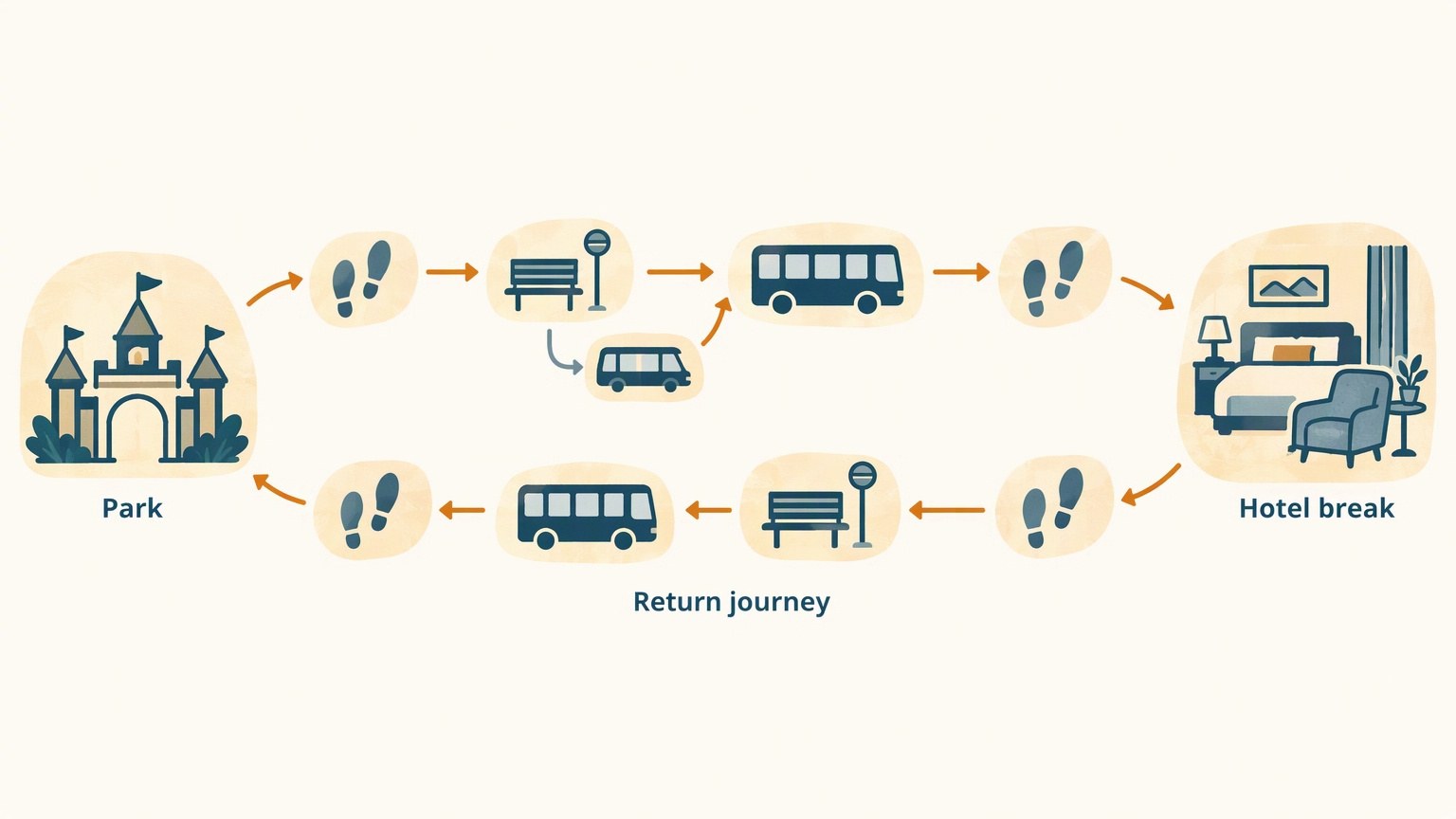
Illustration of outward and return journeys between a park and a hotel room, with walking, waiting benches, transport icons, and a small branching connection.
I would compare options on the same purchasing basis. Accommodation alone is not equivalent to a quote containing admission or other arrangements. The meaningful total covers what you intend to buy, without unwanted extras.
My comparison would identify dates, room category, applicable taxes and charges, park admission, airport transportation, and planned meals or extras. I would separate included items from optional purchases so a lower room rate does not conceal costs elsewhere.
A hotel name does not establish guest-benefit eligibility. I would require written terms for any proposed admission benefit, special access, transportation inclusion, or dining arrangement, tied to your dates and accommodation. Package descriptions cannot replace those details.
I would also weigh change and cancellation conditions. A cheaper reservation that cannot accommodate a likely date change may be the wrong purchase, even if its room meets your preferences.
If you are comparing Disney with a Caribbean all-inclusive vacation, I would compare intended spending rather than assume either label covers everything. Dates, room category, extras, and transport choices are cost drivers I would include in a current quote before recommending a hotel upgrade.
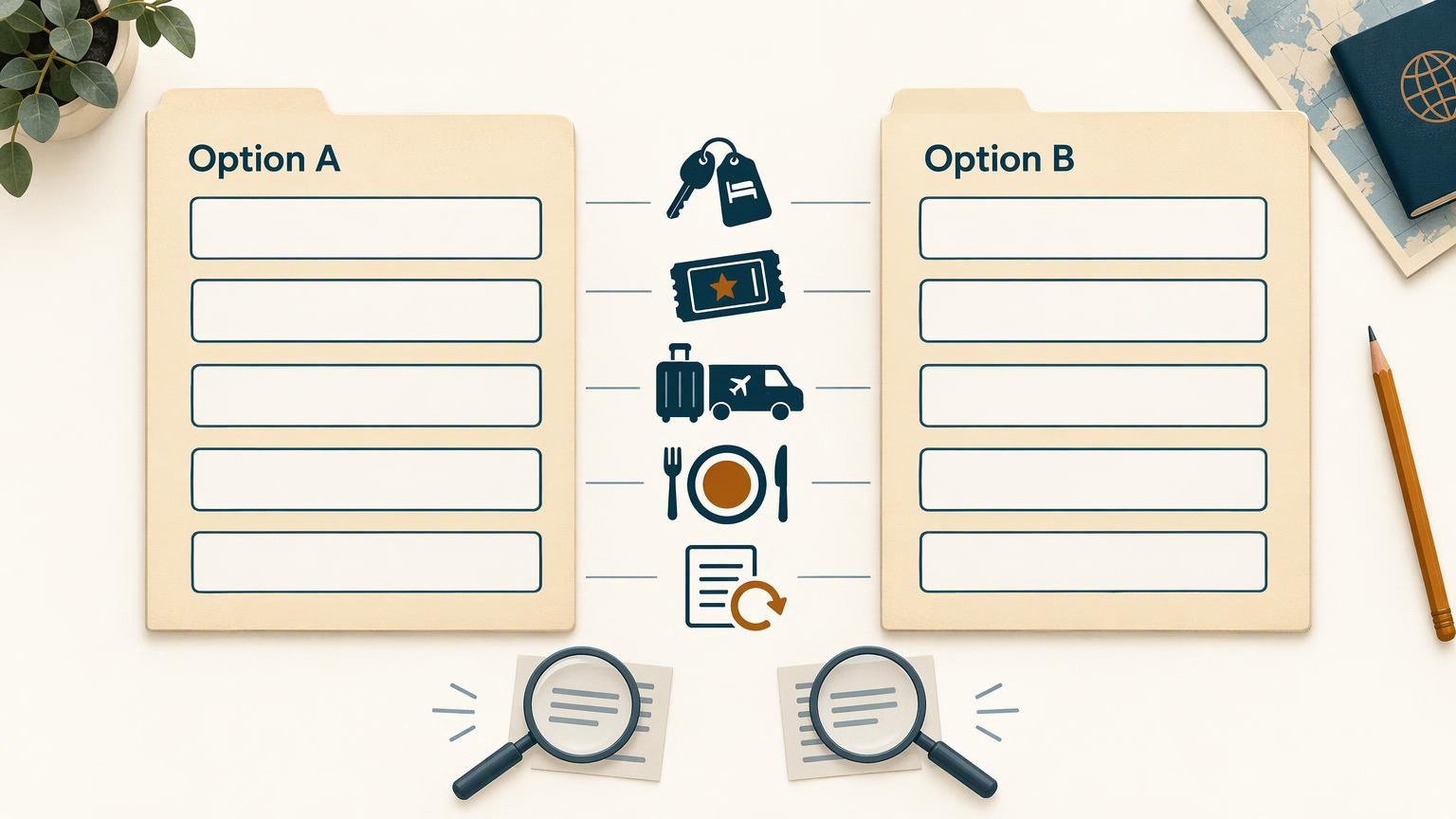
Illustration comparing blank Option A and Option B folders beside key, ticket, suitcase and vehicle, dining, and document-change icons, with magnifying glasses over abstract terms below.
Suppose you want Magic Kingdom days and an EPCOT evening, while your partner wants a hotel rest before dinner. You both value hotel time, but neither wants every afternoon governed by a return journey.
I would compare a route-focused hotel with a hotel-focused option using the same schedule. The first deserves more weight if room breaks are essential on park days. The second remains worthwhile if you prefer a separate hotel afternoon instead of returning during each park visit.
I would not automatically choose the more expensive room. If you stay in the parks on active days and leave another afternoon open, transportation may matter less. Hotel atmosphere then becomes a more meaningful part of the purchase.
I would favor the route-focused choice when both partners want midday returns and the complete quote is acceptable. Otherwise, I would protect a hotel break day rather than repeatedly negotiate rest during sightseeing. Neither approach requires every day to follow the same rhythm.
For anniversary getaway planning, I would protect your important evening, leaving breathing room before dinner rather than depending on every journey going exactly as expected.
I would turn your preference into a brief explaining what the hotel must support: planned parks, essential room breaks, and transport needs. That gives the accommodation discussion more direction than labels such as romantic or luxurious.
Superior Travel Consultants has a Disney vacation planning page for accommodation and trip requirements. My custom-vacation specialty connects that discussion to your itinerary, rather than treating one room category as best for every couple.
For travelers considering an advisor-led travel agency on Long Island, a named advisor provides an identifiable person for the discussion. The agency's more than 150 years of combined experience belongs to the team, not my individual experience or the agency's age.
Independent booking may suit you if room and transportation choices are settled. If accommodation depends on how your days fit together, that is a reason to discuss using a travel advisor. I would distinguish essential arrangements from preferences, then compare options against that shared plan.
You can share park days, hotel preferences, and transport needs and request me, Blake Rehfield, by name for a current quote reflecting the trip you intend to take.
Share the destination, dates and travel style you have in mind. A Superior Travel advisor will help turn the possibilities into one clear, personal plan.