
Define the daily use
I would describe one activity the extra space should support, such as reading while your partner rests. That gives the upgrade a purpose beyond its category name.
I would choose a suite over a standard room only when its documented features improve how you will spend your stay. My five checks are usable living space, bedroom separation, outdoor space, the category's view, and rate-specific inclusions. A suite name alone would not justify paying more.
I compare luxury hotels for couples by the room you are booking, not its most attractive photograph. For Long Island travelers, luxury hotels for couples should fit shared plans and individual routines, from quiet mornings indoors to evenings outside.
My approach to luxury hotels for couples starts with the exact category and rate. I am Heather Hamann; my specialties include custom vacations, cruise planning, and group travel. These five checks help you decide which suite improvements deserve your budget.
I would describe one activity the extra space should support, such as reading while your partner rests. That gives the upgrade a purpose beyond its category name.
I would decide which feature you would be disappointed to lose. I would then compare suitable options instead of trading away that essential for attractive extras.
I would retain the category name, floor plan, and rate terms together. That makes it easier to notice if a later quote refers to a different option.
I would leave an unclear feature out of the value calculation until it is documented. I would not assume the more expensive option includes it.
I would keep a suitable standard room in the comparison. It provides a useful baseline and may be the better choice when the suite's additions do little for you.
I would compare the quoted suite with the standard room at the same hotel. The useful question is what you gain: seating away from the bed, a table suitable for meals, or luggage storage that keeps pathways clear.
I would read the category description alongside its floor plan and labeled photographs. If the hotel lists a size, I would distinguish indoor space from any terrace or balcony included. A larger total does not necessarily mean a larger sitting area. I would not treat an unlabeled photograph as evidence of your category.
My practical test is an ordinary morning or evening. Can you both sit comfortably with coffee, set down a room-service tray, and open luggage without blocking the bathroom? I would value these features above an impressive entrance hall.
For a romantic getaway with substantial indoor downtime, I would prioritize usable seating. For a European vacation filled with sightseeing, the standard room may serve your routine equally well.
I would use the table to compare documented layouts, not assume category names guarantee features. The suite earns its premium when the added space solves a specific need, rather than simply looking larger.
| Layout | Best fit | Trade-off |
|---|---|---|
| Bedroom only | Primarily sleeping | Limited indoor downtime space |
| Open-plan bedroom and seating | Relaxing together | Shared light and activity |
| Separate bedroom and living room | Independent routines | Potentially unused extra space |
I would assess bedroom separation independently because more space and more privacy serve different needs. Reading with the lights on while your partner sleeps calls for an enclosed bedroom with a closing door, not simply a suite label.
I would trace the floor plan: can you reach the bathroom from the living area without passing the bed? Does the bedroom close off from the sitting area? These details determine whether the spaces support independent routines.
For an anniversary trip where you wake earlier, I would compare an open-plan suite with a terrace, an enclosed-bedroom suite without outdoor space, and a standard room.
I would favor the enclosed bedroom for quiet indoor mornings if its documented layout and quote suit you. If you keep similar hours and prefer being outdoors, the terrace may matter more. The standard room remains reasonable when neither improvement serves your plans.
When weighing anniversary getaway options, I would prioritize habits over labels. A door does not establish sound isolation, and a spacious bathroom photograph does not establish bathroom privacy. I would evaluate those needs separately before paying for more space.
| Option | Prioritize when | Trade-off |
|---|---|---|
| Open-plan suite with terrace | Similar hours; prefer being outdoors | Shared light and activity |
| Enclosed-bedroom suite | Quiet indoor mornings matter | No outdoor space in this example |
| Standard room | Neither upgrade serves your plans | Limited indoor downtime space |
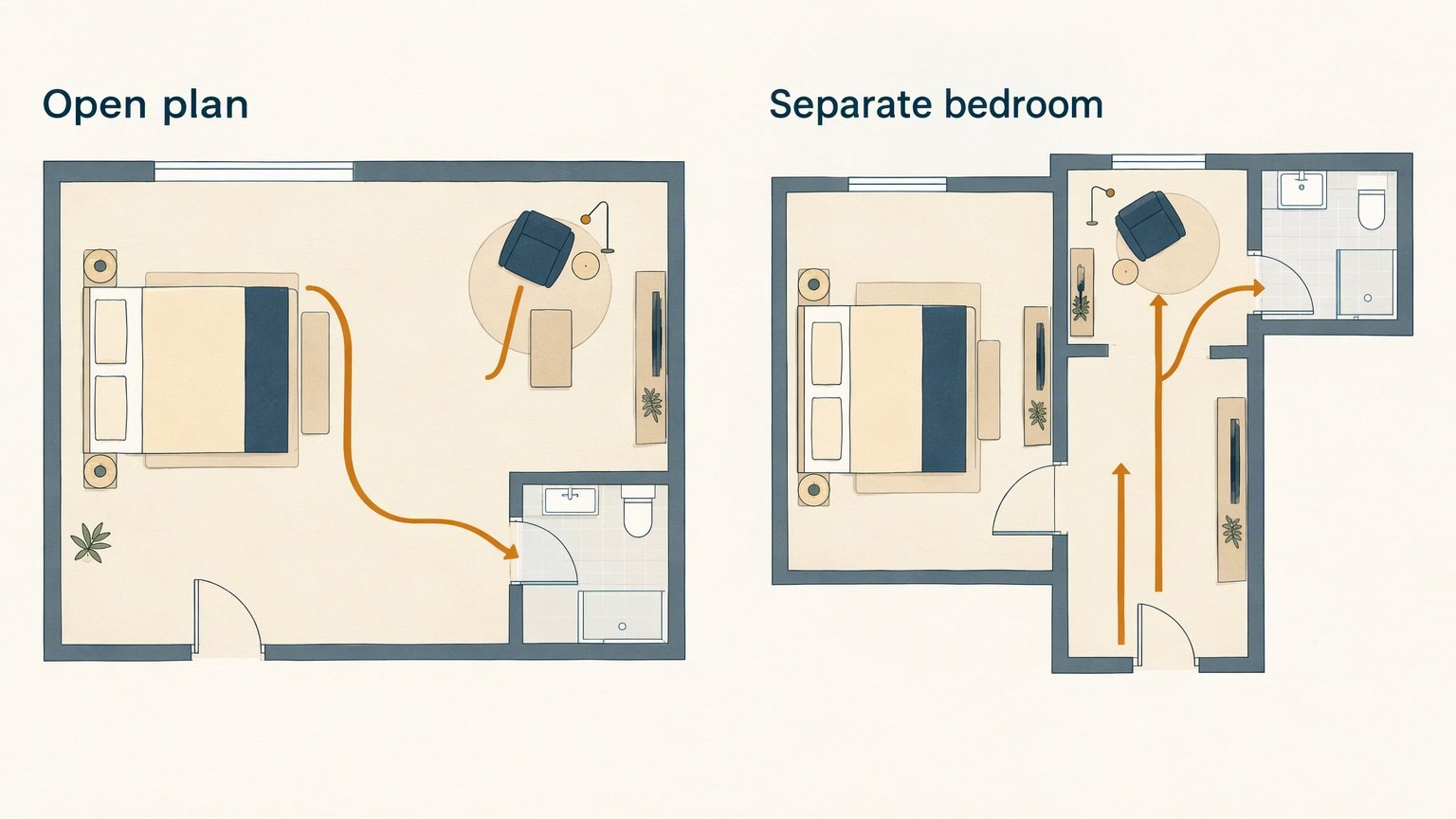
Illustration comparing an open-plan layout with a separate bedroom layout; amber routes show bathroom access beside the bed on the left and through a hall on the right.
I would judge outdoor space by its intended use. Morning coffee requires seating and somewhere to set a cup; afternoon relaxation raises questions about shade, shelter, and room to stretch out comfortably. Size alone would not settle my choice.
I would match photographs and descriptions to the exact category, distinguishing space reserved for your room from shared areas. Private access is not the same as visual privacy: I would evaluate screening separately if being overlooked would affect your comfort.
For a pool or outdoor bathing feature, I would examine its specific description rather than infer exclusive use, heating, screening, or operating conditions from photographs or hotel-wide amenities.
For Caribbean and all-inclusive vacations, I would weigh a terrace against your expected room time. Daily use gives it more value than plans centered on shared facilities and outings.
I would also consider doorways, steps, and surfaces when access affects comfort. An awkwardly reached outdoor area adds little practical value.
My preference would be documented usability over size, particularly when a terrace competes with essential bedroom separation or indoor seating for your accommodation budget.
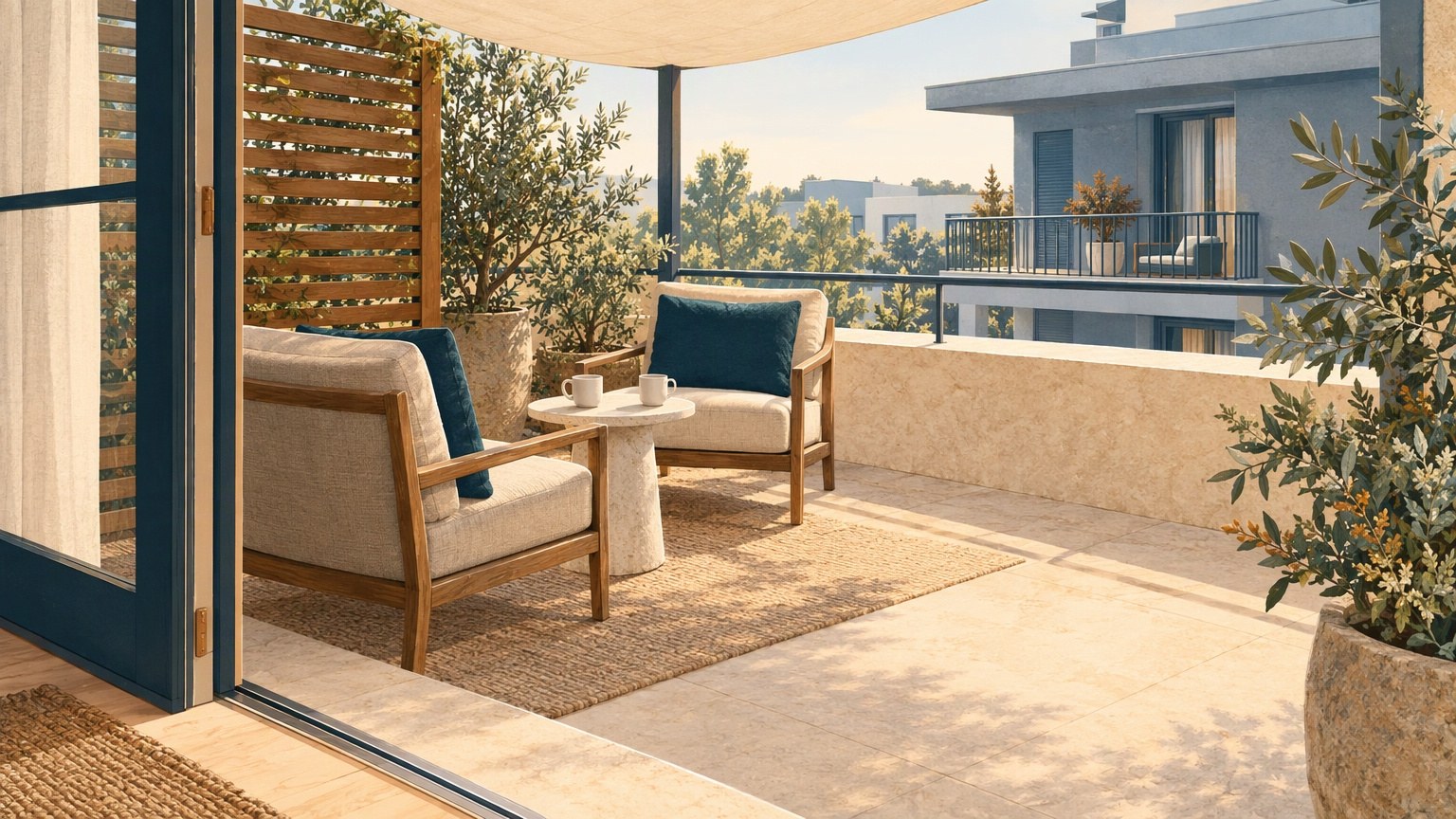
Illustration of terrace seating beneath a canopy, with a clear doorway threshold, partial slatted screening, and a neighboring balcony visible across the unscreened side.
I would connect the view description to the quoted category, not the hotel's setting. A waterfront location does not establish your suite's outlook, and a signature-category photograph does not show what another category offers. I would not pay a view premium on that basis alone.
I would distinguish scenery visible from the bed, indoor seating, and outdoor space. If the view drives your decision, category-specific descriptions, relevant photographs, or written clarification provide the useful evidence.
I would establish whether rooms within the category occupy different positions. Then I would separate the included view from preferences about floor, orientation, or a particular room. A preference would not become part of my value calculation unless documented as included.
For a custom vacation in Asia, I would weigh the outlook against your accommodation needs. Compelling scenery does not compensate for a layout that undermines your routine.
My priority would be specific: enjoying scenery from indoor seating differs from taking photographs outside. When the view is merely a pleasant extra, I would preserve essential privacy, accessible space, and suitable booking terms rather than sacrifice them for scenery.
I would compare standard-room and suite quotes for the same dates, travelers, and relevant booking terms. Dates, category, meal arrangements, and package terms can affect the comparison; I would not assign a numerical premium without current pricing.
I would separate accommodation features from rate benefits. If a quote mentions breakfast, transfers, dining credit, or lounge access, I would examine eligibility, limits, and whether the specific offer includes it. A hotel's broader amenities would not establish your rate's inclusions.
My value test is expected use. A service you would otherwise purchase can strengthen the suite comparison; a benefit that disrupts your preferred plans deserves less weight. I would avoid counting an optional extra as essential simply because it appears in the offer.
For honeymoon and luxury-escape planning, I would prioritize essential room features. Cancellation and payment commitments need separate comparison: a higher-priced suite does not establish greater flexibility.
My custom-vacation specialty offers Long Island couples a relevant starting point for specifying accommodation preferences. I would frame the comparison around your priorities without promising particular hotels, suite inventory, upgrades, or added benefits.
Share the destination, dates and travel style you have in mind. A Superior Travel advisor will help turn the possibilities into one clear, personal plan.