
Name the decision
I would describe what you cannot yet decide, rather than send only a destination name. Choosing between a cruise and a resort needs different help than reviewing one preferred sailing.

I recommend a consultation when you need help resolving a trip decision. Bring timing, traveler details, budget boundaries, priorities, and existing bookings. Clarify any discovery charge, proposal scope, and required approval before authorizing research, reservations, or payment. An undecided destination is fine.
I evaluate travel advisors by how their specialties match your questions. For Long Island travelers comparing travel advisors, the first conversation should establish fit with the planning work you want.
When considering travel advisors, I separate sharing ideas from authorizing research or purchases. I am Mary Susan Schilling; my specialties include cruises, all-inclusive vacations, family travel, and solo travelers. Your brief should explain what would make the trip feel right, leaving room to discuss the engagement.
I would describe what you cannot yet decide, rather than send only a destination name. Choosing between a cruise and a resort needs different help than reviewing one preferred sailing.
I would mark dates, reservations, and spending limits that cannot change. Keep preferences separate so the conversation can explore alternatives without treating every wish as a requirement.
I would identify what you need to compare: room arrangements, inclusions, pace, or transportation. A proposal is useful when it answers your decision, not simply when it contains more options.
I would distinguish the travel budget from any planning charges. Keep spending outside the quoted arrangements visible so a headline package price does not become your entire budget.
I would put questions and purchase instructions in separate messages. Before authorizing anything, identify the exact work or reservation, applicable terms, and amount you are approving.
I treat discovery, proposal preparation, and booking authorization as separate decisions. You can evaluate advisor fit without confusing a conversation with paid research or permission to purchase. These distinctions are evaluation tools, not a promise that every advisor follows identical terms.
I recommend starting with the agency's published process. The Plan Your Trip page says an advisor personally reviews your note and follows up to explore possibilities. It describes Listen, Curate, and Support: listening to your pace, priorities, and budget; considering routes, stays, and experiences together; and remaining a point of contact before departure and throughout the journey. This describes the published planning approach, not contractual terms.
Before submitting an inquiry, I recommend confirming whether it creates any obligation and whether discovery is charged. Discovery defines your question. If your family is choosing between a cruise and an all-inclusive vacation, I would begin with timing, budget comfort, room needs, and pace. You identify priorities and fixed bookings; the advisor considers how those details fit together.
Proposal preparation develops options within an agreed scope. Before that work begins, I recommend confirming the required approval, agreed fees, payment timing, deliverables, revisions, exclusions, and cancellation or refund terms. A helpful initial exchange does not make detailed research included or free.
Booking authorization is a separate boundary. Liking an itinerary does not approve a reservation or deposit. I would review the current quote, inclusions, payment requirements, and cancellation terms, then explicitly approve the specified purchase separately from proposal feedback. Availability is subject to supplier confirmation; proposals are not guaranteed reservations.
I suggest reviewing Our Team and my Mary Susan Schilling profile; the Long Island travel agency page adds local context. My specialties include cruises, all-inclusive vacations, family travel, and solo travelers. Relevant specialties help you choose whom to contact; engagement terms determine what work you authorize.
| Stage | Purpose | Clarify |
|---|---|---|
| Discovery | Establish fit | Charge and next step |
| Proposal | Compare options | Fee, deliverables, revisions, exclusions |
| Booking | Authorize purchase | Arrangements, payment, cancellation terms |
| Stage | Purpose | Clarify |
|---|---|---|
| Discovery | Establish fit | Charge and next step |
| Proposal | Compare options | Fee, deliverables, revisions, exclusions |
| Booking | Authorize purchase | Arrangements, payment, cancellation terms |
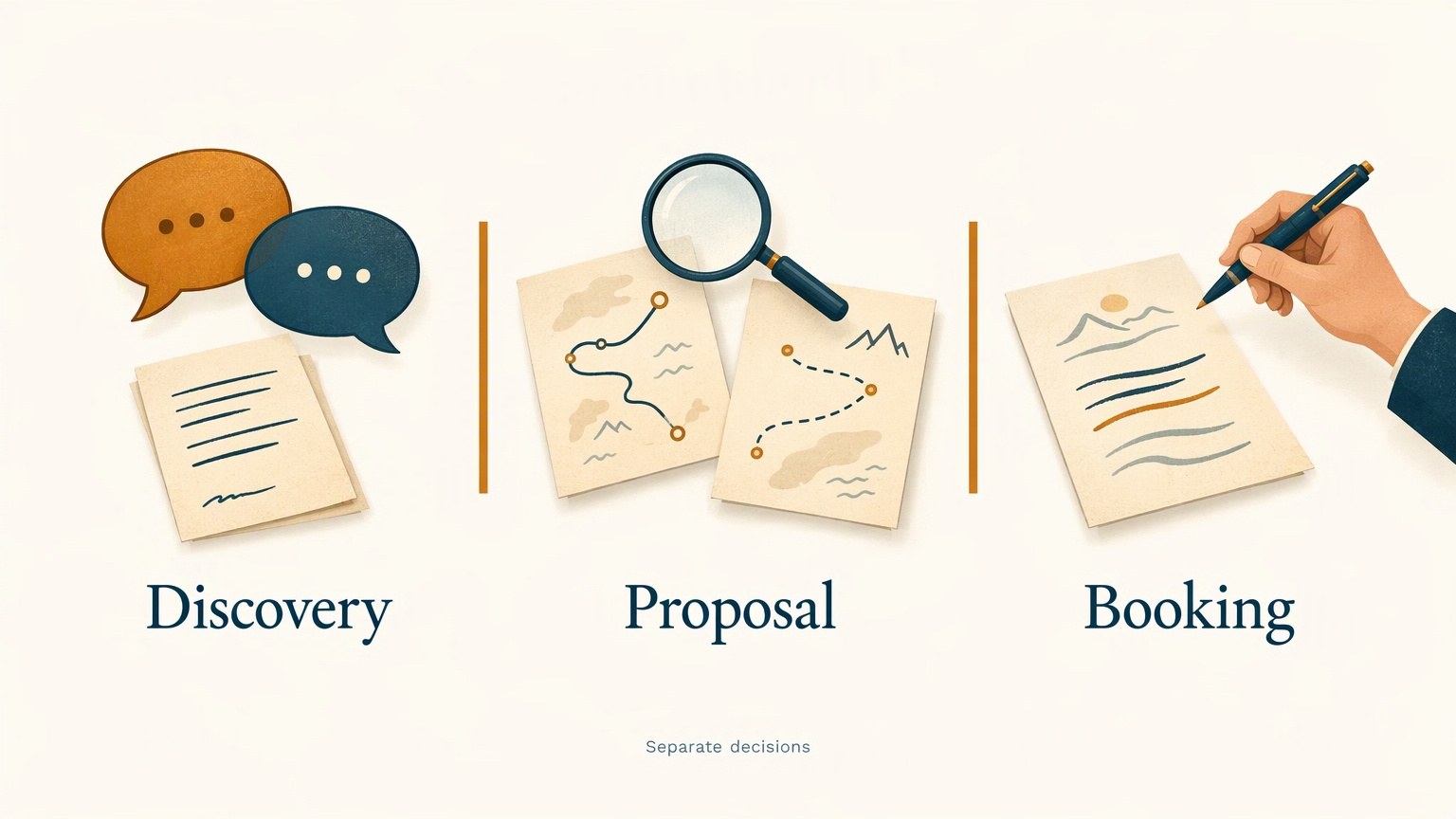
Illustration of three separate decisions: Discovery, Proposal and Booking, with conversation bubbles, abstract route papers and a pen held above a sheet. Amber bars separate the sections.
I would prepare a short brief covering timing, travelers, your spending boundary, and essential priorities. Include a destination if you have one, but do not choose one simply to complete the brief. Explain the decision you want help resolving.
Describe what the trip must accommodate. For family and group cruise planning, that might mean different room needs or expectations about togetherness. Distinguish requirements from preferences that could change.
For Caribbean all-inclusive vacations, I would describe your preferred balance between resort time and outings. For a Disney family vacation, explain the daily pace each traveler wants rather than assuming everyone agrees.
I would separate possibilities from commitments. Identify existing reservations, dates, and change restrictions. Those commitments may narrow the options; do not assume another advisor can alter or take responsibility for them.
I would keep this brief focused on information that changes the choice. You do not need to design the itinerary before beginning a conversation.
I compare a planning charge with defined work, not an assumed industry-standard fee. Request a current quote from me that separates any consultation, proposal, and booking-related charges from the travel purchases themselves.
Research-only and broader planning engagements are different purchases. I would identify whether the proposed scope covers accommodation comparisons, transportation, activities, revisions, or support after reservations. The word planning alone does not establish those inclusions.
Dates, room or cabin category, occupancy, transportation, and optional activities can affect your travel budget. I would compare these details consistently so a lower total does not conceal different arrangements or fewer inclusions.
Record what is included, what costs extra, and what you will arrange independently. Keep insurance separate from assumptions about advisor support. My agency's cruise insurance guide offers further reading; coverage depends on the policy, not the consultation.
Before paying for planning, I would obtain payment timing, revision allowances, and cancellation or refund terms in writing. A narrower service can still be useful when it resolves your decision. Broader wording is not automatically better value, especially when responsibilities remain unclear.
Imagine a family choosing between a cruise and an all-inclusive resort. Dates are fixed, transportation is unbooked, and travelers want different balances of shared activities and quiet time.
I would first have you identify each traveler's needs and acceptable compromises. Then I would frame the comparison around room arrangements, pace, shared time, and transportation rather than request a destination list. You supply priorities; the advisor develops comparisons only within the agreed proposal scope.
For a cruise, I would examine the proposed sailing's schedule and cabins. For a resort, I would examine the stay's room setup and activities. A suitable room arrangement or better balance of shared and independent time could change the choice; ships and resorts are not interchangeable.
If you already know which option fits and can evaluate its terms, independent booking may be reasonable. Otherwise, a consultation has a defined job: resolving family fit.
I would use the same sequence for European vacation planning or escorted tours and river cruises: define the decision, agree on proposal work, then review arrangements before purchase approval. Advisor help still requires your input, agreement among travelers, and attention to terms.

Illustration of three hands arranging shared-time, quiet-time, room and transportation tokens between equally weighted cruise and coastal resort models, with an abstract travel-window strip below.
I would choose an advisor through relevant specialties and a clear explanation of the engagement. Rather than search only for the best travel advisors, identify who fits the decision you still need to make about your trip.
My specialties are cruises, all-inclusive vacations, family travel, and solo travelers. I am an Aruba Certified Expert. That credential is relevant to an Aruba question, but it does not replace a discussion of your needs, planning scope, or purchase terms.
For travel outside those specialties, I would evaluate an advisor whose documented focus matches the destination or style. A profile gives you concrete information for that comparison without assuming every advisor is equally suited to every trip.
After reviewing Our Team and the relevant profile, I recommend a concise inquiry naming your trip, open decision, existing bookings, timing, priorities, and budget boundary. Explain where you need guidance rather than requesting unspecified planning.
I would leave the conversation with a defined next action: further discussion, a scoped proposal engagement, or review of a travel option. If you cannot explain what you are agreeing to, pause. Advisor fit and authorization remain separate decisions.
Share the destination, dates and travel style you have in mind. A Superior Travel advisor will help turn the possibilities into one clear, personal plan.