
Use arrival dates, not departure dates
I would record the local arrival date beside each proposed journey. A departure date alone does not tell your companions when you can join them.

I would consider travel advisors when separate arrivals affect rooms, transportation or a fixed shared departure. Independent planning may suffice when everyone can reach the base and the start is flexible. The deciding factor is how one arrival affects everyone else's plans.
I would compare travel advisors by how they connect separate journeys to your shared vacation. For Long Island travelers meeting companions from elsewhere, travel advisors matter when one arrival affects the whole group's plans.
When choosing travel advisors, I would start with the meeting point, first-night stay and first shared commitment. These reveal whether arrivals can remain independent or need coordinated planning. I would distinguish preferences from existing bookings, because that determines which choices remain open.
I would record the local arrival date beside each proposed journey. A departure date alone does not tell your companions when you can join them.
I would distinguish meeting at an airport from meeting at accommodation or joining a departure. Each creates a different responsibility for getting there.
I would mark a preferred flight differently from a ticket already purchased. That prevents the group from designing a shared start around flexibility that no longer exists.
I would name the person who collects everyone's decisions without giving that person authority over individual spending. Each traveler should approve changes affecting their own arrangements.
I would keep accommodation details and the agreed meeting instructions available without relying on a live group conversation. Everyone should know the next step even if another traveler is unreachable.
I would judge the need for tailored planning by how each arrival affects the shared trip, not the number of reservations. Separate flights can be straightforward when everyone reaches the accommodation independently and the shared start is flexible.
The choice changes when a later arrival could mean missing onward transportation, delaying a tour or leaving someone without room access. Choosing a destination is then only part of the work: arrivals must fit the shared itinerary.
Imagine you arrive before your companion, with a shared activity planned after they land. I would separate your arrival arrangements from theirs, consider transportation and room access, then decide whether the activity belongs that day or after both travelers settle in.
If moving the activity makes either arrival manageable, a willing companion may coordinate the plan. If the start cannot move, I would give tailored planning more weight. An extra accommodation night adds expense but reduces dependence on the later arrival.
I would compare the proposed scope and applicable costs with what you can comfortably coordinate yourself. Advisor involvement does not guarantee simultaneous arrivals or eliminate disruptions. My explanation of when a travel agent is useful adds context: can separate arrivals change without unraveling your shared start?
| Approach | Best fit | Trade-off |
|---|---|---|
| Independent planning | Flexible shared start | Travelers manage arrivals |
| Companion coordinates | Simple meeting arrangements | Requires group agreement |
| Tailored advisor planning | Arrivals affect rooms or fixed departures | Compare scope and applicable costs |
I would define where everyone must first be ready together. Meeting at accommodation creates a different plan from joining a transfer or boarding a cruise. A destination name alone does not tell everyone where to meet.
I would work backward from the commitment's date, location and reporting time in the actual proposal. Each traveler's route includes more than landing: baggage collection, entry procedures and transportation still separate the aircraft from the meeting point.
For a flexible stay, I would consider independent arrivals, with shared activities beginning after everyone assembles. For a scheduled departure, I would compare gathering earlier with meeting that day rather than assume every arrival fits.
For escorted tours and river cruises, I would follow the departure's actual joining instructions. With a customized European itinerary, I would consider whether the opening stay can accommodate different arrivals before onward travel.
An earlier gathering gives the plan more room but adds accommodation and time away. A later shared start preserves individual flexibility, though it can shorten your time together. I would choose according to the commitment you most want to protect, not simply the earliest landing.
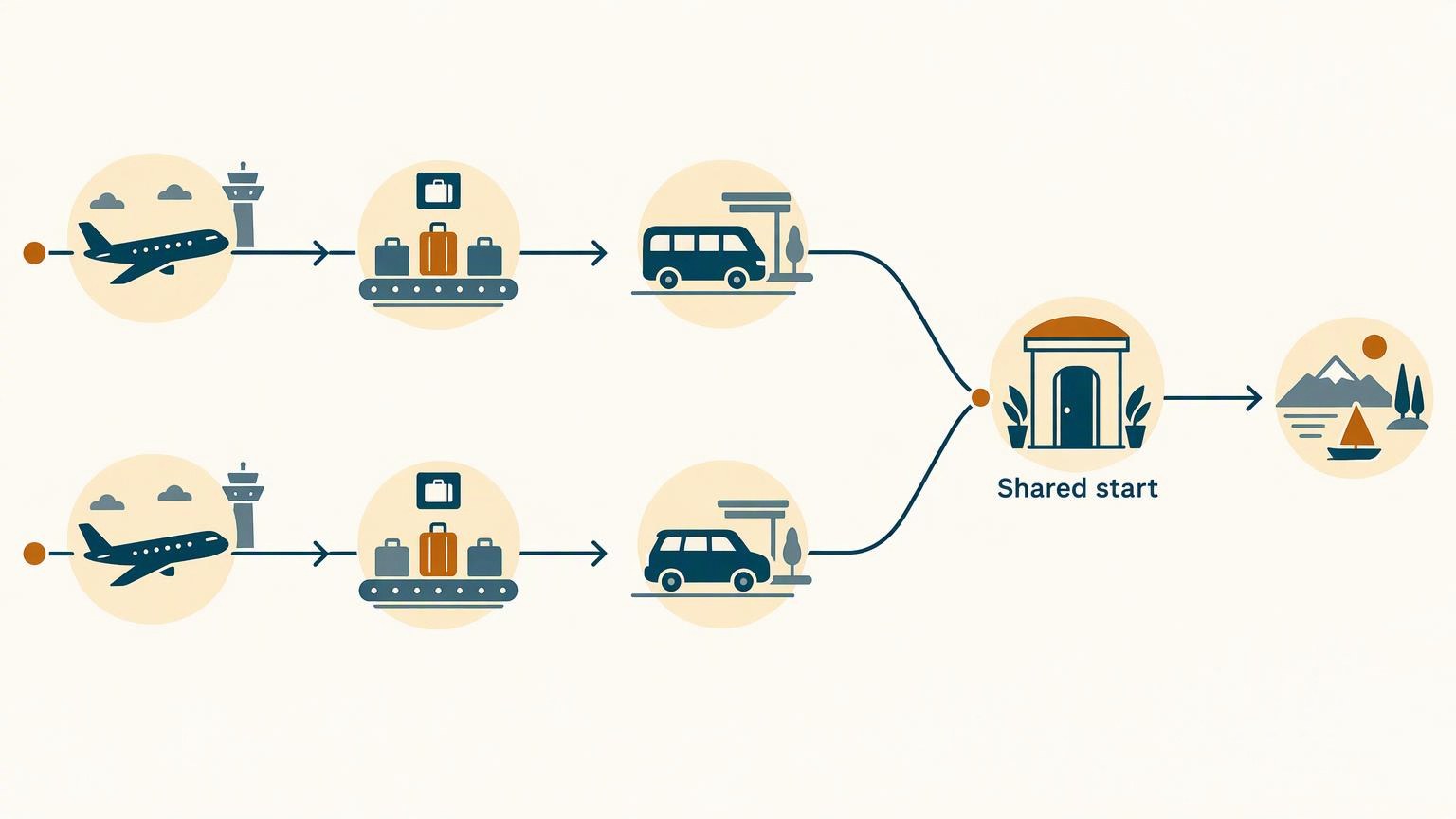
Illustration of two arrival routes passing through baggage collection and ground transportation, converging at a doorway labeled Shared start, then continuing to a mountain and sailboat motif.
I would separate first-night accommodation from the main shared stay. Companions arriving on different dates may need different room nights even when the rest of their itinerary is identical. That difference belongs in both the plan and the budget.
I would map who sleeps where each night and who needs access first. For a shared room, the reservation and property arrangements must support separate arrivals. I would not assume someone can enter a room booked under a companion's name.
A morning arrival does not establish immediate room access. I would distinguish somewhere to leave belongings from a room for resting, then compare the accommodation terms with that traveler's needs.
For Caribbean and all-inclusive vacations, I would separate arrival-night needs from shared resort dates. The package label alone does not establish airport transportation or access before the stay begins.
I would also weigh whether the early arrival should wait. Independent transportation may avoid a long wait; a shared transfer may suit aligned arrivals. I would compare timings, costs and preferences rather than require everyone to move together merely because they are sharing the vacation.

Illustration of two travel-planning panels linked by an amber ribbon, with suitcases beside bed tiles and separate luggage-storage and key pictograms below.
Imagine companions departing different cities for a shared cruise. One prefers arriving early; another wants to arrive on embarkation day. Nobody has booked, and boarding together matters.
I would first identify the proposed sailing's joining requirements. Each traveler would supply their departure city and date flexibility; I would use those inputs to compare where the group could assemble before boarding.
I would compare gathering at accommodation beforehand with meeting at the departure point on boarding day. The earlier gathering adds room nights and potentially separate transportation. The boarding-day meeting leaves less room between individual journeys and the shared departure.
If boarding together takes priority and everyone accepts the extra stay, I would explore the earlier gathering. If someone cannot arrive earlier, I would assess their arrival against the joining requirements before treating the plan as settled. Each traveler would approve changes affecting their own arrangements.
For a flexible stay without a scheduled opening activity, I would instead consider independent arrivals. That contrast guides my approach to family, group and cruise vacation planning: the shared commitment determines how tightly separate journeys need to connect.
I would match documented advisor specialties to your trip, then compare the proposed work. I am Blake Rehfield; my specialties include cruise planning, custom vacations and group travel, relevant starting points for this kind of shared itinerary.
At our Long Island travel agency, we provide customized travel planning. I would use your departure cities, meeting point and priorities to discuss suitable support, without assuming every traveler needs every component planned.
I would distinguish individual air arrangements, arrival transportation, first-night accommodation and the shared itinerary. A proposal covering only the shared vacation differs from one including arrivals. The right scope depends on which connections you want help planning.
For flights booked independently, I would clarify who handles booking changes and who tells companions about revised arrivals. Planning the shared hotel does not establish responsibility for separate reservations.
I would separate personal arrival expenses from shared costs. Extra room nights, occupancy, transfers and travel dates can change individual totals. A lower quote is not comparable if it omits something you need.
Review my profile, then Start planning or call 516-224-7880. Request Blake Rehfield for a current quote identifying inclusions, exclusions and any applicable planning or booking fees.
Share the destination, dates and travel style you have in mind. A Superior Travel advisor will help turn the possibilities into one clear, personal plan.