
Cruise packing list - Blake Rehfield, Superior Travel Consultants
For first-time cruisers who want lighter bags, fewer boarding mistakes, and a packing plan that matches the ship, the itinerary, and day one.
By Blake Rehfield, Superior Travel Consultants
30 September 2026 · 8 minute read
A smart first-cruise packing plan starts with a carry-on for documents, medication, chargers, and one change for day one. Then pack repeatable clothes, shore-day basics, and a few cabin organizers. Most overpacking happens in shoes, formalwear, and backup items that never leave the suitcase.
Table of Contents
A cruise packing list should start with embarkation day, not dinner photos. Build your cruise packing list around the hours before checked bags arrive, then cut what adds bulk without solving a real problem.
I am Blake Rehfield, and this cruise packing list is for Long Island travelers who want a lighter first sailing.
Key Insights
Pack the carry-on first
Put documents, medication, chargers, and one clean change there first. That one step prevents the most common boarding-day frustration.
Choose clothes that repeat well
Pack pieces that work across breakfast, port time, and casual evenings. Rewearing a useful layer beats hauling extra single-use outfits.
Organize for a small cabin
Use cubes, zip bags, and one laundry bag to separate categories. A tidy room feels larger and cuts time spent searching.
Let the itinerary decide
Ports, excursions, and transfers should control shoes, layers, and bags. Pack for booked plans, not imagined moments you may skip.

Open suitcase essentials near the ocean view suggest what belongs on the first cruise packing list.
What should you pack before anything else?
I pack a first cruise by consequence. Start with the items that would be hardest to replace or most frustrating to lose access to for several hours: identification, boarding documents, prescription medication, wallet, phone, chargers, glasses, and any small medical basics you already use.
Those items belong in one carry-on that stays with you from home to cabin. On many sailings, you board, eat, explore, and wait before checked bags reach the room. If your swimsuit, sunscreen, or a clean shirt is buried in the suitcase, day one gets harder for no good reason.
I also suggest a compact toiletry kit, one change of clothes, and a small pouch with motion-sickness remedies, pain reliever, and bandages. For families, put comfort items in the same bag. A favorite blanket, spare pull-up, or snack often matters more than an extra pair of sandals.
The trade-off is weight. A carry-on packed for every possibility becomes annoying in a parking lot, shuttle, or terminal line. Keep it focused on what you may need before evening. If you are still sorting who the trip needs to work for, Groups, Families and Cruise Vacations can help narrow the trip before you start loading bags.
How much clothing belongs on a cruise packing list?
Most first-time cruisers bring too many outfits and too few repeatable pieces. A better method is to pack by activity: travel day, sea days, shore days, dinner, and sleep. If one shirt works for breakfast, a casual lunch, and a walk around the ship, it earns space. If something only fits one narrow moment, it probably does not.
For a typical first sailing, I would rather see a few daytime outfits you can rotate, two swimsuits so one can dry, one light layer for cool indoor spaces, and one or two nicer evening looks. That covers the trip more realistically than packing a fresh complete outfit for every calendar day.
Destination changes the mix. A warm Caribbean route leans harder on swimwear, sandals, and sun layers. A Europe itinerary often needs better walking shoes and a weather layer that handles transfers and cooler mornings. If you are comparing ship travel with land travel, European Vacation Packages usually involve more carrying, more hotel changes, and less forgiveness for extra bulk.
The downside to packing lighter is repetition. You may wear the same dinner shoes or cardigan more than once. For most first cruises, that is worth it because cabins are compact, drawers fill fast, and one manageable suitcase makes the whole trip simpler.
| Trip moment | Pack | Why |
|---|---|---|
| Embarkation day | Comfortable outfit and closed-toe shoes | Works for travel and long check-in stretches |
| Sea and pool days | 2 swimsuits, daywear, light layer | Lets items dry and repeat cleanly |
| Dinner | 1 or 2 nicer outfits | Usually enough for a first sailing |
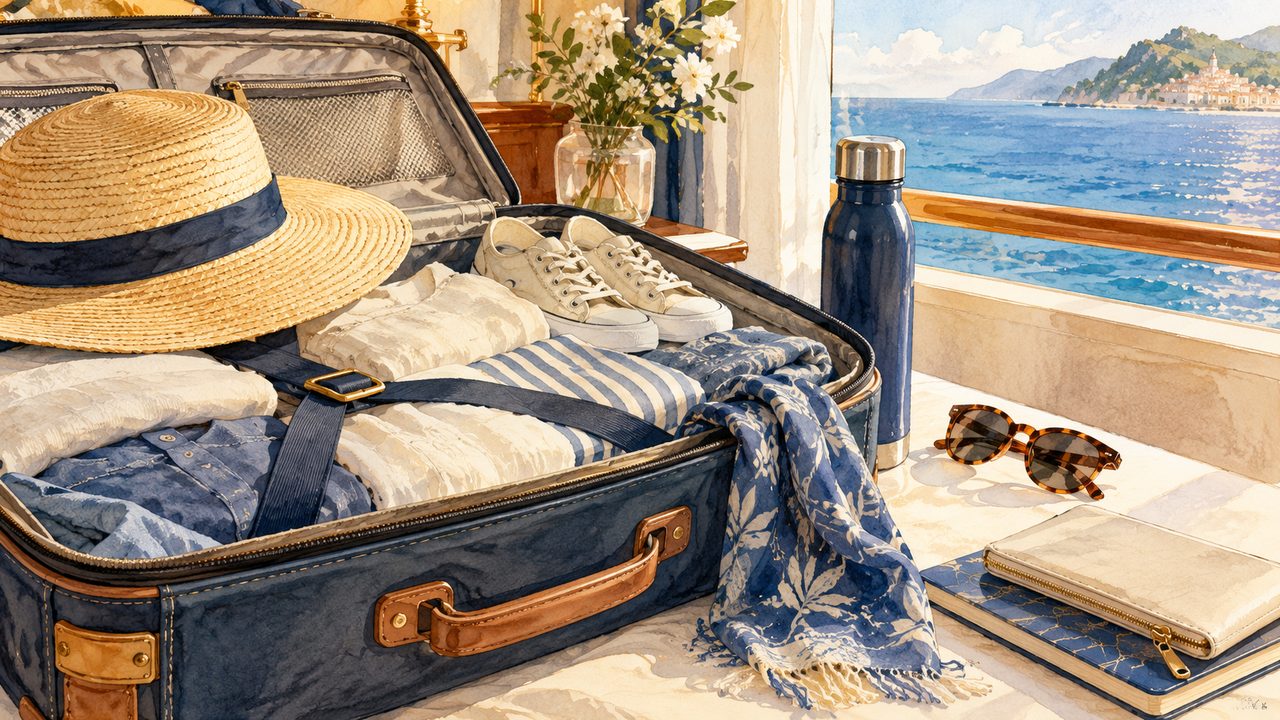
A closer cabin desk vignette can help you decide which small items prevent board-day hassles.
Which small items save the most trouble on board?
The most useful items are usually the least exciting ones: charging cables, sunscreen, a laundry bag, zip bags for wet swimwear, a pen, and a compact shore bag. None looks important while you pack. All can fix a real irritation once you are on board.
Cabins reward organization more than abundance. I like packing cubes because they stop one suitcase from taking over every surface. A small night light helps when several people share a room and one person gets up early. A simple pouch system also works. Keep medication together, charging gear together, and pool items together so you are not digging through every bag for one cable or tube of sunscreen.
This matters even more for families. When beach gear sits in one ready-to-go bag, you leave the ship faster and start the day with less stress. The same practical thinking helps on Disney Vacation Packages, Planned Around Your Family, where access matters almost as much as what you packed.
If you want help matching the list to your ship and route, use Tell us what would make this trip feel right and request Blake by name. I can help trim your list to the items your itinerary is most likely to use.
What should stay off your list?
A smart suitcase needs a clear do-not-pack column. First, remove anything your cruise line may restrict. Heat-producing items are a common issue, and policies can also affect alcohol, extension cords, or some power accessories. I would confirm current rules in your own sailing documents instead of relying on memory from another ship or year.
Second, cut the items that look responsible but usually become dead weight. That includes too many shoes, full-size toiletries, backup outfits for imagined dinners, and extra bags you packed only because there was room. Most travelers wear the same favorites and wish they had left more open space in the cabin.
Third, do not put valuables in checked luggage. Keep identification, medication, jewelry, electronics, and anything hard to replace with you from driveway or airport to stateroom. That rule matters more than almost any packing trick because it protects the things that can derail the trip fastest.
If your sailing is part of a bigger celebration, the rest of the trip may change what belongs in the suitcase. A pre- or post-cruise stay tied to Romantic Getaways and Anniversary Packages or Safari, Honeymoon and Luxury Escapes may justify a different jacket, shoe, or dinner outfit than the cruise alone.
How should your packing change with the itinerary?
The right list depends on where you are going, who is traveling, and whether the cruise is the whole vacation or just one part. A checklist is a starting point. Once the route is clear, the packing decisions become easier and much more specific.
Warm-weather Caribbean sailings usually need better sun planning and less evening variety. Swimwear, sandals, a cover-up, and reliable sunscreen do more work than bulky layers. If you are comparing that with a resort trip, Caribbean and All-Inclusive Vacations show how packing changes when you unpack once instead of moving with the ship.
Europe and longer mixed itineraries usually reward stronger walking shoes, one weather layer, and a smaller day bag that handles transfers and port days without fuss. River cruise and escorted-tour combinations also change the equation because you may handle luggage more often. That is where Escorted Tours and River Cruises and broader travel planning from Long Island can help sort the whole trip, not just the ship portion.
Families need redundancy in essentials and less variety in dress clothes. Groups need agreement about actual plans. If half the group books a walking tour and the rest want a beach day, the right shoes and bags change immediately. Pack for the booked plan, not the version of the trip that never made it onto the calendar.