
African safari cost - Lynne Kaplan, Superior Travel Consultants
If you are pricing a first safari, I want you comparing dated inclusions and trip structure, not a headline number that hides the real spend.
By Lynne Kaplan, Superior Travel Consultants
30 September 2026 · 8 minute read
African safari cost depends most on season, country, camp level, transfers, and whether touring is private or shared. I price it with dated, line-item quotes that show nights, park fees, meals, flights, and drives, because a single headline number can hide meaningful extras.
Table of Contents
African safari cost looks simple until two quotes with the same headline include different flights, fees, and guiding. African safari cost only means something when the inclusions are dated and specific.
From Long Island, I compare African safari cost by route, season, and pace first. That shows what changes the total and what is actually worth paying for.
Key Insights
Ask for dated inclusions
A useful quote needs travel dates and line items. Otherwise, you cannot tell whether park fees, transfers, or regional flights are missing.
Count transfer days honestly
Camp changes cost both time and money. Two well-placed stays often feel better than three rushed stops with repeated packing.
Separate shared from private touring
These are different trips, not minor upgrades. Private vehicles change pacing, stop length, and family flexibility far more than many expect.
Judge value after all extras
Land-only rates can look attractive first. Compare totals after air, insurance, tips, and any private vehicle supplement are added.

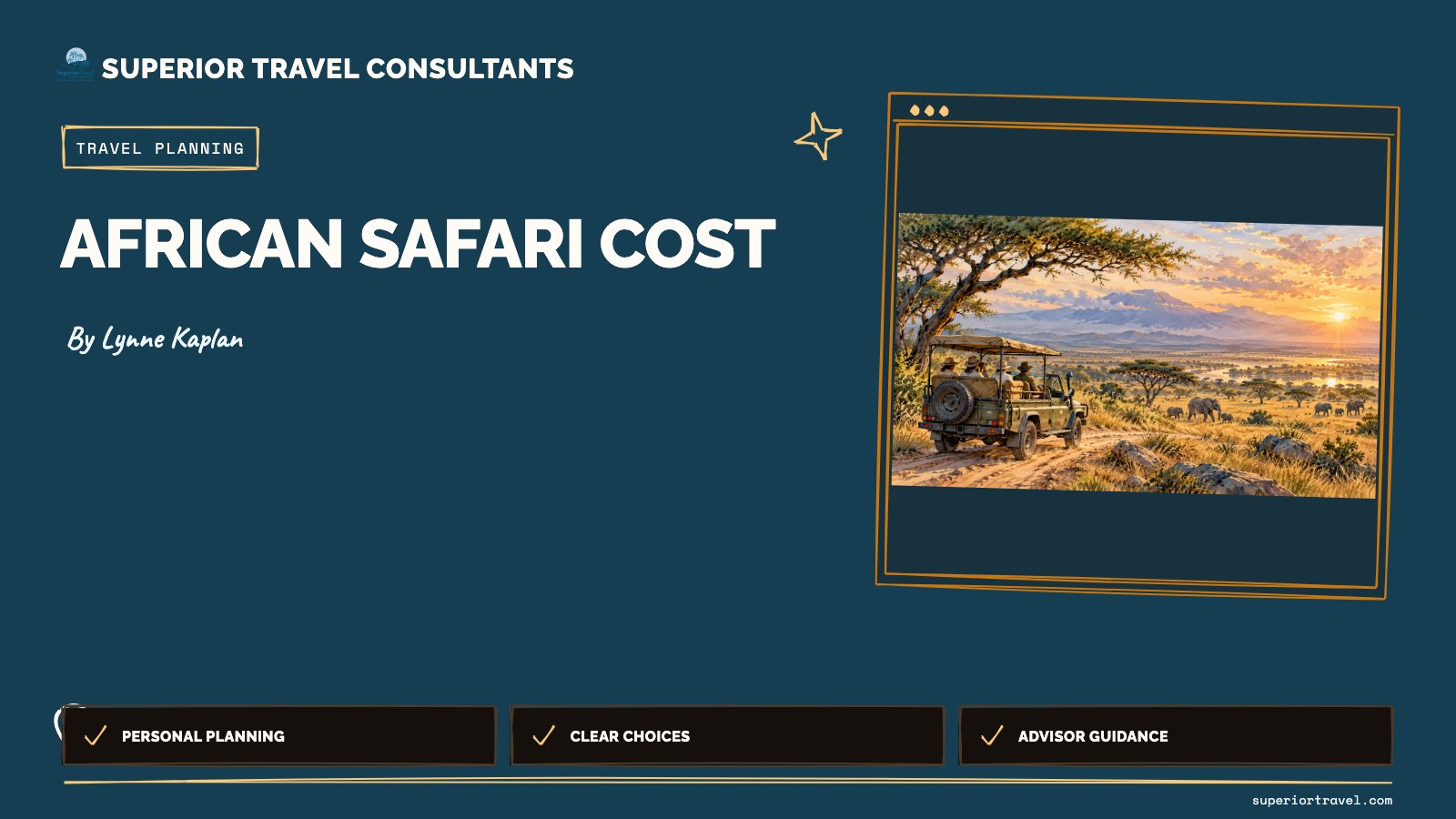
The warm landscape suggests comparing quotes by inclusions first, not by one headline number that hides the true spend.
What drives African safari cost
I start with four decisions: country, season, camp level, and transport style. Those shape the budget more than any broad online average. A shared road itinerary in East Africa and a fly-in lodge circuit in southern Africa may both be called safari, but they are built on different cost structures.
Season usually moves price first. Prime wildlife periods and major migration dates tighten availability quickly, so the same camp can price very differently across the year. If your schedule has flexibility, shoulder timing can improve value, but that trade-off may mean greener landscapes, warmer afternoons, or wildlife spread across a wider area.
Camp level is the next swing factor. A simpler camp may still include en suite rooms, full board, and strong guiding. Moving up often adds more privacy, a larger room, a better transfer pattern, or fewer people per guide. Those upgrades are real, but they only matter if they match how you want your days to feel.
Transport is where travelers often underestimate cost. Road transfers can work very well when parks connect cleanly. Internal or bush flights save time, but they add airfare, baggage rules, and tighter logistics. I also flag whether touring is shared or private, because photographers, families, and honeymooners often value that difference more than a nicer room.
How I compare safari quotes without guessing
The best quote is not the cheapest one on page one. It is the one that tells you what each day includes. I want to see nights, room type, meal plan, game drives, transfers, park fees, and any internal air before I compare value.
A short trip can look expensive because fixed costs are compressed into fewer nights. Long-haul flights from New York, arrival transfers, and park entry do not shrink just because the safari is brief. That is why a seven-night plan can be the better value even when the total spend is higher.
I also compare how much of each day is actually usable. If an itinerary has frequent camp changes, you may spend more time packing and transferring than expected. Two camps across different ecosystems often creates a cleaner rhythm than three camps with repeated check-ins and very early departures.
The same thinking applies when a safari is one piece of a bigger trip. I may compare it against Romantic Getaways and Anniversary Packages or European Vacation Packages if the real question is how to spend limited vacation time well.
| Comparison | Lower upfront price can mean | Better value can mean |
|---|---|---|
| Road vs fly-in | More transfer hours | Less time lost between camps |
| Shared vs private | Less control on drives | Stops and pacing that fit you |
| Five vs seven nights | Higher cost per day | Better use of long-haul travel |

A closer view with gear and wildlife helps you think about which safari style fits your budget and pace.
What safari quotes include, and what they may leave out
This is where I see the most confusion. Many safari quotes include accommodations, meals, scheduled game drives, guiding, and ground transfers. Some also include park fees and regional flights. Others leave one or both out, which changes the final number quickly and makes a low headline rate look stronger than it really is.
I read inclusions line by line because small omissions add up. Drinks beyond standard meals, laundry, private vehicle supplements, tips, insurance, visa costs, and optional excursions are common pressure points. If those are separate, I want that stated plainly before you decide one itinerary is the better deal.
Transfer detail matters as much as price. A camp that looks attractively priced may require an extra light-air transfer or a long road segment on arrival day. That does not make it a poor choice. It just needs to fit your energy, your schedule, and how much motion you want built into the trip.
If you want help sorting those trade-offs, I can compare a safari plan through Safari, Honeymoon and Luxury Escapes and show where the practical cost differences sit before you commit.
Which safari style fits your budget and pace
I usually sort safari plans into three practical buckets: value-focused road itineraries, comfort-led mid-range trips, and high-touch fly-in journeys. None is automatically best. The right fit depends on how you want your days to feel once you arrive, not on which description sounds most glamorous.
A value-focused road safari keeps more of the spend on wildlife viewing than on flights or room extras. It can work very well if you are comfortable with longer drive days and shared arrangements. The main trade-off is less privacy and, on some routes, more transit than first-time travelers expect.
A comfort-led mid-range trip is often the smartest starting point. You still watch the budget, but you also want smoother transfers, a room you are happy to return to, and fewer rough edges. That is often where I begin before adjusting upward or downward based on pace, privacy, and season.
A high-touch fly-in safari spends more on time savings and exclusivity. That can be worth it if you have limited vacation days or want a honeymoon rhythm with fewer long overland transfers. If you are debating safari against another trip style, I may also compare it with Caribbean and All-Inclusive Vacations or Groups, Families and Cruise Vacations so the decision stays grounded in how you actually travel.
When safari is worth the spend, and when it may not be
I think safari is worth the spend when the itinerary fits your pace, the wildlife goals are clear, and the fixed travel effort makes sense for the number of nights on the ground. For many US travelers, that means avoiding a rushed plan built around too many camp changes simply to cover more names on a map.
Older travelers often do well with fewer camps and carefully chosen transfers. Families may get better value from a private vehicle even when it costs more, because the day can flex around attention span, meals, and rest. Honeymooners often prefer fewer properties with stronger privacy over trying to see everything in one trip.
The honest downside is that safari is not the right answer every year. If you want a simple resort week with predictable logistics, another trip style may fit better right now. I would rather say that plainly than push safari into a brief that really calls for a different kind of vacation.
If you want more advisor context before deciding, you can review Find a Travel Agency on Long Island or read Why Use a Travel Agent?. My role is to match the trip to your priorities, not to argue for safari no matter what.